


In keeping with my conviction that we would do better to build things than tear them down, I would like to propose a new form of civilization in the Okanagan Valley. By “civilization” I mean the creation of city environments and the forms of human organization that follow. The current form of civilization gives us this:
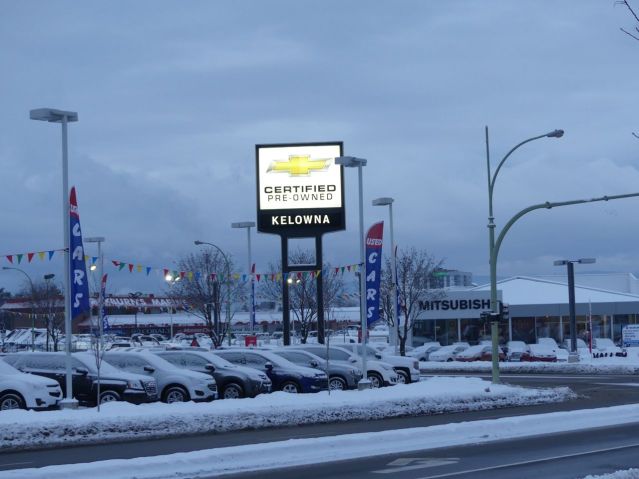
That’s an image from Kelowna, a Canadian-American city in the Okanagan Valley, but not an Okanagan city. You can tell because what is for sale on this car lot is an extension of American industry, focussed, through trade agreements and from there through a beleaguered automobile manufacturing culture in central Canada, a place called Ontario, which is full of Americans with a different form of government from those down south, but not that much different, as the American technology sales centre above shows. The city, you can see below, is designed for this technology, and not for people.

It is remarkable. If Kelowna were an Okanagan city, it would be filled with local technology, offering local culture, and extending its roots into the future. What it is currently extending is its connections to the Canadian and American rust belts, and, as you can see above, to the investment culture centred around global big oil. To understand that clearly, let’s take a step back to the big picture.
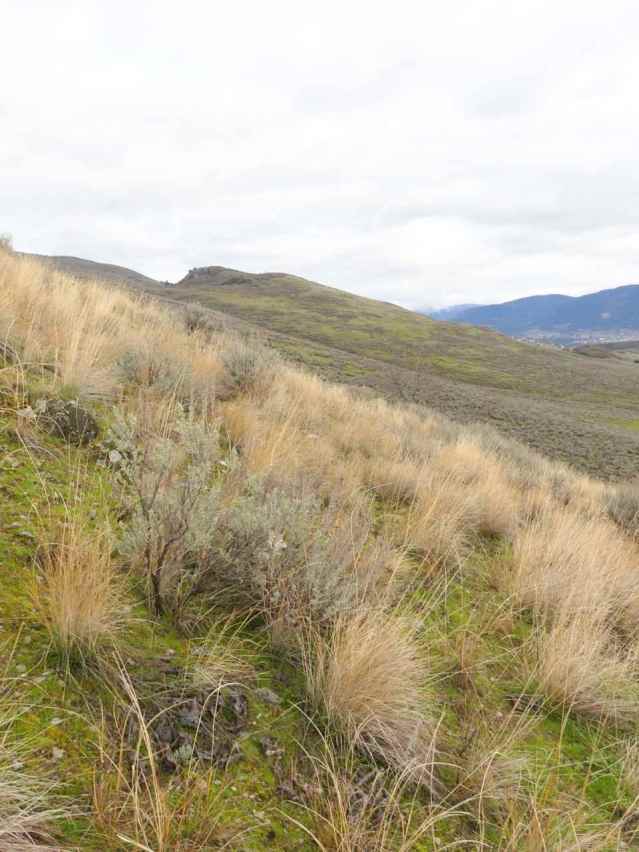
The Okanagan Valley, a former grassland in British Columbia, is a collection of droughted weeds between certain foreign cultural interventions including golf courses, vineyards and subdivisions. It has severed its ties to its grassland past through the hard work of a lot of people, including some in the tourism industry who sell the current city’s American-Ontario offerings instead, like this:
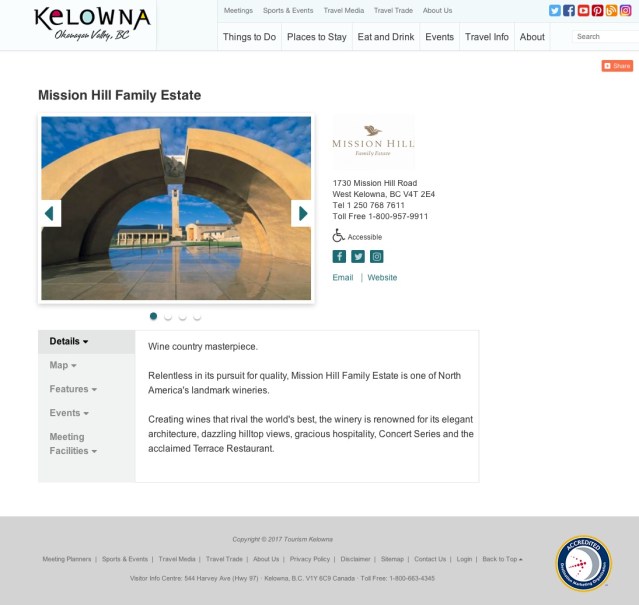
Urban and rural; nature and culture; playtime and downtime: Kelowna isn’t just one destination. It’s a whole bunch of them, located in one uniquely beautiful place.
Kelowna lies in the heart of British Columbia’s Okanagan Valley, the largest city on Okanagan Lake. Whether you’re looking for a family-friendly holiday, a romantic getaway, a weekend with friends, or all three, you’ve come to the right place. https://www.tourismkelowna.com
Tourists will be well-catered to, in concrete hotels in strip malls, on golf courses or on ski hills, eating at chain restaurants, and taking trips out through subdivisions to golf courses and vineyards and ski hills. It is, in other words, a theme park, a kind of Disneyland. The real economic driver behind the enterprise, though, is the sale of property in the sun to people from the colder Canada to the east: a kind of permanent tourism.

The newcomers are happy, because they are living within their dreams. The people who’ve been here for a couple generations or more are not, because they are forced to live in the dreams of others, within an environment further degraded to support them because any environment can only support so much. This is called progress. It is based on the principle of “change”, which, in this water-starved environment is really the principle of desertification. It’s not a very successful form of civilization that can’t last more than four generations without being aquatically bankrupt. Currently, the valley is attempting to manage the acute, self-created water shortage of an improper civil model by limiting access to water on both a class basis and on the claim that the valley is a desert, and people need to learn to live in one. The thing is, it’s not a desert.

It’s just that there’s not enough water to sustain the current imported civic model. We need something better in its place, something in keeping with the climate we live in. The grasslands were good at that. We can solve many of our water issues and our social issues by rebuilding them. Other positive things we can do include developing new water technology on the model of our grassland plants, instead of new smartphones apps or new animated films to be shown on TVs or small screens across the world. At the moment, we have an American-Canadian-American cultural education institution, absorbing the talent of our children, who live in Kelowna and use the former grasslands not as a classroom or a living room but as a foundation for imported playgrounds (ski slopes, beaches, golf courses, vineyards and so on) as we have for generations.
Centre for Arts and Technology Kelowna is one of the top audio engineering schools, film schools, animation schools, fashion design schools, interior design schools, and photography schools in Canada. We are home to dedicated photography, interior design, and fashion studios, a film production studio, two digital recording studios, and 2D and 3D animation labs. https://digitalartschool.com
Sadly for our kids, we can’t afford this gentrified luxury any longer. The land and water are calling in our debts. All the petrodollar-based tech money flowing into the valley in the world just won’t create more water, or reduce the social strife that lack of attention to water has caused. Luckily, though, if we can keep our technology clean, simple and inexpensive, we could take it around the world. That’s one way we could sustain the Okanagan: by making it a part of the future instead of fighting to retain a past through advertising imagery. We can only, after all, convince ourselves of so much before the gap between reality and fantasy is just too great to sustain. This is a problem coming down on us like a runaway train. We might as well face it now. To do so means that instead of following the culture of the United States we are going to have to replace it. We are going to have to learn to be home, which is a new thing for Canada, but there’s no longer any way around it, except into poverty. I have spoken about these ideas earlier on this blog. Today I’d like to add a note about civic organization, because it’s the principle of civilization that the method of organization creates the result. We have subdivisions and weeds today? They are both the result of how we have structured urban life here, period.

They are the same thing, viewed across a class divide.
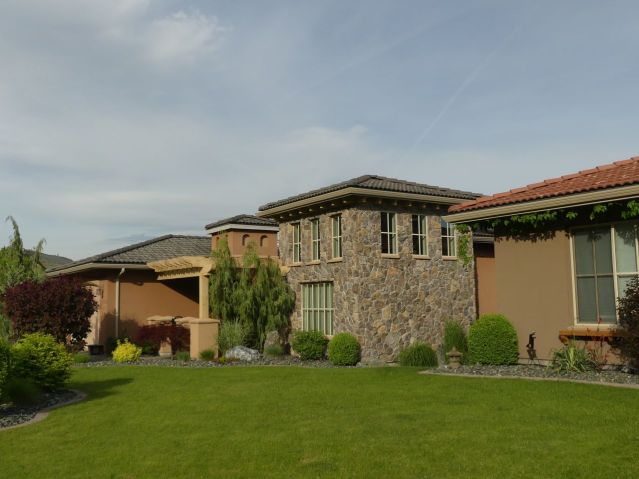
Neither is sustainable. The subdivisions are mining the wealth of communities across Canada, to which they belong, and the weeds in the grassland display the removal of water-carrying capacity from the land, which the presence of subdivisions and the technology that supplies them has created. The reasons are complex, but, as I mentioned, a reorganization of civic principles would be a good start to addressing them. But don’t take it from me.
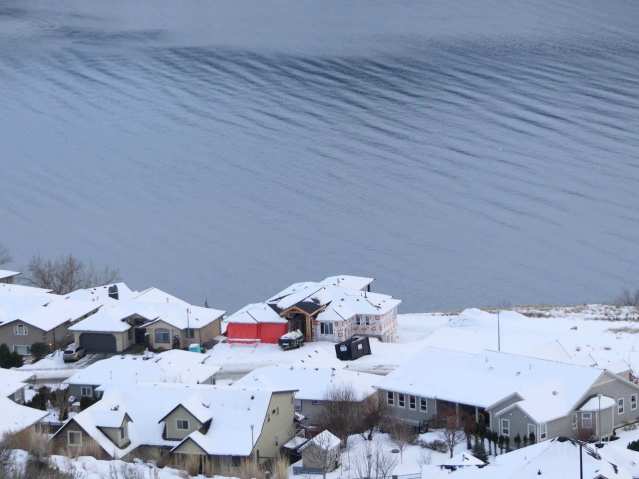

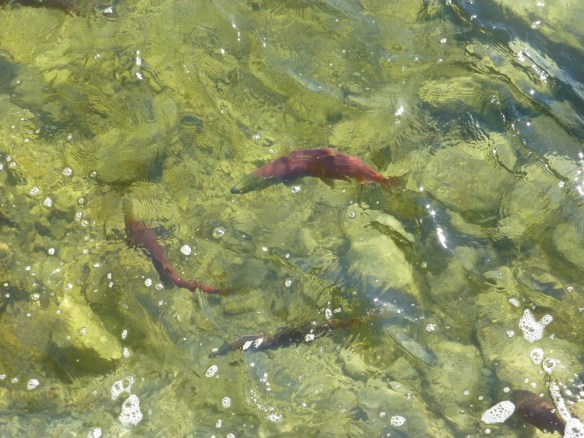
 Let’s be people our grandchildren can admire, and thank.
Categories: Arts, Ethics, First Peoples, Grasslands, green technology, Industry, Innovation, invasive species, Land Development, Urban Okanagan

 Okanagan Okanogan
Well said Harold.
LikeLike
Thanks, Chris.
LikeLike