







Human society is what it is: a little crazy, a little aggressive, a little beautiful, a little fearful, a little boastful, a little shy, a little ugly, a little transcendent, and very much absorbed with its own affairs. That’s why it’s called “human society” and not something like “spiritual society” or “environmental society”or “the society of ants.”

Not Human Society … Yet
Still, it’s good to keep in mind that this “human” thing is new and was grafted onto spiritual and aristocratic forms of society about 200 years ago. It’s good because it means that the term “human society” has nothing more or less to do with the great apes living within its constraints than did those preceding patterns of organization.

Great Ape at Play, Vernon Winter Carnival
What’s more, over time the freshness of humanism (the basing of social organization around the interests of one species of great ape) has become as commonplace as was once the deference of kings to popes or farmers to aristocrats and now looks just, well, everyday.

Everything Normal at the Armstrong Fall Fair
In the late 20th century a group of philosophers in France cooked up a method of stopping this slide towards the commonplace, in the hope of keeping society in a continual state of watchfulness and revolution, or, if you will, because it was late 20th century France after all, résistance.

The Resistance at Work, Vernon
The classic form of resistance in French history is the partisan war waged against the German invaders and occupiers of 1940. For background to that, in the German Third Reich of 1933-1945 it was a dominant belief in Germany that every German knew more in his bones than any intellectual (meaning French or Jewish intellectual or educated type). He (only males were allowed to be German citizens at that time) just needed to think and brilliance would pour forth, accompanied by simple, clear solutions where others (such as those intellectuals and dastardly Frenchmen) saw only shades of grey and points of relativity and discussion.

Hitler Wouldn’t Have Liked this Neo-Nazi Form of Resistance, Erfurt, Germany
The work of this group of Marxist philosophers, including such famous and brilliant men as Roland Barthes and Charles Lacan, is called deconstruction. It uses intellectual tools to dissect the commonly understood physical world into components, just as science does when it studies natural phenomena to reveal the structural forces at play in natural forces. Such deconstruction (dissection) is a task that can never end, because it is in the nature of humans to continually recreate this sense of everydayness, and to dull the deep historical patterns of the world with a patina of normalcy.

In Canada, Plastic Flowers Stuck Into Lions is Normal
Yes, it’s weird.
Against this pressure coming from the deep, animal past of humans, the deconstructionist must remain ever vigilant, lest he be seduced by normalcy and let its bodily responses overwhelm his deeper, more highly-evolved and educated understandings.

Dead Oak Tree A Long Way From Home
University of British Columbia, Okanagan
It’s all a bit too much like 1930s and 1940s German dehumanization of Jews turned on its head for my tastes, but it’s immensely popular and fills most Humanities courses in the universities of the world today. The thing is, though, it might not be quite as universal as it claims to be. It might even be dead wrong, because of that sticky matter of it all just seeming a little too much like French-German mid-20th-century politics. Such a close correspondence should always be a warning sign.

The Ruins of Mid-20th-Century Politics, Conconully, Washington
In other words, deconstruction might be dead wrong, because it might just have the wrong idea about humans at its root. It might be the result of sloppy thinking.
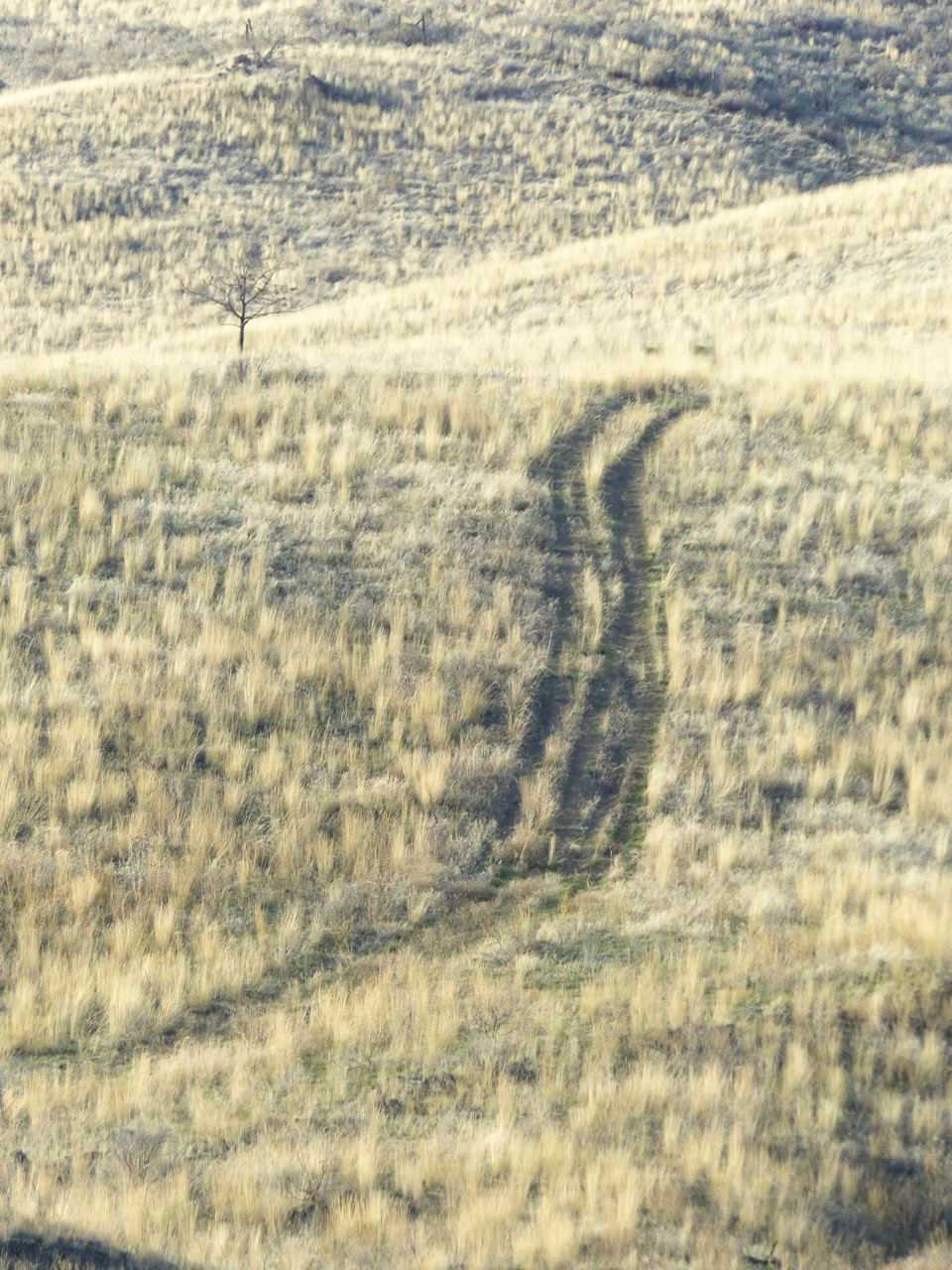
Bad Thinking That Lasts for A Hundred Years, Vernon
I say this because I’m troubled about those Third Reich Germans who went around claiming to be a master race in a continent of so-called sub-humans (apes, such as Frenchmen or Poles or Jews, all given the name of communists for the simple reason that they weren’t German). These Germans (my ancestors among them) were surely a barbarous lot, but if there’s any chance that deconstructionism is built on the foundation of a resistance to them as the antithesis to civilized behaviour, then it’s just plain wrong. The Germans of the Third Reich no more represented primal, brute responses coming from, say, the reptilian brain, than do the actions and theories of, say, Barthes.

British Columbia Back Yard Ornaments: Not Nazi
The Germans weren’t individual, common sense geniuses either. They did, however, certainly represent one response to mechanization and industrialization. The thing is, deconstruction was another. Whatever a commonplace human is or however such a person thinks has nothing much to do with these responses to industrialization or with the historically-fraught relationship between France and Germany, however terrible that relationship has at times been and however vital the force of resistance turned out to be.
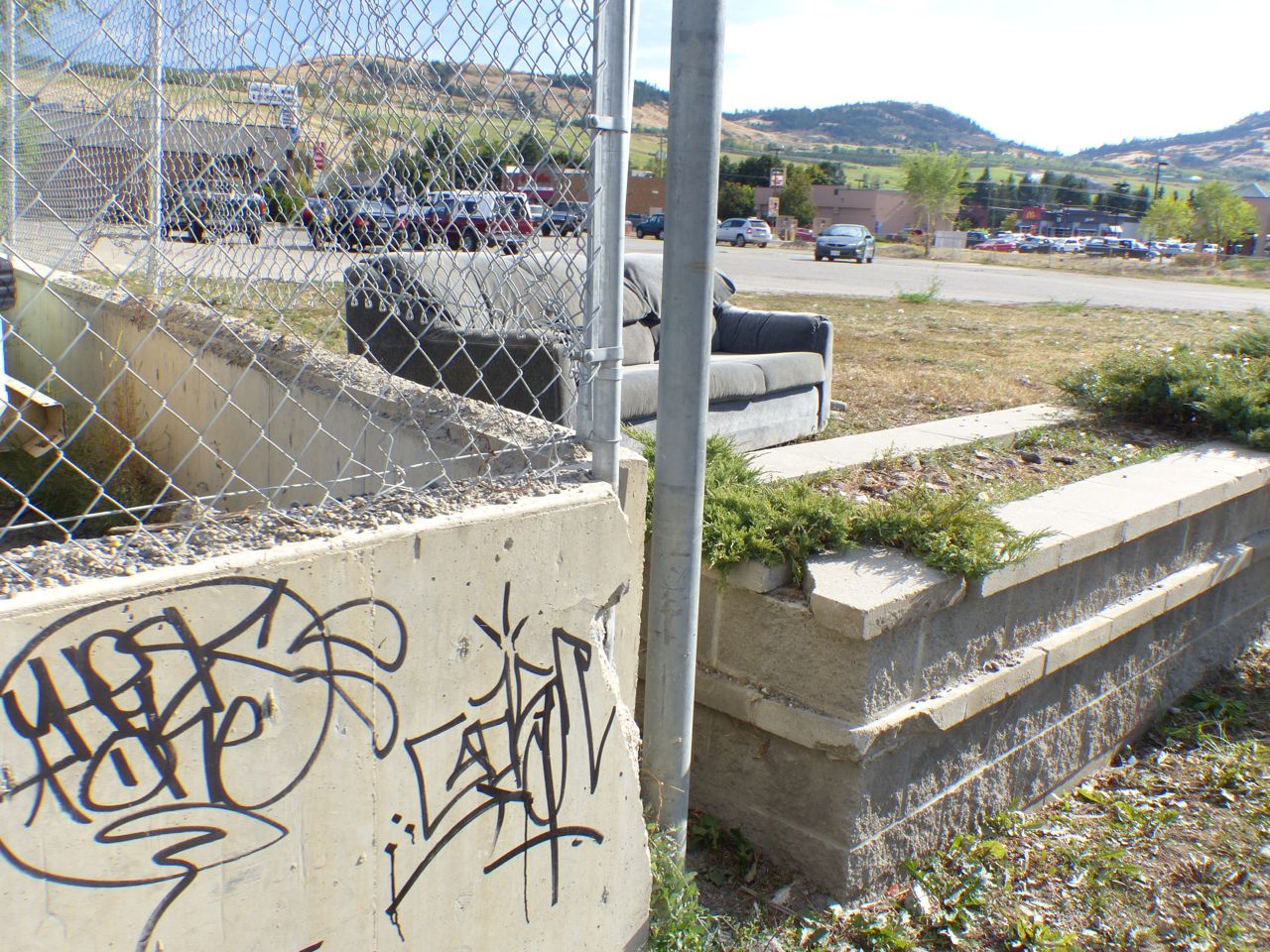
Canadian Street View: Neither Nazi Nor French, Okanagan Landing
In fact, it might not be possible to determine just what a hypothetical human might actually be like, because humans are always embedded in societies and draw much of their identity from their social and environmental bonds.

Humans Often Prefer This Stuff to the Sun Itself, Okanagan Landing
What strange creatures!
If my observation is correct and my concern well-placed, then in its work of deconstructing the commonplace wherever it appears, deconstruction might very well be deconstructing humanity itself, from a sense of wholeness to a sense of assembled components, put together like scientific theories or cell phones on an assembly line in Singapore, tied together by a fragile unifying force called “an identity” or “a self”.

Old Tractor Taking the Place of a Human
Humans love this kind of stuff. To them, it’s like looking in a mirror.
Doing so might be breaking the bonds between humans and the earth, and might be a very real reason why the earth is dying, why so much of it has been laid to waste, and why our younger generations live through electronic social devices. These devices and the post-humanist structural networks they enable are the physical manifestation of deconstructionist philosophy, just as the physical earth and the traditions of working within it cooperatively were the manifestations of “spiritual society” or an aristocratic one.

Grafted Apple Tree in the Author’s Garden
In German, this process is called “Nobling”. Yeah, you get the picture, right?
If we look to ourselves we see the earth. If we look to the state of the earth we see the state of ourselves. Given that humans (and I am in this group, yay), draw a large part of their identity from the environment in which they were raised and the one in which they live (in complex ways deeply rooted in what is called commonplace, non-verbalized physical experience), the deconstruction of these bonds and their replacement with a limited set of tools for further continued deconstruction is deconstructing human relationships with the earth.

The Golf Course at the Rise
Earth deconstructed in the same way that globalization is a synonym for Americanization, with is just a fancy word for the commonplace. A bit of a contradiction in terms? Why, yes, nice of you to notice.
The result is that the earth is invisible.

Invisible Earth
One sees the shadow, not the stone.
The impetus behind all this activity is honourable: to prevent the renewed rise of Nazism. What do we get, however, in its place? A structurally-based terror, one all-in-the-head rather than all-in-the-body: the Islamic State. What’s more, Nazism was all about nationalism, or considering the German state to be the body of its people and the people manifestations of Germany. The Islamic State, on the other hand, is not a “state” in the sense of being a sovereign country, but “state” or a “condition” of Islam, with fighters drawn to it from around the world. Not the “real” Islam but a condition or state of it, in the way a hospital patient is said to have a certain condition. It is, like deconstruction, a force against the commonplace, daily lives of people and a replacement of them with intellectual, structural concepts.
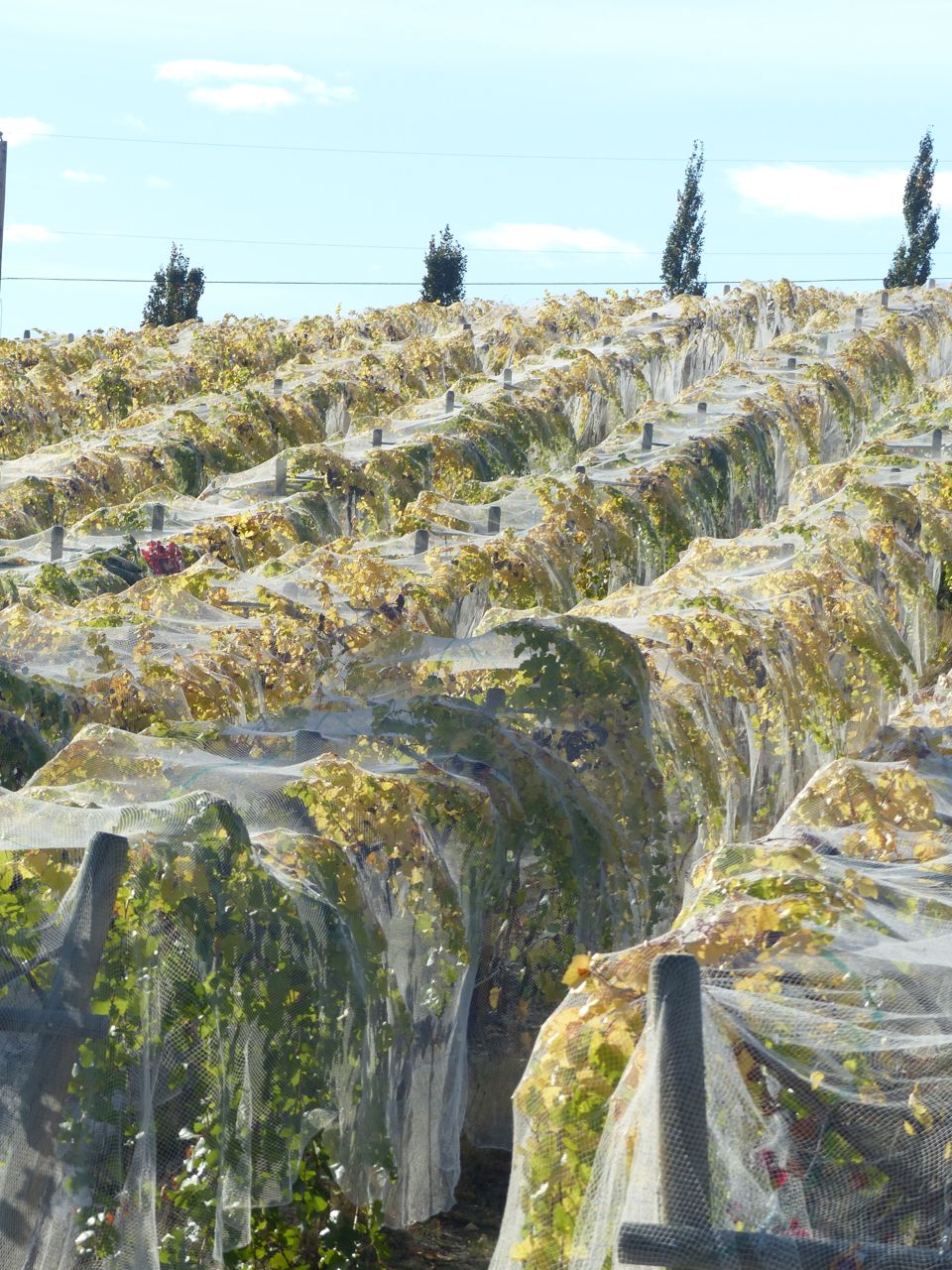 Grape Vines and Birds Separated By Force
If this were done by humans to humans we’d have a “humanitarian crisis”. A “bird crisis” doesn’t register in the same way. Weird!
I am in no way suggesting that there is anything evil or deadly about deconstructionism, as there is about the Islamic State, but I am suggesting that dominant ideologies become environments, which cast up mirrors, not all of which are complementary.

$550,000 House with Eastern Canadian Maple Tree
We humans are not making ourselves look very wise.
Disturbingly, such a condition of eternal revolution and states of mind becoming physical states exists in contemporary Germany. It is called “the National Liberated Zone” and consists of all areas, even if it’s just one skinhead’s head or his apartment in a suburb of Cologne or some small town north of Dresden, which are controlled by nationalists (i.e. by neo-Nazis.) You can’t find this state on a map, but it is there.
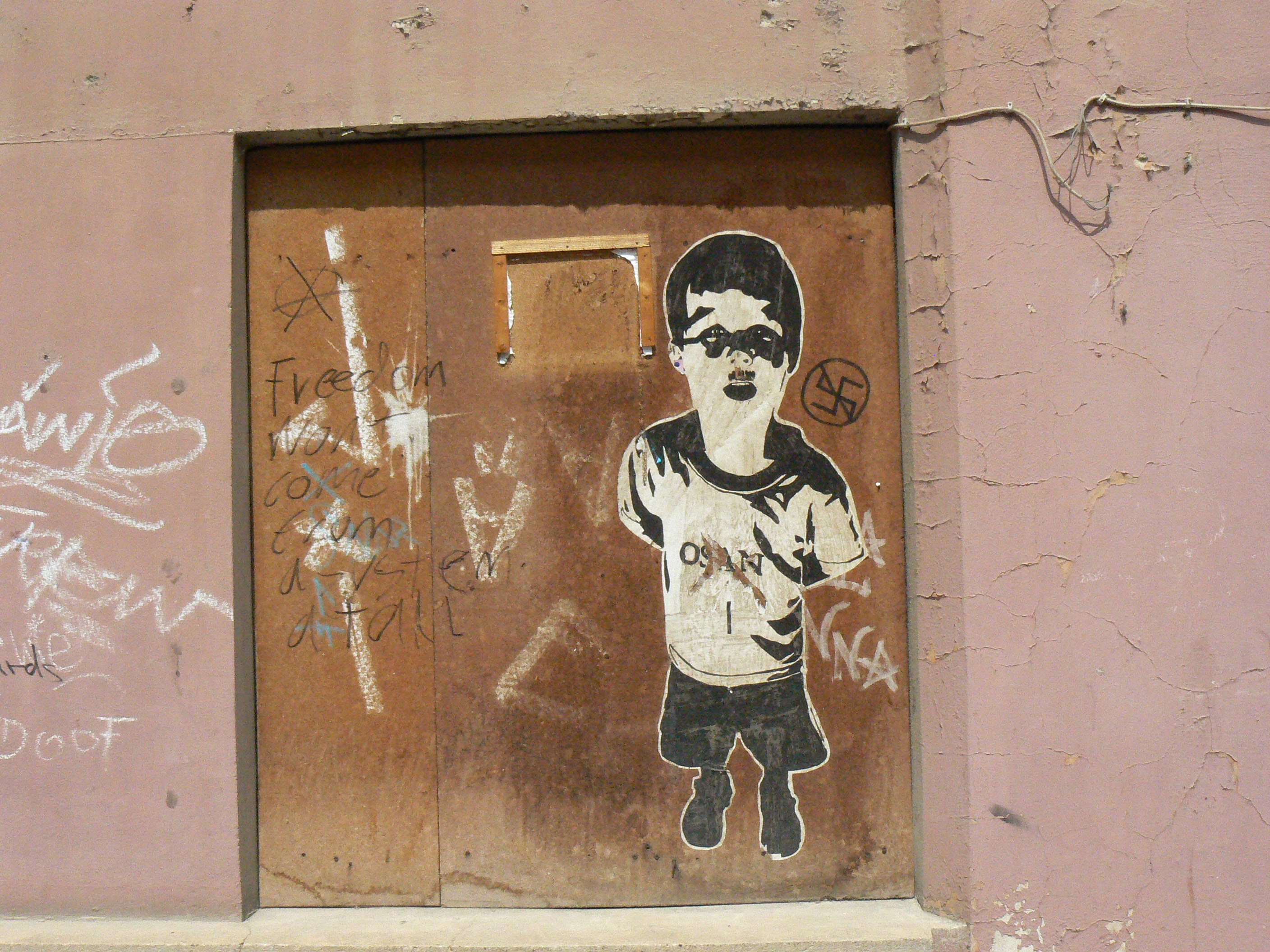
Anarchist Street Art Infiltrating the National Liberated Zone, Naumberg, Germany
This is war in the post-human world.
Where does this all lead? Well, to reiterate what I mentioned above: what is missing in all of this is the earth. Human society is about human society. If we, as humans, wish to survive, we will have to either continue the process of deconstructing ourselves into silicon chips, and accept the continued degradation of physical and human-social environments that logically comes with that, or we will have to include the earth as part of our social group.

The Human Earth
Bobbling antennae and all.
Deconstruction won’t get us there. Only reconstruction can do that. It’s anathema to deconstructionists, of course, but it might very well be that to survive and to pass on the remaining knowledge of life on the physical earth to those who follow us so they can build living structures and relationships from it, we might have to develop an understanding that deconstruction is a tool that works within certain boundaries, while reconstruction is an equal and corollary function, working within others.

Red Osier Dogwoods in October
Reconstruction works here. Deconstruction does not. This plant is part of the humans social group, or we are dead.
Given that social media devices are so powerful and so ubiquitous, it’s not likely that they’re going to disappear any time soon. Accordingly, the challenge is to construct modes of using them which open up earth-based experience in ways which cannot be fully understood using human-based or machine-based social or intellectual modes.

Vineyard in the Fog, Bella Vista
Not to be understood with a smart phone. Sorry.
It used to be that a spiritually-enlightened human had to transcend the self. Maybe he or she could become a saint. It might be that he or she might now need to transcend the machine and that the enlightenment might not be intellectual or divine knowledge but the commonplace — not the machine-tainted commonplace of the Third Reich or the anti-barbarism stance of the deconstructionist resistance, but acceptance. One might just have to put down the cell phone and plant a potato, tend for its plant, pick it in the fall, make a bowl of soup and share it with a few friends.
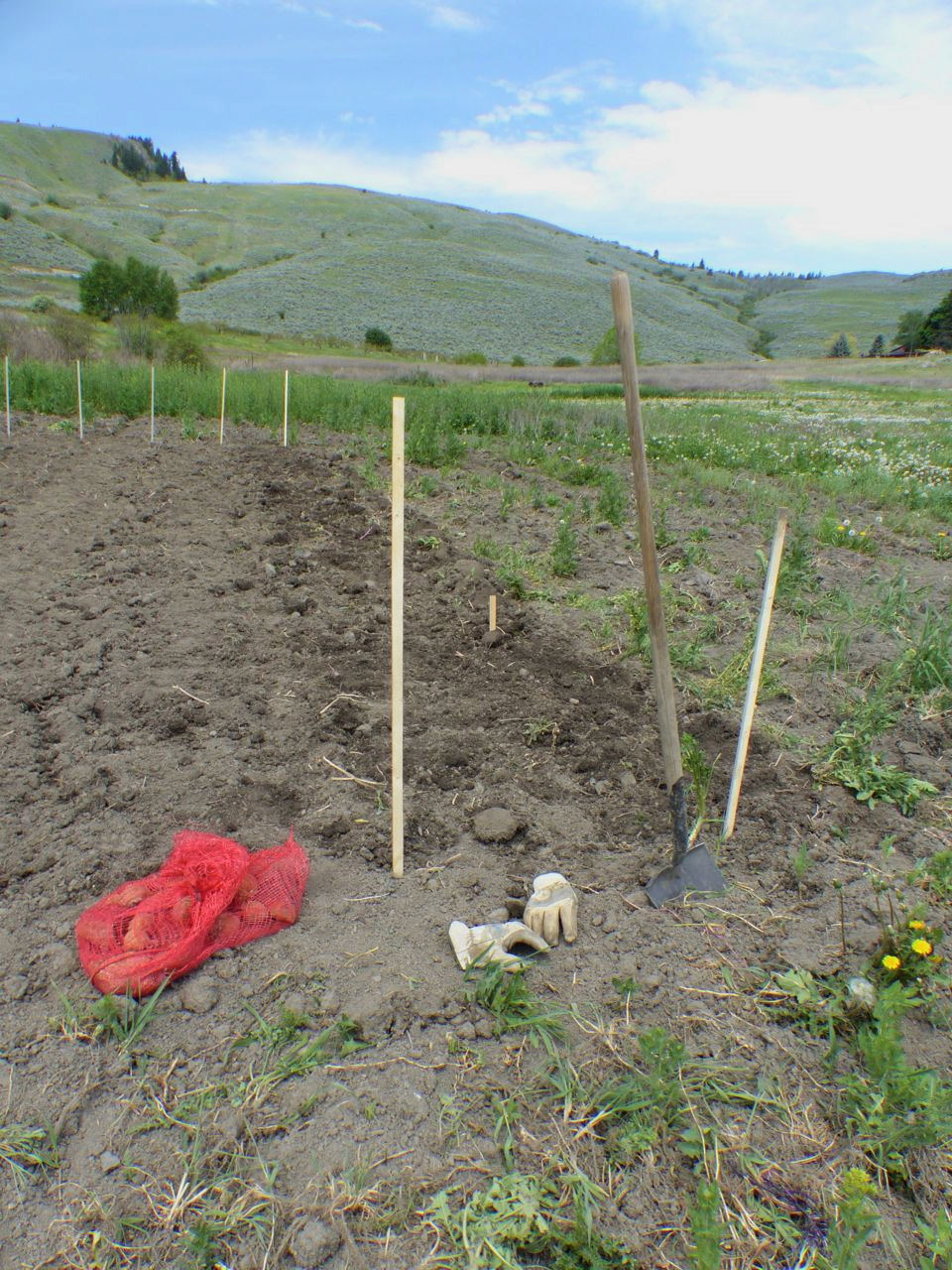
Okanagan Okanogan Plants Some Spuds
Yield, four months later: 450 pounds (>200 kilos)… whew!
We can’t escape the social structures we live within, but we can extend them with generosity, and we can transcend them.

A New Apple Discovered
Transcendence looks like this sometimes.
Art is one means of doing so. Science is another. Agriculture is another. Foraging is another. Whichever one it is our individual gift to give, the earth must be part of the generosity and the transcendence, or all of our physical technologies (which are only extensions of our intellectual technologies) will make us poorer rather than richer, because they will lead us away from the earth and we will be unable to see her.

Garter Snake, Catching a Breath After Some Underwater Fishing
Her.
And if we can’t see her, we can’t see ourselves. Humanism, you see, isn’t enough. The “human” is safeguarded by giving it away.
Categories: Arts, Erosion, Ethics, Gaia, Grasslands, Nature Photography, Science, Spirit, weeds


 Okanagan Okanogan
In my unintellectual way, and without deep familiarity, I’ve tended to think of the deconstructionists as chaps who’ve let their egos take over their intellects. How clever we are, they might say. How we know things that mere mortals cannot conceive of.
Always make me wonder if they’ve ever been in awe of a brilliant sunset, or enjoyed a glass of wine, or fresh-baked bread, or a child’s curiosity…and so on. Commonplace, earth-bound things. Now I wonder if the ISIS/ISIL may suffer from the same pathology.
LikeLike
Yes, it was my point, perhaps awkwardly made, that they have deconstructed humanity, and now we and the natural earth are going extinct.
LikeLike
And in my rather awkward way, I felt I was agreeing with you! However, I can’t accept that “we and the natural earth are going extinct”. Even when feeling most depressed I try to hang on to a wisp of hope.
LikeLike
Yes, there’s hope, but I was pointing out that the end game of the current state of affairs is to turn people into electronic intelligences or to replace them with artificial intelligences, in a machine earth.
LikeLike
Reblogged this on Sable Aradia, Priestess & Witch.
LikeLike
Tolkien would have agreed with you, I think.
LikeLike