




Carrots for now.
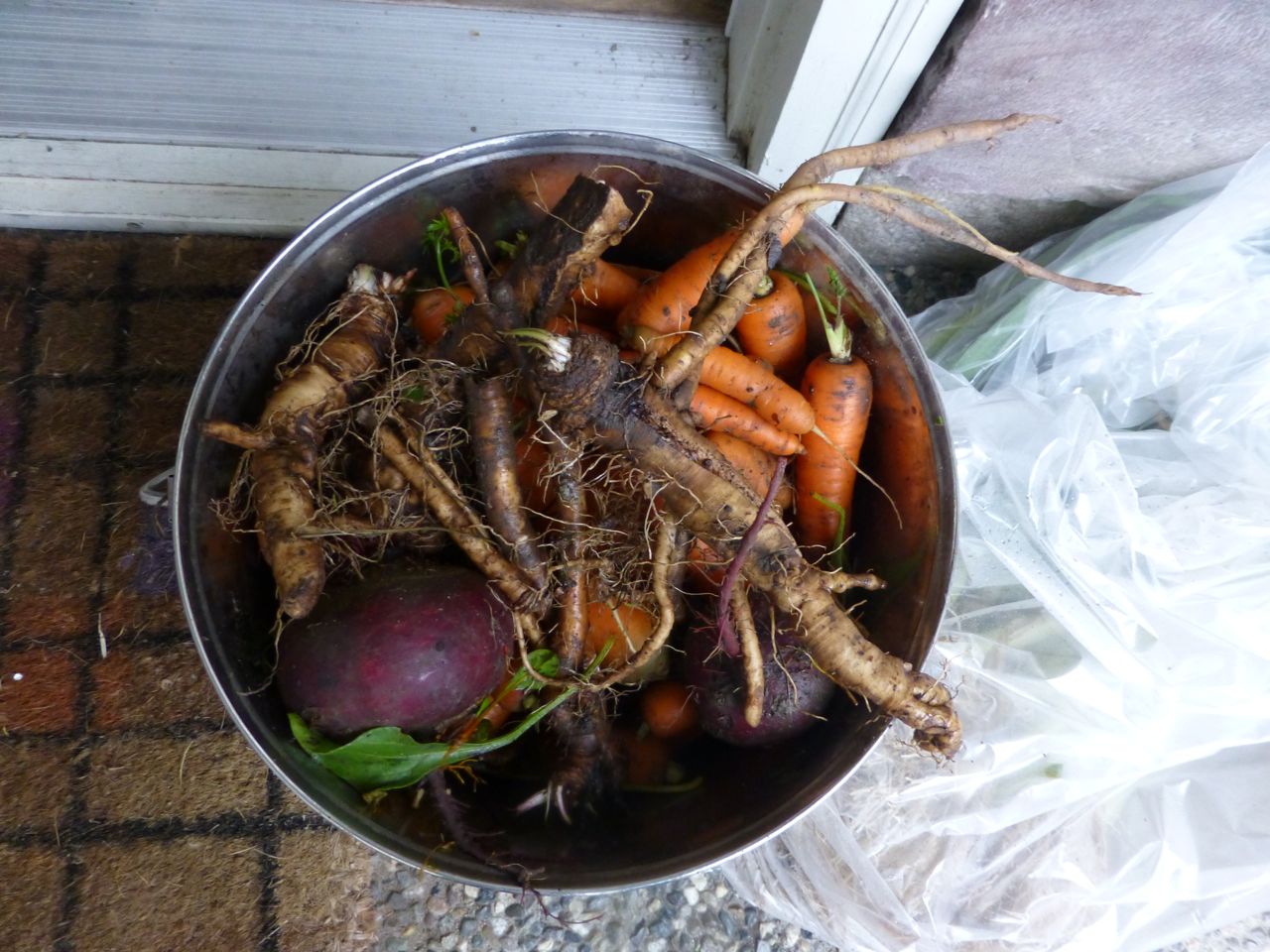 And dandelion root, beets and leeks (in the plastic), too.
And carrots for Easter, as sweet as today.
 All Snuggled In
Carrots in the ground under peach, apricot and nectarine leaves.
Well, some for Christmas, too. In celebration, the year’s last rose:
 Now, let it snow!
Categories: food culture, Gardening


 Okanagan Okanogan
Hi there, I’m interested in knowing how you harvest and what you do with the dandelion root. Like how to you eat the root or do you dry it, and if you dry it…what do you use it for? I love eating dandelion leaves and the flower. I add them in salads, substitute them for lettuce in tacos, etc… I’ve heard of people eating/using dandelion root, but I’ve never tried it myself. Anyhow, that bowl of fresh garden produce looks beautiful!
LikeLike
Hi,
clean it well, scrub it in fact,cut it up into small pieces, as small as your patience allows, and roast it on a cookie sheet in the oven at low heat until it turns golden brown. Then cool it and grind it in a coffee grinder. You can roast it longer, but should avoid the dark brown and black range, as those aren’t healthy chemicals at that point. It makes a lovely hot drink.
LikeLike
Harold,
Thank you much! I will definitely follow what you wrote step by step. I have a lot of dandelions out here so I’ll hopefully collect enough root to make the drink tomorrow. Thanks again, I appreciate it.:) Take care out here. hugs hugs!
LikeLike