




Day 2!
(For Day 1, click on the sun.)

Poetry, Poetics and Scholars of Place in the Heart of Cascadia
Sunday March 2, 2025
Room: Art 366
Arts Building, UBC Okanagan Campus, Kelowna

The Two Cayuse Sisters, Wallula
Presenters March 2:
- Soha Aftab • India
- Slava Bart • Kazakhstan
- Emma Carey • Kelowna
- Don Gayton • Summerland
- Sean Arthur Joyce • New Denver
- Christine McPhee • Penticton
- Lorin Medley • Comox
- Jeanette Merrick • Summerland
- Paul Nelson • Seattle
- Harold Rhenisch • Canim Bay
- Kelly Shepherd • Edmonton
- Stephan Torre • Saltspring
- Amy Wang • Kelowna
Today we’re reading to each other and we’ll go outside, too.

March 1 Presenters
- Vivek Sharma • Nepal
- Slava Bart • Kazakhstan
- Michelle Poirier Brown • Vernon
- Don Gayton • Summerland
- Sean Arthur Joyce • New Denver
- Cole Mash • Kelowna
- Astrida Neimanis • Kelowna
- Paul Nelson • Seattle
- Francisco Peña • Kelowna
- Harold Rhenisch • Canim Bay
- Erin Scott • Kelowna
- Kelly Shepherd • Edmonton
- Sharon Thesen • Lake Country
- Stephan Torre • Saltspring
To view the March 1 schedule, please click the fish.

Day 2 (The Day We Go to the Water)

kłlilx’w
9:00
Welcome
Slava Bart
A child of the post-Soviet diaspora, Slava flew from Israel to Kelowna in 2023 to build an ark holding thousands of years of life and history in its hull.
Slava is close to completing an MFA in Creative Writing at UBCO.
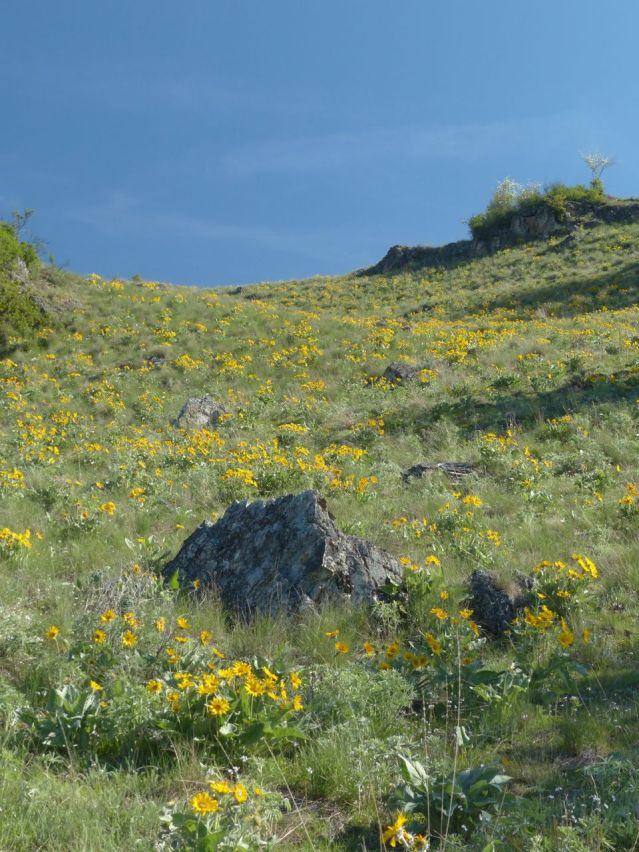
Spring Climb at Cougar Point
9:05
Cascadian Mind & The Cascadian Saturation Job
Paul Nelson
Paul will address how to allow one’s mind to be more of the place than of the intellect that has abstracted us from what is real and how to take the notion from Charles Olson of a “saturation job” to create a project centred around one event or events in the history of the bioregion and to write about them in a “use of speech at its least careless and least logical” in a way that Brenda Hillman describes as “experimental lyric form.” Lineation fits in. Paul began this conversation yesterday.
Poet/interviewer Paul E. Nelson founded the Cascadia Poetics LAB & the Cascadia Poetry Festival. Books include DaySong Miracle (Past 62) (2024); Cascadian Prophets (Interviews 1999-2023) (2024); Haibun de la Serna (2022); A Time Before Slaughter/Pig War: & Other Songs of Cascadia (2020); American Prophets (interviews 1994-2012)(2018); American Sentences (2015, 2021); A Time Before Slaughter (2009). Co-Editor of Winter in America (Again: Poets Respond to 2024 Election (2025, Carbonation Press); Cascadian Zen Volume I: Bioregional Writings on Cascadia Here and Now (2023, Watershed Press), Make it True meets Medusario (2019) (Spanish & English) and other anthologies. He’s Literary Executor for the late poet Sam Hamill and lives in Rainier Beach, alongside dxʷwuqʷeb Creek..

9:25
Circle Reading
An exercise in hearing and being heard, led by Paul Nelson.

Ancestral Stone in the Broughton Archipelago
10:00
Break.
Conversation. Blessèd Coffee & Tea.

Bear Lunch, Big Bar Esker
10:20
Placing Water
Harold Rhenisch
Harold will give a brief overview of Cascadia and the Okanagan as waterscapes.
Harold Rhenisch has just published The Salmon Shanties: a Cascadian Song Cycle. It began when he listened nightly to the Cape Mudge Foghorn on Quadra Island, then followed him up the Columbia from Astoria and here to the Okanagan.

In the Winter, the world settles into Canim Bay.
10:30
Water and Place
Christine lives in the place where the Ponderosa and shrub steppe biomes meet cold and water. In the vast shrub steppe between Oregon and the Chilcotin, this is the place where adaptation to climate change will happen, because it is here that species have the greatest opportunity to adapt. Expect poems deeply rooted in transformative lands and waters.
Christine McPhee lives and writes in Penticton. She is inspired by the grasslands, ponderosa pine forests, rivers and lakes and their various wild inhabitants. Christine’s day job is as a librarian working with an amazing team of people to support literacy, democracy, and community at Okanagan Regional Library. Christine’s work has been published in The Fiddlehead, The Dalhousie Review, Room, The Antigonish Review and Contemporary Verse 2.
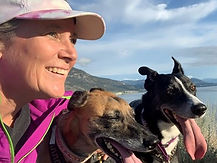

Skating on Skaha Lake, February 2025
11:00
Poems of Water
Lorin Medley writes: “I write about where I live. I am interested in documentary forms and possibilities, the many ways poetry can honour a life. “
Lorin Medley is a counsellor and writer from Comox, BC with poems published in various anthologies including Winter in America (Again, Cascadian Zen: volume two, Refugium: Poems for the Pacific, Sweetwater: Poems for the Watersheds, The New Quarterly and subTerrain. Lorin has a poetry chapbook forthcoming from Watershed Press.
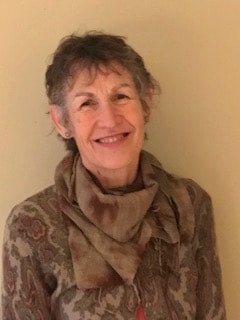

Mool Mool, Yakama Nation
11:30
Dog and Moon
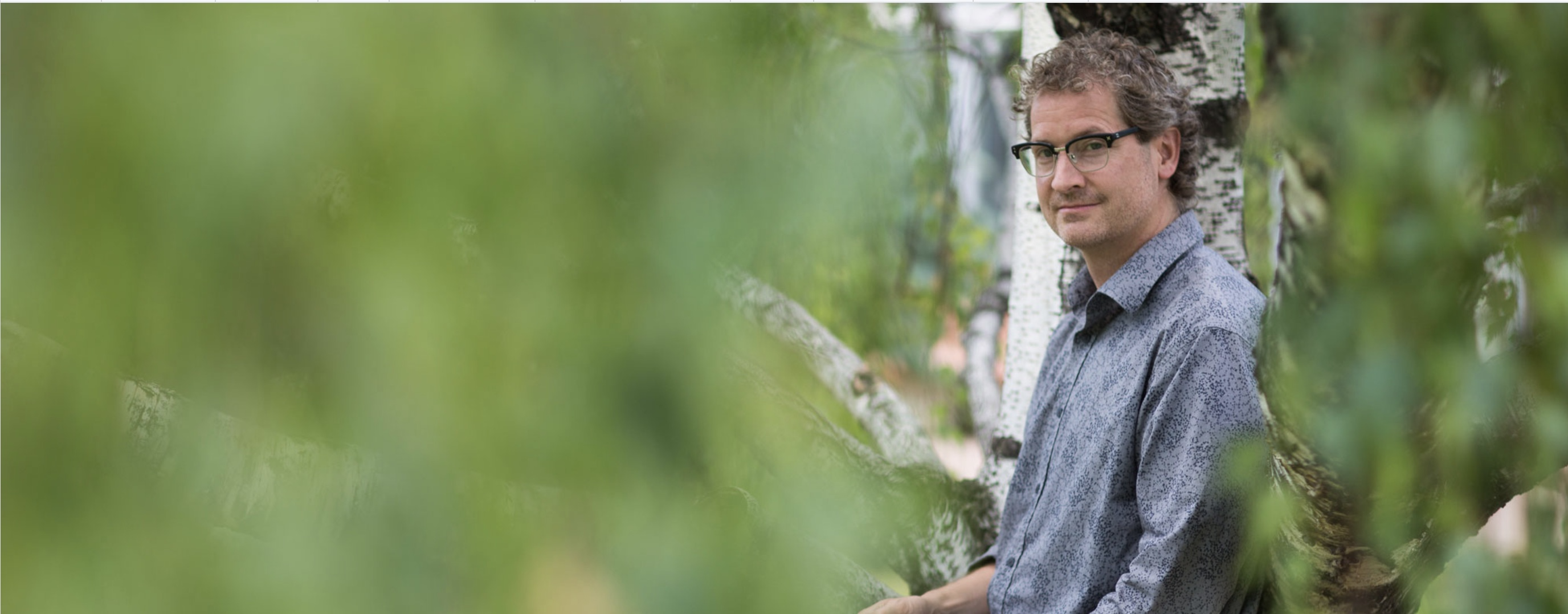
Kelly Shepherd
Kelly will draw the entwined lives of animals and humans out of his new book Dog and Moon, a book of Western ghazals and a dreamlike collection of poetry that intertwines an embodied experience of the natural world with mythology, memory, and the creative process. The book will officially be launched on March 4, here at UBCO.
Kelly Shepherd is a Cascadian son from the shadow of Hudson’s Bay Mountain, currently teaching communication in Edmonton. He holds a MFA in Creative Writing from UBCO.
11:50
Q & A on Flowing and Stillness with Christine McPhee, Lorin Medley, & Kelly Shepherd.
12:00
Lunch Break
Keeping our bodies in the conversation.

sıy̓aʔ the Food Chief provides again.
1:00
Attuning to Invasive Plants
Emma Carey
Emma’s talk will explore living space. In her words: “Conducting research on unceded syilx lands requires an anti-colonial approach as histories of colonialism are often glossed over in the discussion of introduced species. Invasive species are often claimed to be the largest threat to biodiversity, yet what about humans with an ‘invasive land ethic’? This walk will be a workshop in sharing how I notice introduced plants using multispecies ethnographic methods (sketching, poetry, photos, and audio recording). Given the recent construction around the old pond, it is a great place to look at human disruptions, how plants are impacted, and what they do to take advantage of new opportunities post-disruption.”
Emma Carey (she/her) is a settler from Ontario, and a Master’s student in UBCO’s Interdisciplinary Sustainability program. Her thesis will be on invasive plant species and how to build a less antagonistic relationship with these plants. She completed her undergraduate degree in Environmental Studies and Global Development from Queen’s University at Kingston, ON in 2021. Prior to resuming her studies at UBCO, she worked for the Weston Family Foundation’s Homegrown Innovation Challenge that fosters innovative food systems concepts for Canadian fresh fruits and vegetables. She also used to work at an organic farm in Minden, ON.


A new weed ecosystem at work and play in Vernon.
1:40
Landscaping / Landshifting
An Invitation to Apply the Interconnection of All Things
Jeanette Merrick
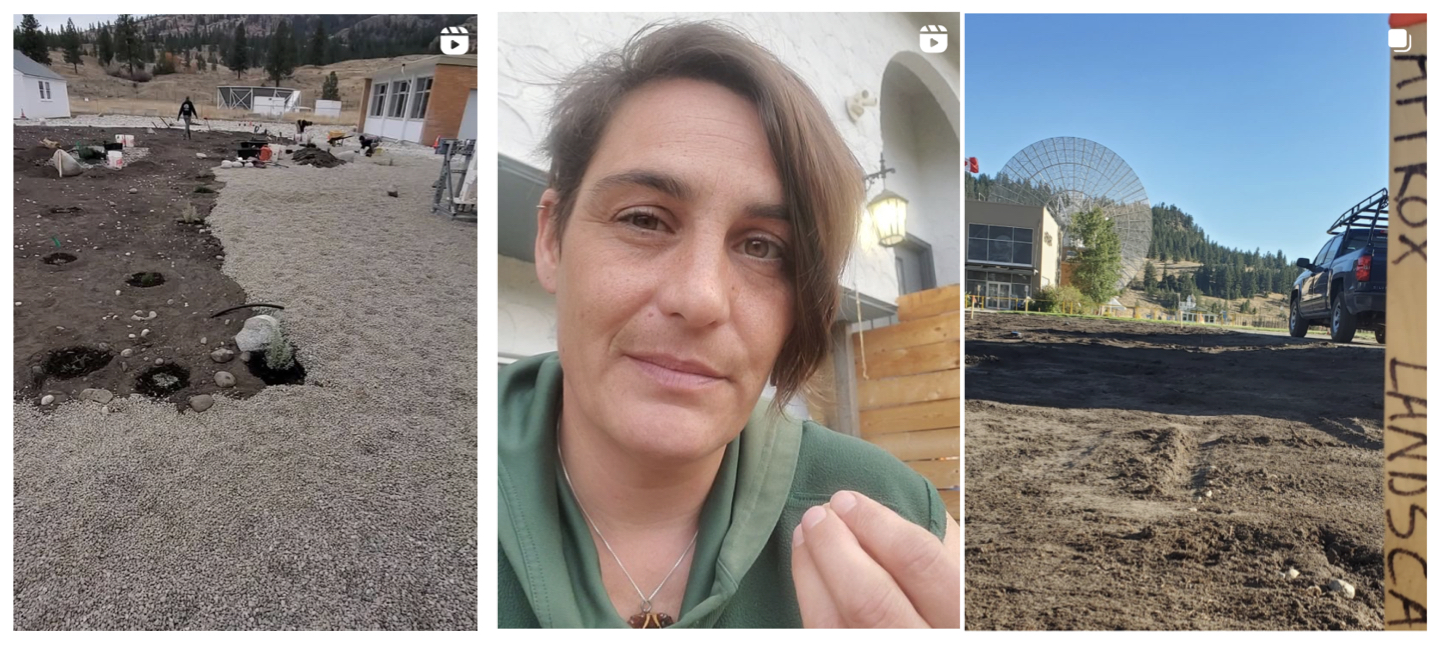
Jeanette will speak to her work introducing sustainable native landscaping to the White Lake Radio Observatory south of Kaleden. She writes: “We can no longer separate the activities of landscape changes from the knowledge of history, species at risk and (currently accepted) landscape management at this time of knowing. This location, this basin, and the significance of just one section of landscape is an opportunity to address the complexities of western science, indigenous knowing and effort towards collaborative learning.”
Jeanette Merrick is a horticulturalist and landscaper, based in Summerland.
2:20
Talismans (A Farmer’s Gift)
Stephan Torre
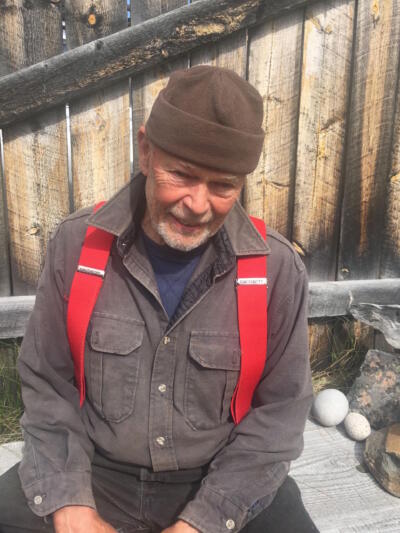
Stephan Torre has lived off the grid in Cascadia for most of his life, writing poems in conversation with his work as a farmer and citizen of the earth community. He will read poems crafted from the forms of the natural world he knows intimately and as himself. He works with wood. It shows in his carved poems.
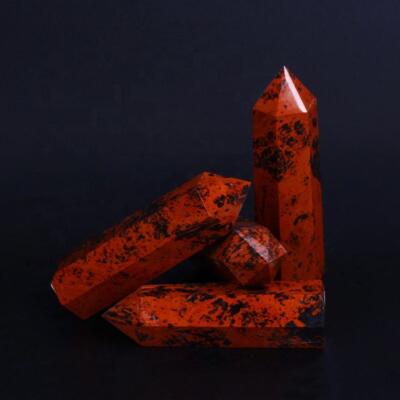
Stephen’s selected poems is Red Obsidian. He divides his time between Atlin, Saltspring and Port Townsend.
2:50
Q&A on Landscaping and Humanscaping with Emma Carey, Jeanette Merrick & Stephan Torre.
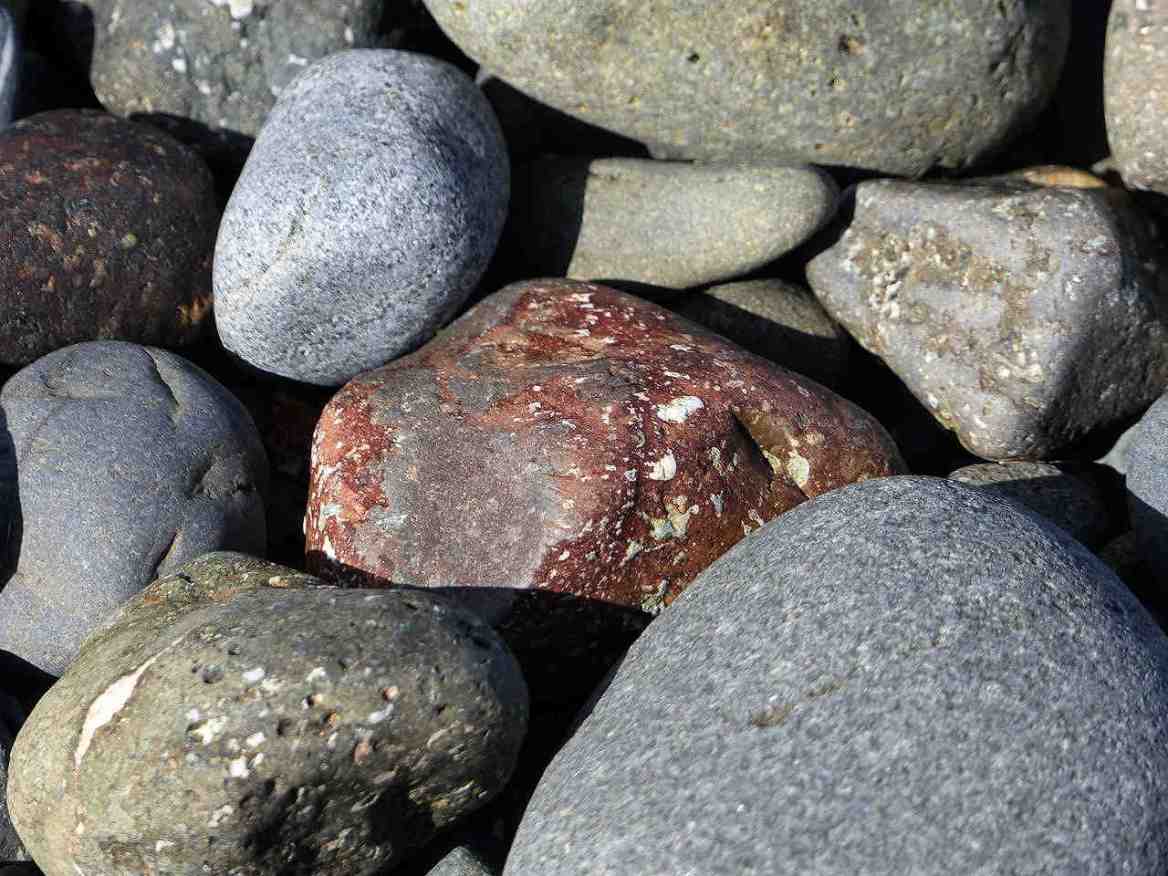
The exotic rock of Cascadia. Volcanic Islands ground down by storm at Frenchman’s Pool.
3:00
Break
Coffee. Tea. Any baking we haven’t eaten yet.

Snacking on Kinnikinnik west of Kaslo
3:20
Solar Cycles
Sean Arthur Joyce
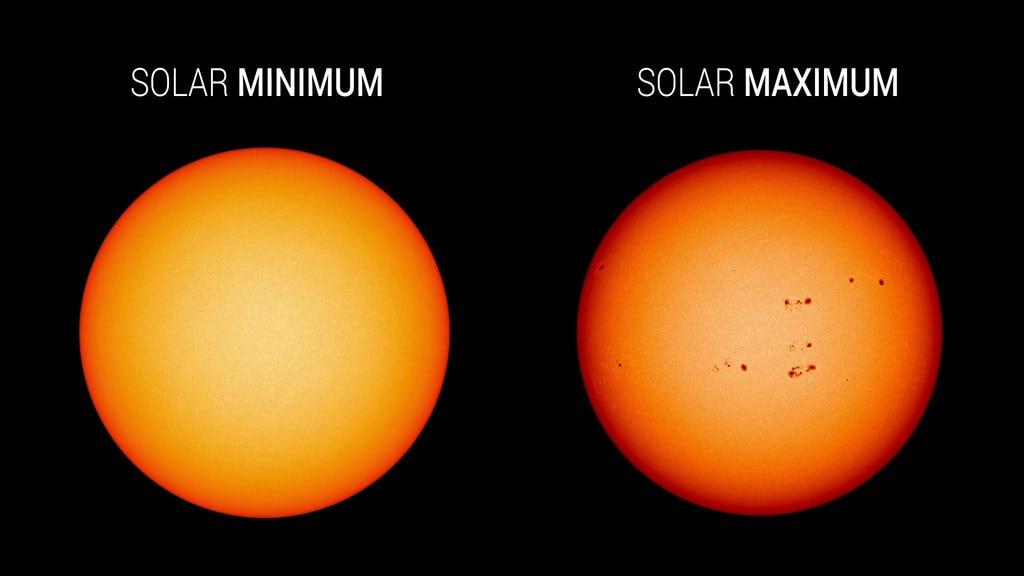
The Earth and the cosmos are in a highly active state right now, coinciding with human social chaos. Coincidence? Or causation?
Sean Arthur Joyce Sean is a poet and columnist. His 12th book is Pole Shift & Other Poems. Sean blends science and poetry to discuss the question: Could cosmological and terrestrial events be having an impact on human society during this time of worldwide sociopolitical upheavals?


3:50
We Have Always Been: Non-human Kinships in Memory
Amy Wang notes that “Place is remembered through sensory details; these may be physical, emotional, or incidental. Yet the non-human are often excluded when considering such memories. In this talk, I outline a research trip to childhood memory sites, where I revisited non-human kinships. I will also read poetry produced from this trip.”
Amy Wang is a second-year UBCO MFA student whose work focuses on intersectionality within Chinese-Canadian experience. Funded by SSHRC and the BC Arts Council, you can find Amy’s writing in That’s What [We] Said, Paper Shell, The Goose, and more.

4:20
An Outside Perspective on Place from the Inside, the Outside and In Between
Soha Aftab
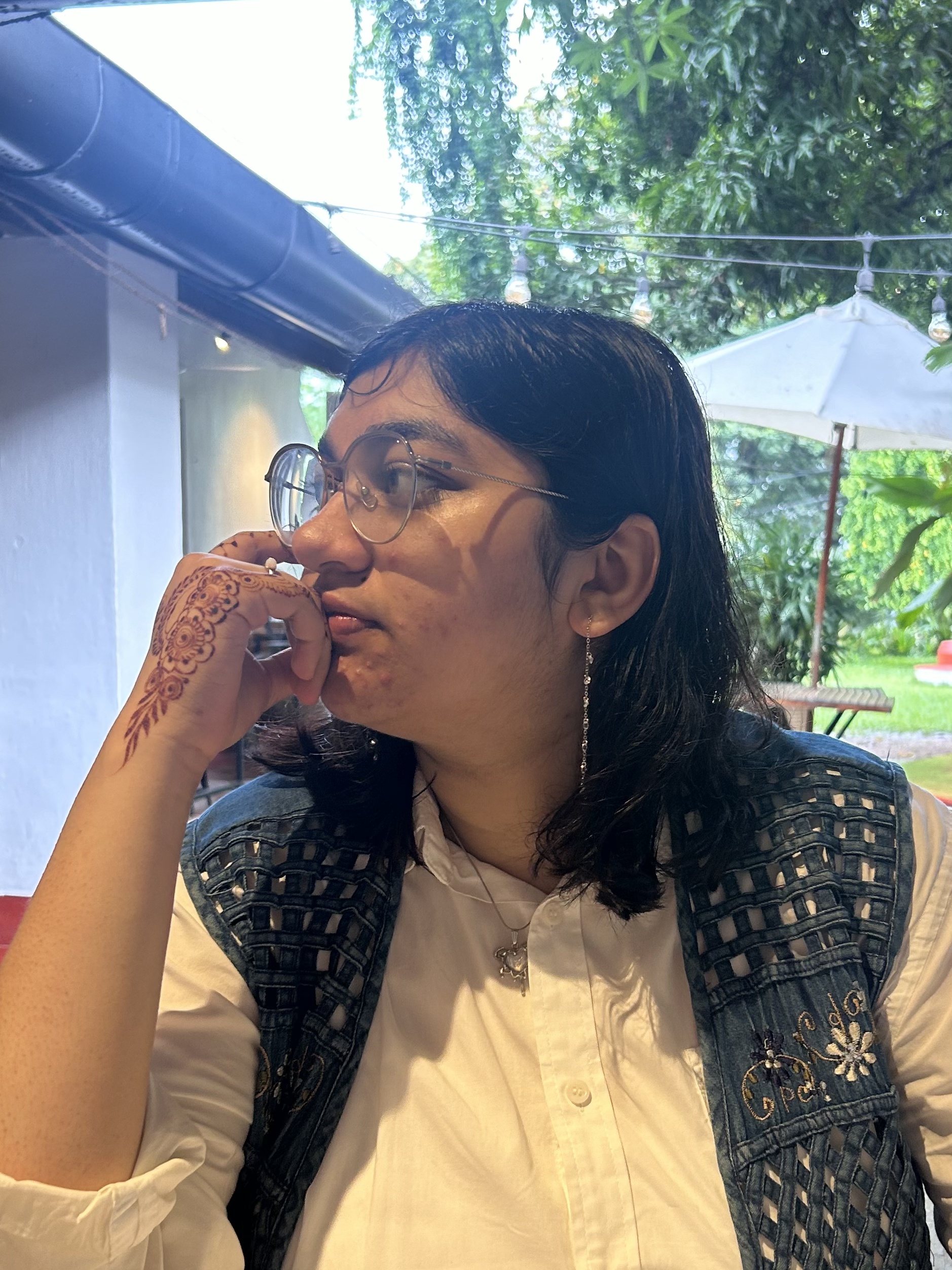
Soha writes “The talk will focus on the environmental connection to the water and the ocean that I have in my hometown in India, the lessons it has taught me concerning my identity and my family and the generational patterns that the ocean represents to me and my family over generations, as immigrants within India. I will first read a long-form prose poem about my connections to the sea and then go into a PowerPoint presentation about the poem, my connection to the ocean using personal anecdotes and how thinking about the environment in this way can empower us to think about our connection to land differently..”
Soha Aftab is a second-year English and Cultural Studies student at UBCO. They work with creative mediums, such as zines, long-form oral poetry and digital mediums. Their work primarily focuses on South Asian studies and the connection between land, community, family and queer themes of gender and sexuality, and they bring a personal touch to their essays, articles and poetry. You can read more of their work at the Phoenix News at UBCO.
4:40
Indigenous Cultural Burning in the B.C. Interior
Don Gayton
Don will provide brief explanation of dendropyrochronology, a key methodology that allows us western scientific types to verify this longstanding cultural burning tradition. He will bring a fire-scarred tree cookie sample from just north of the campus, that shows the fire history dating back to the 1700s, for folks to look at.
Don Gayton works as an ecologist, specializing in grasslands, grazing management and fire ecology, and he “writes in his spare time”. He says, “In the last century, the physicists interpreted science for the public; in this next beleaguered century, we ecologists will get our turn.” He is humble. His books The Grassland Mechanism and Landscapes of the Interior are must reads for people of the bunchgrass and ponderosa pine biomes.

5:00
Q&A on Perspectives with Sean Arthur Joyce, Amy Wang, Soha Aftab, & Don Gayton
5:20
Grad Readings, Open Mic
and Forward Planning, too.
6:00
Farewell
Categories: Arts, Cascadia, education, Ethics, Land, Land Development, Pacific Northwest, poetry, Spirit, Sun, Urban Okanagan

 Okanagan Okanogan