


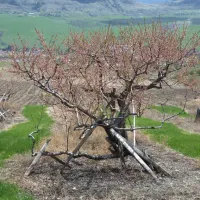


Sometimes, prophecy comes from a crow, telling the news.
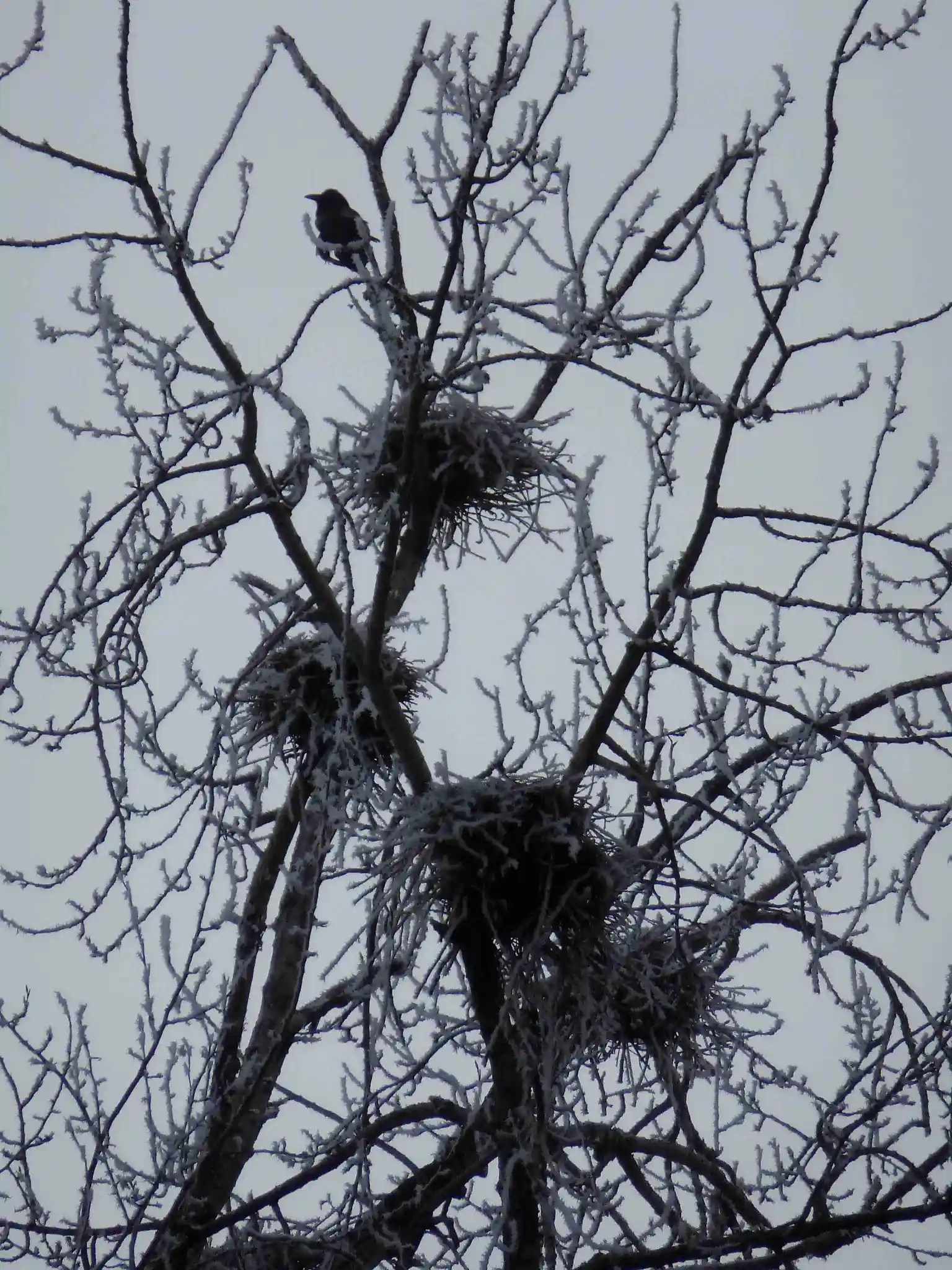
Town Crier in a City of Crows. Photo by Harold Rhenisch
Sometimes, it’s a man. Even if it isn’t his choice. One was called Slough-Keetcha. I introduced his story earlier, here and here, and here.
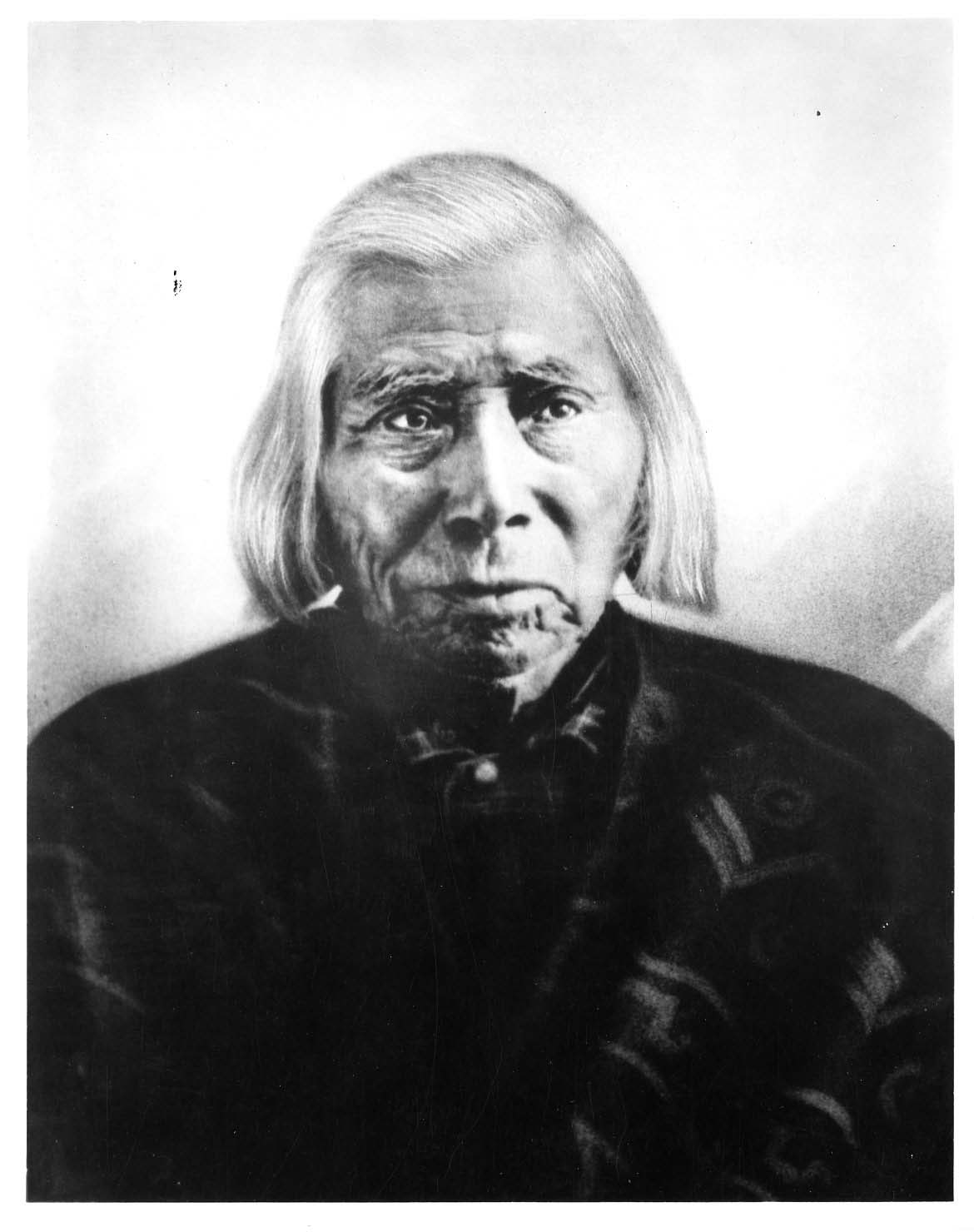
Slough-Keetcha in Old Age
Spokane Chief Garry (1811?-1892), 1892
Photo by Sherman Blake, Courtesy UW Special Collections (Neg. L-93.68.10.10)
The lives of the boys like Slough-Keetcha sent to Assiniboia by their fathers to learn Christianity, so they could use it to guide their people through the machinations of White power ended tragically, as my earlier posts pointed out. Since then, we have travelled to Pierre’s Hole to get some perspective on Indigenous power in these equations. Those posts are here. Starting with Pierre’s hole, the Rendezvous system of mobile fur camps started to bring in missionaries, including Jason Lee in 1834…
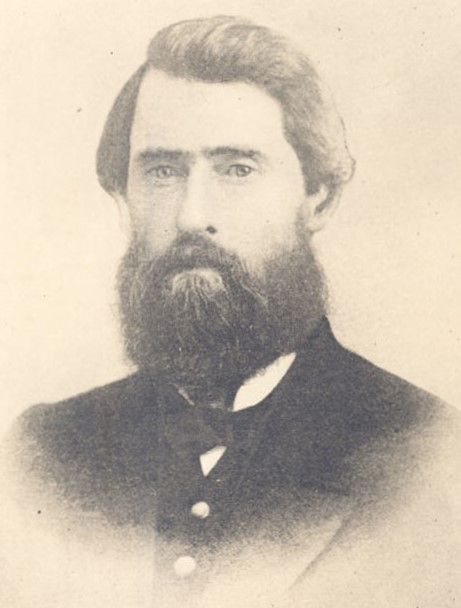
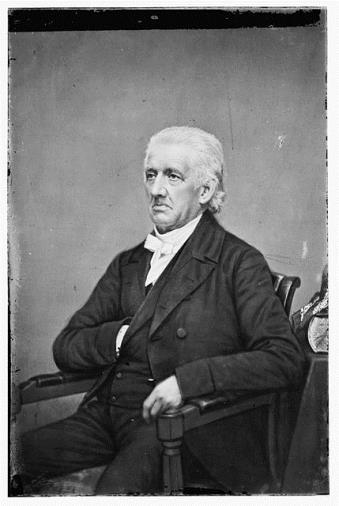
A Canadian Missionary to the Nez Perce, he Advocated for American Settlement.
… Marcus Whitman in 1835, Bishop Demers (his story is here) in 1838 and Pierre-Jean De Smet in 1839.
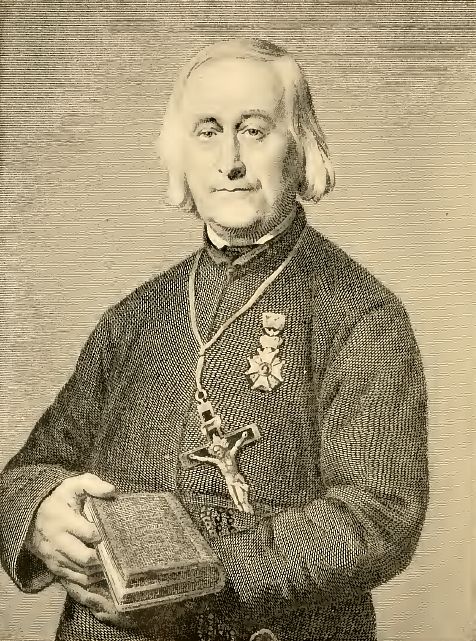
Father De Smet wearing Order of Leopold (Belgium) decoration. Source.
Usually, it was a military order of knighthood. Strange.
Things changed rapidly. Demers came to minister to White French Canadians. Lee, Whitman and De Smet came to minister to the Nez Perce, although they had been invited by the sons of Iroquois (Indigenous French Canadians!) in the west. The last missionary of vital importance to this story, Father Charles Pandosy, came in 1847, after the Rendezvous system had passed, to plug the gap after the other missions had failed to Christianize the native population, which he had to do under the conditions of war caused in part by the behaviour of the others. Between the five of them, they represent much of the Christian misunderstanding that became a new expression of the fur trade and, compromised by the history that came before it, especially the tragedy of Slough-Keetcha’s generation and the debacle of Pierre’s Hole, all Indigenous efforts for political and cultural survival, forms one of the cultural pillars of the Pacific Northwest. So, before we follow Jason Lee into this story, just a reminder that if we gather all the players to the table, we should not forget the really important spiritual players, such as Ponderosa Pine:

You can read more on her here.
Let’s keep her and the crows in mind. This is not just a human story. However, sometimes its prophets are human. As Larry Cebula relates in Plateau Indians and the Quest for Spiritual Power, 1780-1850…

In the winter of 1830 Spokane Garry [Slough-Keetcha] served as a translator for one of Francis Heron’s sermons at Fort Colville … [to] … chiefs of the Spokans, Nez Perces, Coeur d’Alenes, Kutenais, Pend d’Oreilles, Sanpoils, and Kettle Falls Indians. Garry also gave sermons of his own that winter and the Indians were deeply impressed with what they had heard. One especially attentive listener was Hol-lol-sote-tote, a Nez Perce chief whose negotiating skills caused whites to dub him “lawyer.” Lawyer brought home the news that the doctrines of the Columbian Religion as practiced were incomplete. He had met a Spokan youth who had learned the whole story of the white man’s beliefs from the missionaries at Red River.
Larry Cebula. Plateau Indians an the Quest for Spiritual Power, 1700-1850.
Lawyer was the son of Twisted Hair, who had guided Lewis and Clark across the plateau twenty-five years earlier in the attempt to develop a long-term partnership between nations. When news of the devastating malaria epidemic that was sweeping through the Lower Columbia reached the Nez Perce, they dropped all hesitation. The Columbian Religion that Cebula mentions was a nativized form of Catholicism adapted from the Christianized Iroquois of Kahnawke who paddled David Thompson across the continent in 1809, stayed, married, and raised families in Salish and Nimiípuu country. A full discussion of the political and social context of this meeting of cultures is here. And, yes, some of its prophets are not human.

Some people see stuff you can’t, except with their help.
So it was that in the spring of 1831, inspired by disease and Slough-Keetcha, the fur trade reversed direction and flowed East. Seven Nez Perce and Flathead men from Iroquois families set out for St. Louis to secure “Christian teachers” and the “Book of Heaven,” prophesied by the raven so long before. They brought William Clark’s Nimiípuu son, Daytime Smoker (his story is here) along, so that family connections and the memory of Twisted Hair’s friendship with Clark a generation before could smooth the way. Clark, however, didn’t answer the social, familial or political context of their plea.
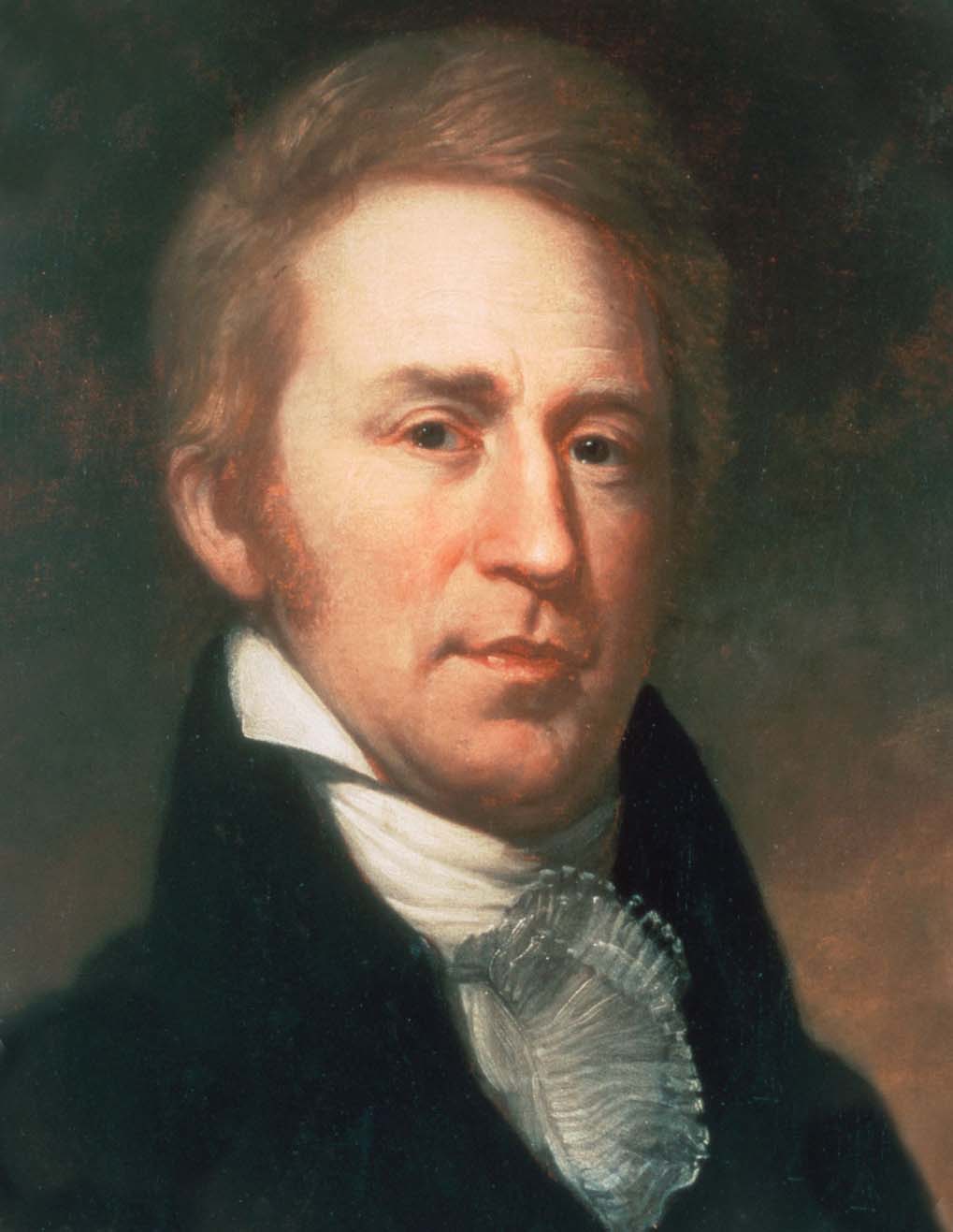
William Clark by Charles Willson Peale. Source.
He was now an important politician and not the young man Twisted Hair had taken at his word, although perhaps not yet the Napoleon he would become as the 4th Governor of Missouri:
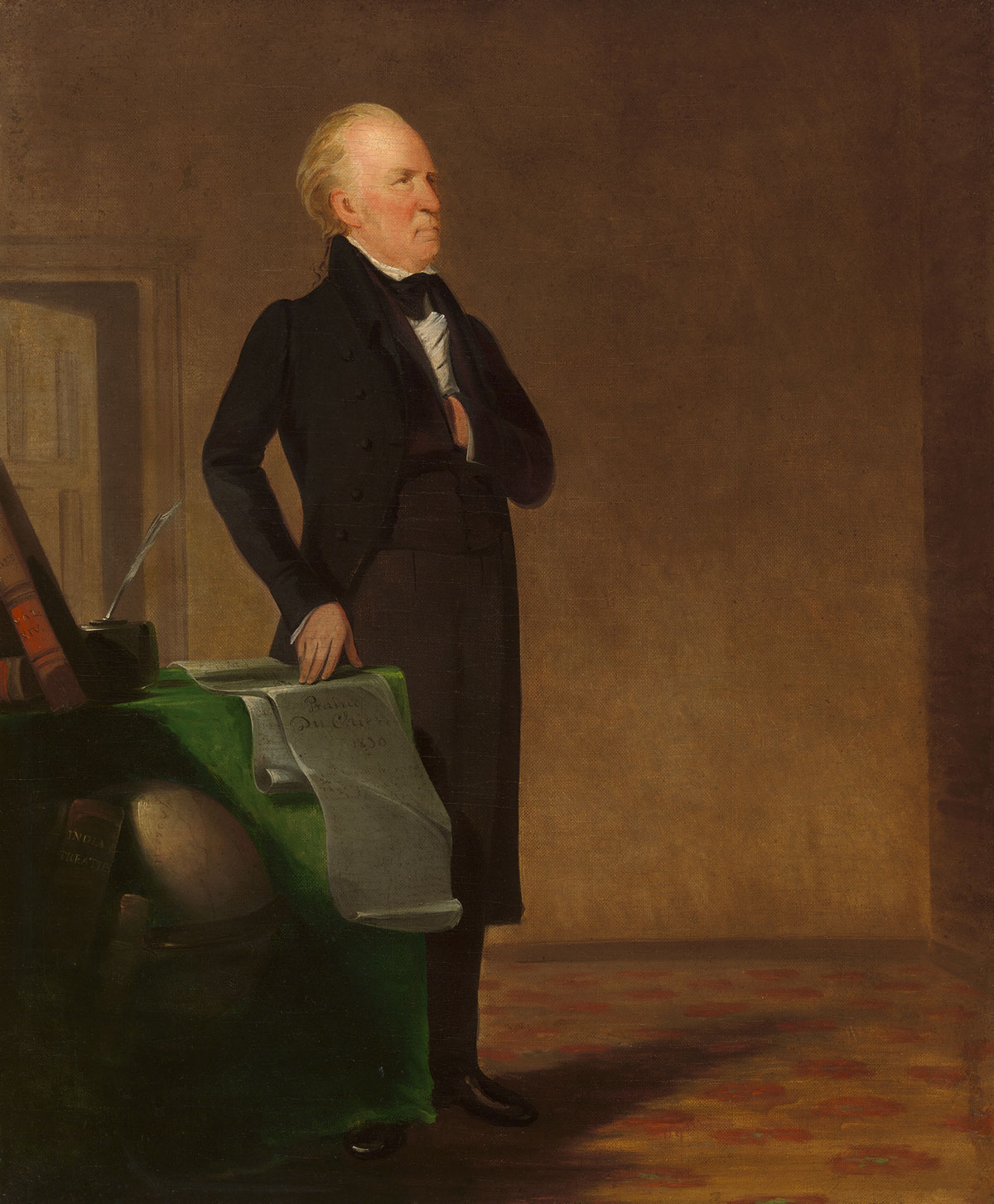
Clark by Catlin. Missouri Encyclopedia.
The call didn’t, however, die. It was presented, second and third hand (and perhaps more), by a New York merchant, Gabriel P. Disoway’s account of the delegation meeting the Missionary and Wyandotte native William Walker in Clark’s house in St. Louis. Walker was a wealthy mixed race man with an estate and slaves. He had also been educated at a mission school in Sandusky and subsequently worked as a translator for the Indian Department, headed by William Clark in St. Louis. Walker was the leader of Wyandottes betting on Christianity as a force that would keep them on their land. Many Wyandottes who had not converted to Christianity saw expulsion to Kansas as a means of retaining their own spiritual traditions. It was an irony that they had to speak to the government through Walker, who didn’t agree (perhaps because he wished to keep his slaves and his business interests; perhaps because, as he was half white, he considered himself to be white). In other words, Walker’s exchange of letters with Disoway took place within a racial context, in a year of slave revolts and the first black lay preachers. It was possible to change your race in 1831, or think you could. Mixed race Wyandottes could become Indians in Kansas. Others could become White in Ohio. Here’s Walker’s letter to Disoway, published in 1933 in the Methodist journal The Christian Advocate and Journal and Zion’s Herald.
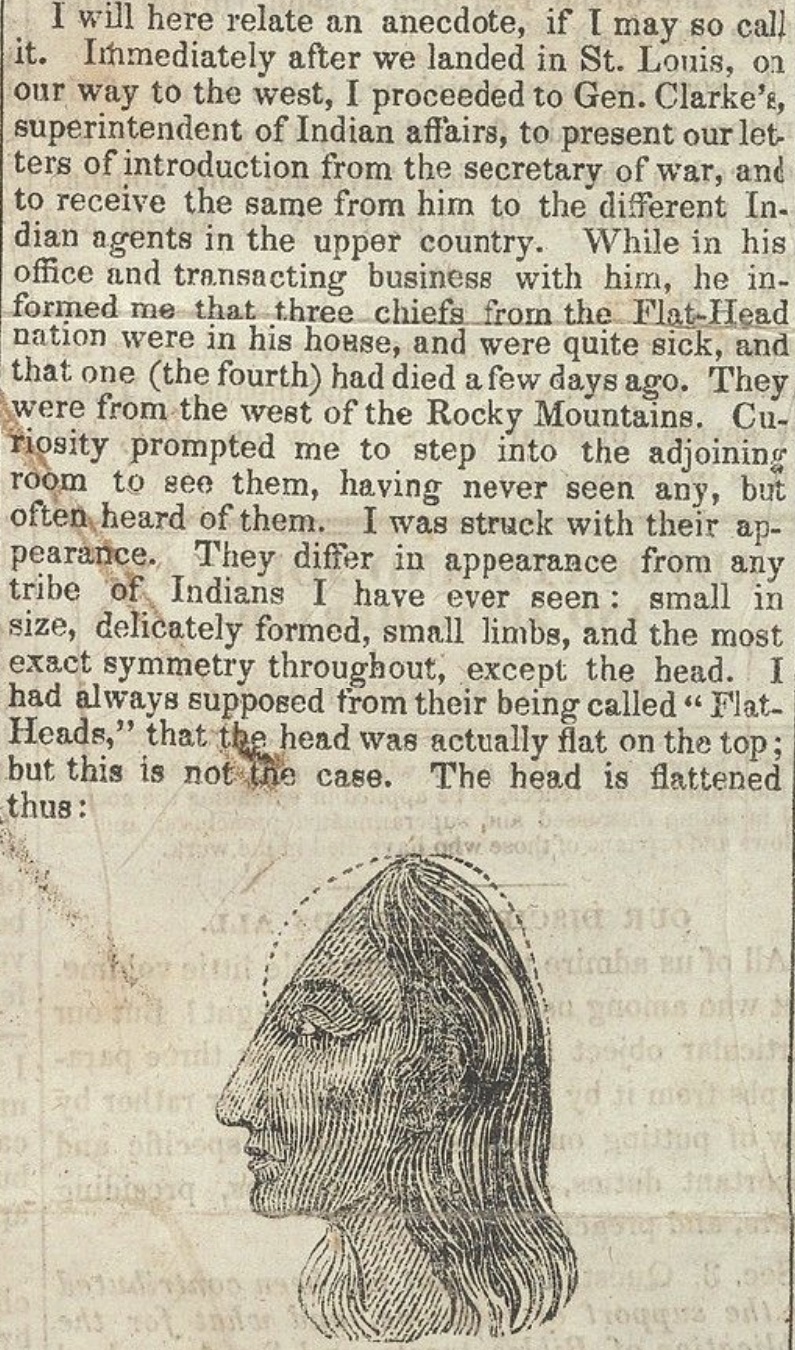
The drawing is problematic. No Salish or Nimiípuu or Iroquois people ever flattened their heads. He was making it up. He did, however, go on, with more curiosities:
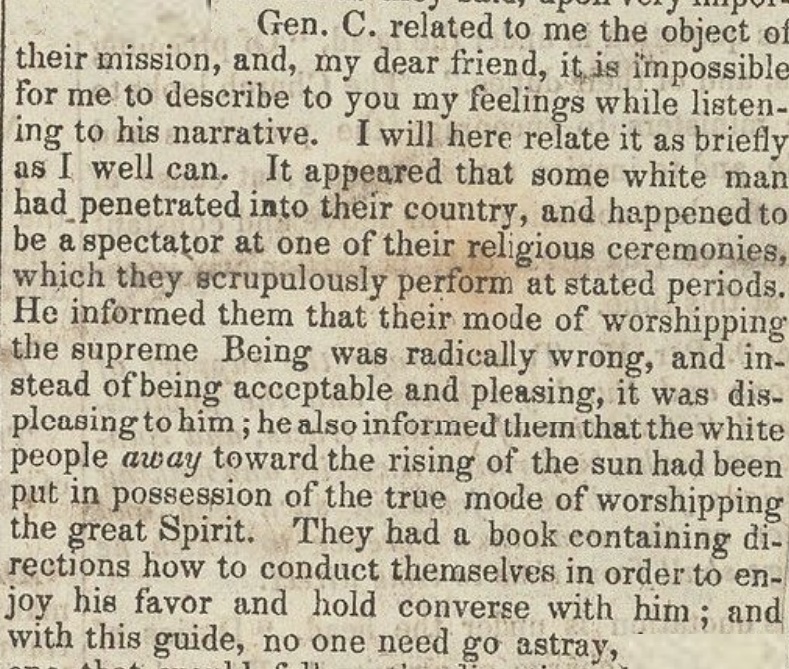
Isn’t it curious that Walker didn’t speak to these Native men? We know he didn’t, because they were practicing Catholics, in a rudimentary form introduced by the Iroquois. What’s more, he certainly heard their call, or heard some story and passed it on, just through his own filters, that’s all. Instead of hearing of their rudimentary Catholic practices, he heard of their Native worship of the Great Spirit. Instead of hearing of the need for political support in a spiritual form, he heard a call for the salvation at the heart of Methodism: steady progress in education and morals, followed by a sudden miraculous transformation, a kind of elevation of the body into the radiance of God. It is a beautiful and moving conception, but an incorrect assessment of either the situation or the people.
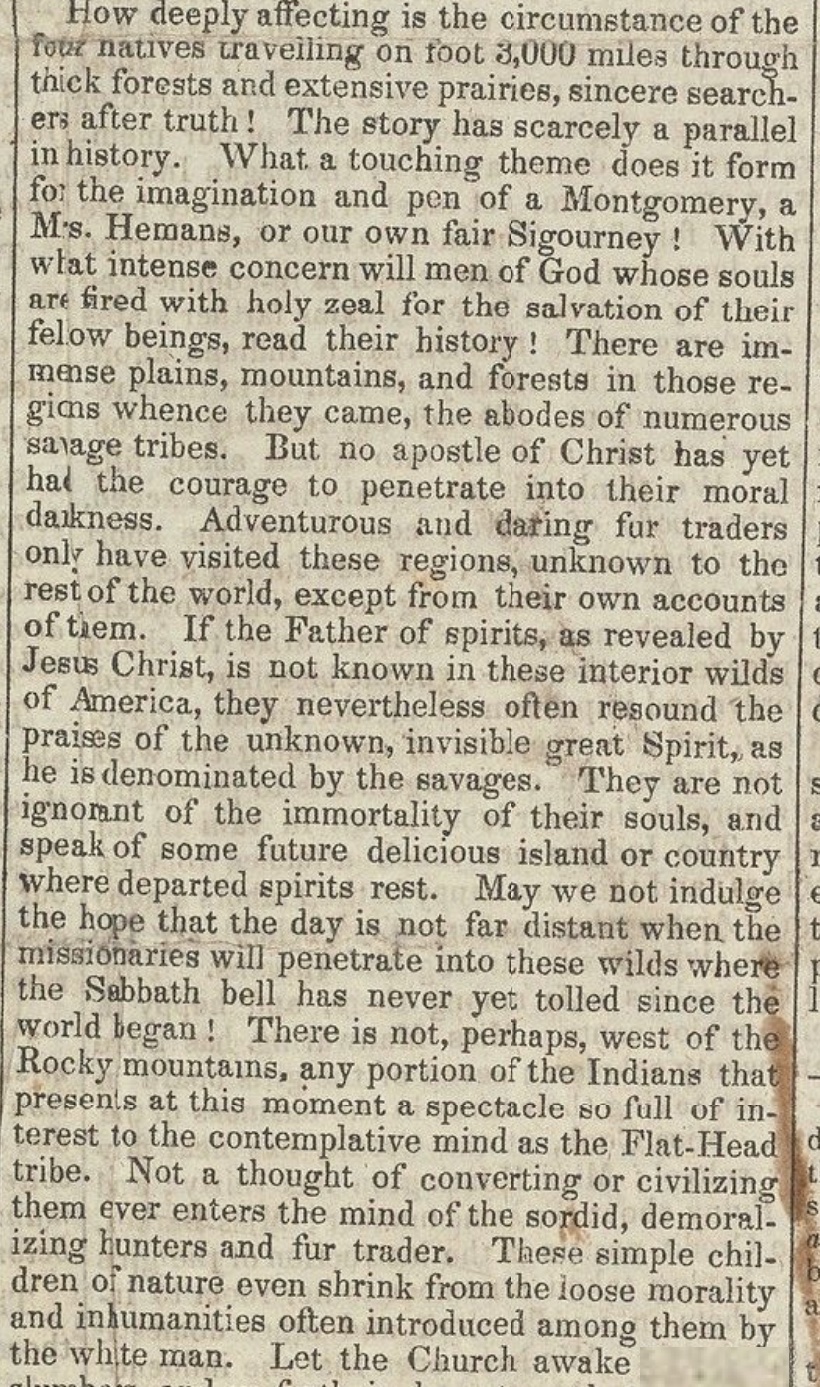
It was a time of apocalyptic narratives. The world was expected to end soon. Its final days would culminate their methodical approach of knowledge leading one to turn to God and choose morality over sin in a sudden complete revelation and ascension into heaven. How curious again. Here’s Walker one more time:
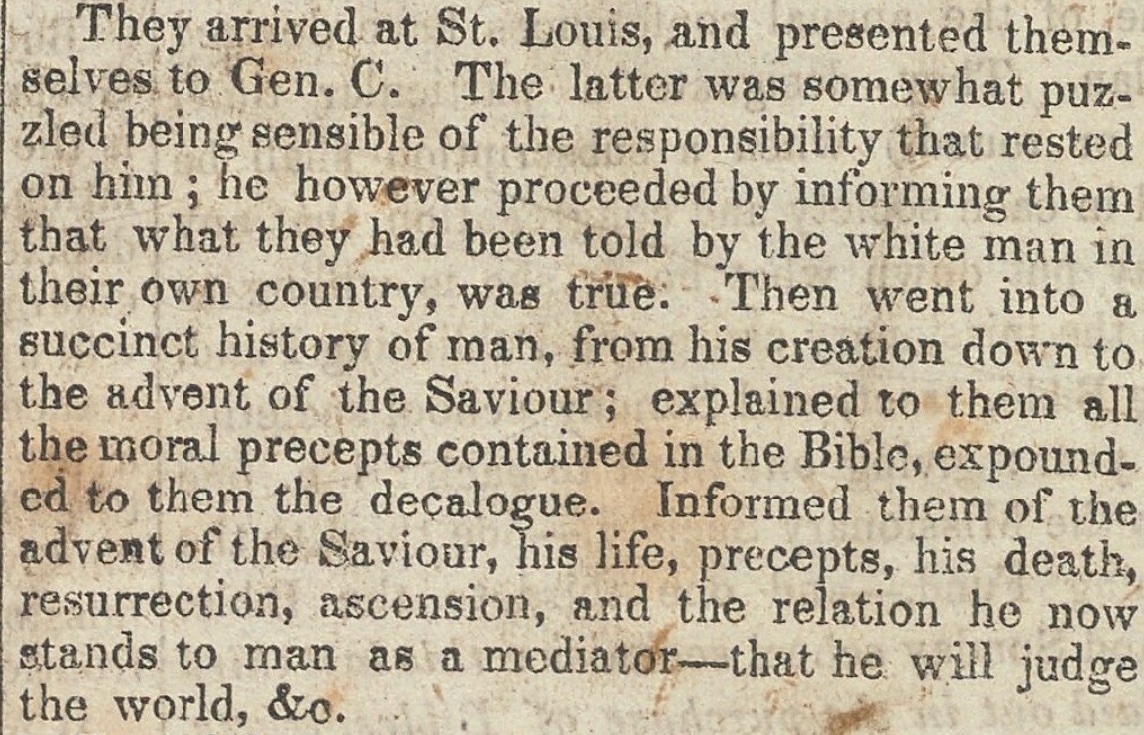
It is a bit hard to believe that a man who tracked to the Pacific and back in his youth, the only man in the United States who had met their peoples on their own terms, a busy national administrator, should spend his precious time with them giving them a sermon. It’s even hard to say if this is Walker’s voice at all, and not just Disoway. It sure sounds like it. For an extensive treatment of the ecstatic traditions of the Methodist Church at that time, as it moved from civilization to the forests…

…, have a look here.
These ecstasies of going back to the land in the imminent appearance of Heaven on Earth was commonly expressed with the phrase that the land was “white for the harvest.” It’s an odd term from the Book of John:
Say not ye, There are yet four months, and then cometh harvest? behold, I say unto you, Lift up your eyes, and look on the fields; for they are white already to harvest.
John: 4:35.
It is Jesus’s admonition that waiting for spiritual enlightenment is not the right path: when the grain is heavy in its ears in the fields and the whole field glimmers white in the mid-day sun, it’s time to bring the crop in. The enlightenment is there. You don’t have to measure or weight anything or seek counsel. You just know. Daniel Keating and Mathew Levering provide a Christian reading in their Notes to Thomas Aquinas’ Commentary on the Gospel of John, Chapters 1-5:
… we should point out that harvest time is the time when the fruit is gathered; and so whenever fruit is gathered can be regarded as a harvest time. Now fruit is gathered at two times: for both in temporal and in spiritual matters there is nothing to prevent what is fruit in relation to an earlier state from being seed in relation to something later……there is a certain gathering of a spiritual harvest; and this concerns an eternal fruit, i.e., the gathering of the faithful into eternal life, of which we read: “The harvest is the end of the world” (Mt 13:39). We are not here concerned with this harvest. Another spiritual harvest is gathered in the present; and this is understood in two ways. In the first, the gathering of the fruit is the converting of the faithful to be assembled in the Church; in the second, the gathering is the very knowing of the truth, by which a person gathers the fruit of truth into his soul.
Commentary on the Gospel of John. Chapters 6-12 / St. Thomas Aquinas ; translated by Fabian Larcher and James A. Weisheipl ; with introduction and notes by Daniel Keating and Matthew Levering.
A more contemporary term for the same impulse is “make hay while the sun shines,” because, well, tomorrow it might rain.
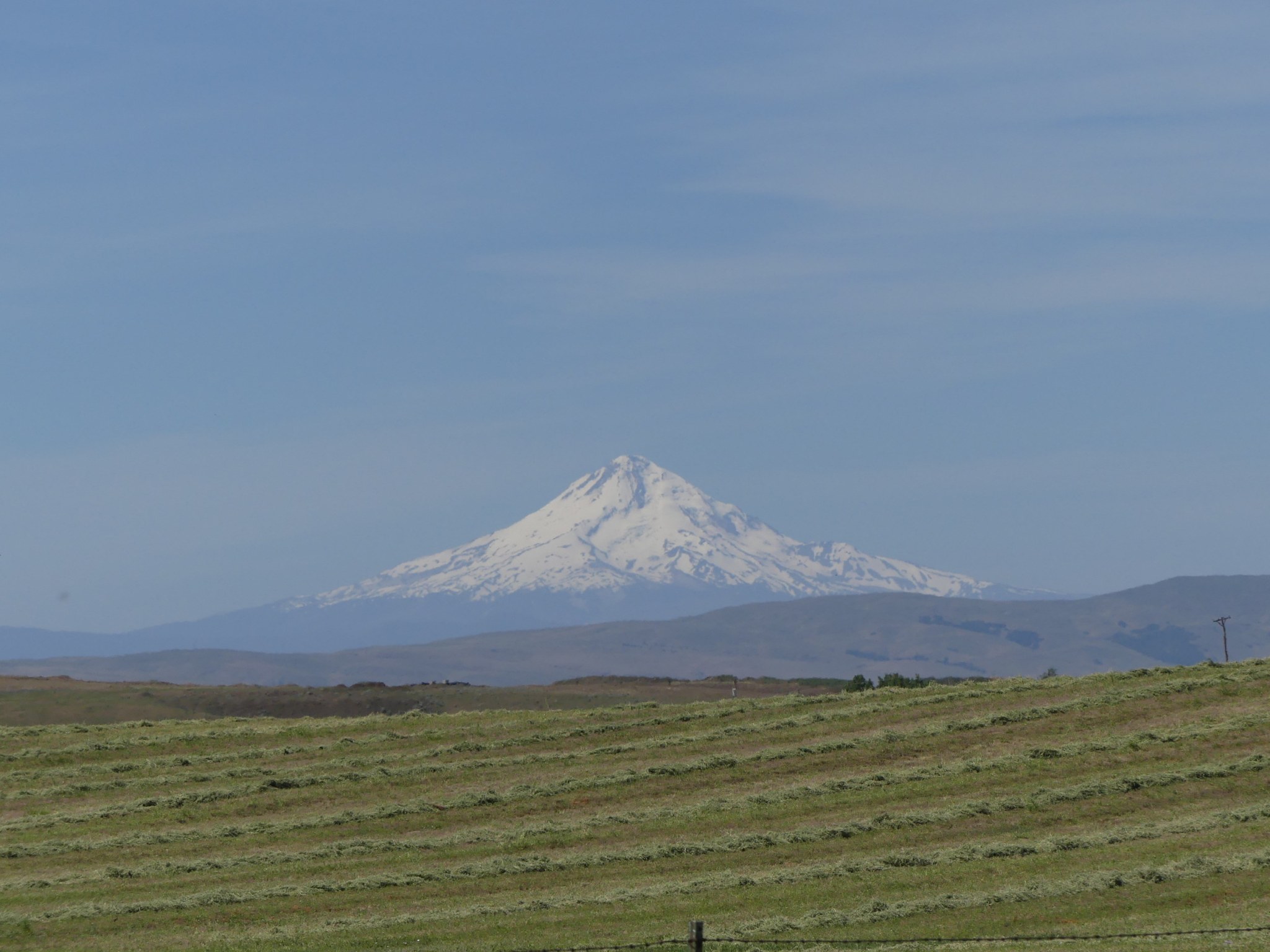
Hayfields and the Ancestor Pahto Today
In the context of Yakama country, the foreground of this ancient spiritual image is Christian. But only the foreground. The rest is a sacred Yakama story that, in another language, English, is called the land. It is a lot more than that. Photo by Harold Rhenisch.
Unfortunately, the 1831 reading lacked Keating and Levering’s sophistication, and opted for a “The harvest is the end of the world” scenario. Faith, and a place in Heaven, would be proven by decisive action. Accordingly, when the American Board of Commissioners for Foreign Missions in Boston heard the call, they pulled back funding from missions in India, where there were millions of souls to be “reaped”, to concentrate on converting the people of the Columbia Plateau to Christianity before they all vanished. Presumably, it was a form of spiritual triage: the millions in India could wait. The plateau “Indians” were deemed to be ready for God to reveal himself through them immediately. In Oregon, God was present. He was shining out. If you went there, you would be in His presence. Here’s how the Connecticut Presbyterian Minister Lyman Beecher described this harvest time in his bestseller “A Plea for the West” in 1835.
But whatever we do, it must be done quickly: for there is a tide in human things which waits not, moments on which the destiny of a nation balances, when the light dust may turn the right way or the wrong.
Lyman Beecher
The request set the United States aflame. In early 1834, a Methodist missionary group led by the newly-ordained Jason Lee left with an expedition which Nathaniel Wyeth, who had lost all his men after the shoot-out at Pierre’s Hole and had wound up in the HBC Columbia District penniless, had re-organized to compete with the Hudson’s Bay Company to harvest the furs of the West. Lee’s assignment was to harvest the white souls of the Flatheads who had arrived in St. Louis in 1831. Wyeth’s failure is touched on here. Lee, however, abandoned his mission, under the counsel of Hudson Bay Company Factor Dr. John McLaughlin, who advised him to set up his mission among the Canadians on French Prairie, rather than among the Flatheads. McLaughlin’s motives are curious, but unknown. Here’s what he wrote in a journal:
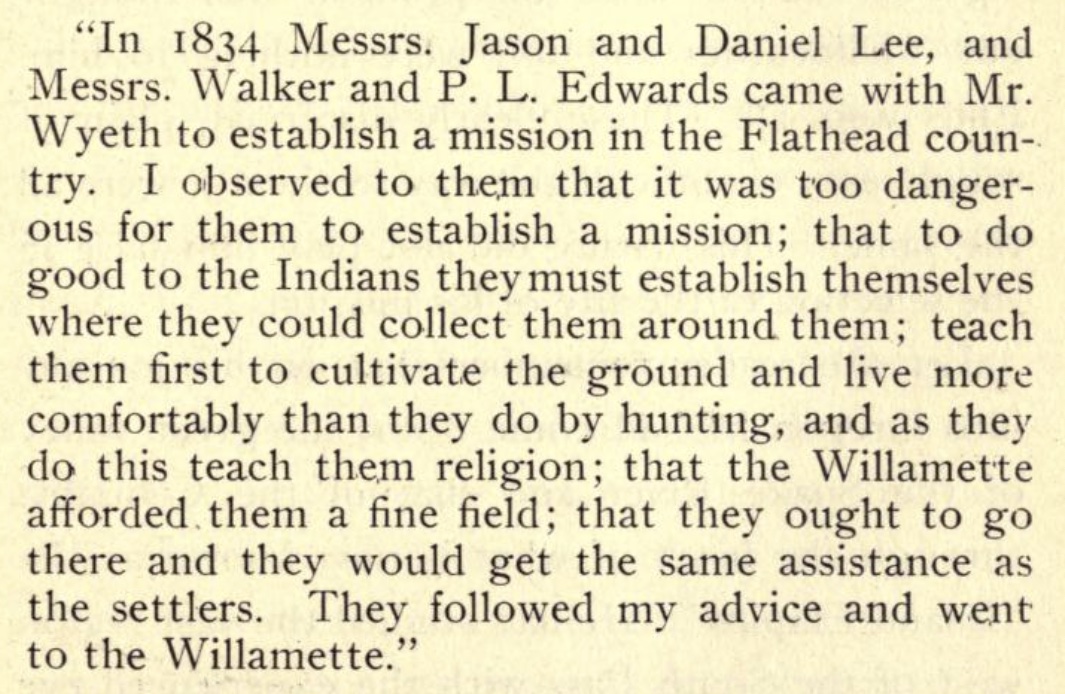
Curious. Such settlement was in violation of the Hudson Bay Company’s Charter and in opposition to the policies of the HBC. Yet the Willamette was as much HBC Territory as the Bitterroot Valley. Curious. Source: Missionary history of the Pacific Northwest : containing the wonderful story of Jason Lee : with sketches of many of his co-laborers, all illustrating life on the plains and in the mountains in pioneer days, Harvey K. Hines, 1898.
Here are some possible reasons he might have advocated a path seemingly at odds with his own interests:
- He was attempting to keep the Americans out of Washington, to preserve it for the British;
- He felt Lee was too tender to withstand the brutality of the frontier (translation: he’d have difficulties with the murder and violence that was used to control the plateau people at the time);
- He wanted Lee and his Methodism south of the Columbia, where he could keep an eye on him, and where he was clear of potentially British territory to the north;
- He didn’t want Lee teaching farming and diverting the attention of the Flatheads from catching beavers and selling them to the HBC;
- He didn’t trust a Canadian who had become an American, perhaps because of old hurts at the trading of assets at Fort Astoria that lost the War of 1812 for the British in the West;
- Although he was a Catholic, he’d had it with Bishop Demers;
- He was fed up with the HBC;
- All of the above.
Lee’s character, however, is more clear: he really did abandon his mission to the Flatheads before even giving it a chance. The Methodists were furious. The Salish and Nimiípuu call for spiritual enlightenment remained unanswered. Perhaps because children died. Here is Reverend Hines, failed candidate for Governor of Oregon, explaining it all for us again:
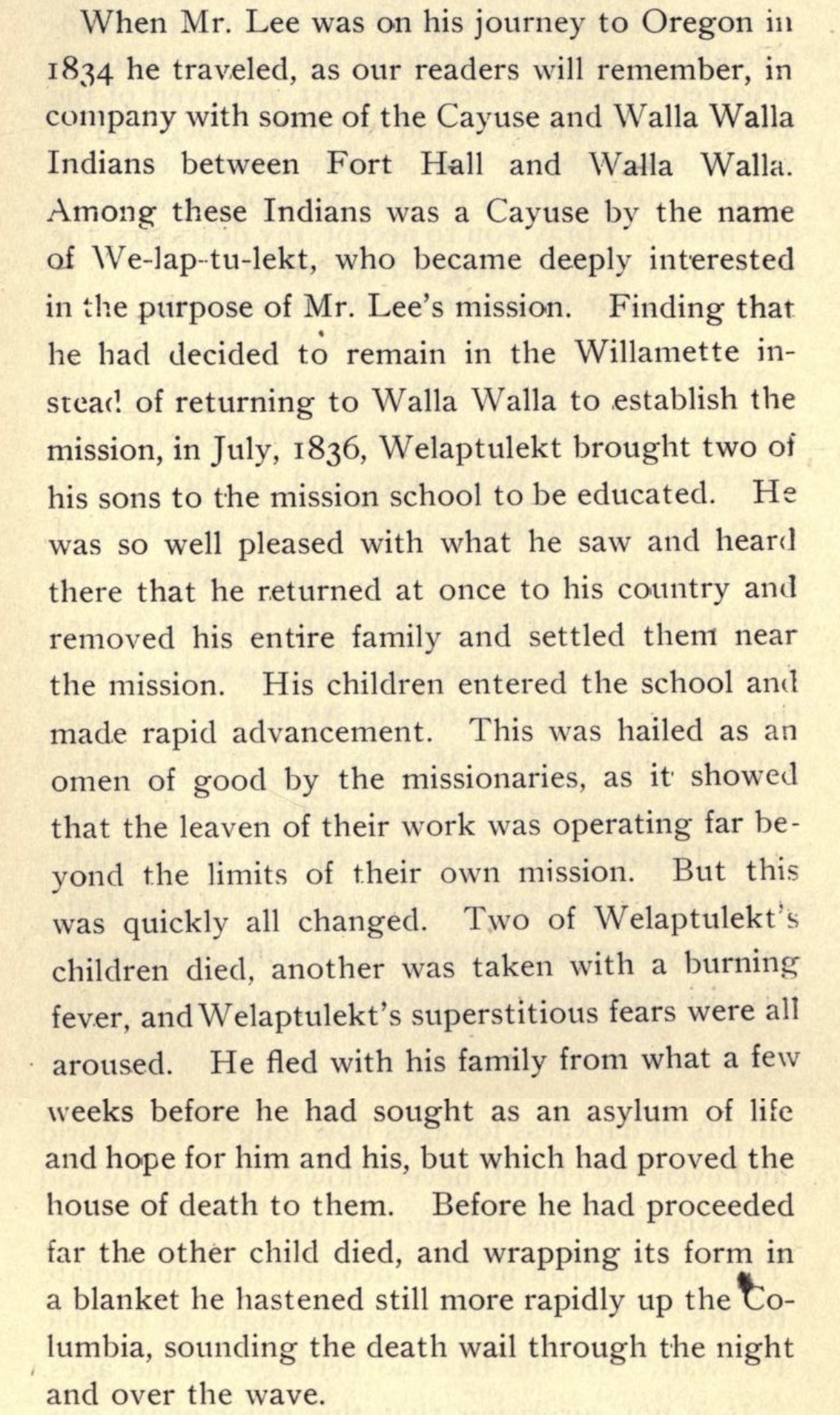
A lot more children than just Welaptulekt’s died at the school, due to the rapid spread of disease in the dormitories. Tellingly, Hines chastises Welaptulekt with superstition, rather than crediting him with the simple and universal fear of losing his children, who had been healthy before. What an awful man. Source: Missionary history of the Pacific Northwest : containing the wonderful story of Jason Lee : with sketches of many of his co-laborers, all illustrating life on the plains and in the mountains in pioneer days, Harvey K. Hines, 1898.
The history of the Pacific Northwest was set. Hines, however, keeps blaming the victims:
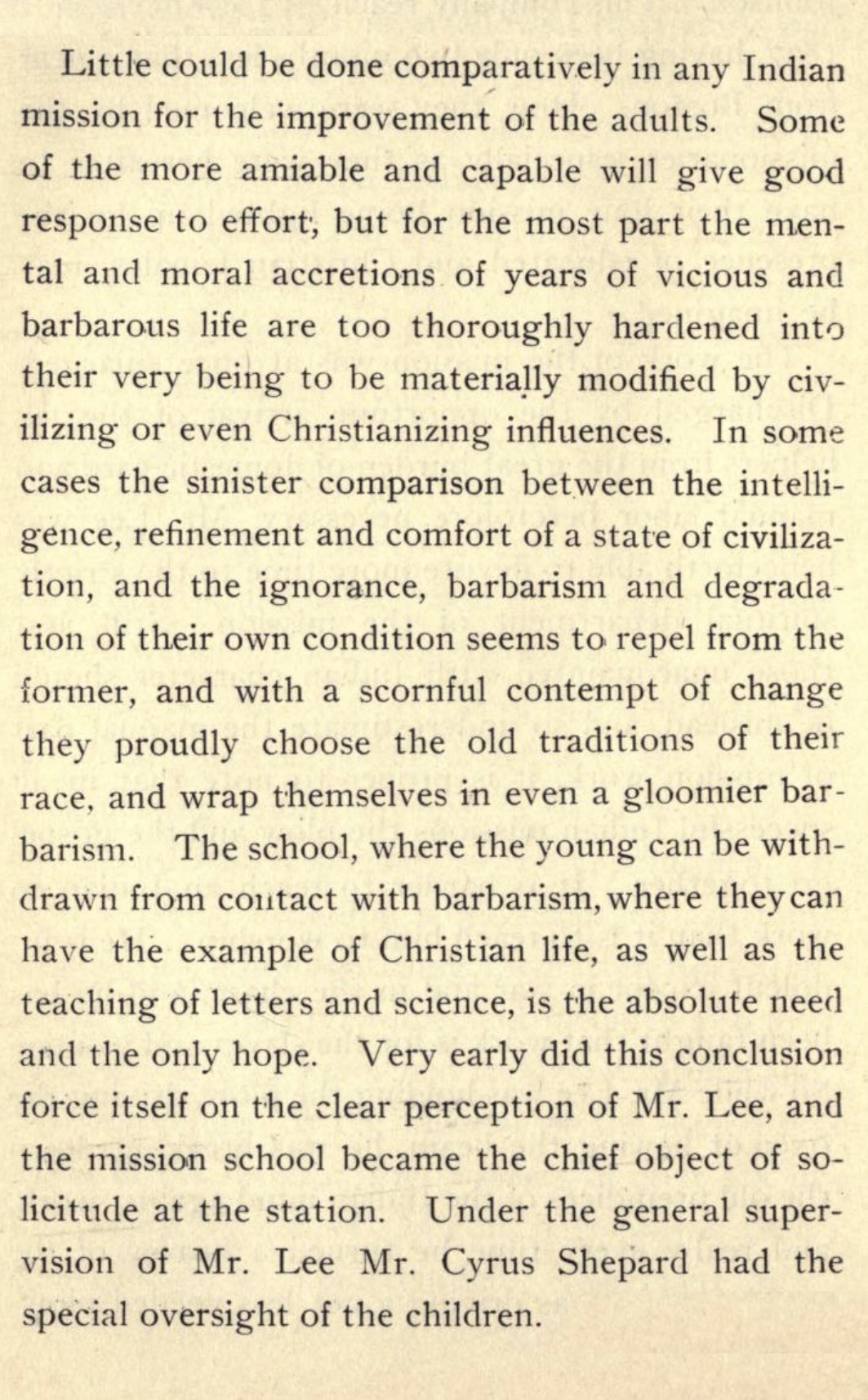
God Help Us if this is what civilization looks like: men unable by inadequate or inappropriate or plain unwanted methods to convince a people to drop their culture and take on another, steal their children, lock them into airless rooms, where they die of disease, mock the parents for their grief. Source: Missionary history of the Pacific Northwest : containing the wonderful story of Jason Lee : with sketches of many of his co-laborers, all illustrating life on the plains and in the mountains in pioneer days, Harvey K. Hines, 1898.
In the end, Lee was influential in transforming his failed mission into the State of Oregon, rather than into an independent Republic, as many others wished. The rest of the Columbia District was still “white for the harvest,” and still empty of ministry. The first to arrive was Marcus Whitman. Like Lee, he rode to the annual rendezvous, this time at Green River in 1835.
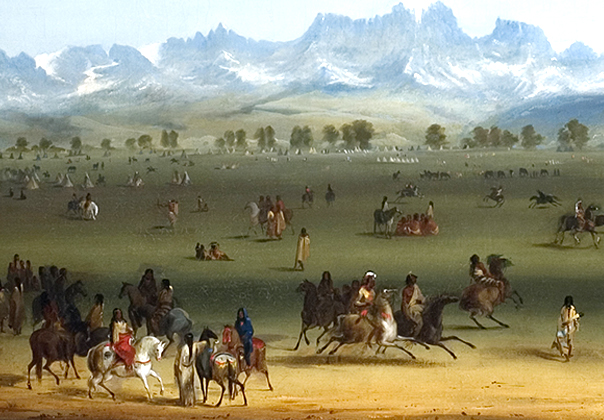
The Rendezvous of 1837, Painted by Alfred Jacob Miller. Source.
The 1835 Rendezvous was at the same location. It likely looked similar.
Whitman arrived at the Rendezvous in the company of Lucien Fontenelle, the fur trader who had brought the Flathead expedition to William Clark four years earlier. At the Rendezvous, Whitman, a trained doctor, removed a metal arrowhead from Jim Bridger’s back, which he had received in the Blackfoot country after leaving the shoot-out at Pierre’s Hole. Here’s the doctor, in bronze:
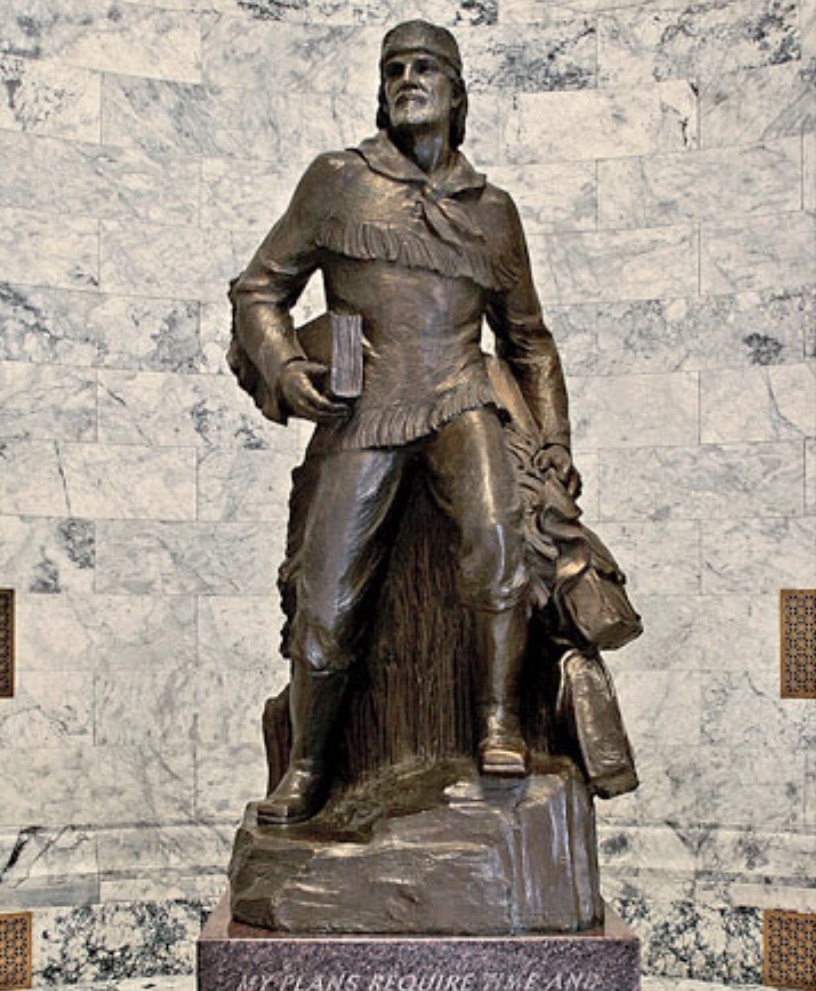
Marcus Whitman. He was not bronzed for converting anyone, because, like Lee, he only converted one.
Like Lee, he converted the land. But that’s a story for next time. See you then. Until then, the land:
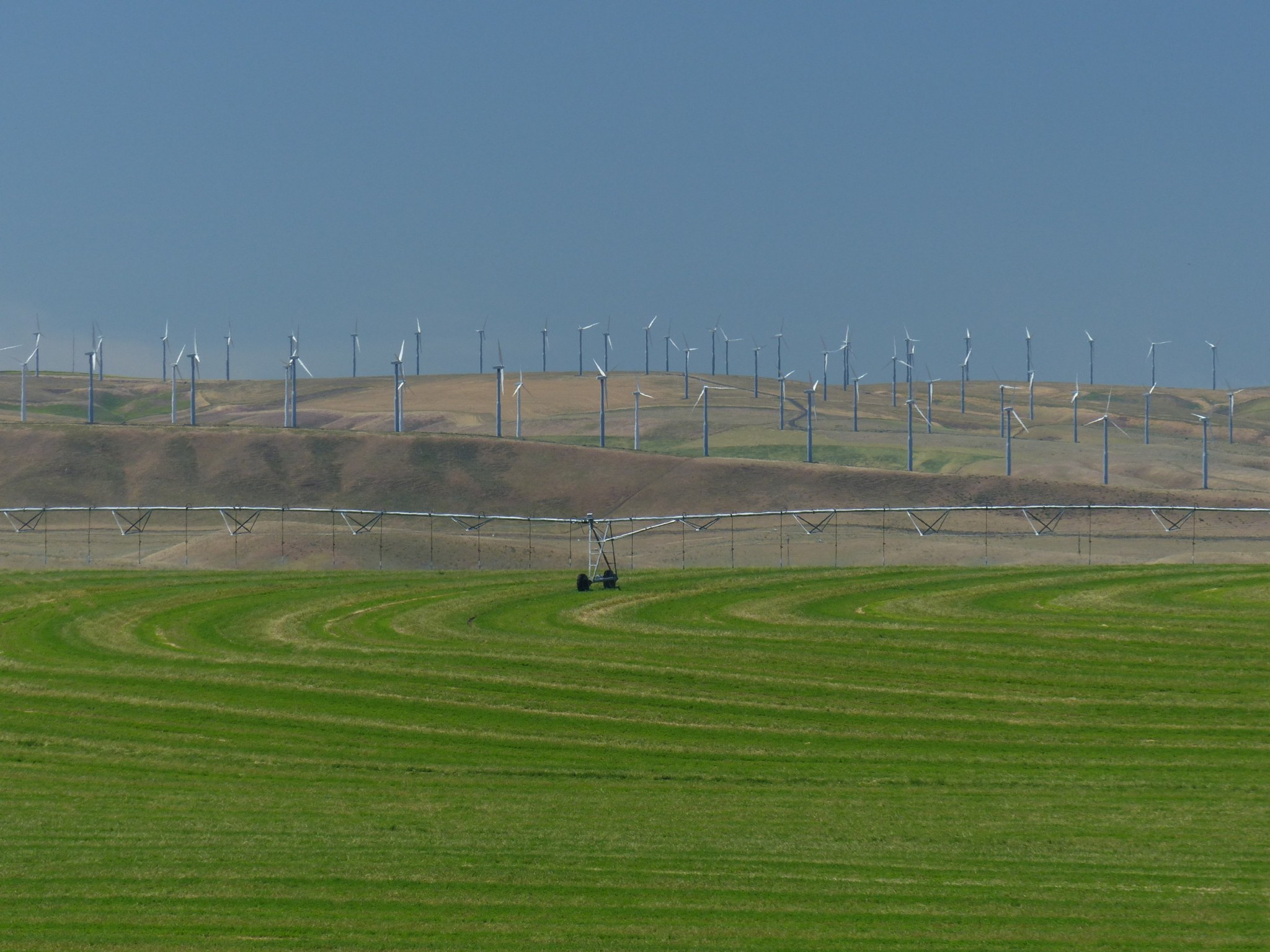
The Walla Walla Valley. Converted.
Categories: Ethics, First Peoples, History, invasive species, Pacific Northwest



Fascinating and densely “braided” histories, local and bioregional. The nineteenth-century decades covered in your recent posts – 1820s, 1830s – were also the years of America’s Second Great – Protestant, Christian, Evangelical – Awakening, and with it – as you reference, no shortage of freelance preachers, apocalyptic movements, and zealous folds of believers. That fact often escapes examination when people address the history of non-indigenous settlement in Cascadia, although I seem to recall that “religion” will cause a stir among the population in Oregon when settlers begin to consider statehood.
At the risk of being a pest: It’s “John McLoughlin” not “John Laughlin”. Unless this is a Canadian or British spelling thing I’m unaware of.
Best and thanks.
LikeLike
Thanks. Just spell check rewriting Dr. John behind my back, the sneak. ☺️
LikeLike