


Because Canada is a country at the north of the world, it reads things in a northern kind of way. This, for instance, is seen as a hot place, not as 10,000 year old glacial water. This is Okanagan Lake. The sand in the foreground has been trucked in to provide a kind of substitute Florida, so people can swim out and get cold on a hot summer day. Nonetheless, it is viewed in a very Canadian way: as a glacier that warmed up. Other countries don’t usually have a culture like this. A recent immigrant to the valley (and the population has increased by over 100% with immigrants from Canada over the last twenty-five years, far beyond its carrying capacity) remarked to me recently that ruined grasslands like the one in the image below, still surviving but largely given over to weeds, are just a romantic attachment. Despite their 6000-year-old human history, the glaciers trump them. “This,” I was told, “was all glaciers once.” Verrrrry Canadian, that.
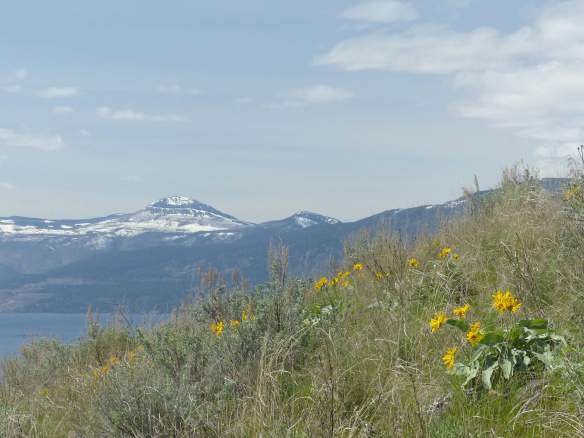
Apparently, that was enough to cancel out the richest, most productive landscape on the Pacific Coast, even more diverse and productive than the great rain forests of the Pacific Slope. It was once ice and rock, and therefore anyone could do anything to it at any time, because change is natural. As if care and respect weren’t.
Categories: Endangered species, Grasslands

 Okanagan Okanogan
Wow. That’s some serious disconnection sickness. If that person actually had a relationship with these grasslands and all the life they nurture and sustain, they wouldn’t be able to utter or even think of comments like that. We’ve got to know something in our hearts to care about it, including ourselves.
As the Syilx would say: “f*#$in’ suyapis”.
LikeLike