


According to the old European story of Demeter and her daughter Persephone, this is the time of the year when the maiden earth descends to spend half a year with her husband in Hell, before returning to earth to bring crops back to the fields and the sun to the sky. The story is present in the Okanagan, too. Here, at this time of year, it looks much like this:
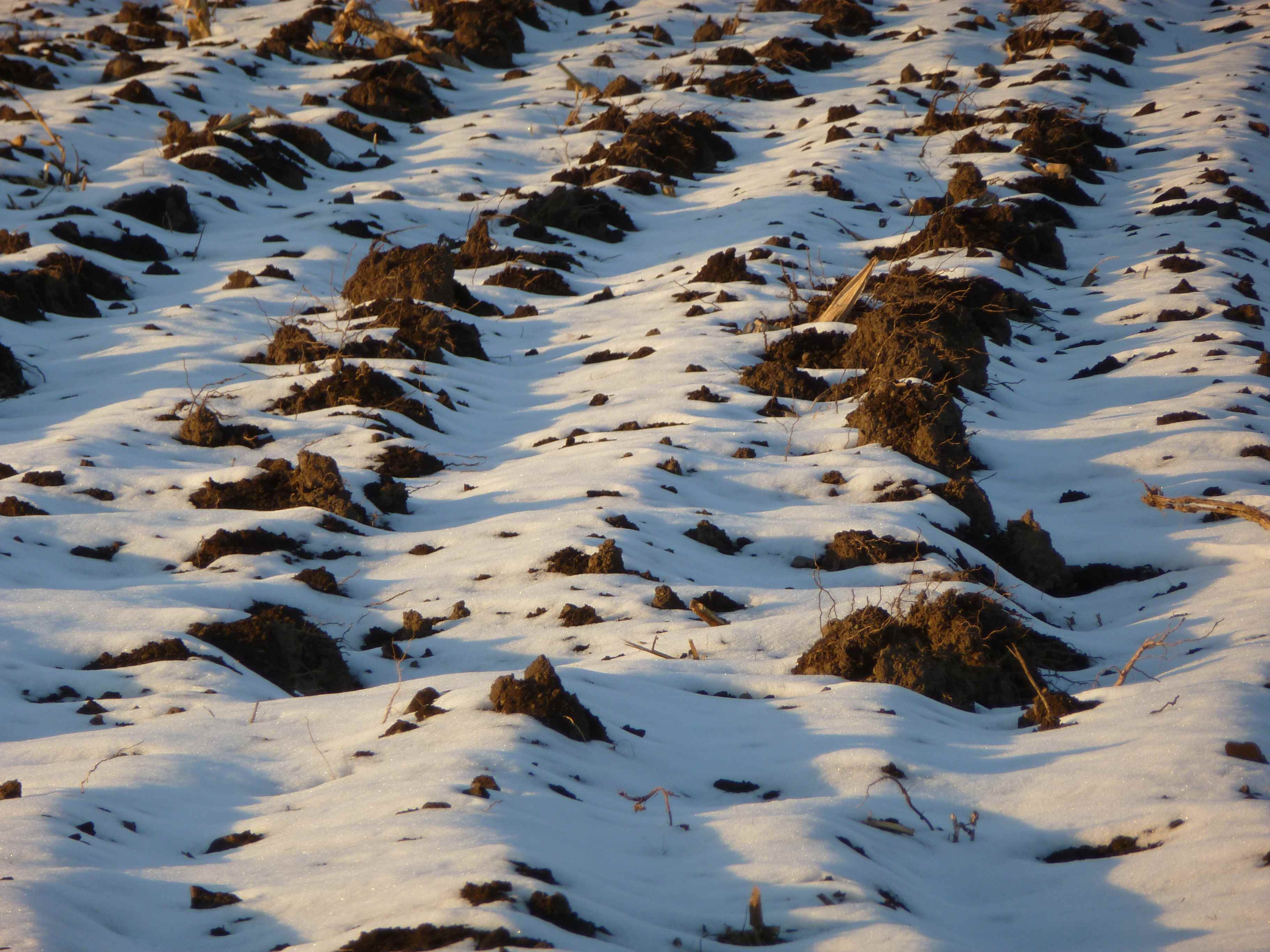
Cornfield in the First Snow
Dead to the world and waiting for the story to begin again.
It is a powerful story. But here in Turtle Island, it works only in fields, which are defined by fences. Why are there fences? Why, to keep humans out. They certainly don’t have any effect on the other mammals who share our space. Take a look:
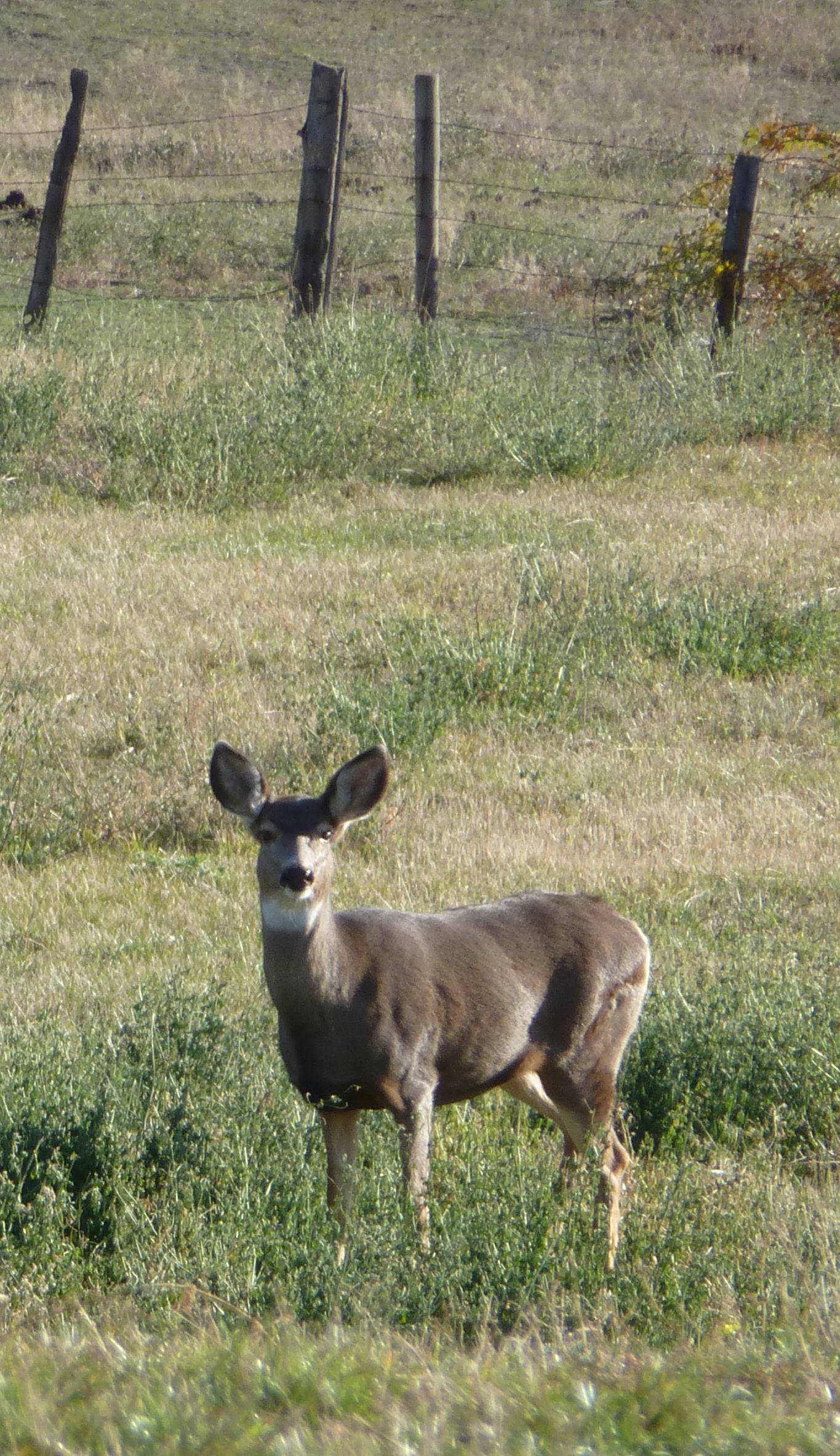
Deer Making use of an Abandoned Orchard
Someone might as well, eh.
On the other hand, look at what fence lines do to human activity on the land. Here’s a bigger view of the same abandoned orchard, in context:

Abandoned Bella Vista Orchards with Weeds
Notice the subdivisions in the background, kept at bay by fencelines. Now, is it just me, or don’t they look a lot like plowed fields as well?
Truth is, British Columbia land use is split three ways: surveyed private property, First Nation reserves, and an Agriculture Land Reserve, to support farming (and Persephone). That’s where the fences come in, to keep the stories straight. Where the land isn’t fenced off, though, it arranges itself differently, such as here:

Black Sage Hillside, Okanagan Falls
These bushes don’t need fences. They have arranged themselves musically, according to a conversation with water.
What the Okanagan would look like if humans arranged land divisions on water as well, is worth imagining. As for all those fences, well, we could use boundaries for different purposes, such as the deer do with our fields. Even those other immigrants, the starlings, do that. Here they are catching some fine late afternoon light:

Starlings, Showing Us the Way
Better adapters than humans, they have learned to arrange themselves musically in this landscape.
Categories: Agriculture, Land, Other People

 Okanagan Okanogan