


The Canadian Okanagan is the deep south. At its farthest south, Osoyoos boasts Spanish architecture and is famed for desert sun and vineyards. Grapes are planted here on old orchard land, impossibly north of any reasonable range, because it’s the far south. Sometimes, they’re even left on the vines after the leaves fall, so they can be pressed into icewine when the temperature dips to 7 Below. Here are some that are waiting right now:

Icewine Biding its Time
Oliver, BC, November 6, 2011
The lovely thing about borders is that the American Okanogan is in the deep north. There is little by way of a tourist industry, south of Ellisforde, there hasn’t even been frost yet, and although it is the north, orchardists are putting their crews of Mexicans to work picking Australian long season Pink Lady apples. Right at the border, when you travel north from the deep north you arrive instantly in the deep south.
Family orcharding is in trouble in both halves of the valley, but in the deep south orchards are replaced with vineyards, while in the deep north, where frost wouldn’t be such an issue for tender french grape varieties, old orchard land usually looks like this:
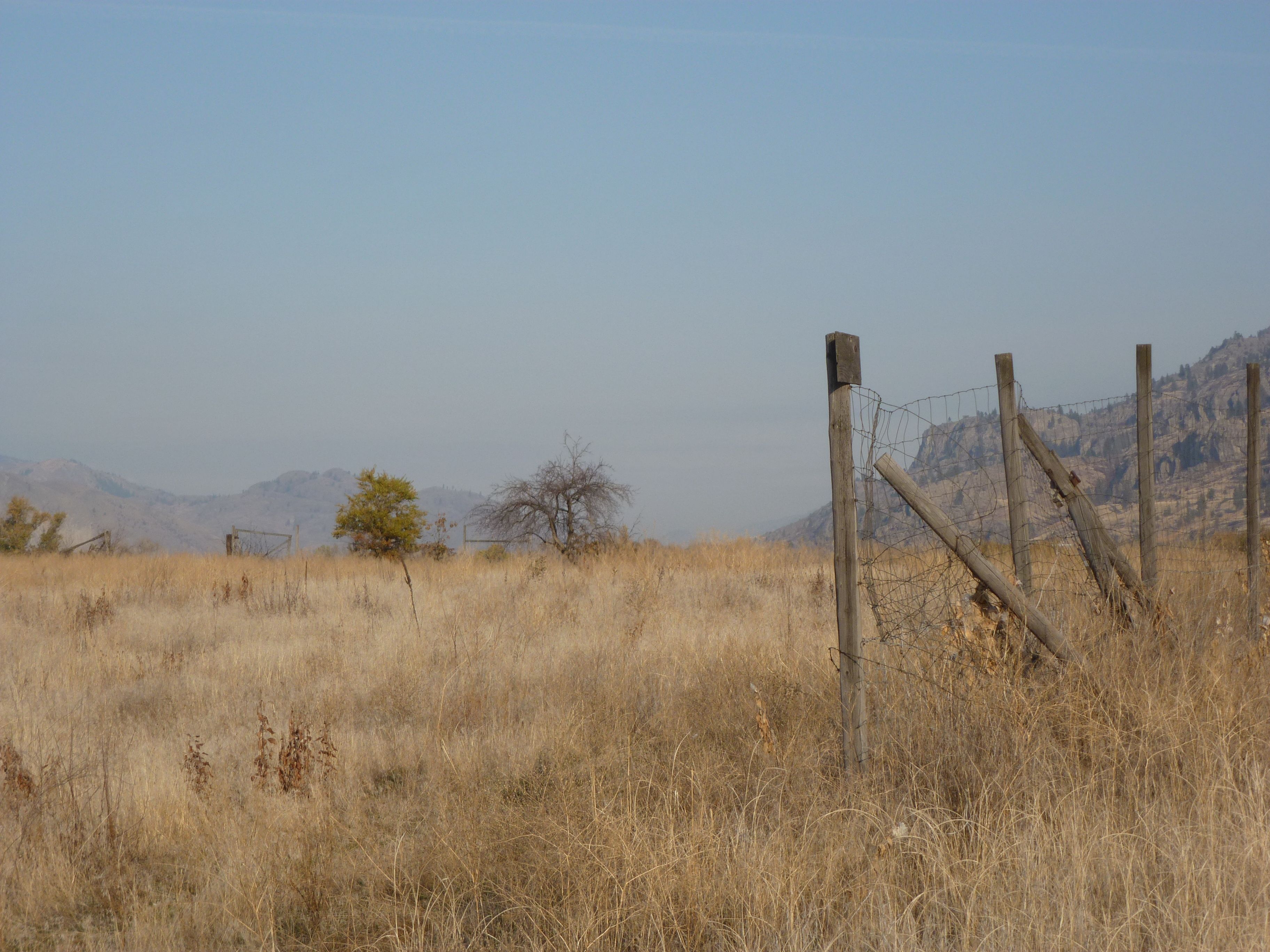 Orchard Land near Ellisforde
The Old West regains its own.
That’s the difference between the American and Canadian cultures that have colonized the same land. The American Okanogan is near a fabled frozen Canadian north, and so is a barren land. The Canadian Okanagan is near a lush American south, and so is a land of plenty.
Isn’t it great that we love each other so?
Categories: Agriculture, Industry, Land

 Okanagan Okanogan
Bluebunch Wheatgrass is happy both north and south!
LikeLike
Indeed, and that’s a neat story I’ll follow up with in a day or two. Sadly, though, black sage is definitely happier south of Haynes Point. If I was a black sage bush north of Oroville, I would try to evolve feet, I think, and apply for a green card.
LikeLike