


The other day, I showed how little economy was actually generated by the Okanagan’s forests. 95% or so, in fact. Check it out, if you missed it. https://okanaganokanogan.com/2025/11/06/there-has-got-to-be-a-better-way/ This post continues the discussion. This time, it’s about water. And apples. Have a look:

So, let’s think about the water in that orchard. First, it’s close to the valley bottom. In a rain shadow such as this one, where low altitude air is dryer than air higher up, this matters. Here’s the neighbour farm to this one, to put that into perspective:

Frind’s Bella Vista Bowl Vineyard, during planting, four years ago.
These farms are at an altitude of around 450 metres. The mountain in behind rises to around 1400, and behind that 1700 metres. Down here, there is sun. Up there, there is snow. To irrigate these farms, water is piped down from that altitude, which is kept in a forested state to optimize water collection. Every lake above the Okanagan is mined for water in this way, and all of it is brought down to the 300-450 metre level. Down here, though, 45% of the water evaporates in the desiccated air. So, let’s and look again. If that orchard had appropriate varieties and was grown high up, 100% of the water used would be efficiently put to use. Down here, 45% of that water is wasted. The farm has a water inefficiency that looks like this:
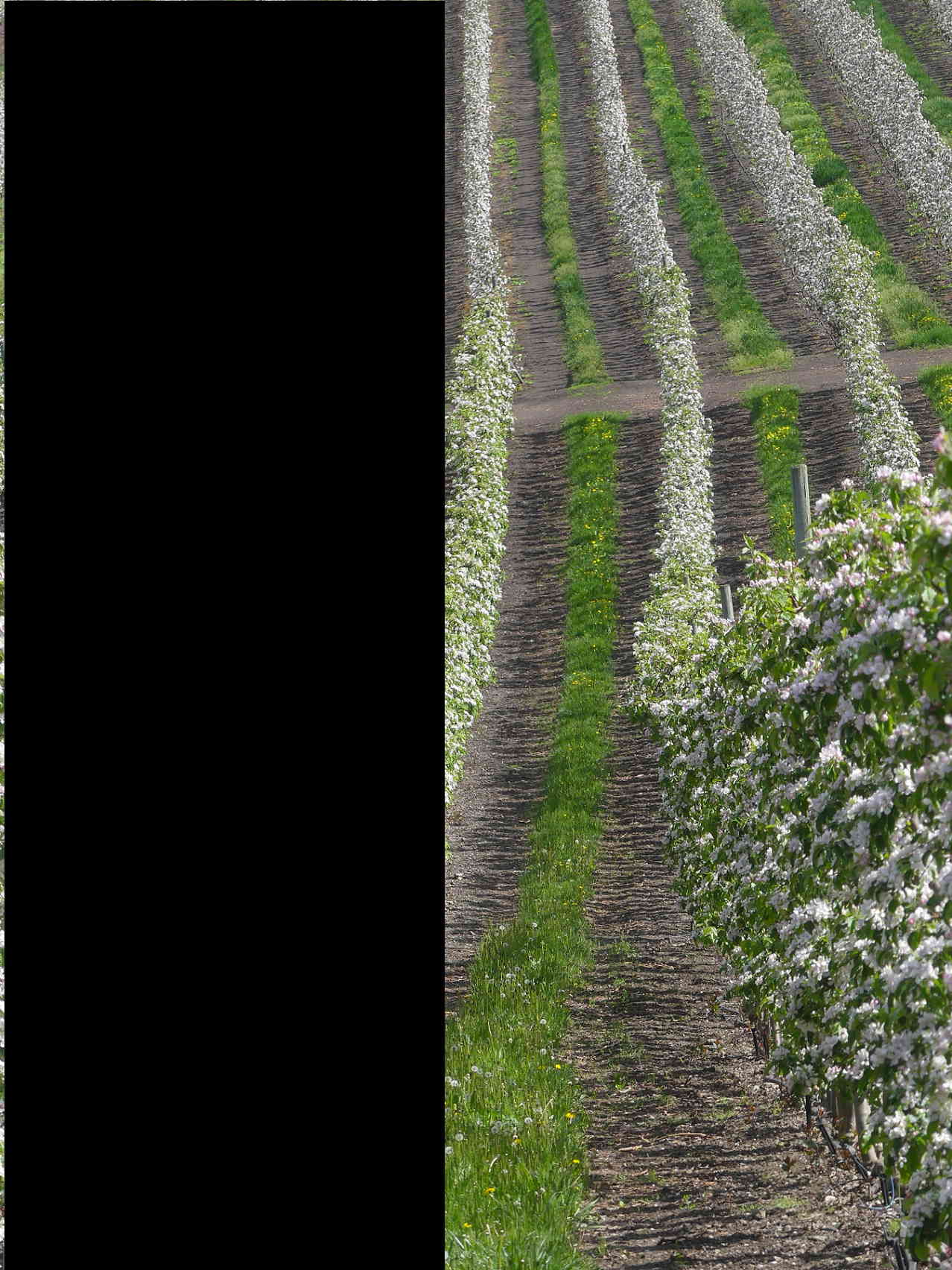
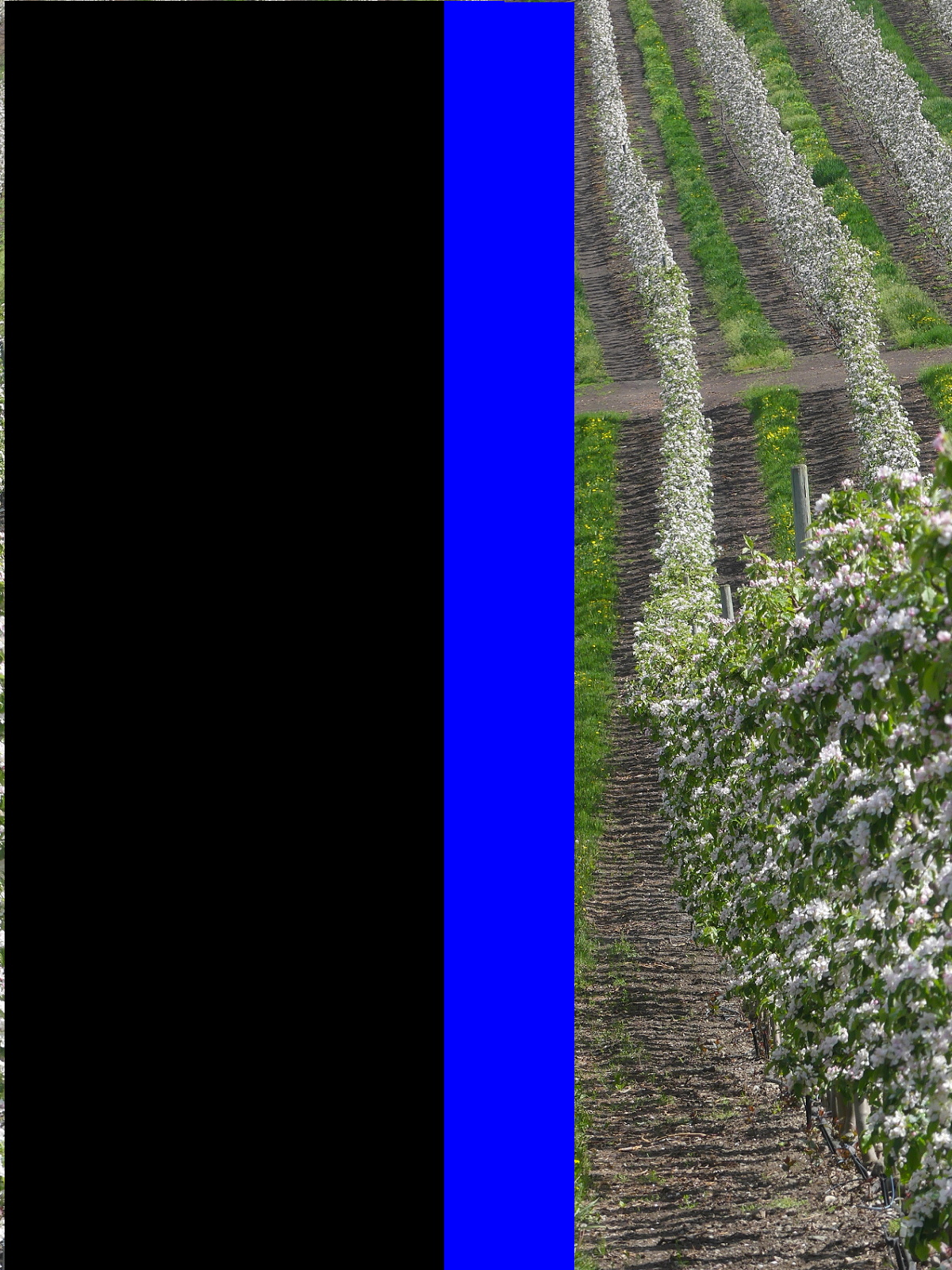
It has been shown in New Zealand that removing a tractor and the weight of sprayers and fruit moving equipment from an orchard of this type improves productivity 25%. This Okanagan orchard is arranged for tractors, which means that it has a further water deficiency, in that it is wasting 25% of the water it does have left. Kind of like this:
Ah, but those apples aren’t very profitable in what has become an expensive, gentrified landscape, unable to compete with industrial apples from Eastern Washington, in mid-Cascadia. The strategy to compete with that is to throw all imperfect apples to the ground, to lesson transportation, storage and sorting fees. That looks like this:
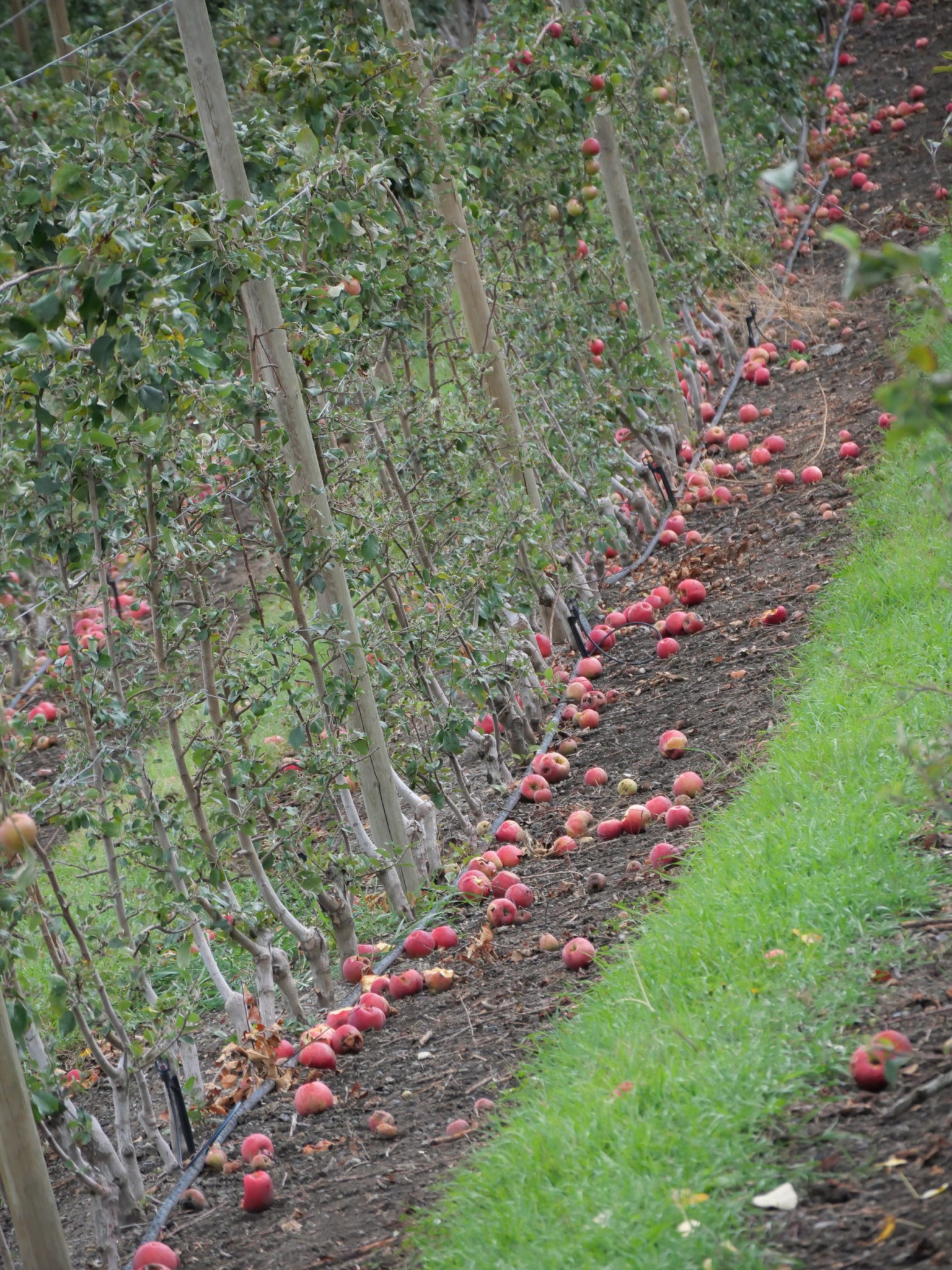
Granted, this isn’t what I’d call a serious orchard, but it is part of one of the biggest and most commercial, with vast holdings in the north half of the valley, of a full, industrial size. So, for an orchard like this, I think we can add a further water deficit, for apples (water) wasted. Perhaps that’s like this:
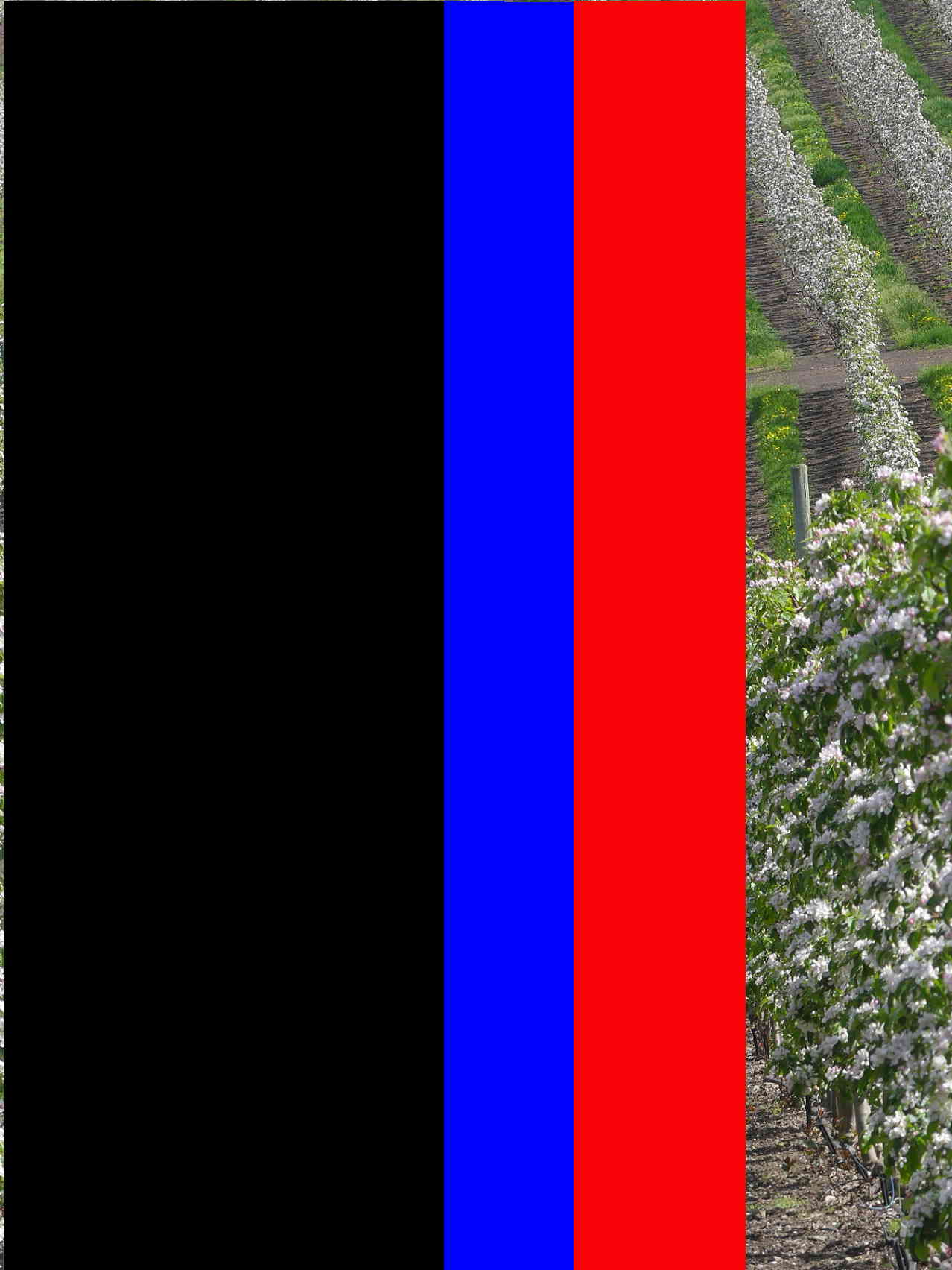
That’s an awfully big water deficit, for very little production. Imagine if the fruit were grown at 1200 metres. There are varieties that would do just fine. We’d gain 45% of our water back. Imagine as well that instead of tractors, greenhouse technology (pipe rail systems) could be used.
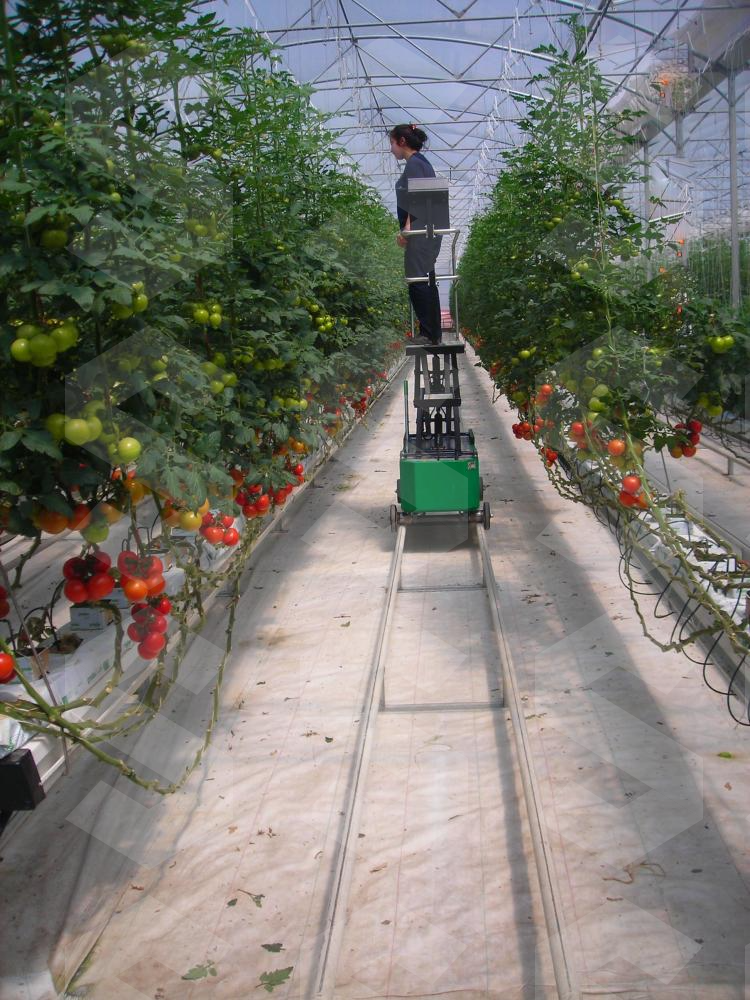
https://seomak.com/en/product/kia-3000-greenhouse-piperail-trolley
The water deficit would be erased. I’m sure a system could be designed that allowed for growth on the ground, rather than ground cloth. And what of the dry valley bottom? Currently, it’s a struggle between urban growth and bankrupt orcharding, like this:
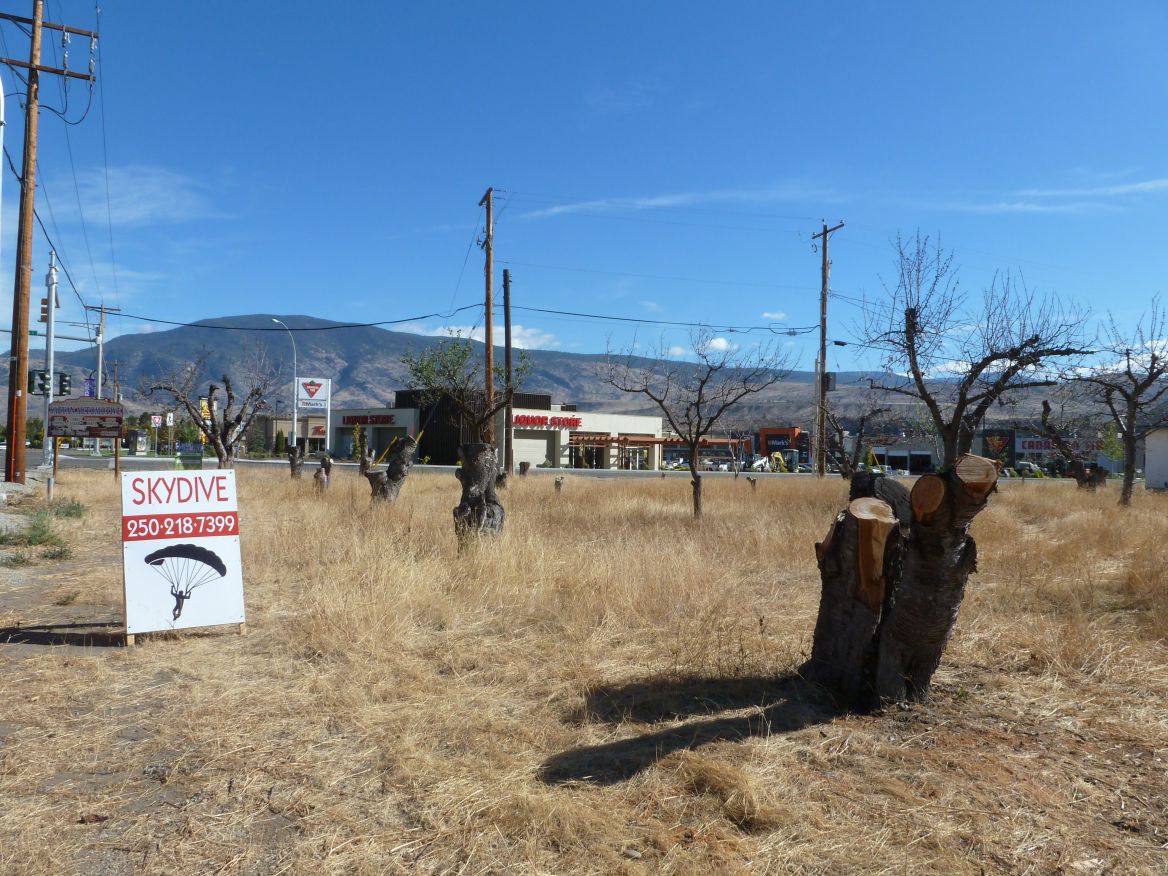
An Indigenous Deficit
Urban expansion has helped neither the water deficit nor food sustainability, nor has it created an Okanagan that working people can afford to live in. These days, even the middle class is largely priced out. There are, however, many crops that grow in the wet spring months, the wet fall months that follow, and even through the winter. There are many native crops that could be grown, which need little water. The choice, in other words, is not between a bankrupt, water-destroying farming model and urbanization, which is touted as a way to gain value from the land. Neither is it a choice between forests and orchards. The forests around those impounded reservoir lakes in the high country aren’t exactly without deficits of their own.
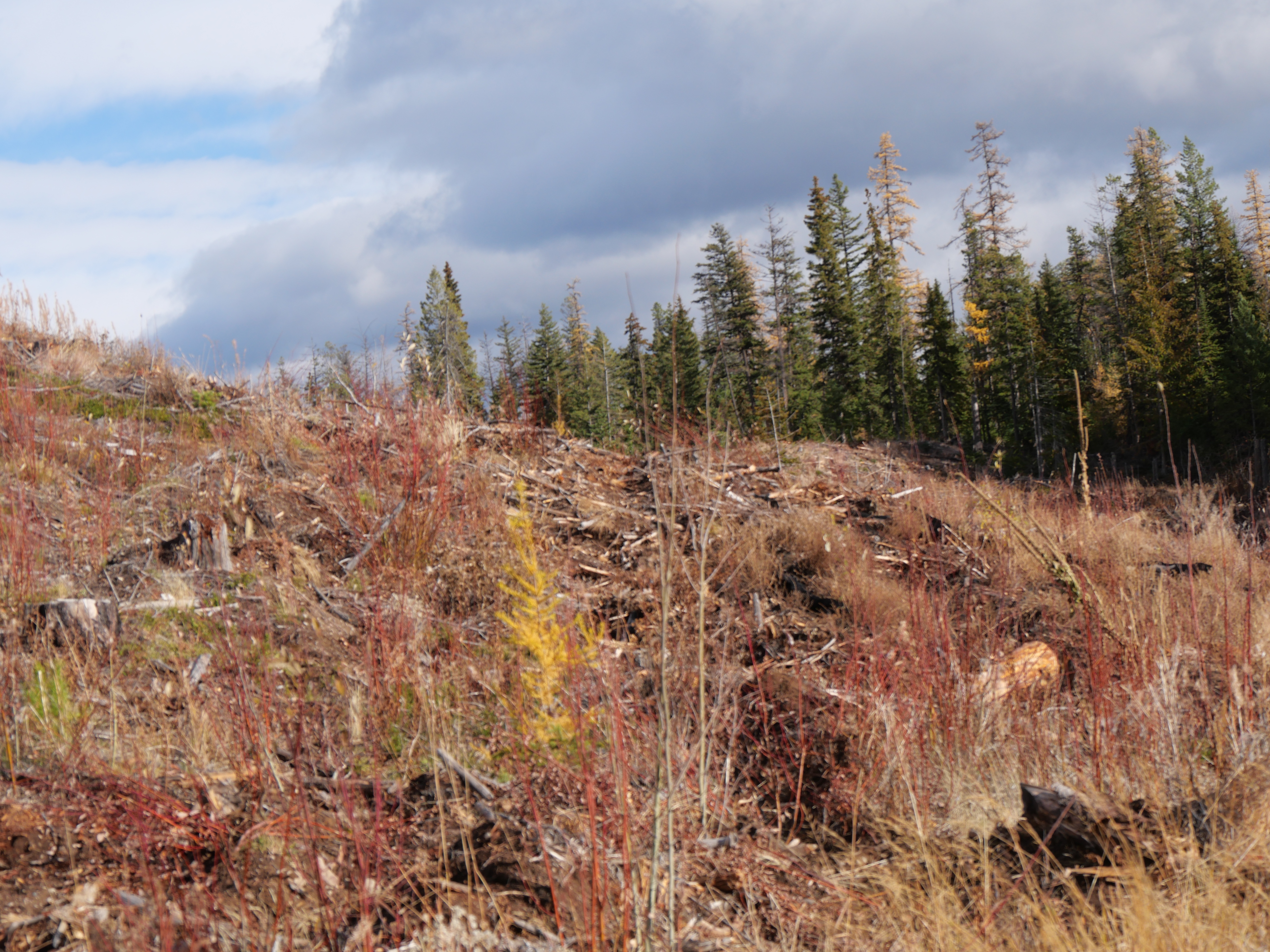
We need to do better. A lot better. The good news is that all the pieces that will allow us to do so are here. Well, almost. But that’s a story for next time. Thanks for joining me here.
Categories: Agriculture, Earth, Erosion, Ethics, First Peoples, Forestry, Gaia, history, Industry, Land, Land Development, landscaping, Open Agriculture, Other People, Spirit, Water

 Okanagan Okanogan