




In my previous post, I showed you a forest zoned for commercial use. It is in trouble. Here’s one zoned for protection. It is in trouble, too.

You will begin to understand the grasslands when you begin to see trees as weeds.
What you are looking at is a grassland in Big Bar Lake Provincial Park, as it erodes under an invasion of pines. In the terminology of the British Columbia Parks Branch, it’s a natural and desirable succession of ecosystems. That’s a bias, actually. Grasslands become environments like this in the absence of two things: fire, and humans. The bias is a notion of land being pure without human interference, and less-than-pure with a human touch. An irony is that the human touch has degraded it, in favour of the cultural bias that favours trees and the industry that can be generated by felling them. People are very much a part of this image, through the agency of that bias and the legal regulations that support it. But do, please look again. That trail wandering through the image, and this one (just pulling back a bit)…

…is not a human trail. It is a coyote trail. The people who are this land, the Stswecem’c Xget’tem, one of the Secwepemc nations, are one of the ancient Plateau nations for whom the ancestor Sk’elep, known to other cultures as Kojoti or just coyote, tamed the monsters of the land and brought salmon. You can read that as a story, which it is, and as a land use protocol, which it is. Or you can just read the rock.

In an oral culture, it is the story, Ske’elep’s story, that is to be maintained, so you can continue to learn from it. You can read it as a glacial erratic, if you read the land without people, or, if you read the land with its people, as a possible grave or trail marker sketched with Sk’elep’s head (and several times, too, if you spend some time with it.) If you read the land without people, then the ecological change of the grassland to a forest, and the loss of its ecosystems and the life they support, will exclude people. If you read it with Ske’elep’s people, then Ske’elep’s path remains open and the trees must go. The same thing applies to the North Okanagan, where I live now. In high forests, threaded with moraines (like the one above with the coyote rock), succession means the repeated harvest of ingrown timber, its regrowth, and its harvest again.
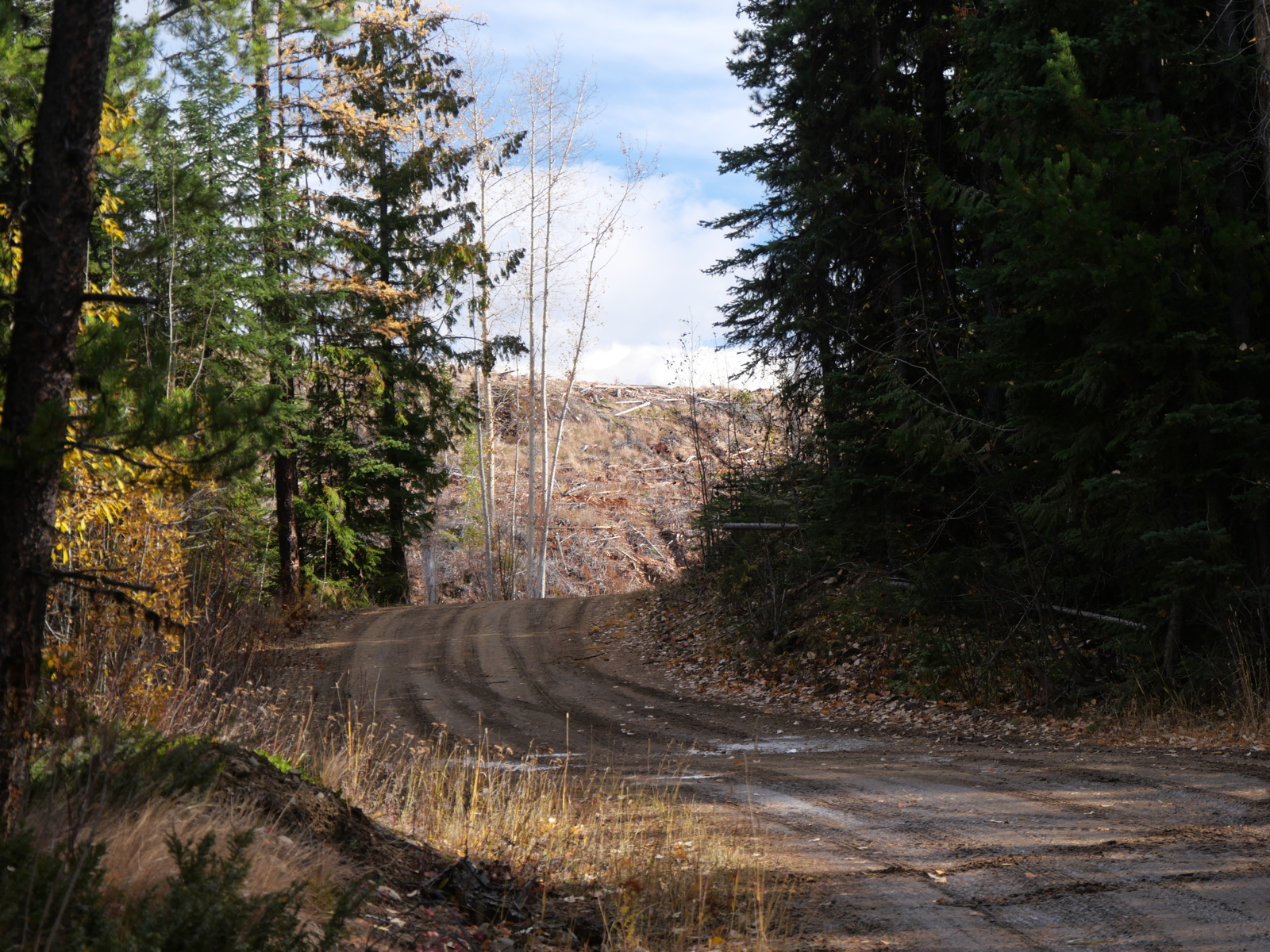
What is the point of origin here? The forest? The clearcut? Na, it’s the road, which manages the transition. It’s not Sen’klip’s road (as Ske’elep is known in syilx culture).
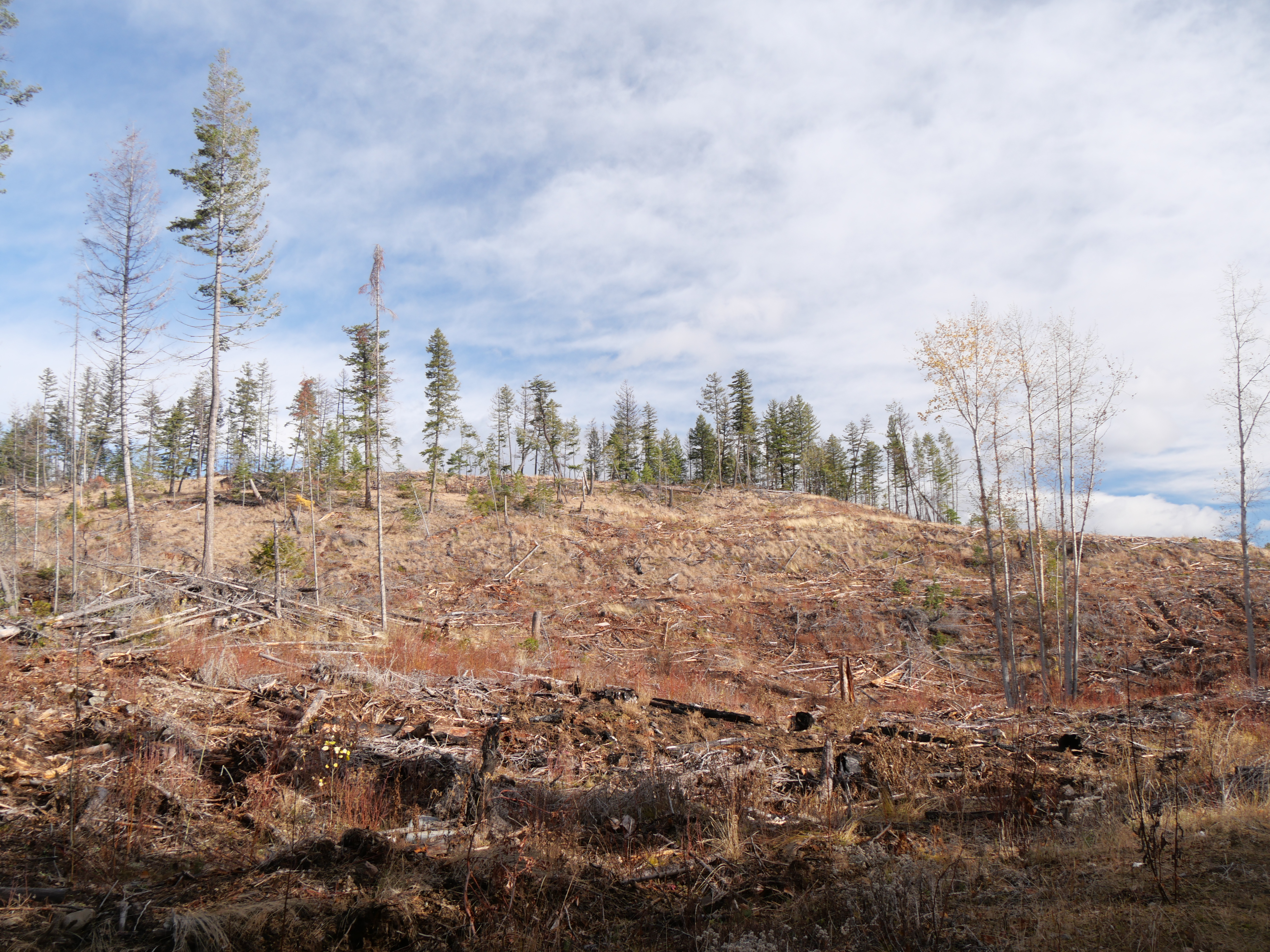
In terms of succession, there are up to 1000 times as many trees on the Plateau as there were before Euroamerican tree bias, which allows for the industry that sustains the imported culture’s protocols here. The point is, it’s all about people. If you’re going to have trees instead of salmon, you are excluding the Stswecem’c Xget’tem at the very heart of their nation, just as surely as you are excluding the grass and Ske’elep. This is a racialized image:
It’s also economic nonsense, which is the same as saying it’s social nonsense, as I pointed out in my previous post, here: https://okanaganokanogan.com/2025/11/06/there-has-got-to-be-a-better-way/.
Here again, we must do better.
Categories: Earth, Erosion, Ethics, fire, First Peoples, Forestry, Gaia, Grasslands, History, Industry, invasive species, Land, logging, Nature Photography, Other People, Pacific Northwest, Recreation

 Okanagan Okanogan
Thanks for these two posts. (My computer doesn’t want me to send a comment.) I was a teacher in my former existence and tried to teach critical thinking, divergent thinking, etc. I wasn’t terribly successful, but would try again if I were to be given a second chance.
I am happy to see your posts again after a hiatus. They inspire me, help me move my old bones and mind and creativity. A blessing on your work. Curt
LikeLike