





The War of 1812, eh.

William Pitt the Younger, British Prime Minister, left, and Napoleon of France carving up the globe.
National Portrait Gallery, London
“The two greatest Commercial Nations in the Globe cannot move in the same Spheres without jostling one another a little… we want Elbow room and these good Neutrals won’t give it to us… they get a few side Pushes, which makes them grumble.”
British diplomat Augustus Foster, February 1806
(The Commercial Nations above are Britain and France. The neutrals include the United States.)
Neutrality, huh. As a reason for war. Well, as the man said:

In 1812, the United States decided to cease to be neutral and to protect its freedom as a neutral shipping nation. Neutral as in: not siding with Britain or France. It was a thing:

A successful war would eliminate British naval power from North America and give the United States free access to the oceans.
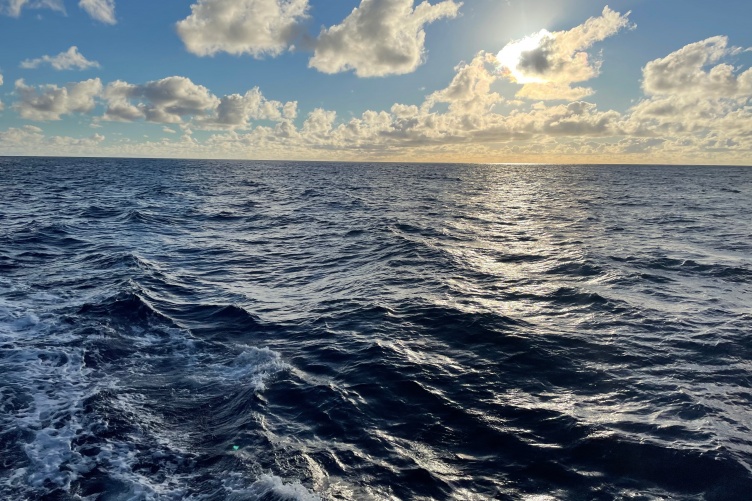
And the ocean of grass that covered most of the continent. Let’s not forget that, either.

At Sea in Montana. Photo by Harold Rhenisch
However, as the United States was (and remains ) a complex amalgam of varied geographies, societies and interests…
Map of the United States as a series of amalgam dental fillings evenly spaced between left and right, all with deep roots.
… there were other advantages for attacking Britain (now Canada). They included:

It was a quest less for territory than for using territorial gains as a political lever:

Territorial adjustments were not just considered among the club of European nations. There was the 50-50 division of the country, too, a delicate balance that remains today…

Map of the United States as a Disagreement Today. Source
Today, the division circles around notions of the worth of having a federal government. Back in 1812, it was about slavery. And that means it was also about the Pacific Northwest. Which was kind of international, being the territory of many Indigenous nations, plus Spain. To give you an idea as to what was at stake when the conquest of North America is viewed from within the very real pressures of internal US politics, here’s a map of how it all worked out after the War of 1812.

1857. The Slave States are Red. The Free States are Green.
Note that Iroquois territories south of the Great Lakes ceded to the USA after the War of 1812 were solidly anti-slave states by the time this map was drawn, skewing a delicate balance. They have been domesticated, or tamed, like horses.
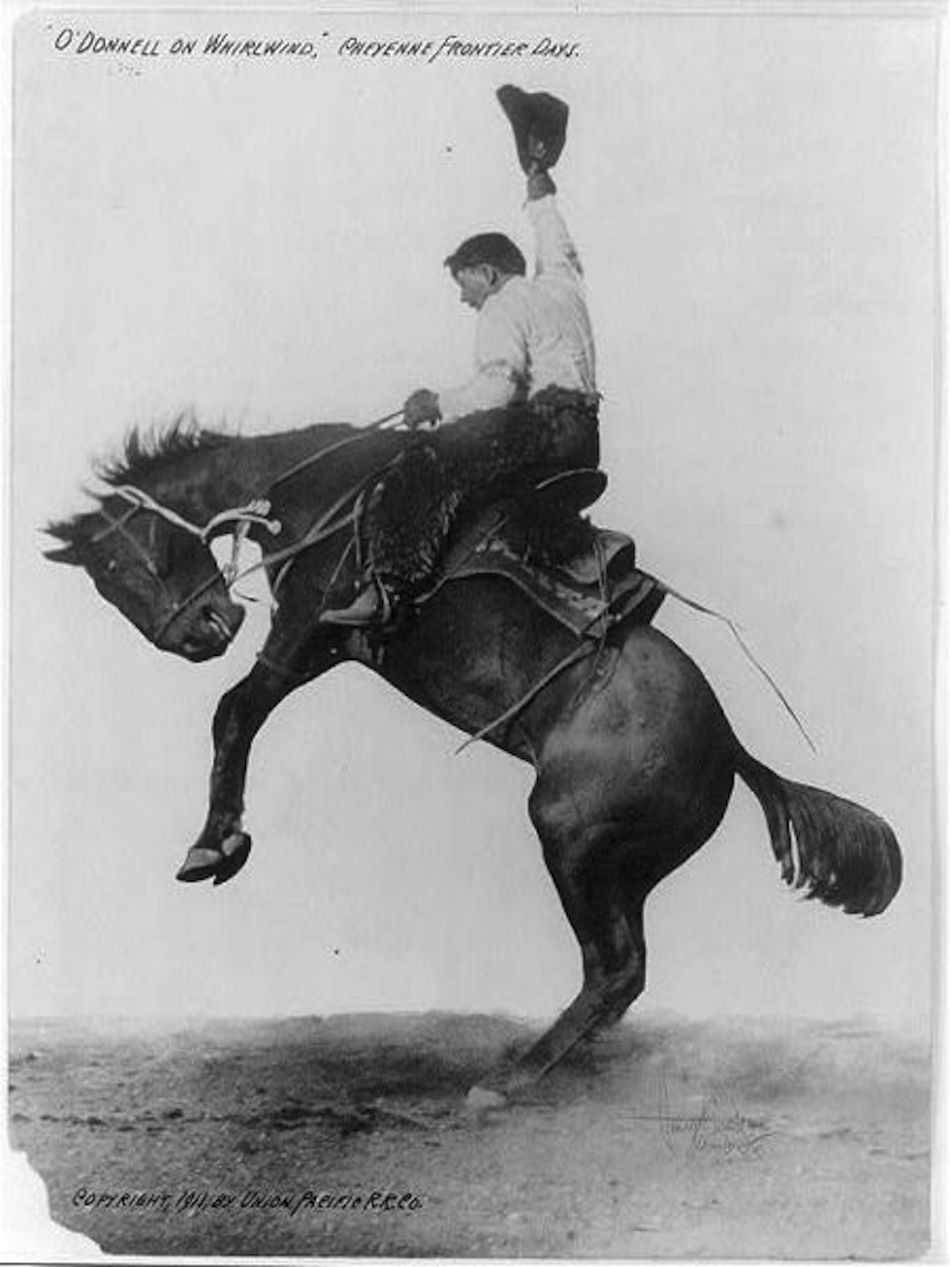
Breaking a Horse Back in the Day
So, really, it’s more a map of domesticated states versus wild ones.

Green=Domesticated. Pale Green = Might be Domesticated Yet
Following the logic of this map, the US Civil War (1861-1865) was a process of domestication or the breaking of human will. Starvation and exposure were used as will-breaking (torture) techniques.

A Union Soldier After Repatriation in 1865
So, look again:

Note that by 1857, the new state of California is a non-slave (domesticated) state, even though the pressure to become a slave state (a wild, or free one) had been intense. All the other stuff in the map, the pale green stuff, remains prime territory for achieving American political balance, or, in other words:

That’s not the only role assigned to the Pacific Northwest by U.S. cultural tensions. There’s this, too:

And not just Lower Canada (Quebec).
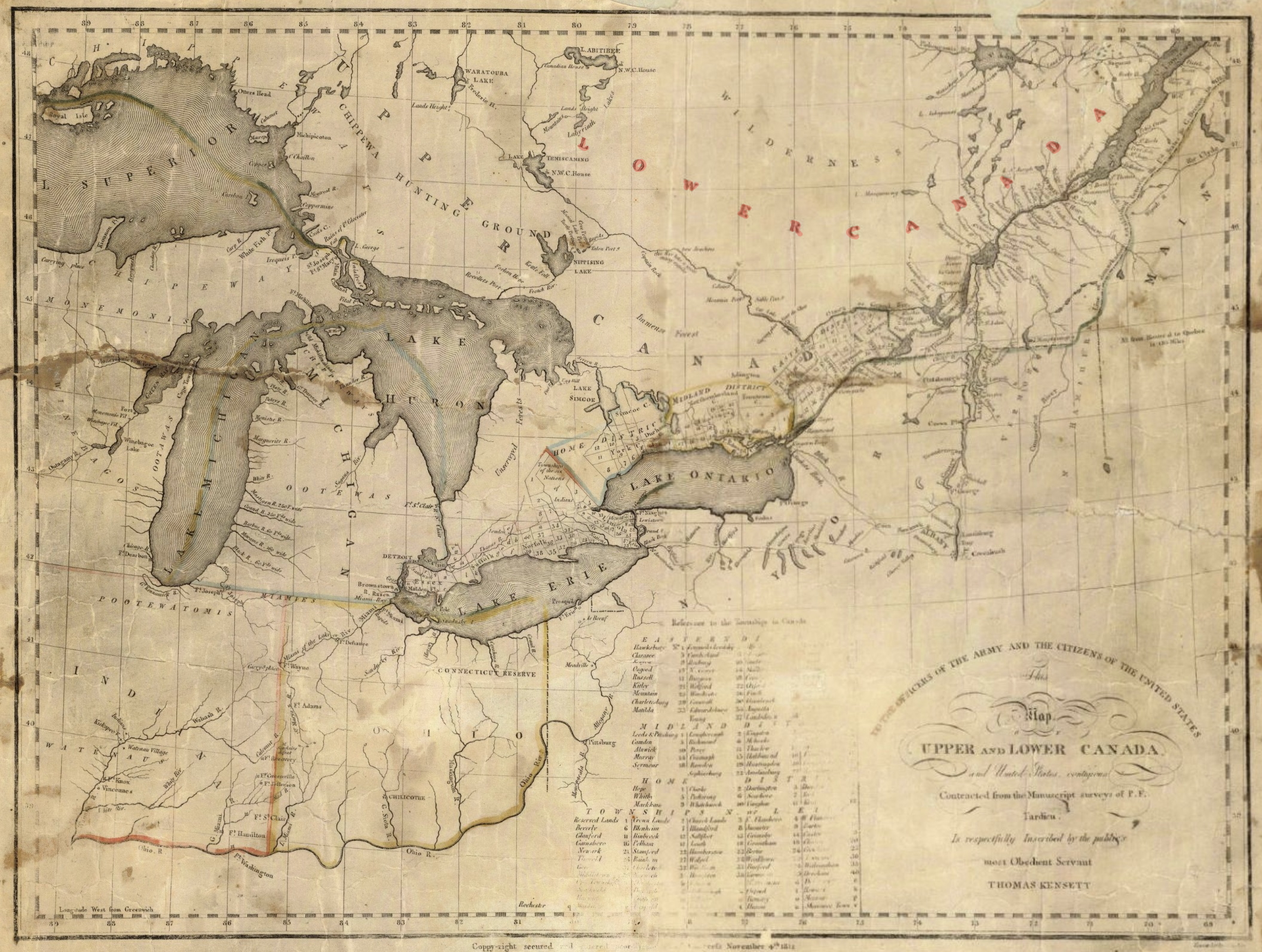
But Cascadia as well. Here’s the Canadian Flathead House in today’s Montana in 1809.

By 1812, Catholic Iroquois (from Lower Canada) were present there in the mountains of Eastern Montana, teaching about Catholicism and calling for missions resembling Kahnawake…
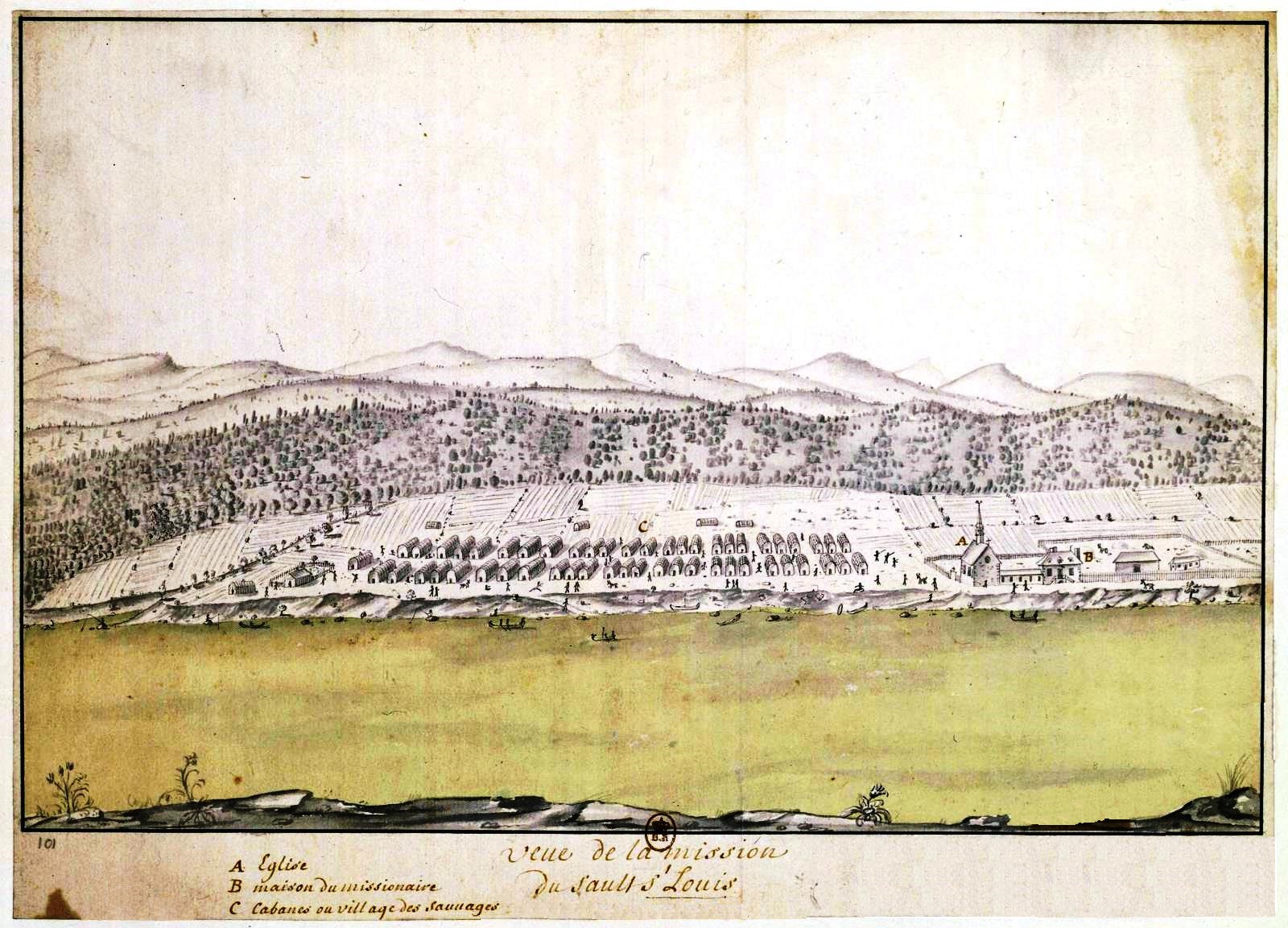
Mission du Sault S’Louis (Kahnawake Mission) in 1750 (Looking South from Montreal [in Lower. Canada]).
Note the Haudasonee Long Houses and the Church
…which had offered the Iroquois (the catholicized Haudasonee) the protection required for moving between Indigenous and settler worlds. Such neutrality, ensured by the special status of the Church as a quasi-neutral broker in White society, seemed a good strategy.
For a detailed background on the arrival of the Iroquois, please go here: https://okanaganokanogan.com/2022/12/10/38-ravens-prophecies-the-war-of-1812-and-the-old-northwest/
As an illustration of their approach, three Iroquois-Salish-Nimiípuu journeys overland to St. Louis in the 1830s (still a French city), resulted in a variety of missions in Cascadia and eventually American settlement. Settler narratives don’t remember it as the procurement of the special protection offered by resident priests, as the Iroquois did. Instead, settler narratives blamed the failures of priests on a Flathead desire for the shamanic efficacy of Christianity, which could be used to intercede with spirits better than could their own shamans . There was some of that at play, but overall such cultural representations of cultural naiveté and archaic thinking among tribal cultures in the Industrial Age could do well with being set aside. The Iroquois were long-civilized, for one, and they were Catholic, for another. What they wanted was simpler and more practical than shamanic spirituality: use of an intermediary within White society to allow some measure of freedom and survival for their Flathead families behind its screen. What arrived in Cascadia, however, less. Once people were mass-baptised, the priests journeyed on. Their important relationships were with White society (where they had to fund-raise). Interfaith rivalry and competition for elite space in emerging American society became all-important, not the creation of a mediating spiritual aristocracy in Cascadia. Ironically, this was the same issue that faced the Iroquois and their Salish and Nimíipuu families. They all had to work hard to survive. Catholic missions that followed in Walla Walla, the Yakima Country and Oregon…

St. Paul’s Church in French Prairie in Oregon’s Willamette Valley, Photo by Harold Rhenisch
No longer French.
By 1821, another incursion into the free space of the West, added fuel to this blaze. Conflicts between Indigenous, Métis, American and British concepts of the independence of Assiniboia …

I mean, look how Assiniboia (circled above) sticks south of the 49th Parallel on 1820. Sheesh.
It didn’t just lead to stress in American-claimed territory, but also to a bitter war of attrition between the aristocratic Hudson’s Bay Company (British, but largely Orkney) and the Northwest Company (British, but largely Canadien and Iroquois) and the forced merger of the companies to prevent them destroying the British claim to the northern half of North America and opening the door to a continued American revolution and settlement. It had, after all, happened before.
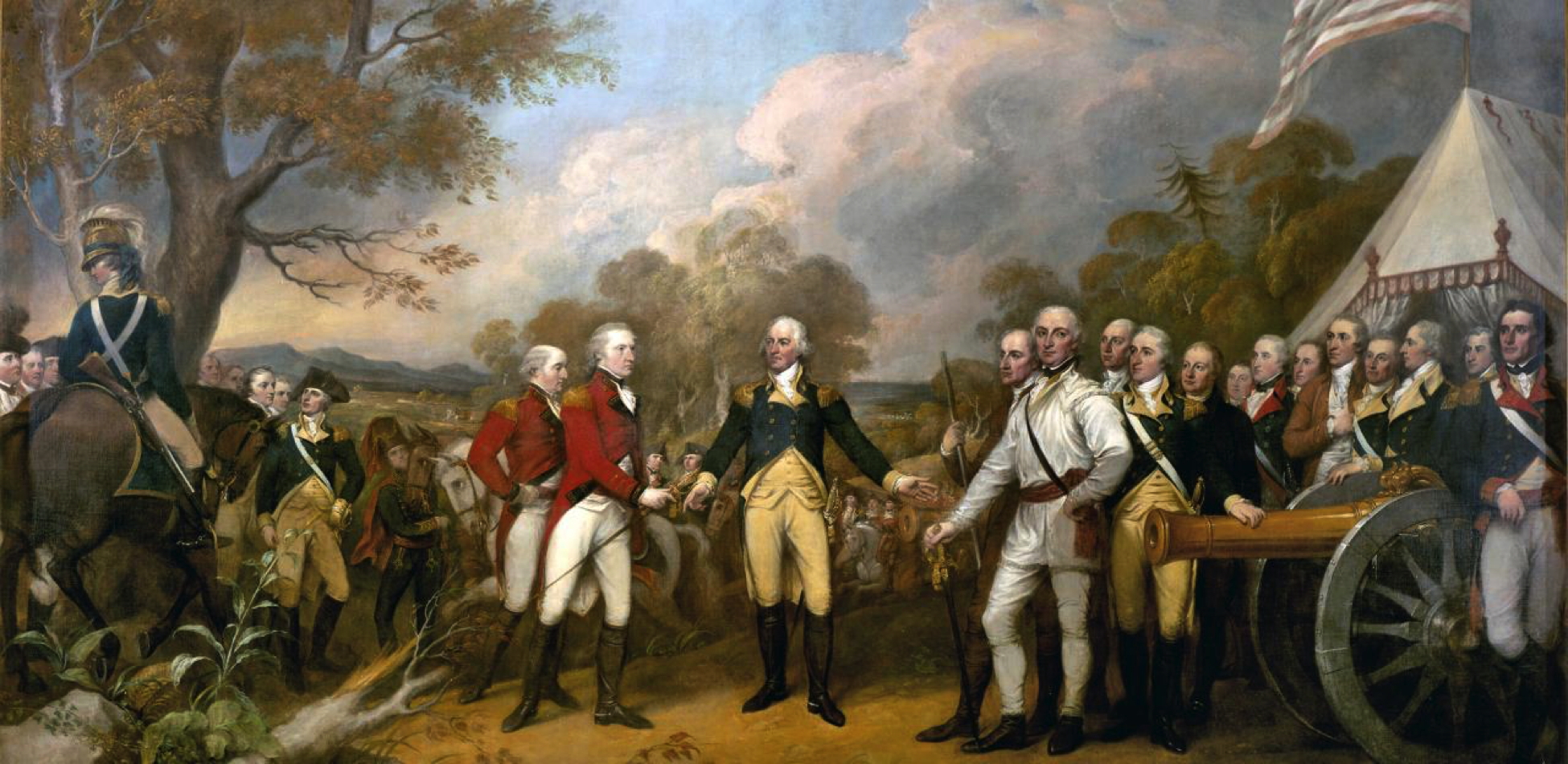
John Trumball’s “The Surrender of General Burgoyne” at Saratoga.
Here are some more details on Assiniboia’s relationship to Cascadia, to refresh your memory:
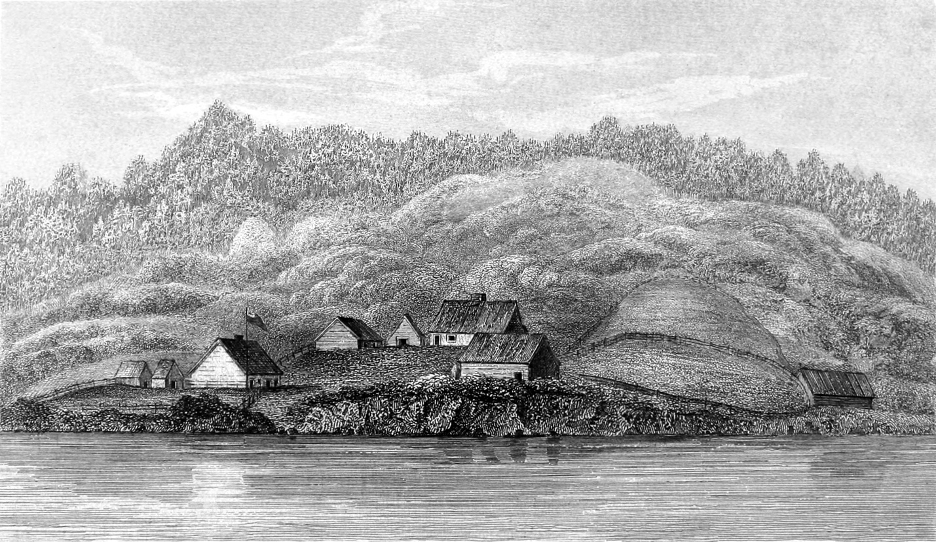
A particular spur to this attempt to negotiate this status between Britain and the USA was the debacle of the War of 1812. From a settler perspective, both the British and the Americans claimed victory. In Cascadia’s Astoria, though…
@font-face {font-family:”Cambria Math”; panose-1:2 4 5 3 5 4 6 3 2 4; mso-font-charset:0; mso-generic-font-family:roman; mso-font-pitch:variable; mso-font-signature:-536870145 1107305727 0 0 415 0;}p.MsoNormal, li.MsoNormal, div.MsoNormal {mso-style-unhide:no; mso-style-qformat:yes; mso-style-parent:””; margin:0cm; mso-pagination:widow-orphan; font-size:12.0pt; font-family:”Times New Roman”,serif; mso-fareast-font-family:”Times New Roman”;}.MsoChpDefault {mso-style-type:export-only; mso-default-props:yes; font-family:”Calibri”,sans-serif; mso-ascii-font-family:Calibri; mso-ascii-theme-font:minor-latin; mso-fareast-font-family:Calibri; mso-fareast-theme-font:minor-latin; mso-hansi-font-family:Calibri; mso-hansi-theme-font:minor-latin; mso-bidi-font-family:”Times New Roman”; mso-bidi-theme-font:minor-bidi; mso-font-kerning:0pt; mso-ligatures:none;}div.WordSection1 {page:WordSection1;}
Fort Astoria During the War of 1812. Note the British Flag.
And here it is in 1844, looking out over the Columbia, north to Cape Disappointment:
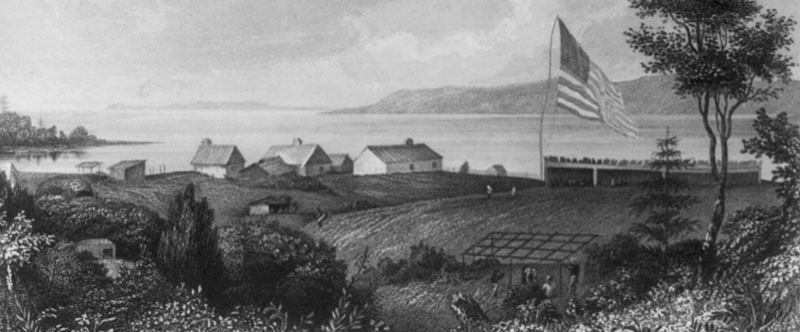
Note that someone with less skill than the original artist has sketched in an over-sized American flag, just because.
In other words, the war continued in the West long past its settlement in the East. From a Cascadian point of view, any immediate confusion as to who had won or lost the war existed mainly within the status societies of European and Euroamerican power, the ones that claimed the region as their own in competition with each other. The Cascadian people, including their sons-in-law, the Canadien workers at Fort Astoria (living by then in the French settlements of French Prairie, Colville, Nisqually and Frenchtown,) never changed their allegiance to the land. For insight into the rituals of two foreign powers fighting over land that was not theirs, I recommend Alan Taylor’s The Civil War of 1812:

In Taylor’s account, the war was fought between the Irish, newly dispelled from their homeland by famine and English cruelty. One half of them were fighting for the USA, on an issue of freedom of the seas. The other half were fighting for Britain, on an issue that might be best described as Law & Order. More strange yet, the British did well in the war because they offered land to American settlers at a far better rate than the Americans did only a few miles away. For this largesse, they asked only allegiance to a king who allowed them to realize the dream of a chunk of land of their own. It was a dream much touted in the USA, yet, ironically, more accessible in Upper Canada. The stratagem worked, too! Not only were Irish fighting an Irish civil war in Lower Canada and Upstate New York, with the prizes being British or American dominance (but certainly not Irish) but Americans were also fighting Americans. Even more ironically, the American habit of outfitting private citizen armies, a powerful bit of romance left over from the American Revolution and still extant today…

Not a Match for the Wagner Group, Even
…left the USA without coordinated command or supply. All of these are issues that would reoccur in Cascadia in 1848, when the Kentucky sons of American 1812 fighters, raised on stories of Iroquois scalping parties (largely trumped up by the Haudonasaunee as propaganda) and betrayal by government on all sides (still an American and Canadian issue), were in the fray. But that’s all small change. From a continental Indigenous point of view, the war was an unmitigated disaster. It was the Haudonausonee, of which the Iroquois were Christianized members, who had won the war for the British. These guys:
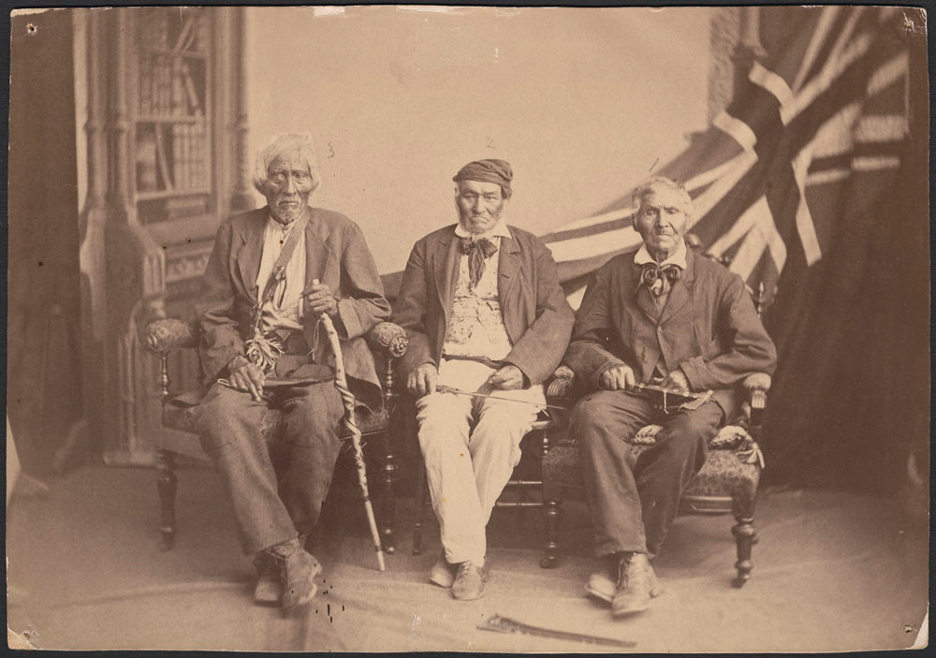
Six Nations Warriors War of 1812
Studio portrait taken in July 1882 of the surviving Six Nations warriors who fought with the British in the War of 1812. (Right to left:) Sakawaraton – John Smoke Johnson (born ca. 1792); John Tutela (born ca. 1797) and Young Warner (born ca. 1794).
(courtesy Library and Archives Canada/C-085127)
The Iroquois, with their experience with the Sioux slave trade and as black marketeers between British and American camps, would have noticed the tangle of allegiances — even moreso given that their kinspeople, the Haudonausonee, lost all their territory in the treaty that concluded the war, despite more-or-less winning the war itself for the British, and despite assurances in the Treaty of Ghent that presumably allowed them to keep their land. Here’s the relevant passage from the treaty that ended hostilities between Britain and the USA, but didn’t end the war, so to speak:
ARTICLE THE NINTH.
The United States of America engage to put an end immediately after the Ratification of the present Treaty to hostilities with all the Tribes or Nations of Indians with whom they may be at war at the time of such Ratification, and forthwith to restore to such Tribes or Nations respectively all the possessions, rights, and privileges which they may have enjoyed or been entitled to in one thousand eight hundred and eleven previous to such hostilities.
Note that:
- The USA was never at war with the Haudasonee, only with the British and its allies,
- And certainly weren’t at war with them after hostilities ended,
- And they weren’t at the treaty council.
- The rights to be restored were ones that, in the eyes of the USA, they were not entitled to in 1811, and that
- Conflict over those rights were a cause for them warring on the British side in the first place, which is to say that
- In the eyes of the USA, they had no rights and
- The treaty was written by a cunning lawyer.
Let’s read on:
Provided always that such Tribes or Nations shall agree to desist from all hostilities against the United States of America, their Citizens, and Subjects upon the Ratification of the present Treaty being notified to such Tribes or Nations, and shall so desist accordingly.
And in the same vein of largesse:
And His Britannic Majesty engages on his part to put an end immediately after the Ratification of the present Treaty to hostilities with all the Tribes or Nations of Indians with whom He may be at war at the time of such Ratification, and forthwith to restore to such Tribes or Nations respectively all the possessions, rights, and privileges, which they may have enjoyed or been entitled to in one thousand eight hundred and eleven previous to such hostilities. Provided always that such Tribes or Nations shall agree to desist from all hostilities against His Britannic Majesty and His Subjects upon the Ratification of the present Treaty being notified to such Tribes or Nations, and shall so desist accordingly. Source.
Note:
- the only resistance was bound to come from its own allies, the Haudonausonee,
- whose rights had just been bargained away by a clause, and which
- could only be defended if Britain attacked the USA,
- which would negate the whole idea of a treaty based on the inability of either Britain or the USA to press their claims against each other further.
- The only ground they could agree to give away was Haudonausonee ground.
In other words,
- US and British face was saved, at the expense of the Haudonausonee.
You would have to be a fool not to keep this mess in mind, and the Iroquois were not fools.
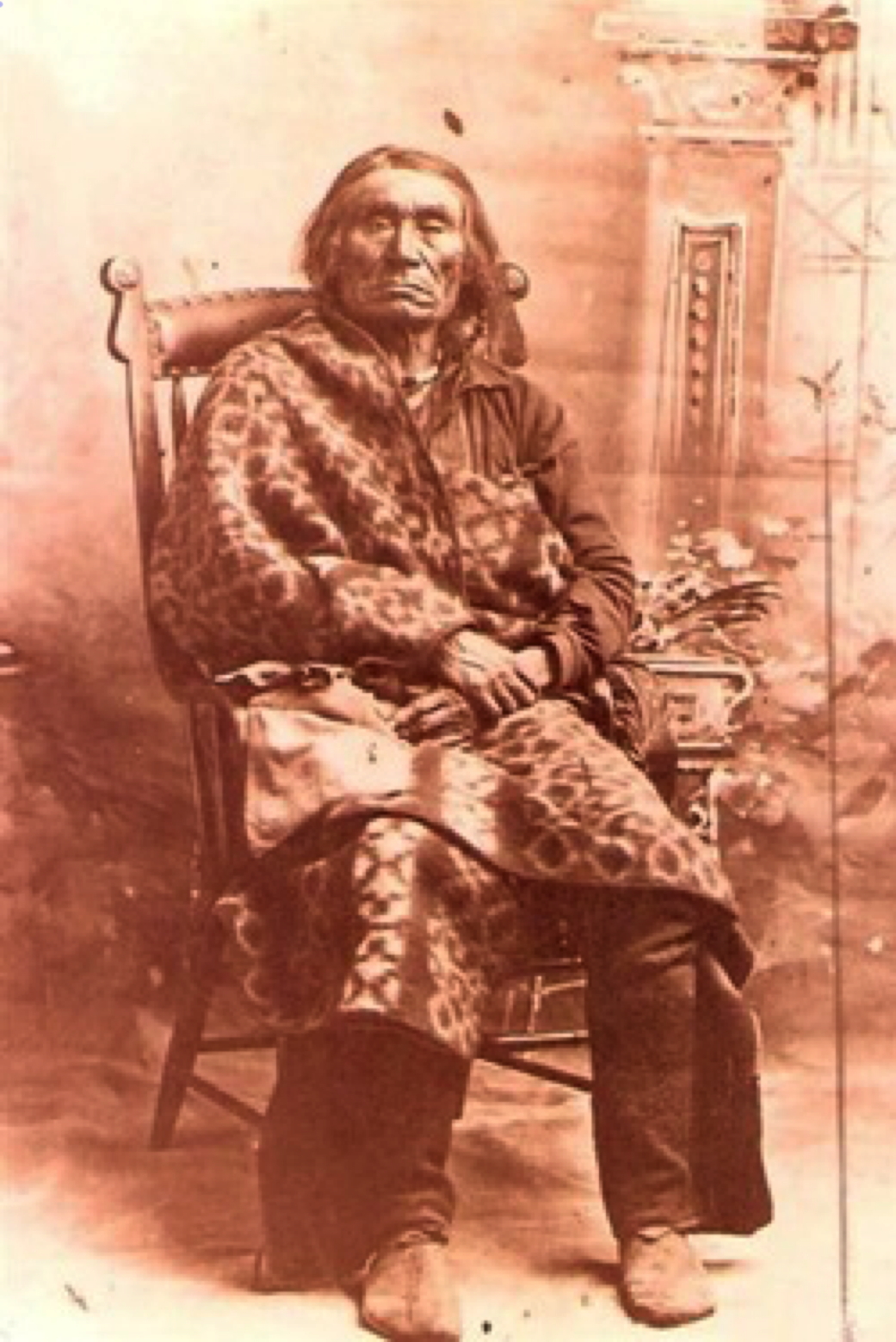
Not a Fool
Old Ignace (Ignace La Mousse) and His Photographer’s Canvas Backdrop. The Chair was, perhaps, chosen to be a throne.
One more consequence of the war was that in 1813 the US Government blocked any foreign investor from trading with native peoples on US soil. In a decade, this move would prove a thorn in Cascadia’s side. After all, if the USA and Britain had agreed on a temporary mutual claim to Cascadia, regardless of what the Cascadian people might have wished, and its only presence in Cascadia was mercantile (ie the HBC), then any American occupation of even the Cascadian borderlands would deny the HBC that trade and would plunge Britain back into a war it did not have the means or desire to fight. Caught in this bind, in 1824, the Hudson’s Bay Company decided to continue the War of 1812 using a scorched earth policy. They would:
- Maintain trade
- Block the Americans, and
- Keep trading in beavers,
- sourced from Indigenous territory
Typically, a scorched earth policy describes a retreating army destroying villages and crops in order to deny them to an advancing enemy, forcing it to carry its own supplies and shelter where it could.

Germans invading the Soviet Union in 1941 pause to watch the Soviets burn their villages and crops in their retreat. The Germans torched everything all over again during their own retreat three years later.
The HBC strategy had more in common with a more recent one, the defoliation program in the Vietnam War, which defoliated 3,000 square kilometres of forest, to deny cover to the Viet Cong.
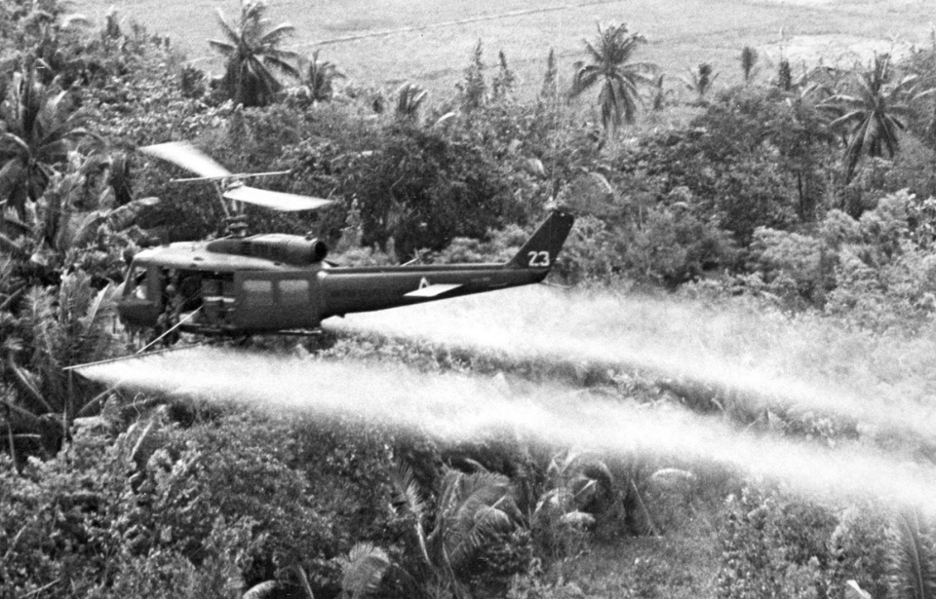
Spraying Agent Orange in Vietnam
4,000,000 Vietnamese remain sick. More personally, my father had me spraying this same stuff on weeds in our orchard in the Similkameen, with a backpack sprayer that leaked poison all over the Cowichan Sweater my mother had knit for herself when first married, with a green pheasant on the back, which she had passed down to me. I had to throw it away. I can hardly be the only Cascadian farm kid poisoned in this way. The sweater looked much like this:
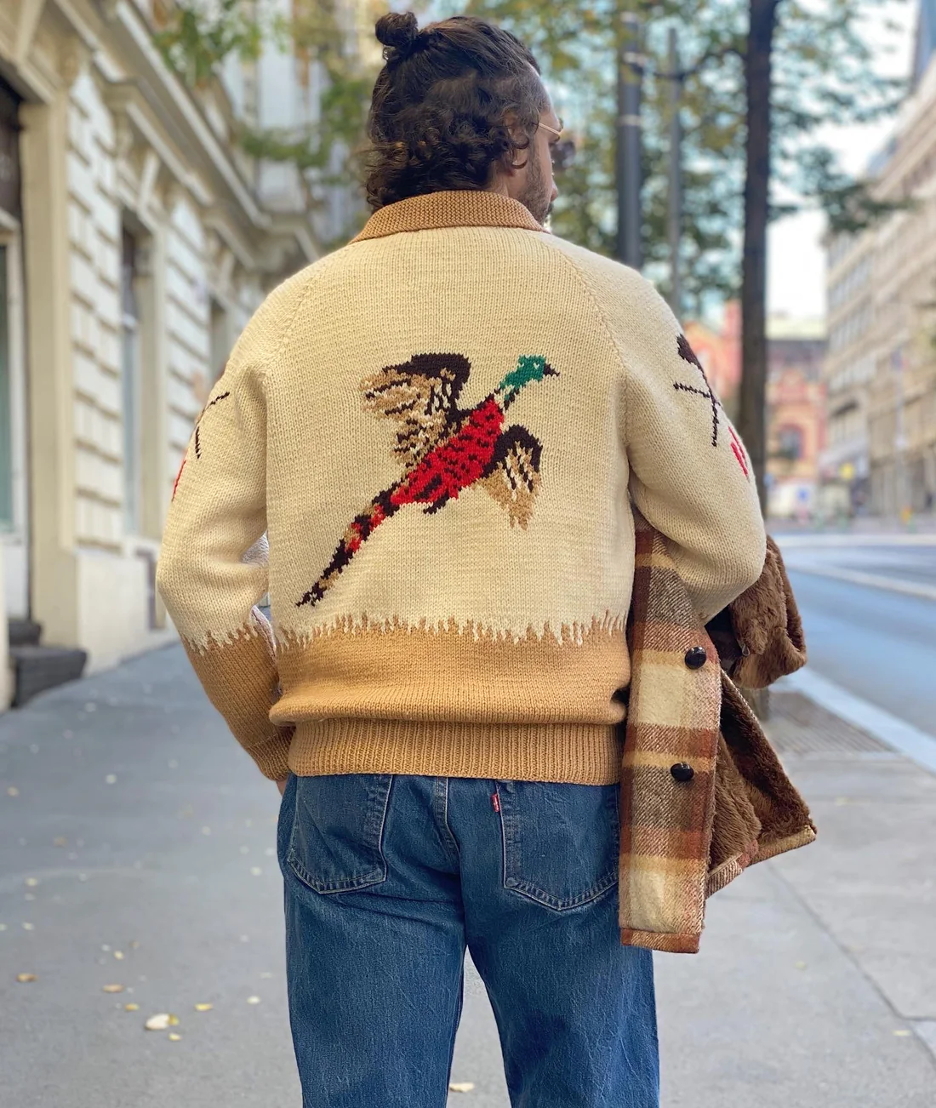
This one has hunters on the front. My mother, eschewing violence, omitted the hunters. She just liked pheasants.
The HBC target was not the Americans. It was their economy. By eliminating the beavers, they could extract trade profit from the land, pre-empting any American justification for war, while denying any American occupation. Or so they thought. They were traders, not diplomats. You can read more on this history here:
And so it was. Two expeditions, one in 1824 and the next in 1825, sought to exterminate all beaver on the Western slope of much of the Rockies.
Ogden left men to kill all the beavers in every watershed here. You can read about his trail of destruction here:
That’s how traders conduct wars. Middlemen, like the Iroquois, get squeezed (just as the “neutral” Americans were squeezed by a British naval blockade prior to 1812.
Next, the details of this proxy war by trade.
Categories: cartography, First Peoples, Grasslands, history, Pacific Northwest

 Okanagan Okanogan

A side note, regarding the United States, neutrality, and maritime freedom. Many Americans if not most accommodate all sorts of misinformed notions about “non-intervention in foreign wars” or “isolationism” as keystone foreign policy planks of the nation historically. In fact, in 1787, before its new Constitution had been completed, the United States signed a treaty with Morocco in the spirit of assuring free-market maritime trade with North Africa. Taking office in 1801, President Jefferson was sending warships to the Mediterranean to rein in privateers – pirates, if you prefer – who were finding safe haven in North African ports while preying on international shipping trade. Napoleon and the Ottoman Empire were by most accounts ignoring the situation in order to keep from crossing swords with each other. See Barbary Coast Wars.
Also: I wonder if you should better reference the source and situation of the photo described as a ‘domesticated Union Soldier after the repatriation of 1865”. For many, it may prompt recall of the notorious prisoner of war camp run by the Confederacy at Andersonville, Georgia during the last years of the American Civil War.
Just catching up with your later posts. Thanks, and best.
LikeLike
Many thanks!
LikeLike