


The fire burns through, turning the land to dust and ash, and then, a month later, at the end of summer, it’s spring.
 Bunchgrass Coming Back
All I can say is, it must have had a stored source of water.
Here’s a closer look…
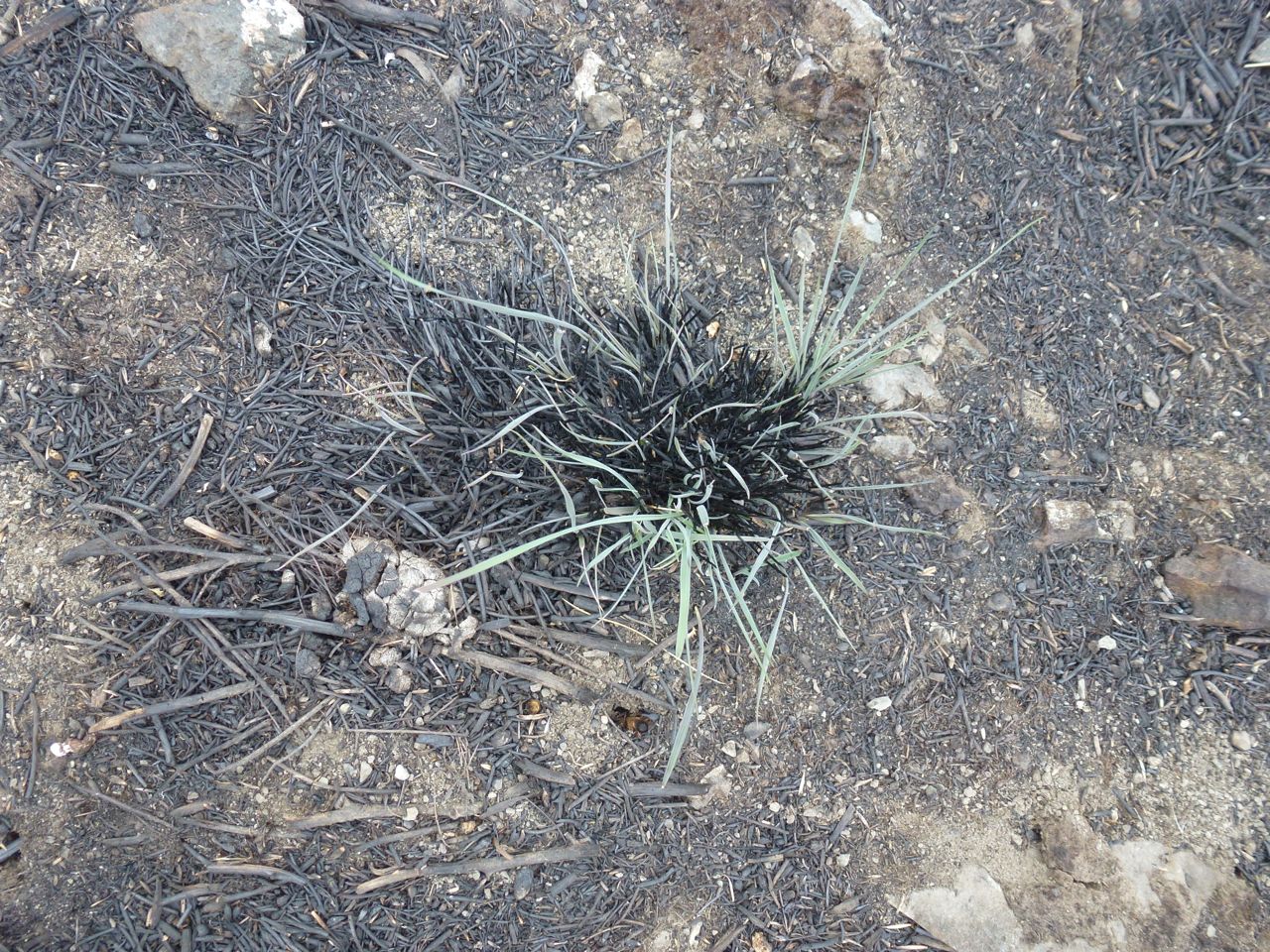 The Advantage of Bunching Up
If there’s a thunderstorm, even burnt stalks will drive the water into your heart.
Herbacious plants are also coming back …

In the Non-shadow of Non-sagebrush
Plants are springing up. It’s as if the sagebrush was more of a hindrance here than the fire.
The sagebrush is not coming back, but shrubs are, especially in the rocks …
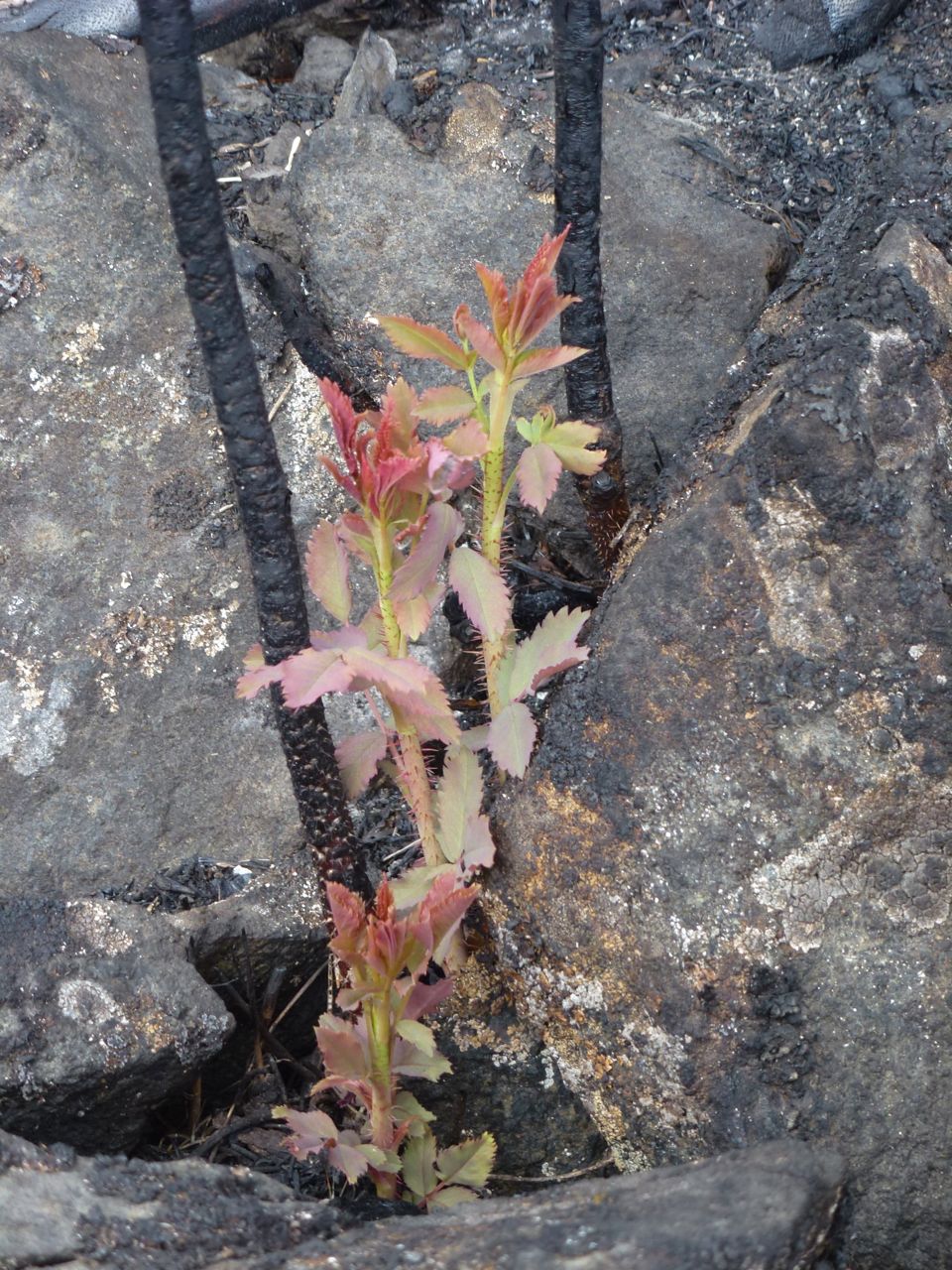 Wild Roses
Seriously growing as if it were April.
Cherries, too…
 Wild Cherries on the Rebound
The original stalks were only 60 centimetres tall, as they were browsed down by deer. Look how the dead stalks encourage the deer to move on (for now.)
But all is not well…
 Cheatgrass Colonizing a Cow Footstep
This isn’t regrowth from root reserves. This is seed, fed from one thunderstorm a week ago. The fire must have just blown over the top of these seeds while they did their la-de-da.
Still, there are cool things, too. Look how something as simple as a spider helps to reshape the landscape by harvesting the wind…
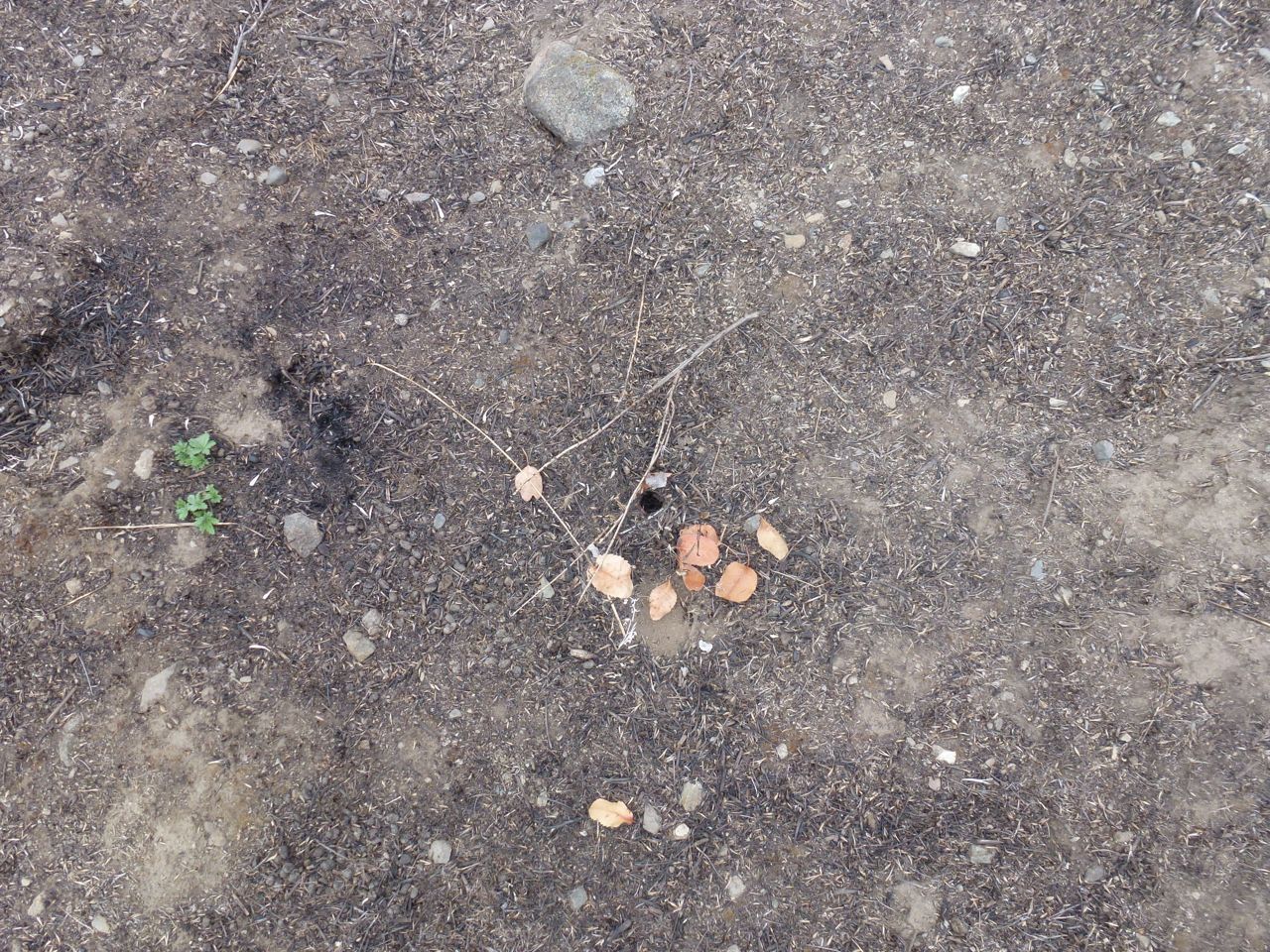 Spider Hole, With Leaves Caught in the Web at Its Mouth
If you’re thinking, “What kind of spider has a hole two centimetres in diameter!!!!!!”, I’m thinking it, too.
Whoa. Here’s dead sagebrush pulling off the same trick.
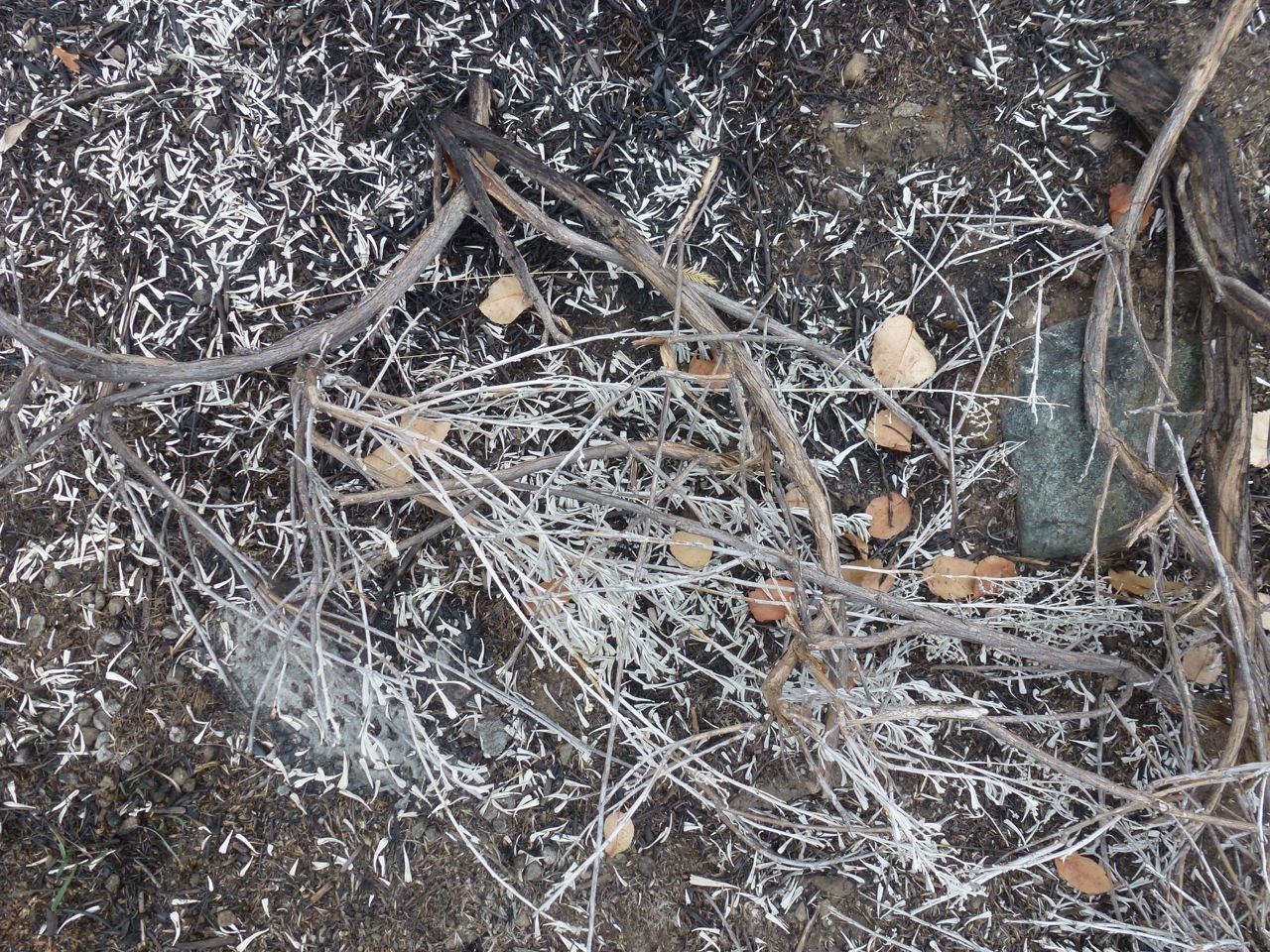 Dead Sage Catching Wind Debris
And so organic material concentrates in a wasteland.
Kind of like water behind a dam. In all of these cases, water, seeds, and organic material are stopped in their tracks from moving across a landscape, and concentrated in one spot. That seems to be an important rule: stop, be here, stay. There seem to be many ways in which to bring it about. But, spring in the fall? That’s very cool.
Categories: Erosion, fire, fire gardening, Grasslands, invasive species, Land, Nature Photography, Other People, Water, weeds

 Okanagan Okanogan