




Cameras are intriguing machines, that not only capture light, but allow their operators to frame it in a visual space. That space is human. The photographs we take would be useless to dogs, for instance. The relationship between the body of the photograph and the living processes of the earth creates a dynamic energy. When it’s right, the photograph comes alive and becomes mind. We can think by seeing. Another device that works like that is the electricity that flows between the two poles of a battery.
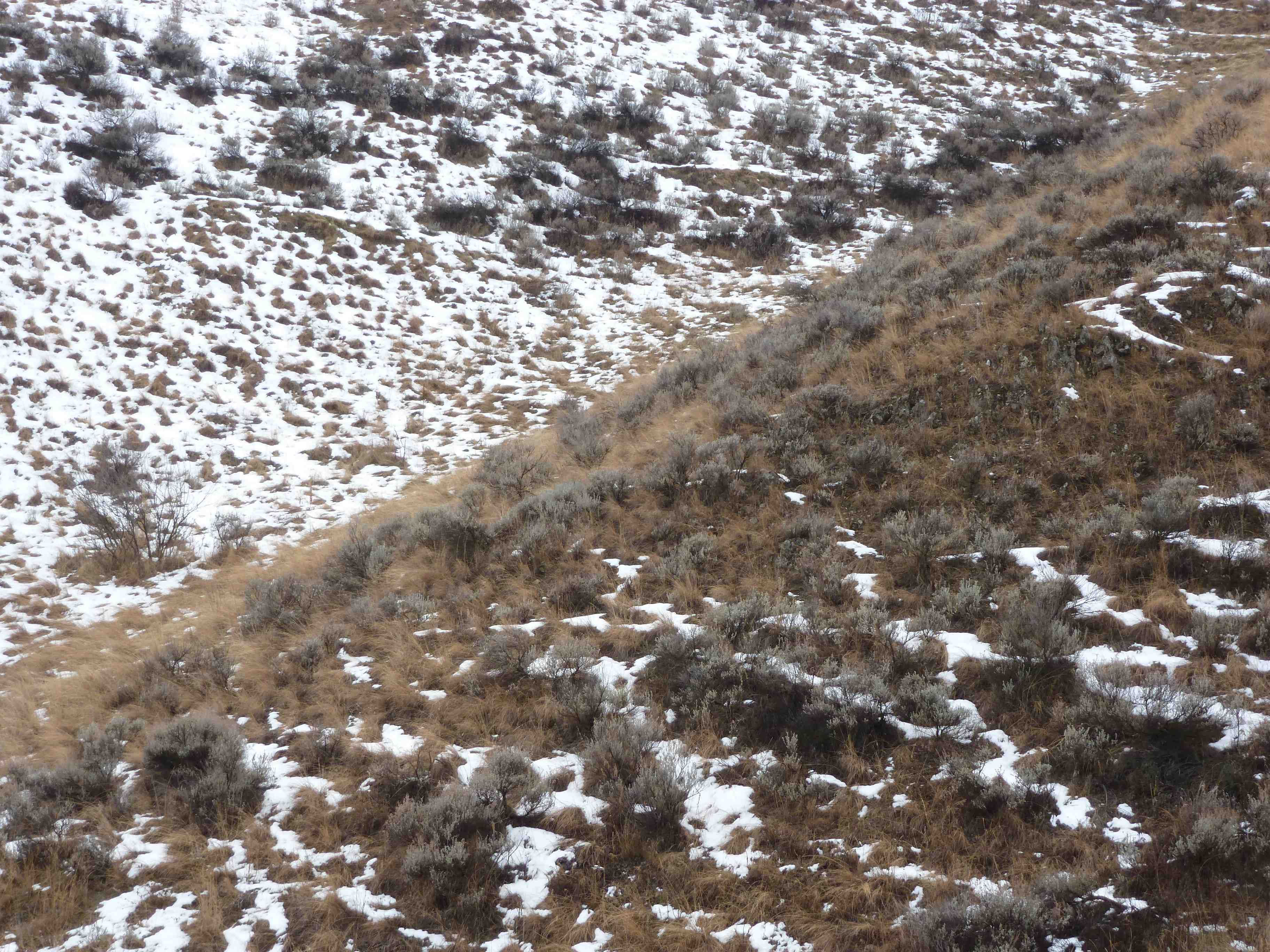
Sunlit and Shaded Slopes in the Grass
Such patterns create a web of heat and coolness that extends the seasons on the grass. Seen from a distance, these simple switches look much like this:

The Commonage, Vernon, BC
Two days after the biggest snowfall of the year, the land is hard at work, absorbing water in two different ways. The ultimate result is the wetlands down below, snaking among the houses, warehouses, schools, and sportfields built up on gravel, trucked in and dumped into its story.
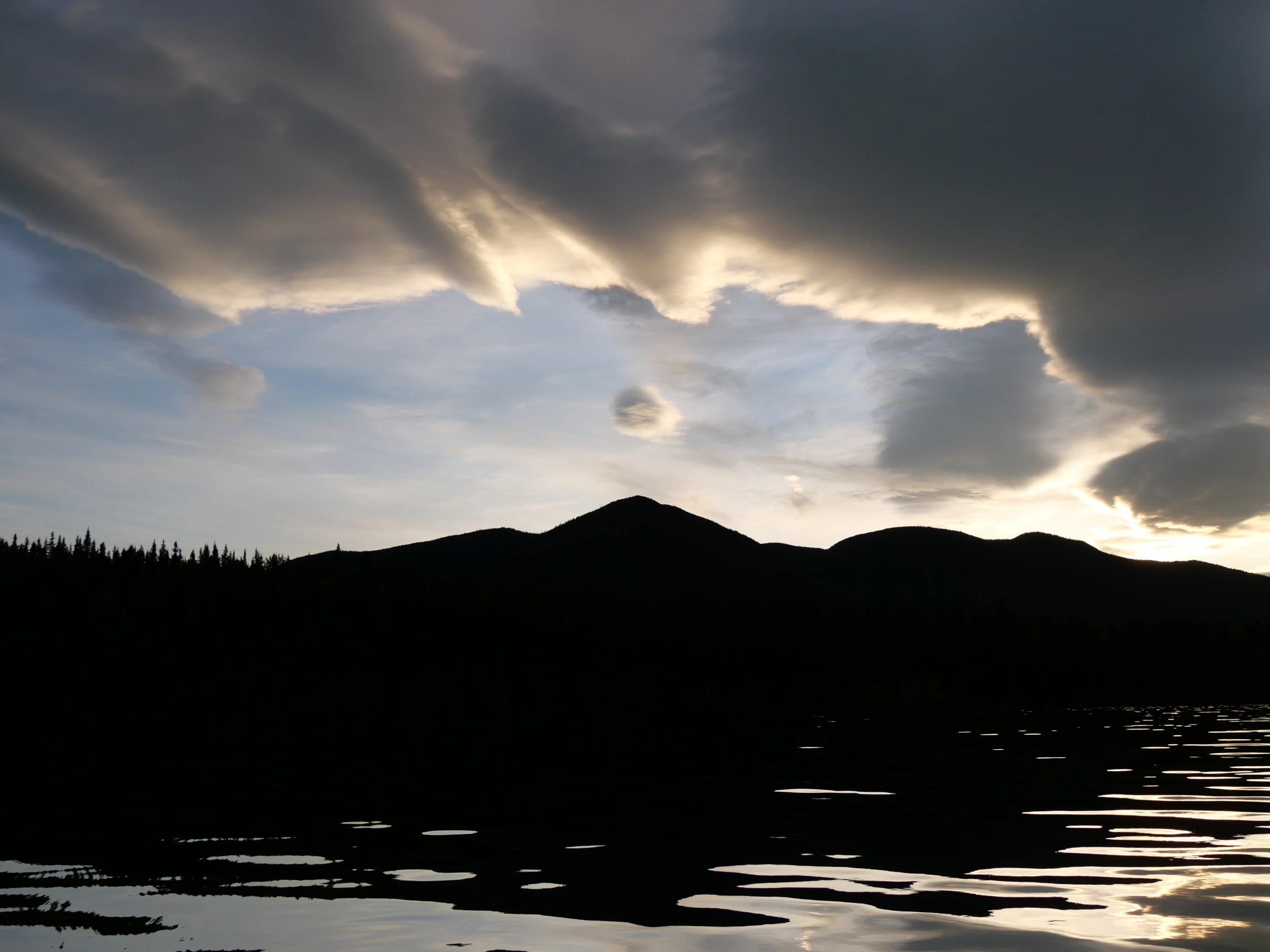
These effects appear to be planet wide. Here are two shots of dawn a few days back. They’re rather lousy shots, but they make their point. First, to the west:

Over Shorts Creek, the World is Blue
The German poet Goethe would point out the deep, melancholic emotions that emanate from this shot. Actually, Goethe would have likely gone so far as to talk about death. Poor gloomy man.
While to the east, look what’s going on:

Over Coldstream, the Sun is on the Way.
Goethe would have pointed out the emotions of excitement and energy here. Good on him.
Same sky, a second apart, two different directions. This pattern of colour is reversed at the end of the day. In between, the light is white. This movement of energy is powering the world. What do we get in the shadows of the cliffs, where water and heat are conserved, and mixed in delicate microclimates?

Bird Nest in the Wild Roses
Life! It’s kind of like photography, really. Or, to put it another way, the art of photography is less human than we think. It is one way in which we, humans, celebrate ourselves of creatures of this earth. We wouldn’t be like this on Mars. The complexity of darkness and light and water mingling in this environment, powered by the little atomic switches of photosynthesis, where plants convert water, carbon dioxide, and light into sugar, and life, is visually pleasing to such visual creatures s humans, but also leads us deep into ourselves. We need no other tools but our eyes, engaged with the world. Beauty and function are one.

Water Beading on Last Year’s Grass
The balance of this photograph is a true path into the balance of the world. By finding that balance, and framing it, the mind gives the body an image of itself. We call that image the earth. For 15 billion years, the universe has been trying to see itself. We’re getting there. But it no longer seems like we’re the artists here. We’re just dancing along.
Categories: Earth, Industry, Land, Light, Nature Photography, Okanagan Art, Water

 Okanagan Okanogan