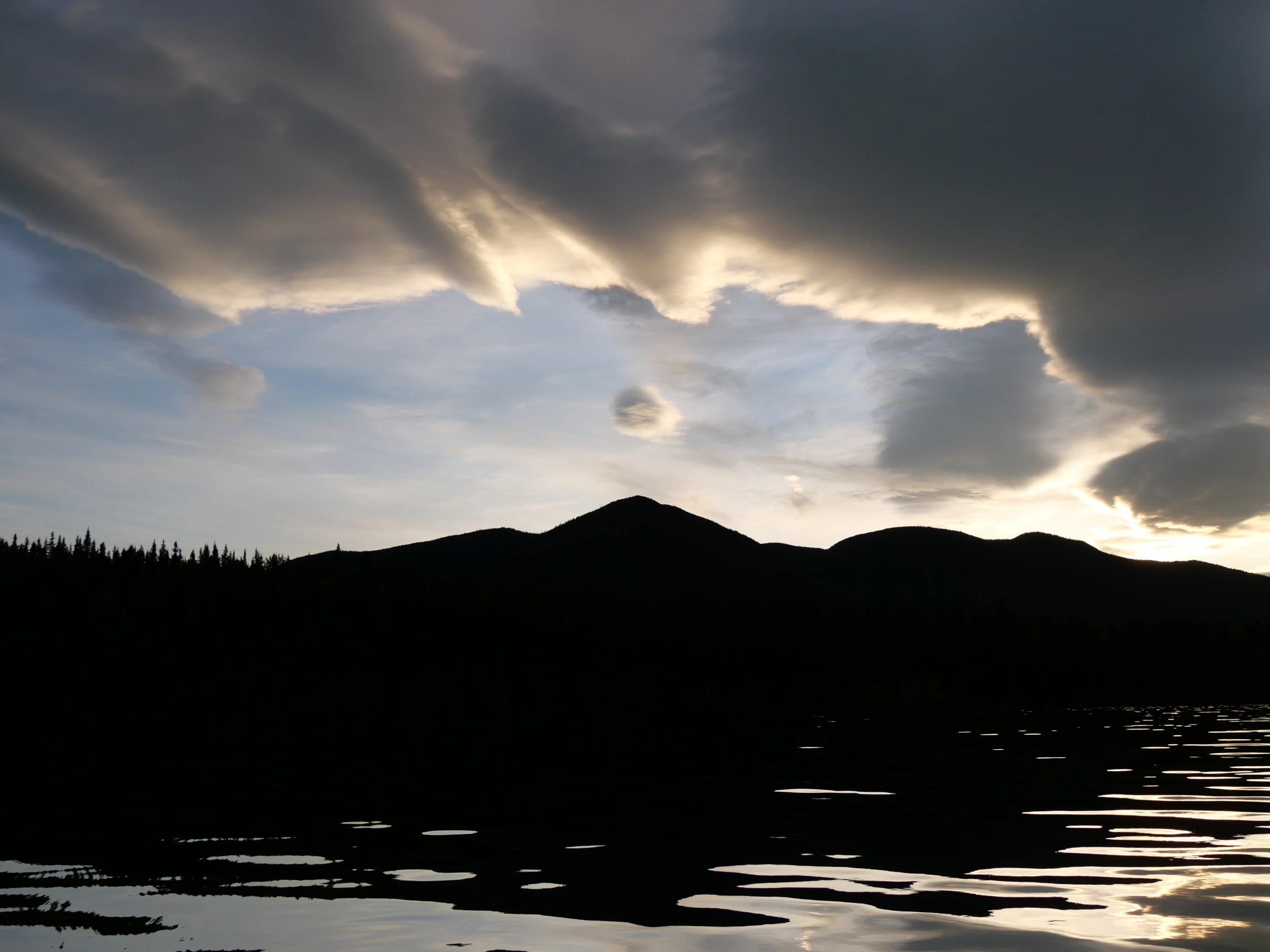


After thinking about water yesterday, and how it is moved from place to place with the sun’s heat, which it stored and gave back again under the soil surface, I went to climb the hills. My goal was a cliff at an elevation of 770 metres, that collects water, creates a wet climate in its shadow, and funnels it down into a streambed in the dry grass. I wanted to see how that all works. I have those pictures for tomorrow. First, though, I want to show you the light that I found along the way.
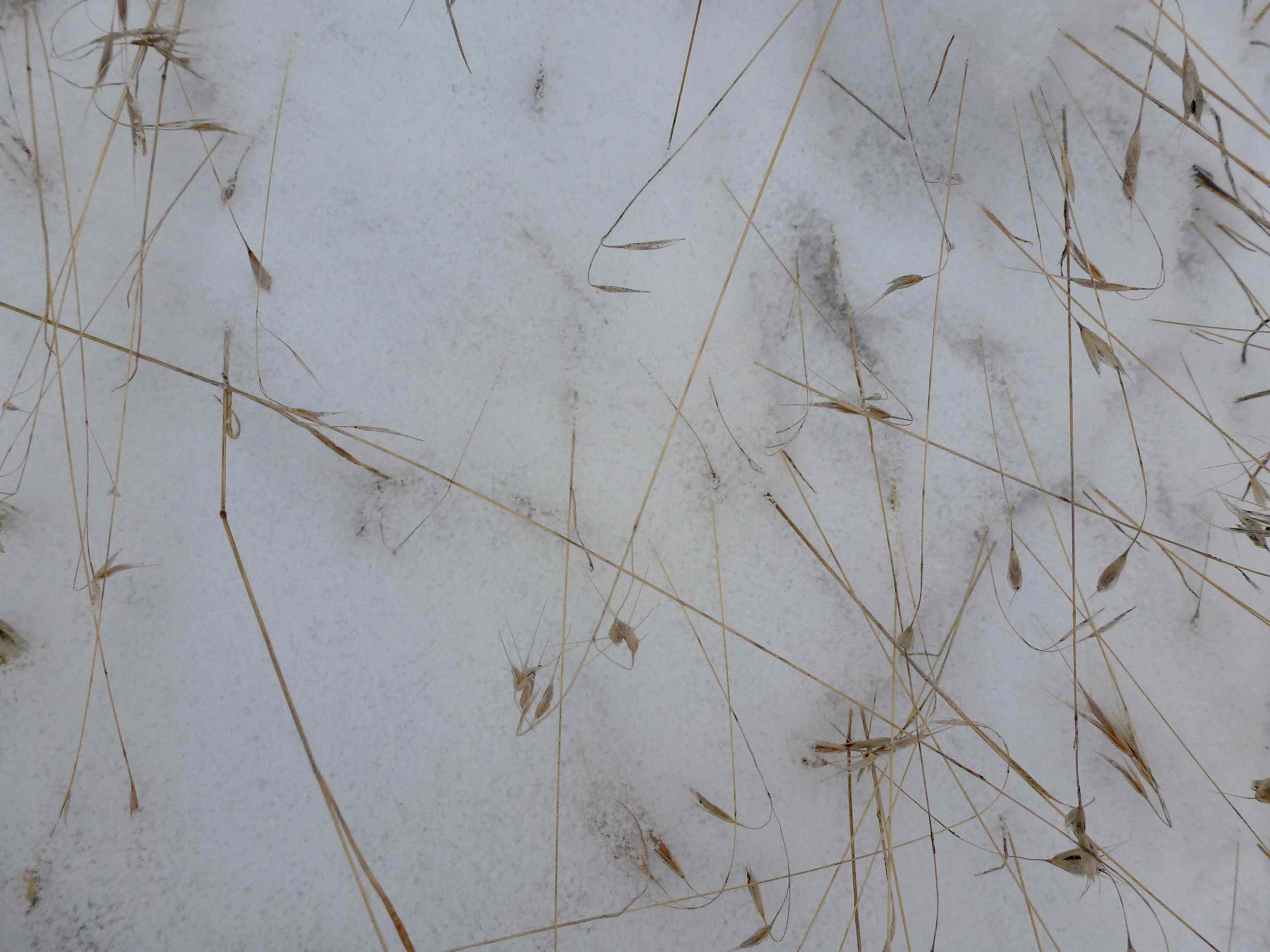 Grass Seeds in the Shadow
This is a story of energy being harvested, stored, and transferred, season by season……..Or is it?
The German poet Goethe wrote a 1400 page book about light. He got some things right, he got some things wrong, and he created some diagrams that can seriously hurt your head. In the end, he goofed on the nature of light, and got human perception right. The colours we see are not just light. They’re tangled up with emotions and the business of being a spiritual & psychological entity tied to a physical body, living on a physical earth that is a grid of energies.
 Grass Seeds Hanging Over a Deer Trail
Goethe would have pointed out the dark seeds within the bright stalks here, that this image is built up out of the darkness within it, as much as it is out of the light. Significantly, to Goethe, it was the seeds, not the stalks that are dark. They are of the body, in the way a human with closed eyes knows where a glass is he or she has recently placed on a table in the dark. Seeing, for Goethe, was the point where bodies and light meet.
Of course, for it to work, where there is light, there is darkness. We can’t see into the dark earth, but we can see into the change of colours on its surface. Here, for instance, is the edge of the sun:
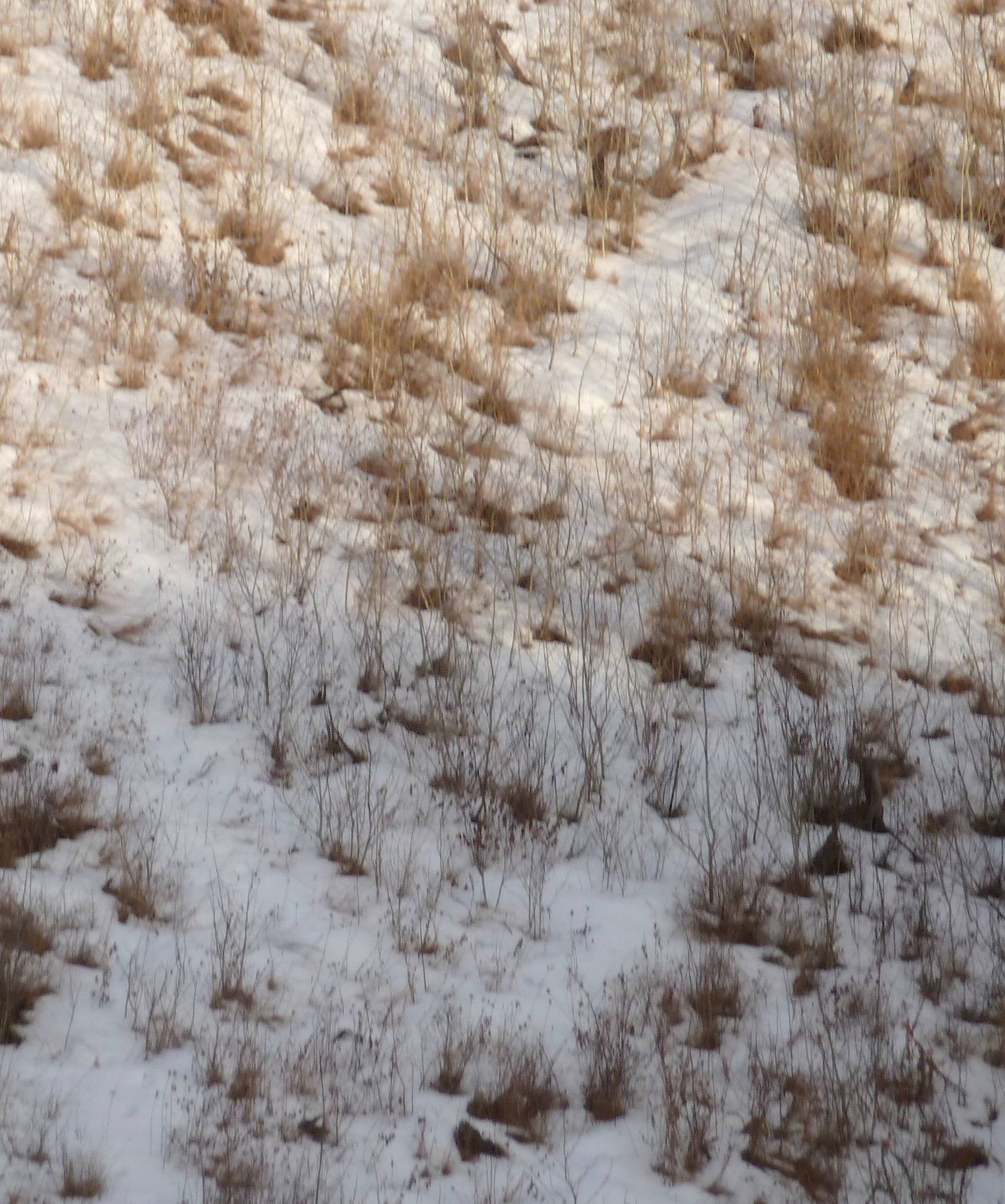
Cliff Shadow in the Late Afternoon Light
If Goethe is right, anyone observing this one field of grass will experience it differently on both sides of the line where the sun and the earth meet.
In contemporary terms, these subtle differences of perception are called emotion. Nonetheless, they are at the core of human experience of the earth — a place where body and mind meet. Here, for example, is what greeted me after I pulled my way up a porcupine trail through the wild roses, oregon grape, and douglas firs:
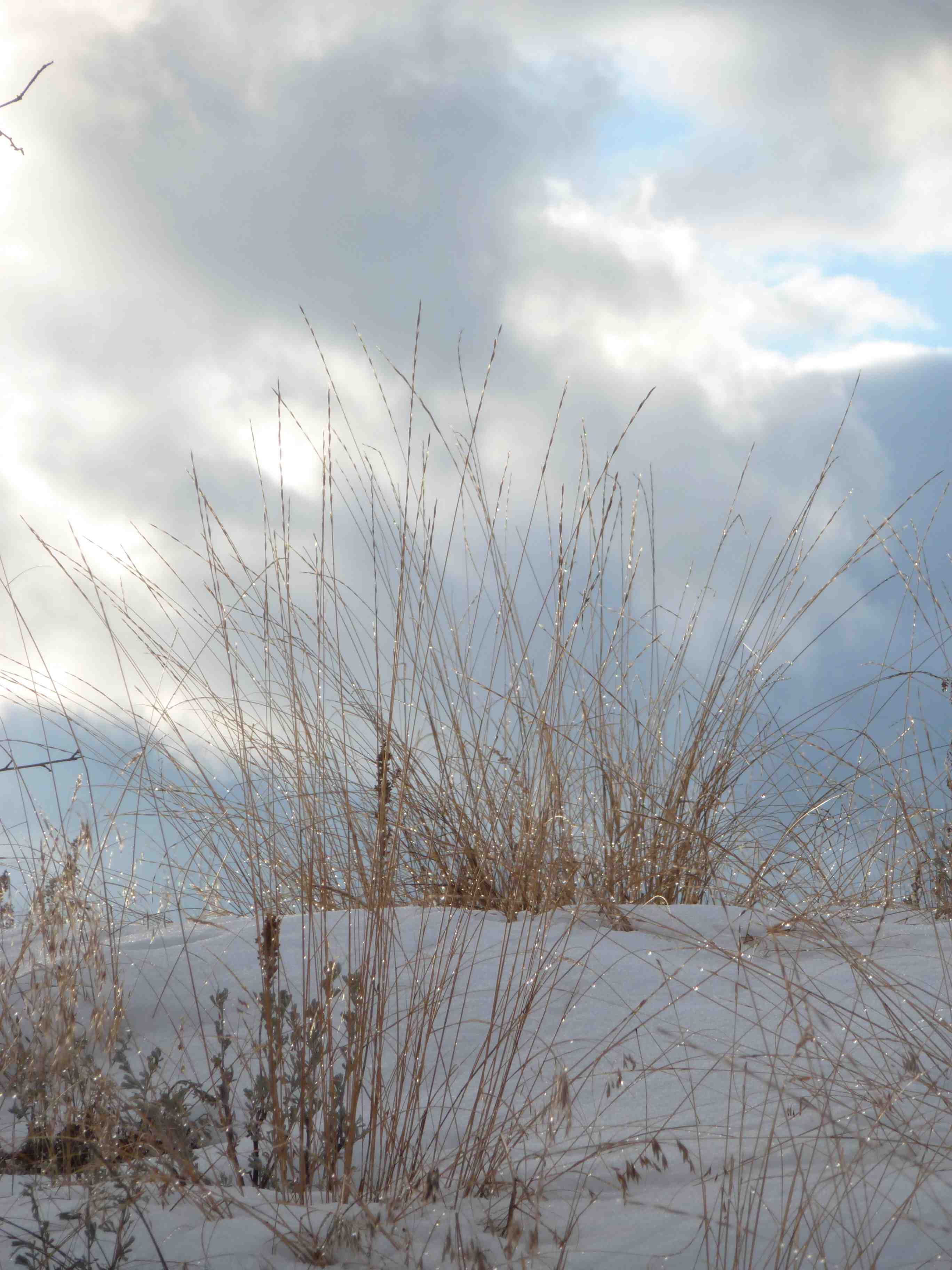
Bunchgrass Glistening with Yesterday’s Snow
You could describe this as a complex interchange between energies, or you could pull out the camera and record a moment of beauty.
Science and beauty: they are the same thing. As I tracked down the slope on the other side, on the same horizontal plane as the sun as it went down behind the mountains across the lake, I found myself in a light I’d never experienced before: head on.
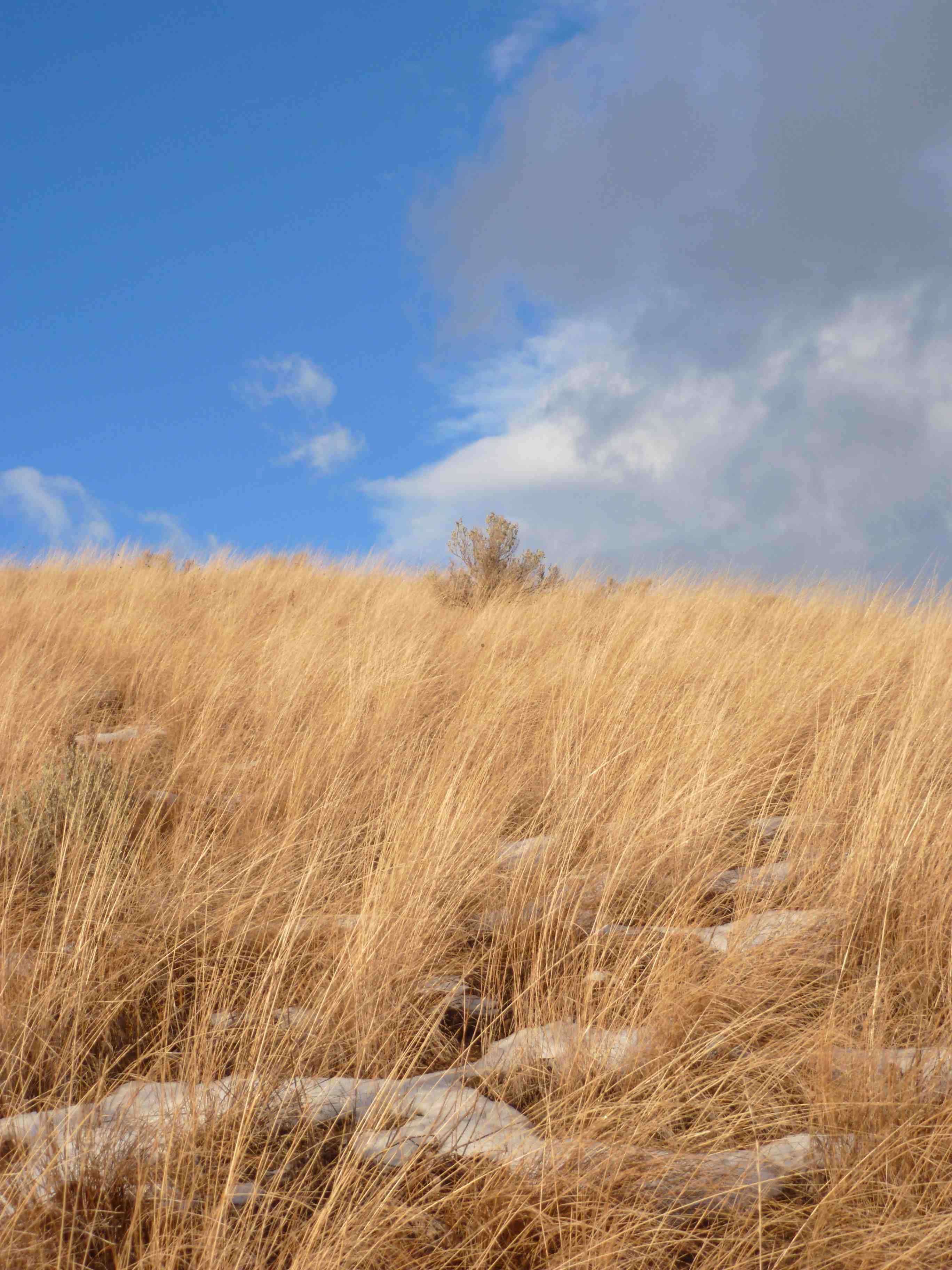
Grass in the Red Spectrum
When the sun is viewed so close, distance vanishes. Whatever processes produce light in the sun, are completed right here. In the same way in which we view the grass to read the clouds of water under the earth, so too can we brush our hands through the grass, and walk through the sun.
Poetic, perhaps, but Goethe’s way of science has given us our modern artistic traditions, the entire colour industry, from paint to makeup, and Waldorf schools. That’s not bad for a man keeping his eyes open two hundred years ago. Today, though, we have cameras, which can capture both the physical colour of things and our emotional reactions. They do so through selection, framing, and the energy we bring to them as viewers. In effect, they make those emotions transportable. Each photograph is a space in which the world sees itself as spirit. In each photograph, they are the same thing. It is a terrific tool for exploring the world. To get you started, here is another illustration of Goethe’s primary observation:
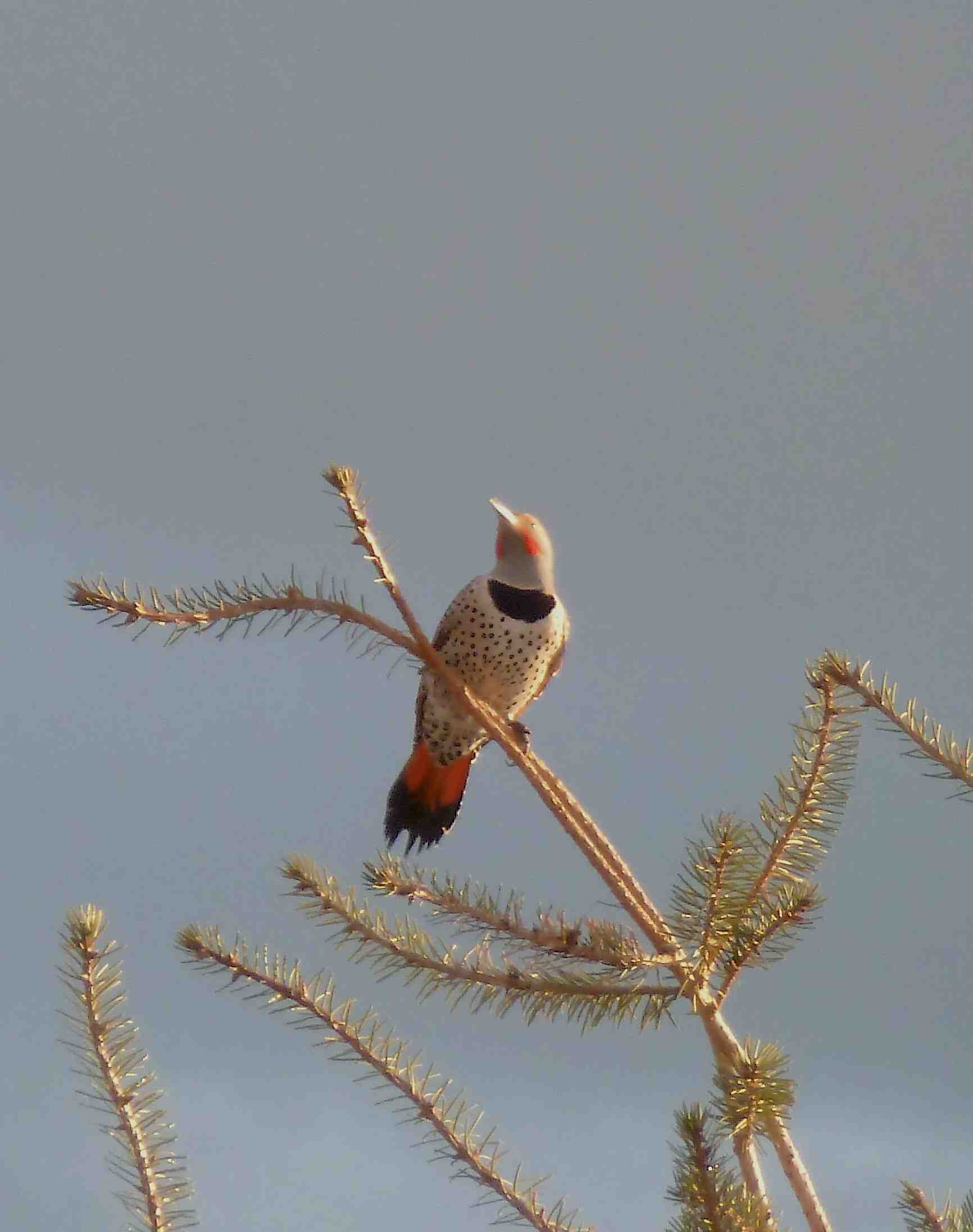
Flicker in Full Colour
The Hills Golf Course
One entire series of emotional reactions is attached to the colour of this bird. Another set, however, applies to the starling here, viewed a half hour later:
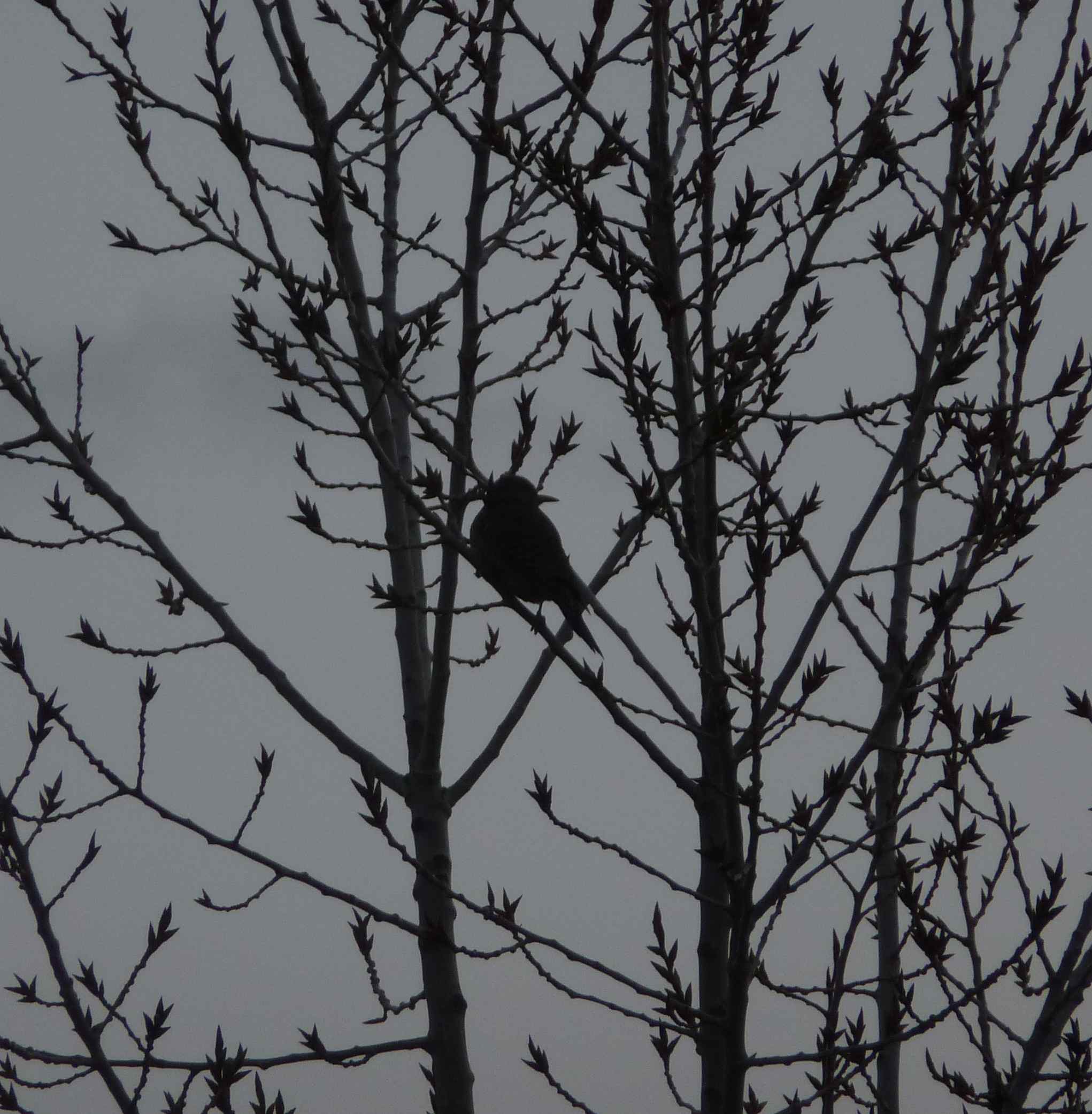
Starling in a Poplar in the Last Light
Orchard Hill
As painters know, colour matters. As poets know, emotions matter. As Goethe would say: understand the emotions; you will come to knowledge. Here, I think, is what he meant:
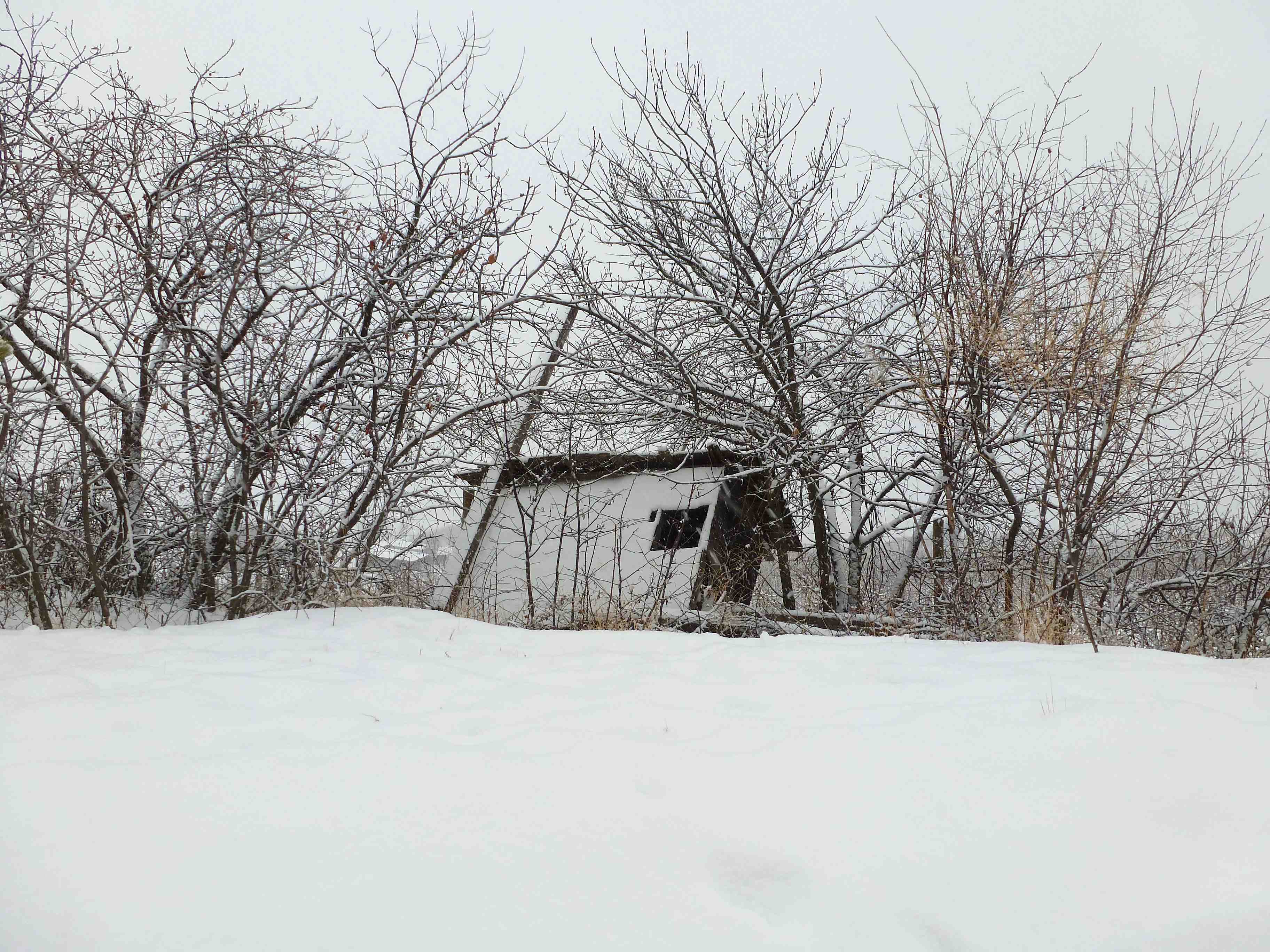
Old Pump House in the Snow
Gray Canal, Okanagan Landing
Is this a picture of darkness, framed by light, or a picture of light, framed by darkness? No doubt it’s both. We are creatures of this planet. It’s processes are our processes. If we understand them, we understand ourselves. That is one of the goals of this blog. Another is to find ways to translate that understanding into a new system of energy use and land use, that works with the land not against it. I think our future depends upon it. Tomorrow, I want to explore how the story of water matches the story of light, and how photography can illuminate it. Until then, I leave you with a final thought:
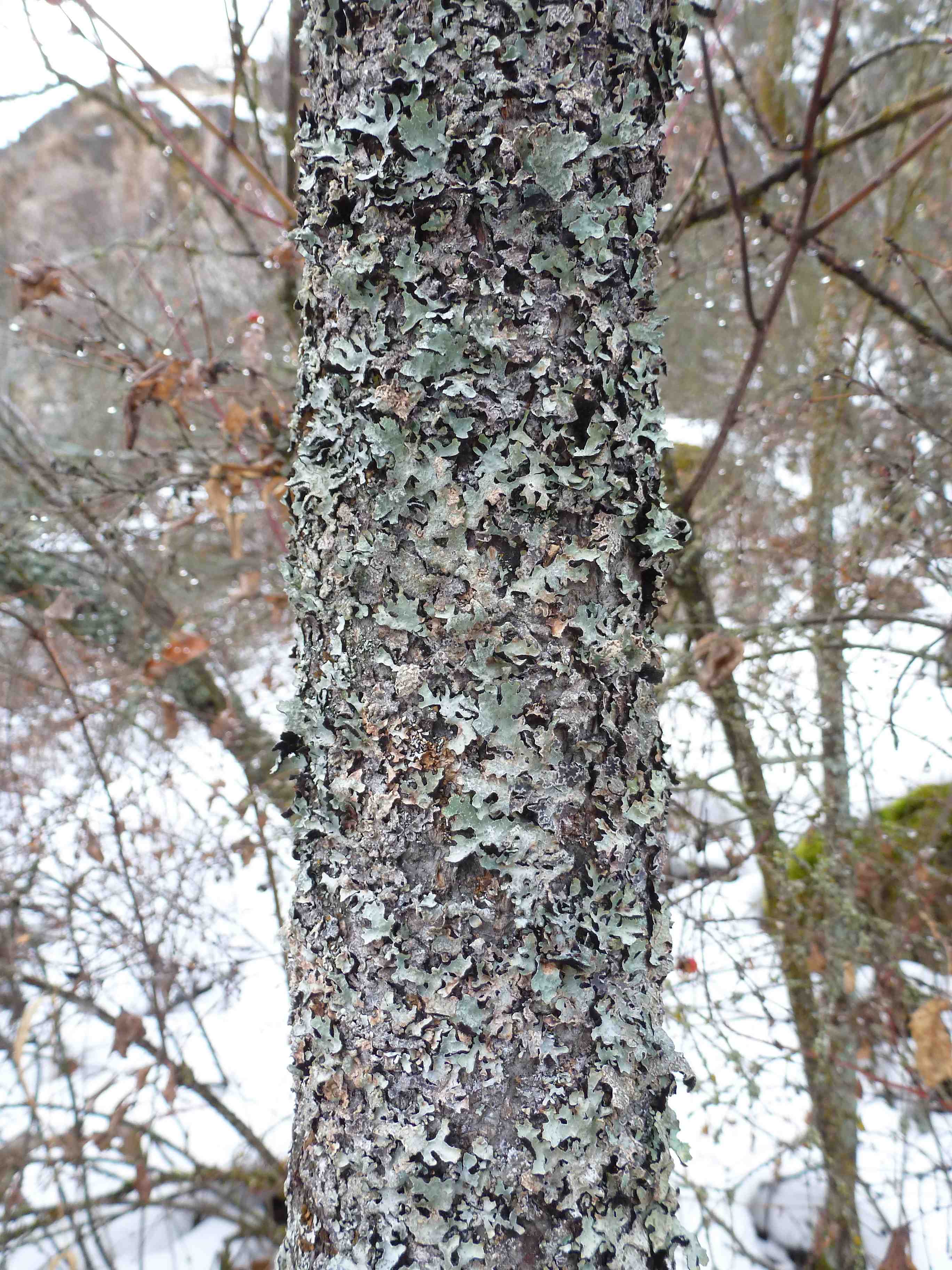
Lichens Harvesting Shadow
All the trunks and bushes in the shadow of the cliff I climbed to yesterday, contain such structures, that comb both water and light out of the air. Just a few feet away, tiny relatives live off of the sheen of rainwater on glacial erratic stones and volcanic outcroppings. All around us, the planet is breathing water and light. I’d be surprised if we weren’t, too.
Categories: Industry, Innovation, Land, Light, Nature Photography, Water