




Here are three women walking down a corridor between two deer fences. Plus a coyote, as I showed you a few weeks back. Today, a bigger view.

The upper fence ostensibly protects a weedy patch of land that twenty years ago was part of a North Okanagan Valley grassland degraded by cattle. A cow in the undeveloped slope behind the women shows a bit of what it was like.
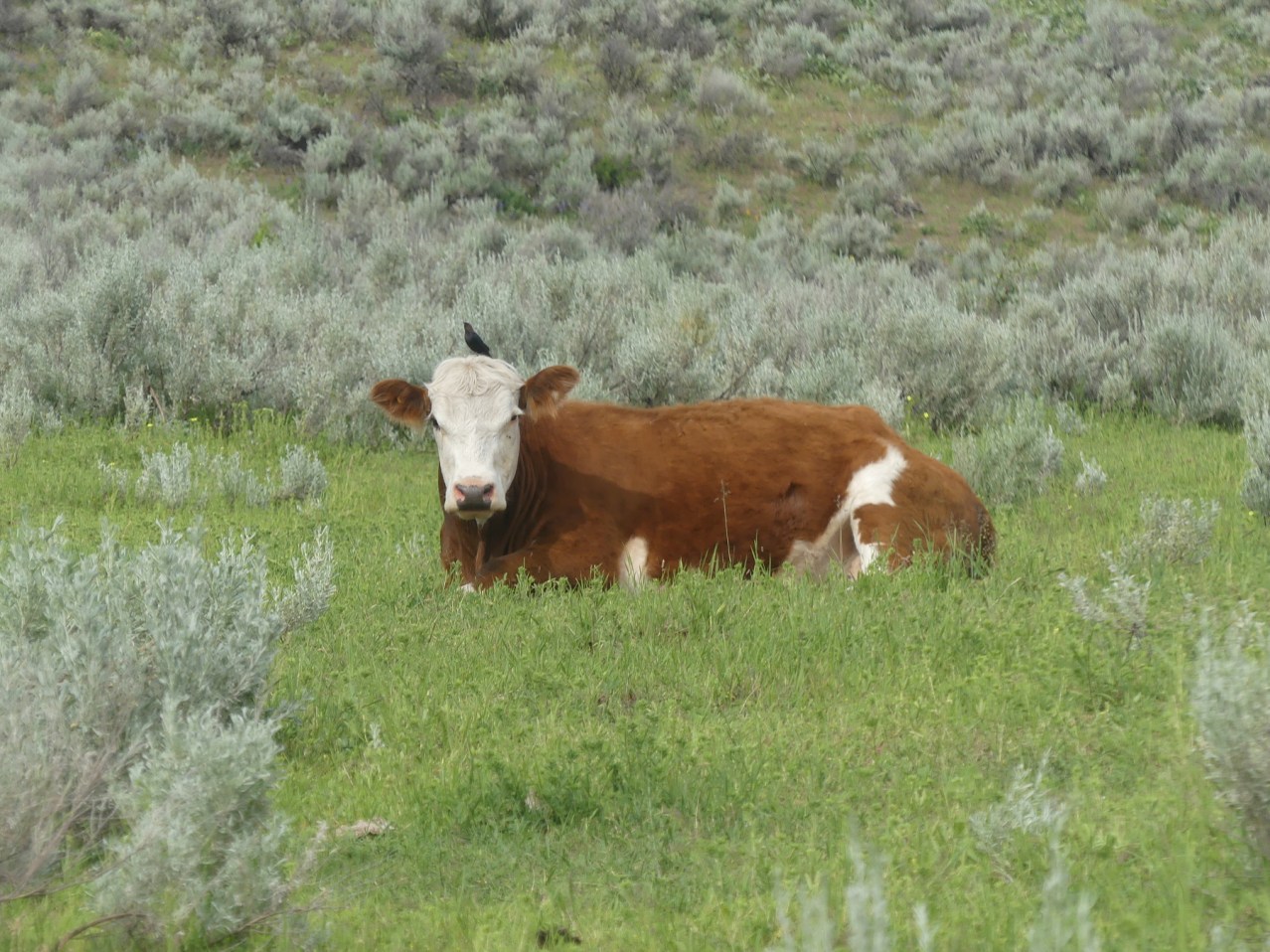
Hard to raise more than a dozen cattle in this thousand acre mess of weeds.
Instead of the land being rejuvenated for agriculture or for its environmental values, the part behind the fence was turned into a housing development, on the promise that it would have a vineyard and, between the houses, a carefully planted and protected grassland. Even bluebirds would be protected. The lower sections were graded into a vineyard (the coyote stands on the berm of the grade) for aesthetic values, and to raise property prices overall. A winery was promised.
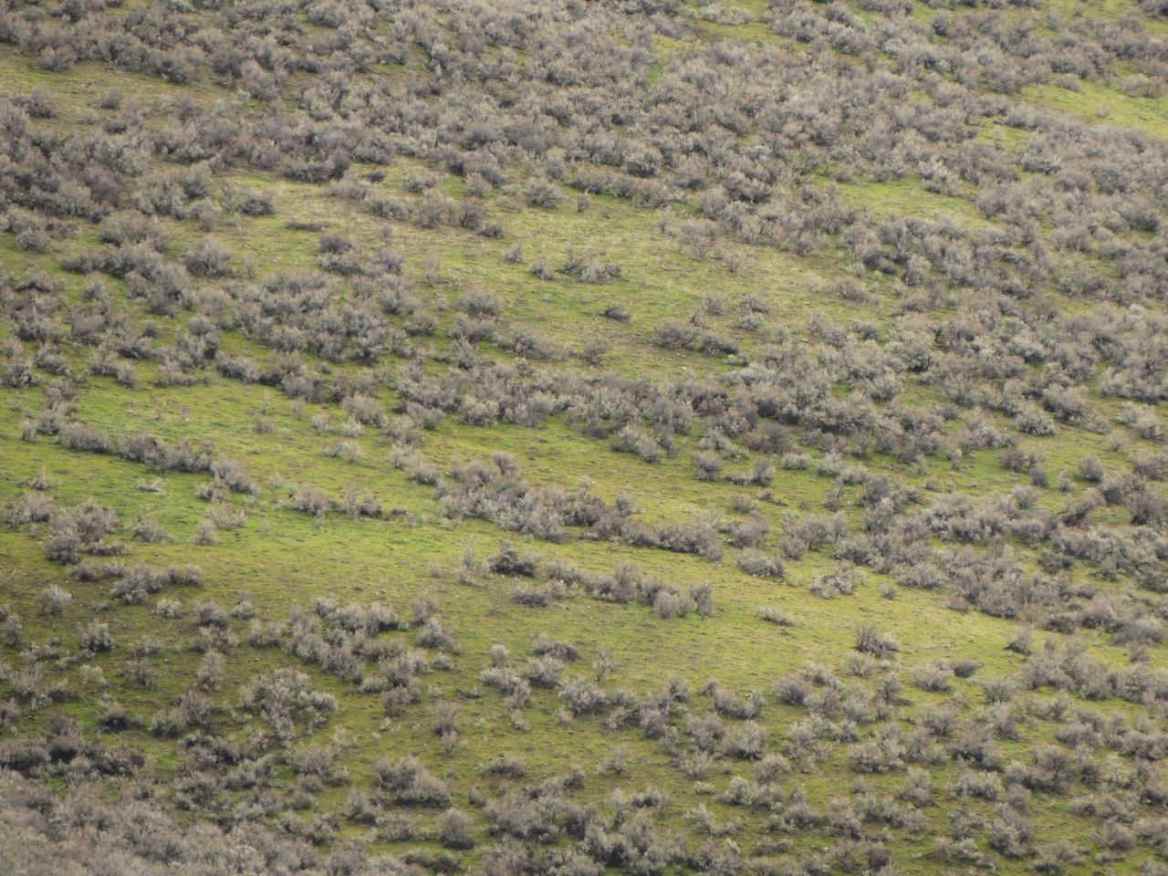
This is the undeveloped part. There are three species of plants here: arrow leafed balsam root (out of season in the image), sagebrush (overgrown; a consequence of overgrazing and a fire trap), and cheatgrass (an invasive weed, green in the fall and early spring, then dry as hell; another firetrap). Cattle and the cheatgrass they brought have destroyed an ecosystem of over a hundred species of flowering plants (and bluebirds, monarch butterflies, and so on).
The upper sections were given treated water from the sewage treatment plant in the valley bottom, and graded into a golf course.

It was all predicated on ever-increasing land prices. When they dropped instead in the 2008 economic crash, it all went bankrupt, erasing any environmental promises. The vineyard has now been removed. It is slated for development into more houses, to bring value to the subsequent purchaser of the golf course.
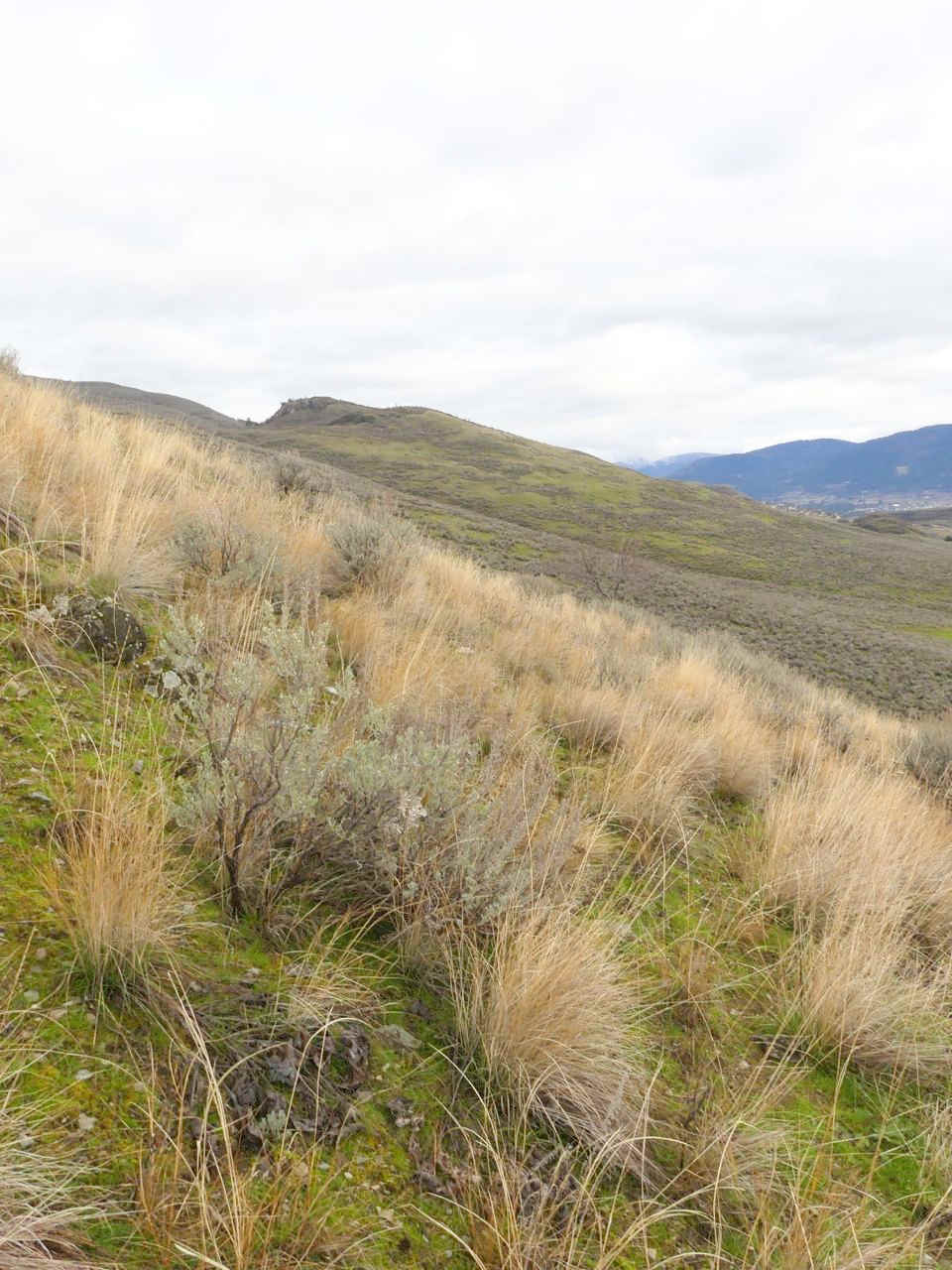
This comparatively healthy grassland in the foreground, to steep to suit cattle, has a healthy population of mariposa lilies and a few thistles, all capable of supporting a few birds still. It is now slated for development into houses.
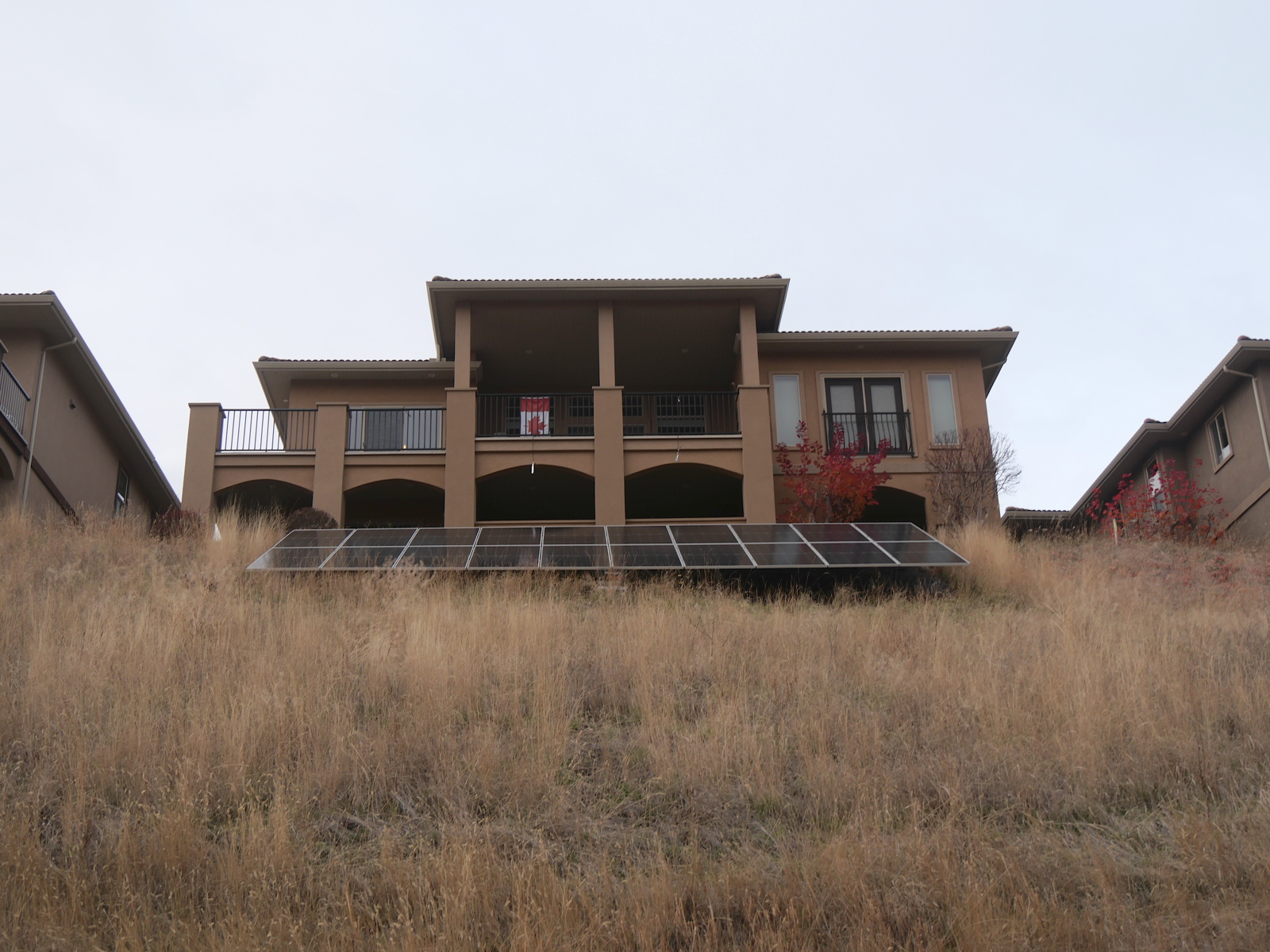
The bluebirds are all gone, because a degraded grassland cannot feed them. The coyotes and the deer have a trail through the vineyard, and the deer-“proof” fence, and the human trail below. Unfortunately, bankruptcy also freed the houses from any environmental plan. Of late, purchasers have begun treating natural space as private space for development. Here’s my favourite: a carefully planted bunchgrass slope, with environmental value, turned into an array of solar panels, for a lesser environmental value.
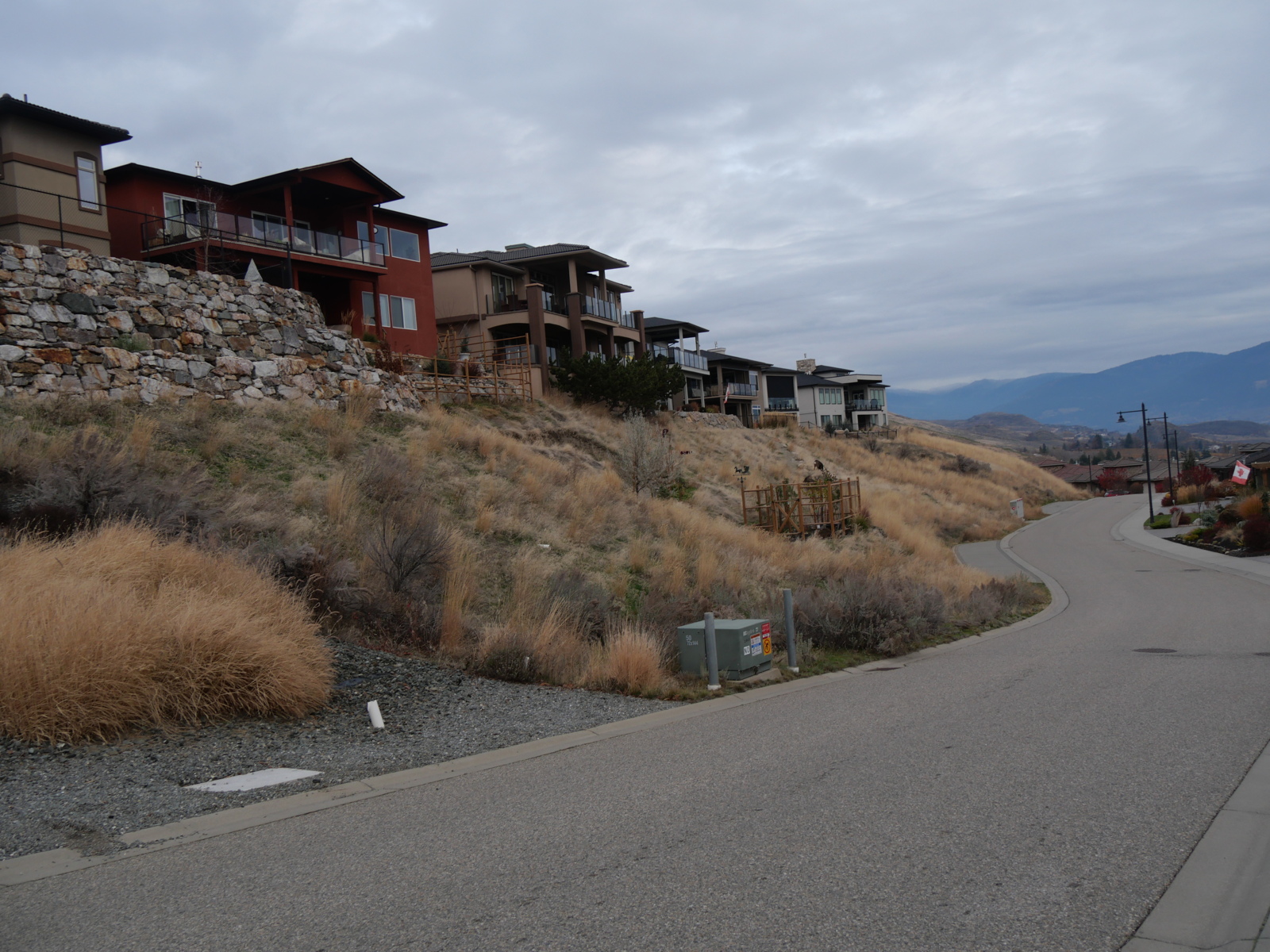
But the little neighbourhood across the street from it is pretty special, too. You can spot a rock wall to support a swimming pool, a fenced garden, and, if your eyes are good, a set of treed terraces perfect for drawing a wildfire up the slope to the house.
If you look closer…
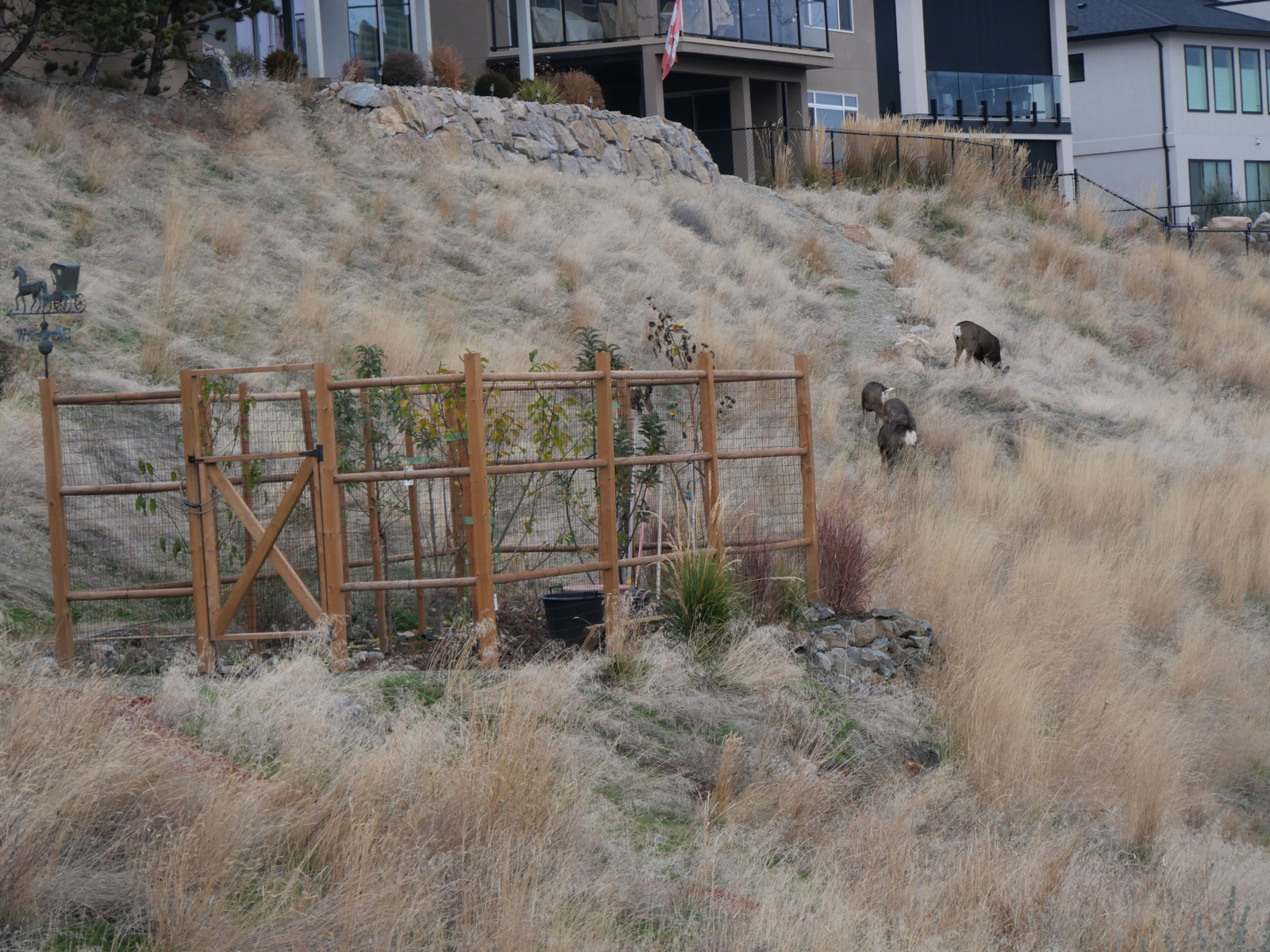
… you can spot the conflict between the garden (well, orchard) and the deer. The crowded little orchard between the walls is not long for this world.The deer are grazing on the cheat grass that has moved in.
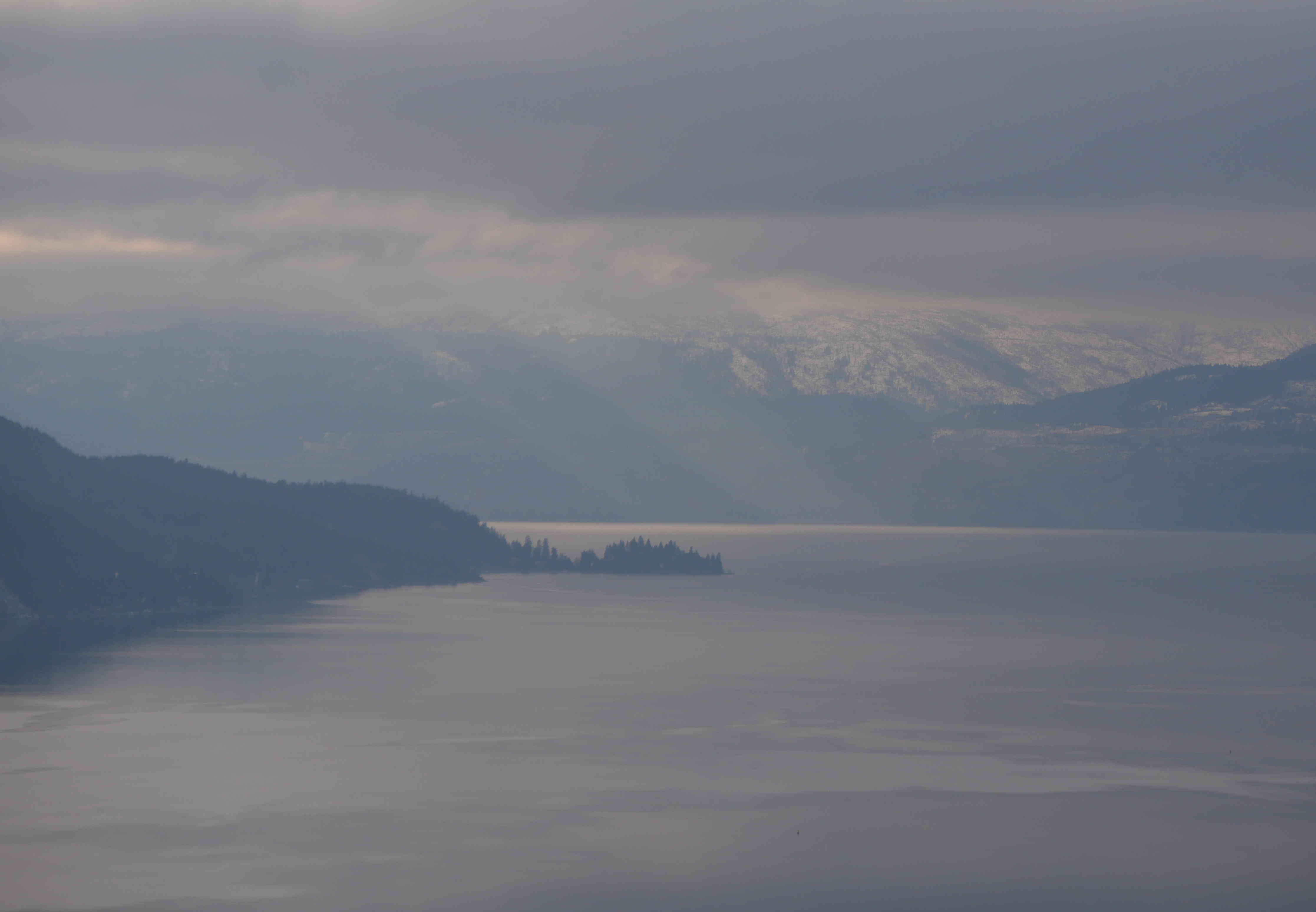
The views of smog finance the whole thing. Unfortunately, I have yet to meet anyone in this neighbourhood or on the trail below who knows that this is car exhaust and industrial particulates. It is called “a beautiful day.”
I’m not trying to show that the houses shouldn’t be here, only that the conflict between the environment, the houses and the private property rights and dreams of the house owners remains unresolved, even though very little remains except weeds…
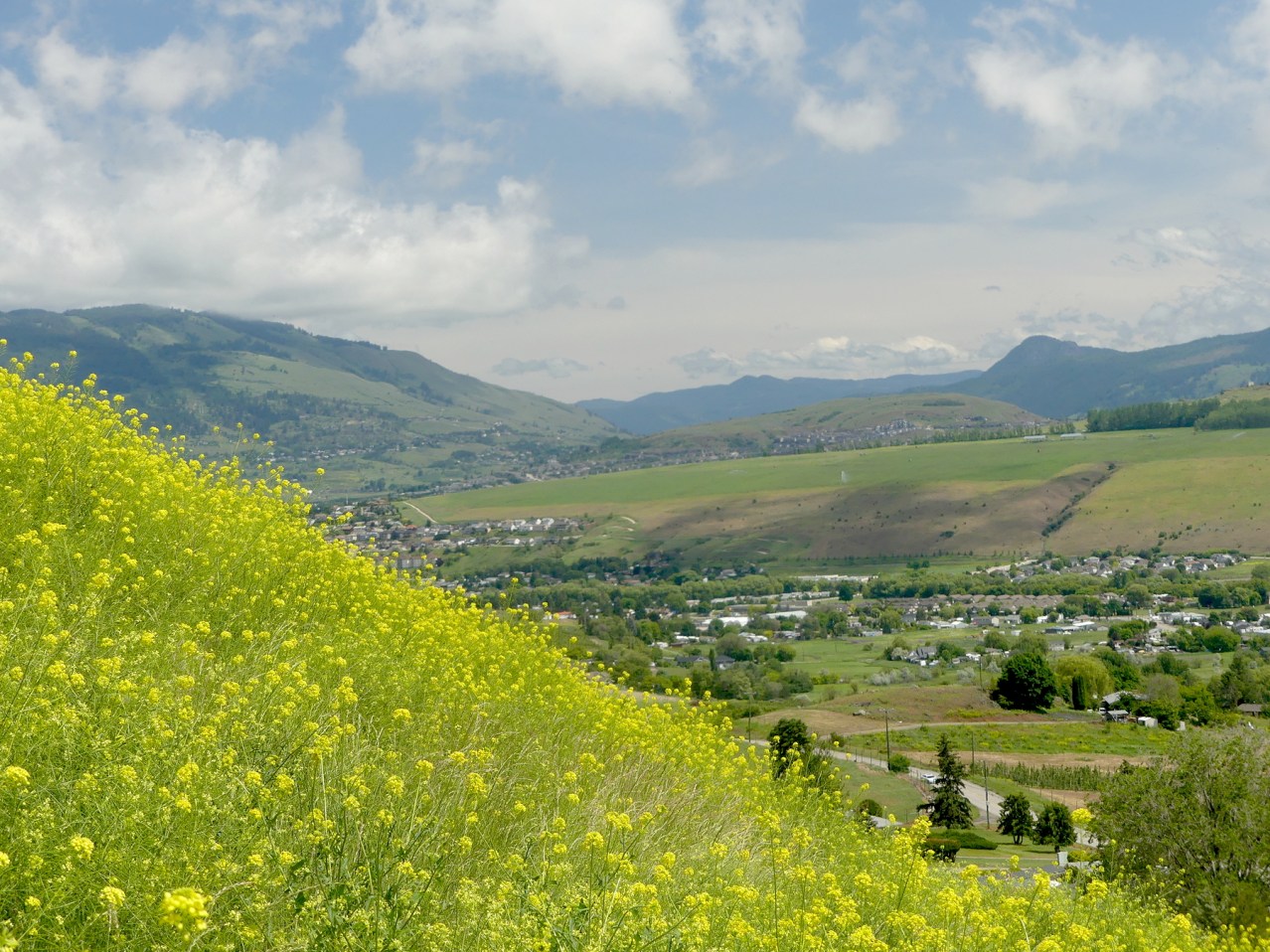
Mustard Being Weedy
…with any past acts of balance largely erased. There were originally naive attempts at beautification. When the development was cut into the grassland, wildflower seeds were cast on the approach. They weren’t native flowers, and are all gone now. However, one species, flax, has survived in a few spots, because European flax is virtually identical to native flax.

Unfortunately, the house owners, or the landscapers to whom they pay a hefty annual fee to keep the subdivision looking trimmed, mown, and shorn, never planted more of it, despite its beauty and success. Here’s some on an old Japanese orchard down the road, to show what might have been:
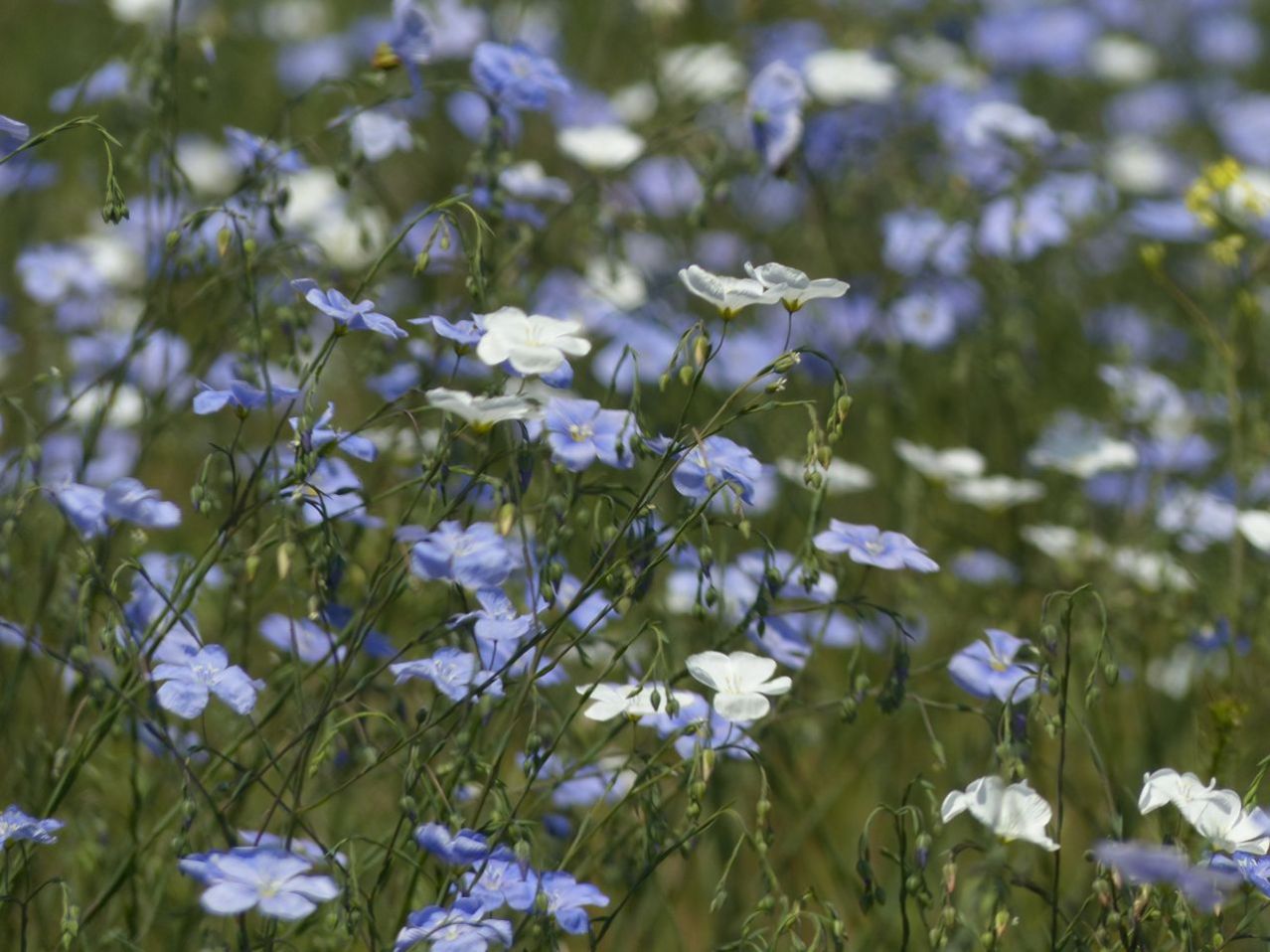
It would have cost only a few dollars.
As for the orchard, it’s across the road from the women and the coyote. Remember them?
The lower fence, erected with government money, was intended to protect that orchard from deer, just as the upper one was to protect the vineyard from them. The deer, however, have a fine trail across it all and into the orchard, where they graze and play hide-and-seek from coyotes. The orchard, which also received government subsidy to reduce the cost of trees, is a disaster. Of its nearly 40 acres of orchard, about 8, or 20%, have never produced more than a few apples, and half of that, or 10% of the total, have never produced anything pickable. That makes two deer fences, so far, that don’t work, largely because of human neglect, a subdivision that doesn’t work because of human desires to reshape landscapes, and a trail between that used to be an irrigation canal to water the orchards. Unfortunately, corridors, like this human walkway, were not mandated through the orchards and vineyards, for the deer to pass up and down the hill as they must in order to survive. The deer are more durable than human ignorance, though. For example, below the houses there is another orchard, also a former Japanese one, which looks like this right now:
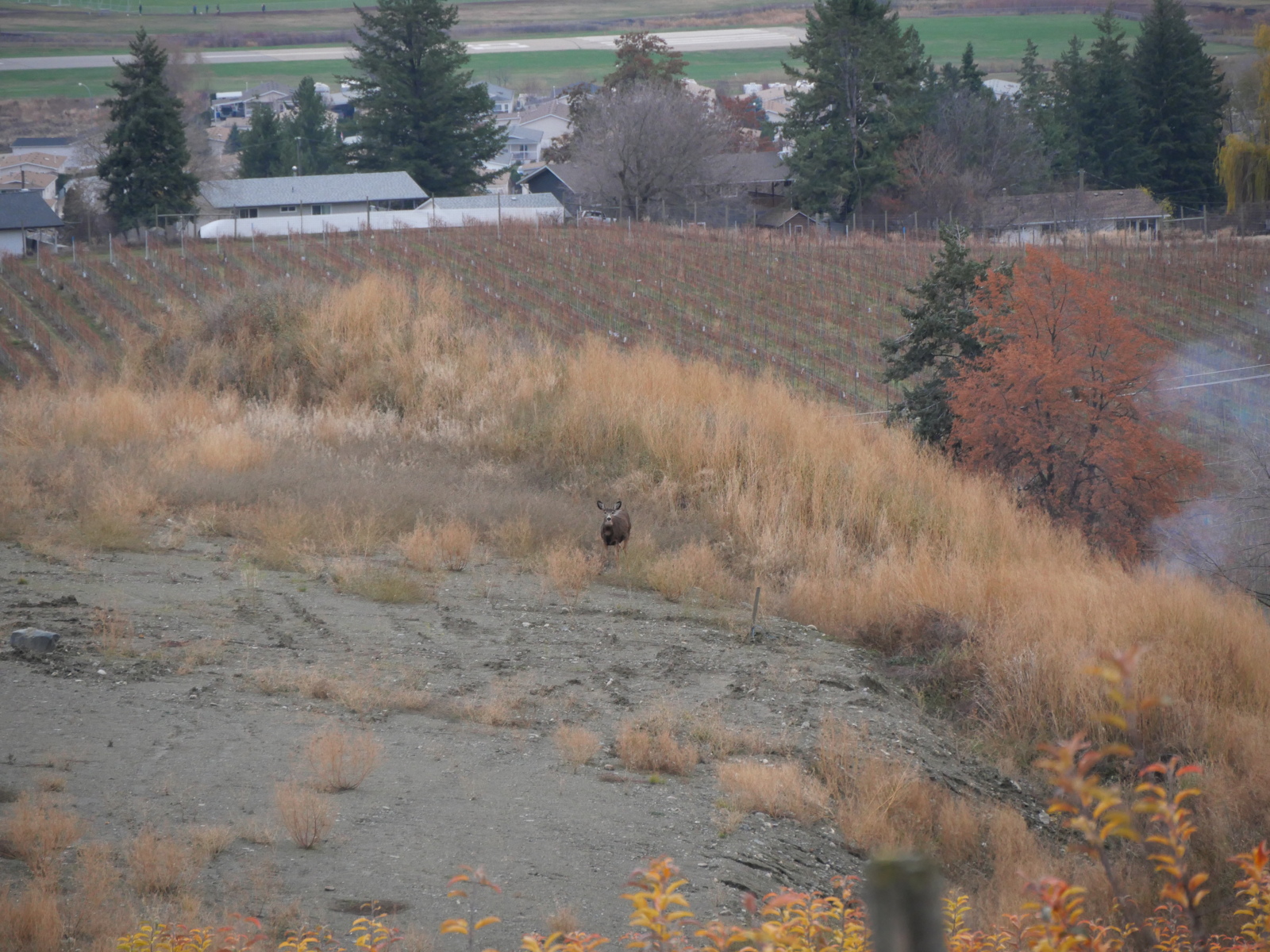
A couple years back, the farmer got the idea of grading this upper part of his orchard into a building site to house a village of temporary foreign workers, but was shut down by the city, because he neither had a permit nor could ever get one, given that farmland is meant to be protected. The subsidized fences are part of that bargain. The deer are ignorant of all this.
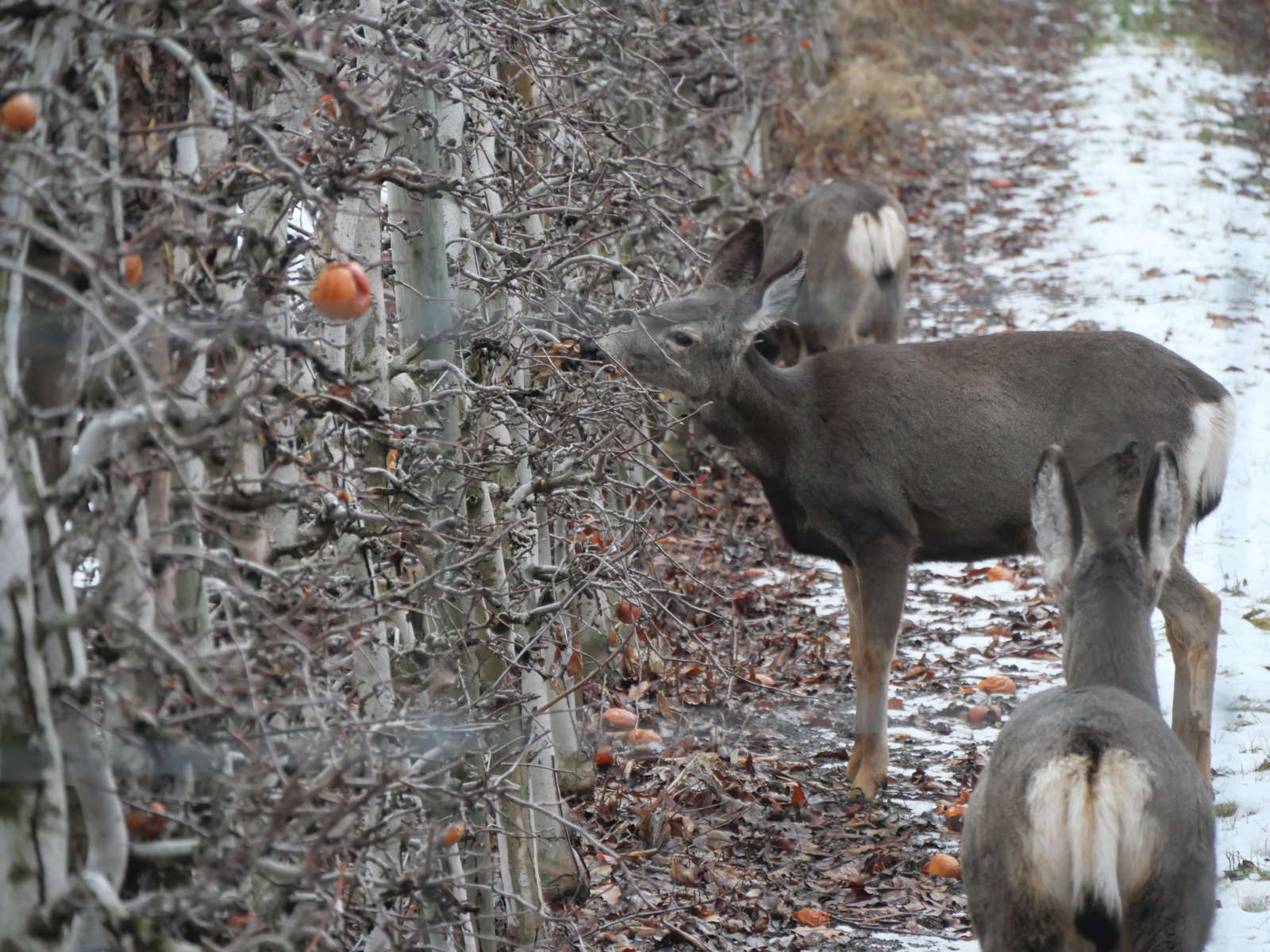
Her friends pay no mind to the fence, either. It is easy to breach. Here they are destroying apple fruit buds, behaviour that the fences are meant to prevent.
Well, the farms are supposed to be picked, too. But on land priced high by urban development, orchards can’t afford to do so.
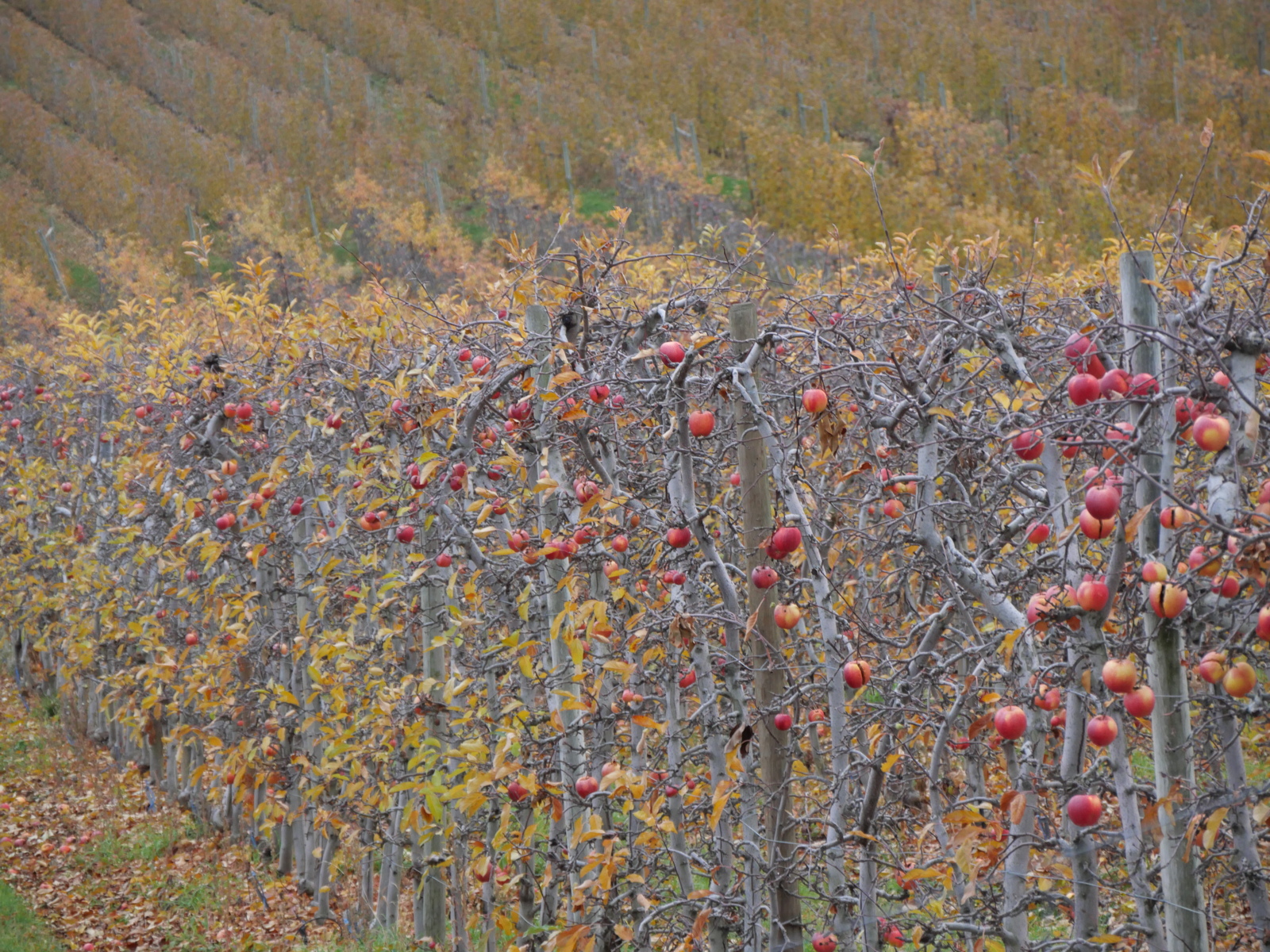
So, robins stay the winter in the ruins, long after their natural diet of mountain ash berries…
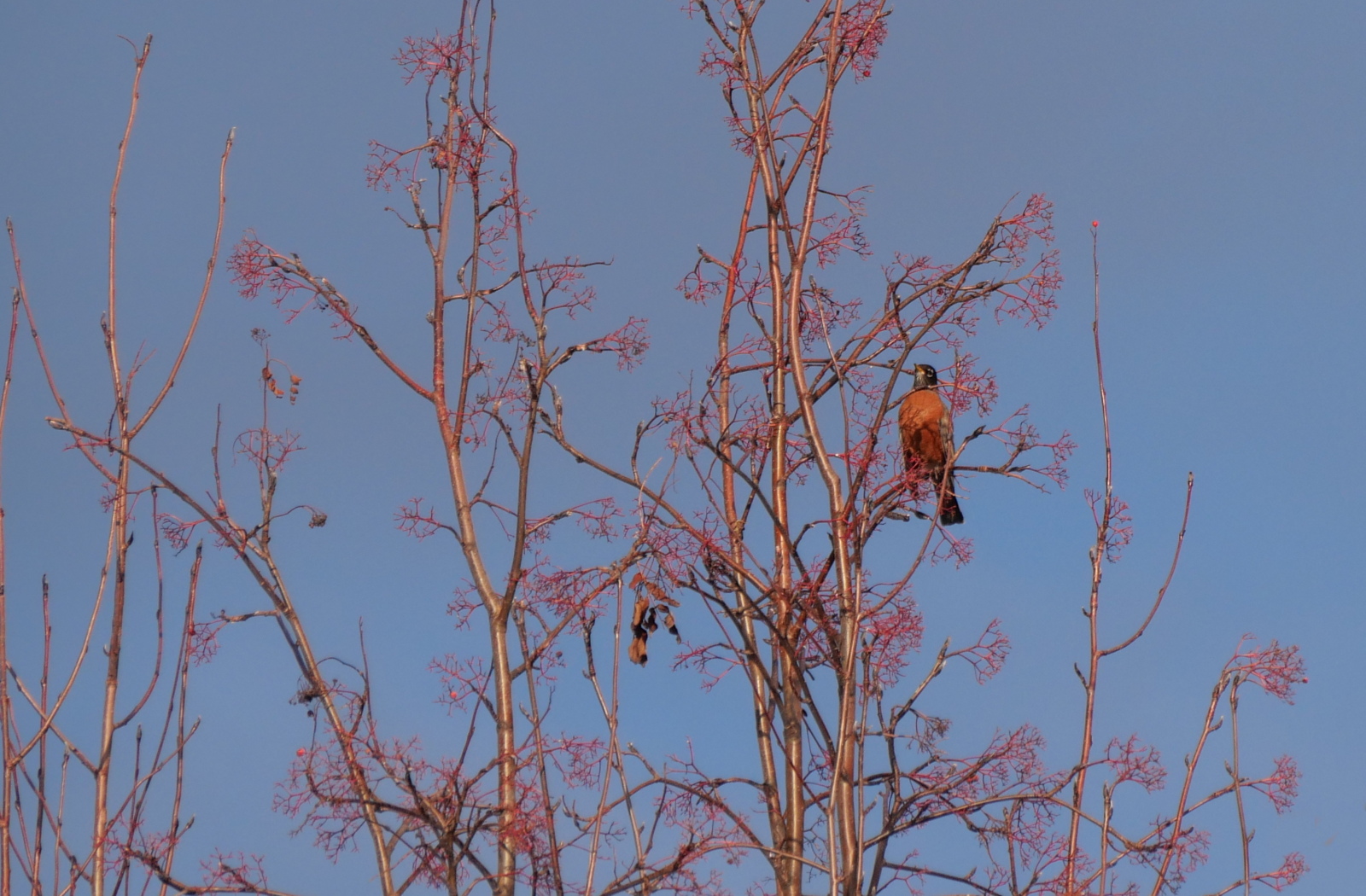
…is gone. So, there are pressures on farms in this valley, from animals and from human social customs. The government assists with the animal bit, to little avail, to compensate for the human social bit, leading to a collapse of both: the animal bit collapses in the subdivisions; the human social bit collapses on the farms.
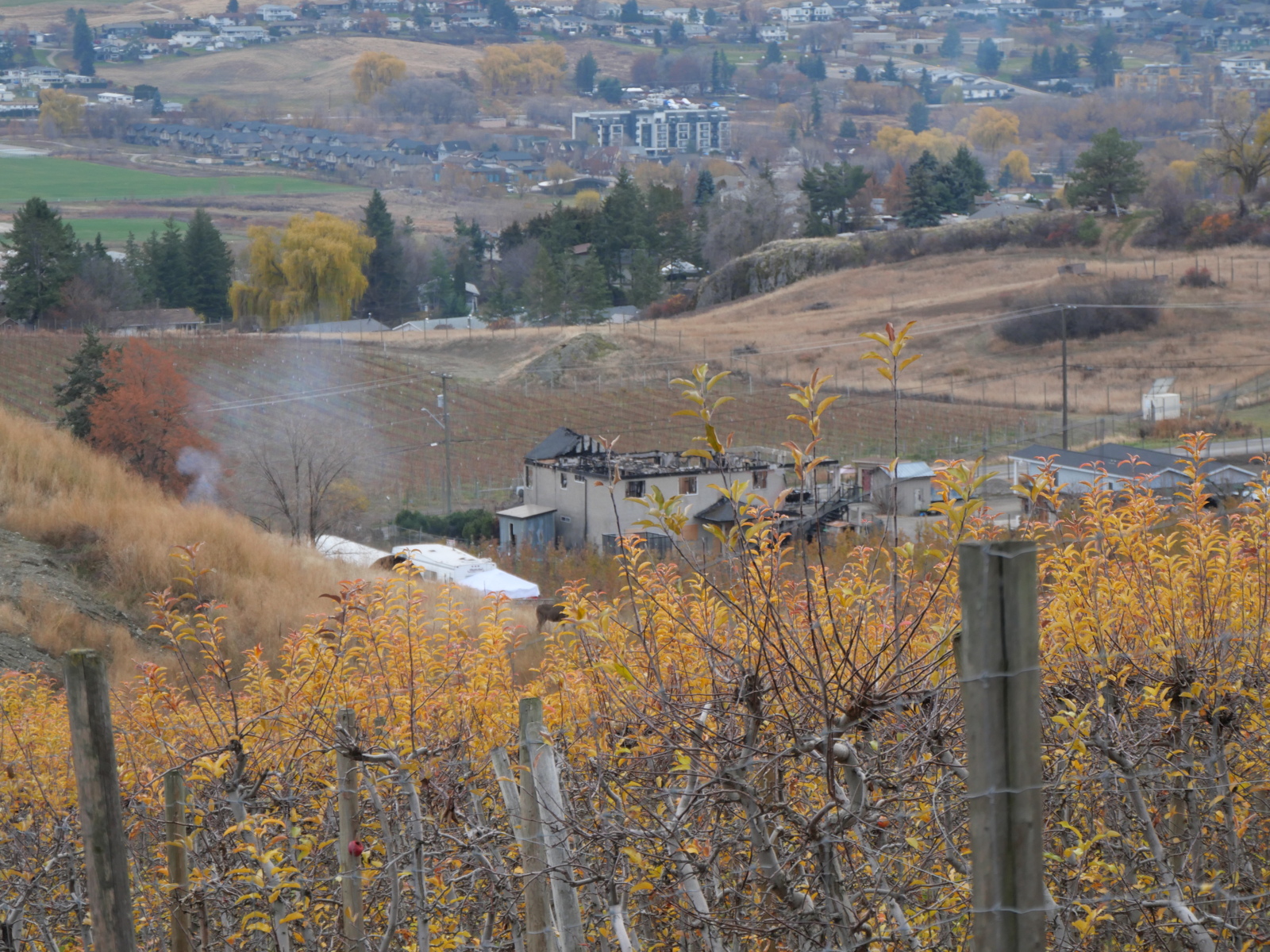
This farm, and 125 years of human history here, is in crisis. Note the destroyed (and unrebuilt) house. I have been talking about new land use protocols lately. I will tie this discussion into that fully in my next post, through a discussion of social contracts with the land. As it stands, the compromises of mixed land use in the Okanagan environment…
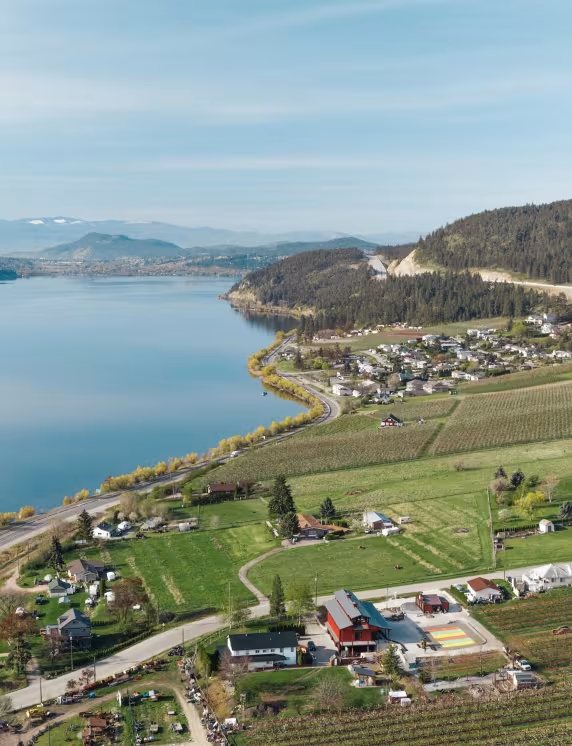
The Mish-Mash That is Oyama, just south of the images I showed you before.
…are unsustainable. They lead to ever-increasing conflict and a degraded environment. We can fix that. Stay tuned.
Categories: Agriculture, Atmosphere, Endangered species, Erosion, Ethics, Floral, Grasslands, History, history, Industry, invasive species, Land Development, landscaping, Other People, Spirit, Urban Okanagan, weeds

 Okanagan Okanogan