
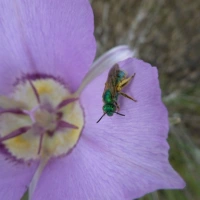


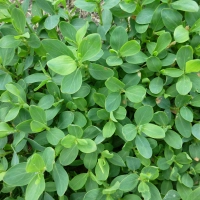


You know that corn on the cob that tastes so good? No, this is not corn.
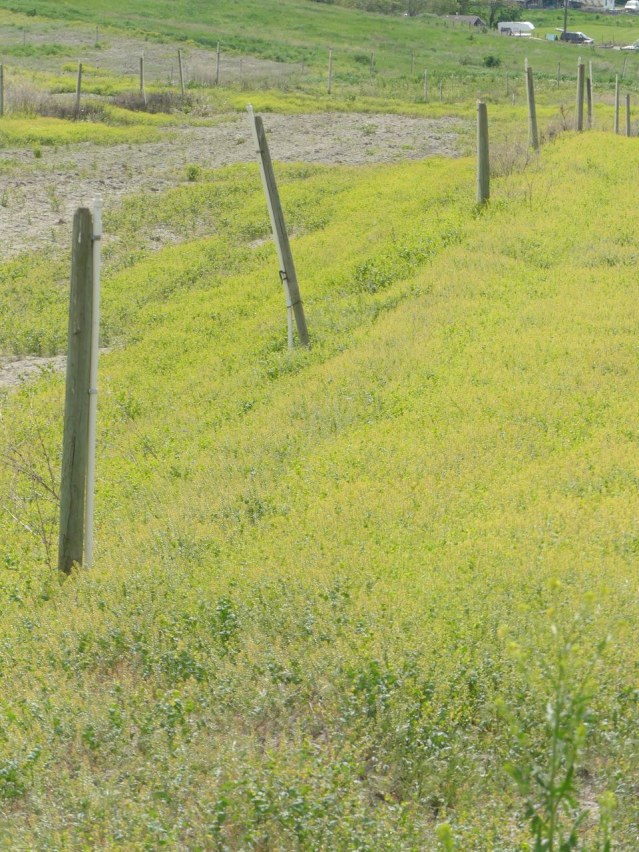
This a farm here in Vernon that grew sweet corn for a few years and now grows wild mustard, and not much of that, because the soil is dead. It’s an illness produced by a soil-depleting monoculture (sweet corn), aggressive tilling, aggressive application of herbicides and aggressive application of petroleum-based fertilizers. The result is forty acres of land that needs about 1000 full dump truck loads of manure to be alive again, but, of course, that much manure is going to add a lot of cow methane to the atmosphere, and there goes global warming. You could say: the image below is the image of global warming.

And even so, all this manure added to the soil wouldn’t be enough to make it “full of nutrients” or “full or water-retaining organic matter” or any of those good things, although they are important. It would just make it alive. It’s just a start. Here’s some soil:

A common description of that would be that these fungi are living off of dead organic matter, and breaking it down into nutrients, which plants can use. Huh. Isn’t that a description of science’s own methods, rather than of the following image (grassland soil)?
 That complexity is complex life. Note, I didn’t say “supports” complex life, because the guys below are part of it.
How can soil die? Isn’t it dead already? Rock and stuff? No, this is rock:
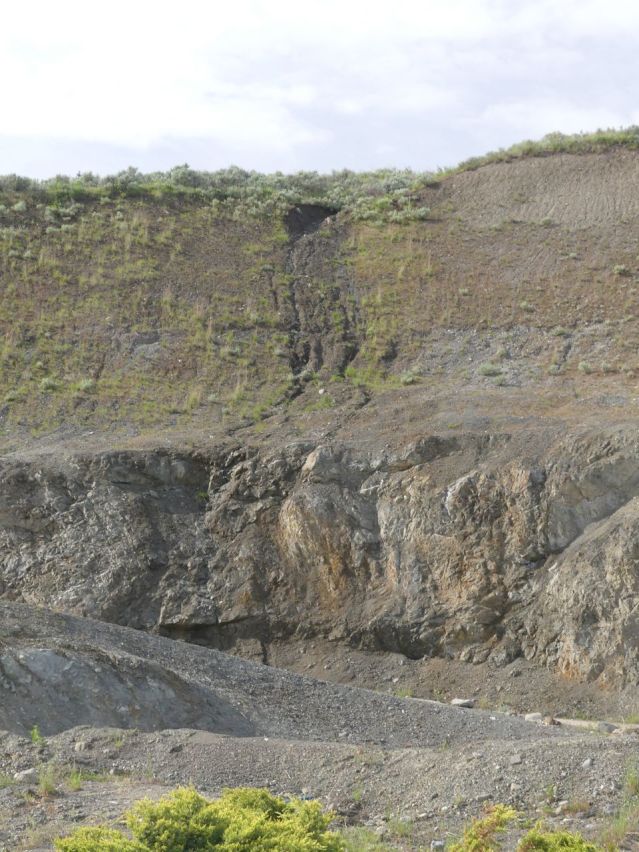
This is soil.

It tends to be a social affair.
 Very social.
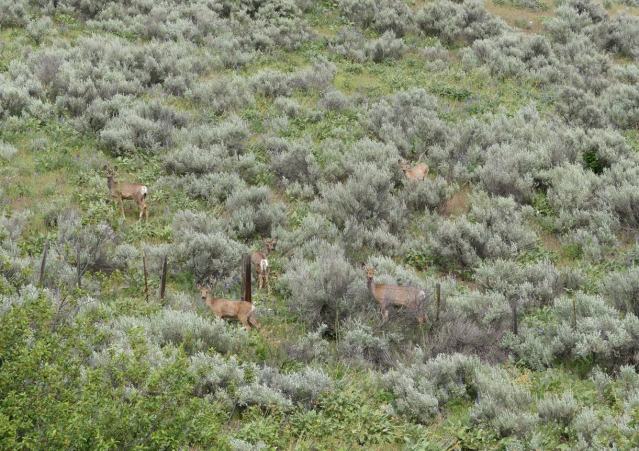 It reaches into the air.

Flies.
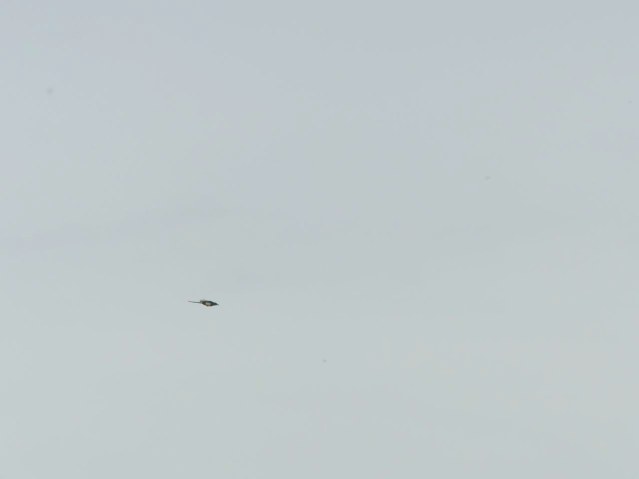
And lands again.

Fun stuff. Some plants get into that wing thing themselves.

I mean, if you want to attract things with wings, grow wings, right? It’s what you do in the air, after all. You open. You wing. You stick your head into soil that has turned into pollen. Of course, you can move through the sky, as the soil, in the open, without wings, but it means you have to have long legs. But do note the ear wings! Makes sense, they’re in the sky, right?
 Or spines, so long-legged soil doesn’t eat you. They make their point.
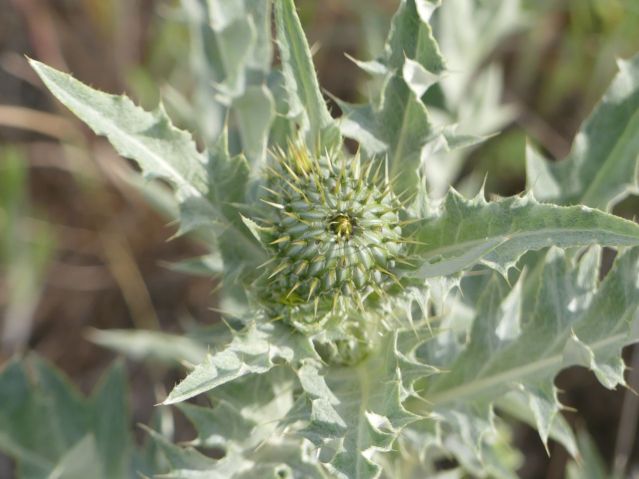
Yeah, I know, it’s normal to think of soil as a bunch of grains of rock and decayed organic matter, munched on by microbes and worms and soaked with water, but, really, it’s big stuff. With ears.
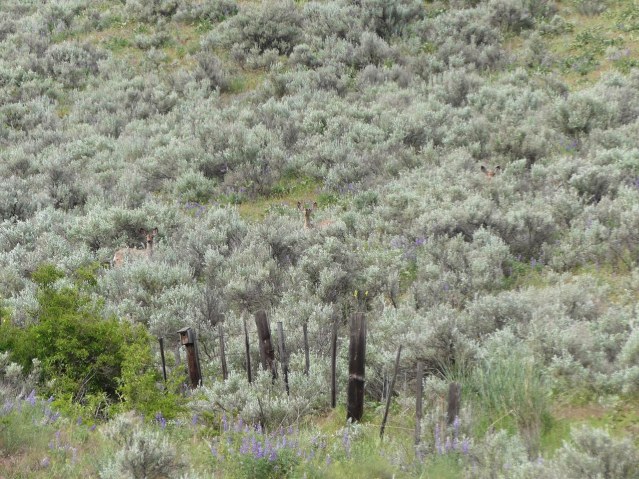
And eyes. It sees you.

Just because sweet corn is bred to be super sweet, doesn’t mean it’s good for us. Just because it stores for a week in a truck on the way to a grocery store doesn’t mean it’s good for us. We’re basically making an image of the petro state. Here’s how that works. You start out with the aerial soil called a grassland…

… and mumbo jumbo presto magic you get the stuff in the image below. That’s the Sweet Corn Syndrome (SCS).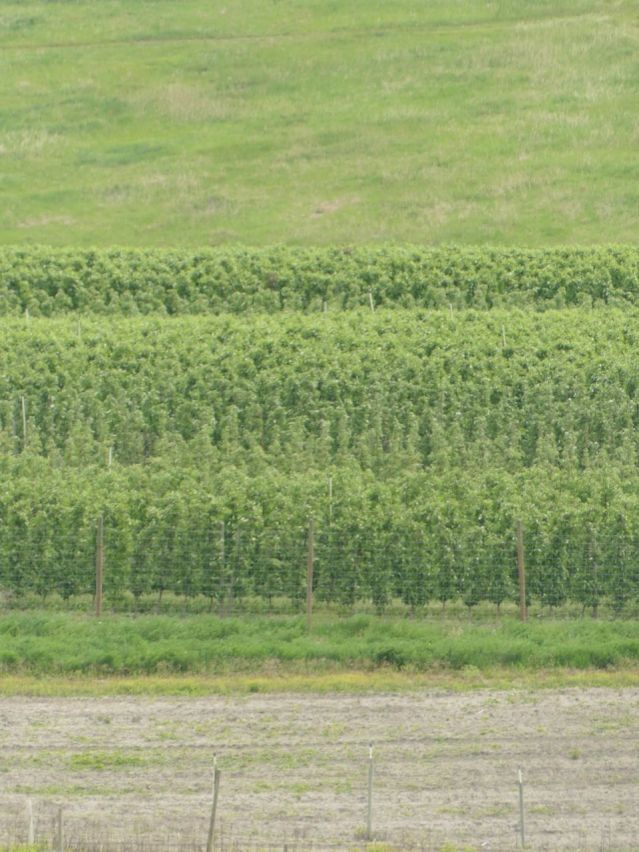
Here, let me guide you to what you’re seeing: at the top of the image is a blue bunch wheatgrass grassland reduced to pasture weeds, that’s the first step of conversion of soil to petroleum, c. 1870; in the middle of the image is an apple orchard, grown like corn, the second step, c. 1990-2016; in the foreground is a former apple orchard (grown like an apple orchard) given over to value-added designer petroleum (corn and pumpkins) for a few years (c. 2000-2016), as well as a GMO seed trial (C. 2013-2015) for canola (a form of vegetable petroleum), which involved some heavy herbicide applications to create a buffer zone (the soil version of keeping monkeys in laboratory cages), and which has now been reduced to ground up rock (Petros). It has petered (petrified) out, i.e. it has gone to rock, because the life has been mined from it. The next step is to skip the designer petroleum and just turn the corn into petroleum itself. 45% of the corn grown in Iowa is turned into petroleum, actually, and Iowa is a corn monoculture. If we keep on on that path, we’re going to have cities made out of ground up rock, and a planet (soil) that looks like this:
 But here’s the deal. Remember that grassland I showed you?
Yeah, that’s the one. Well, that’s someone’s back porch. On the toe of that slope coming in from the right, you’ll find this: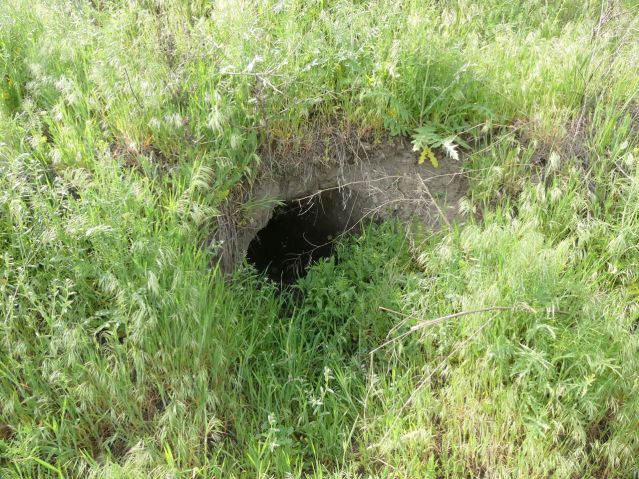 Last year’s coyote nursery den, with weeds! Not only is it part of the soil and not only does it have a great view, but it’s strategically located. Look again: where the contours of the land lead water, they also bring life to soil, including deer. This is one of their trails. It goes around the front of the den, at a distance of about two metres.
That’s how you do it when you are part of the soil. You let life come to you.

It’s that or die.
Categories: Agriculture, Earth, Erosion, Gaia, Global Warming, Grasslands, History, Nature Photography, Other People, Science, Spirit, weeds

 Okanagan Okanogan