


It is time to set the one ton beasts out to munch.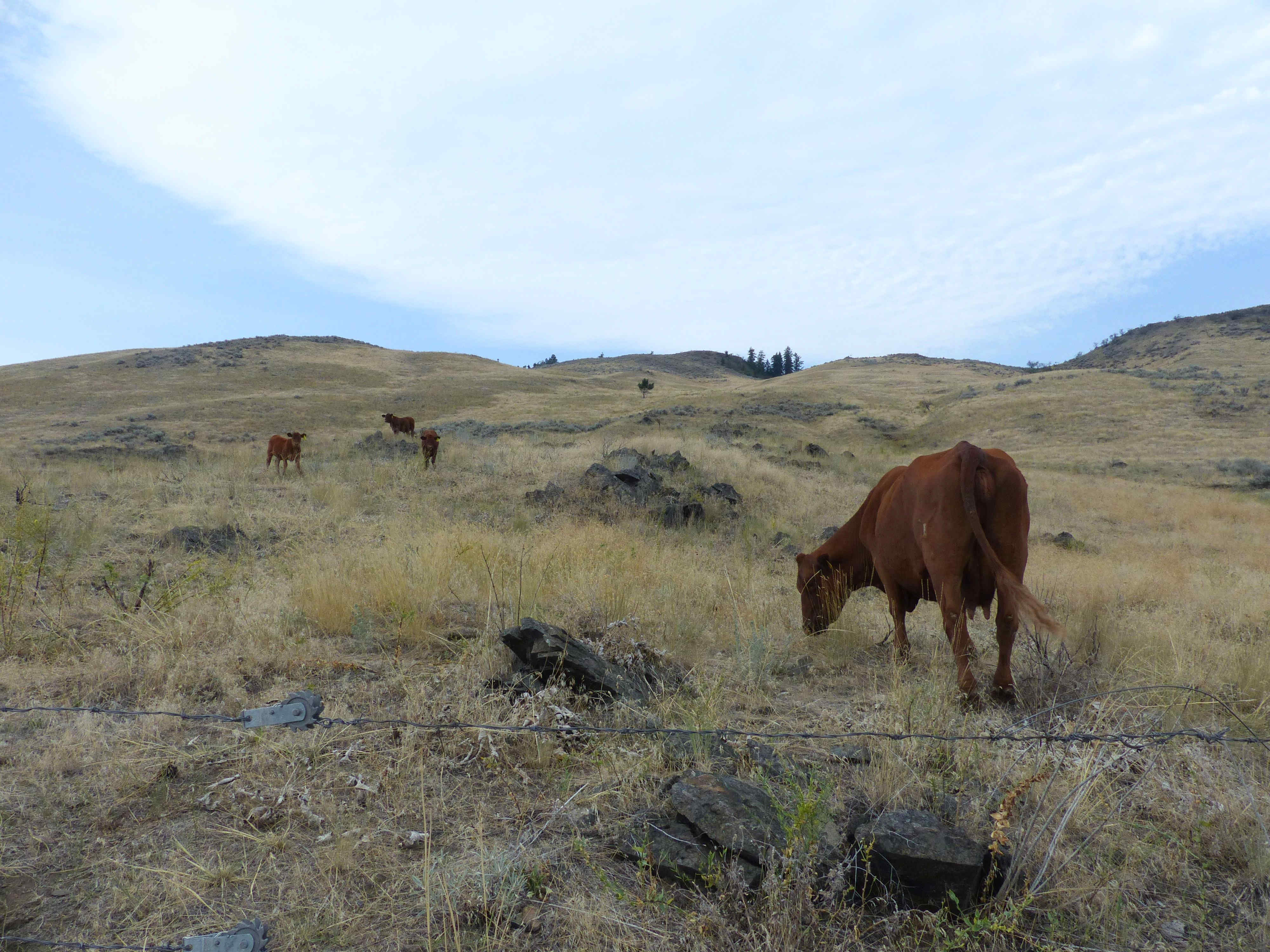
Here is a muncher in her lunch.
And here are the kids playing on the rocks.

Now, in the spring these folks aren’t out here on the grass, but now, with temperatures approaching 40 degrees Celsius, as they have for a month, out they go! They don’t have time for me. Here is one of the cows giving me the once over.

But it doesn’t last. She is awfully hungry and it’s a lot of work finding something to munch. The grass, as you can see, is cheatgrass. Although in March and April it is lush and green, and would make good pasture, at this time of year it’s an ocean of spear-pointed seeds that you’d have to be insane to try to eat. Still, you have to try. It makes you a little dazed, really.

The image below shows one of her sisters demonstrating just how slim pickings are, by standing in the midst of a stand of mustard gone to, well, wood fibre, really. Plus the cheat grass. Note how she appears to be picking her teeth with that stuff.

Is this the look she’s aiming for?

Josh Harnett: American Stick Chewer
Dunno. She did, however, show me her survival technique, out in this time warp of weeds:
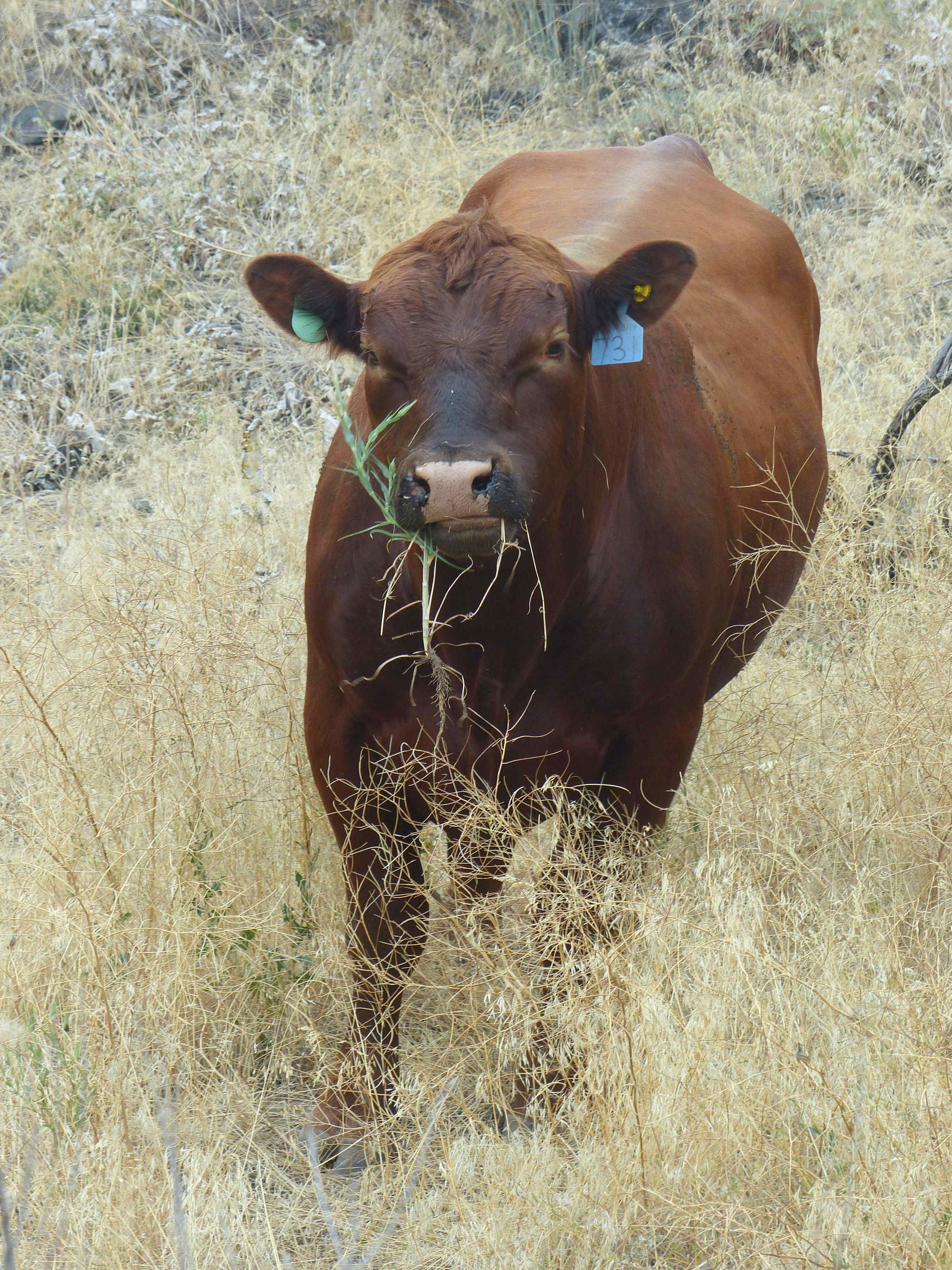
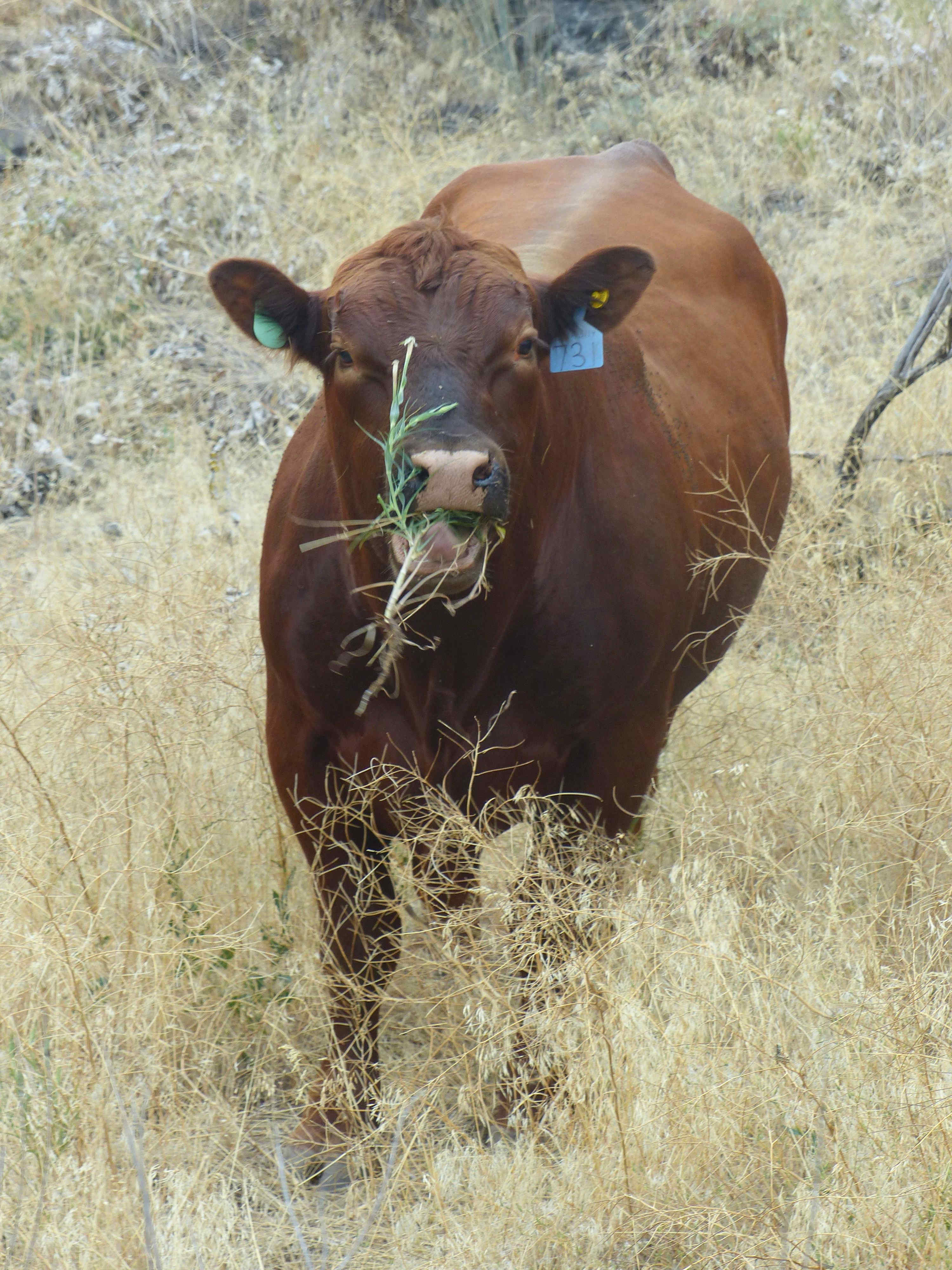

This is yellow salsify, an invasive weed. It covers less than 1% of the land area, and is the only thing that these cows have found to eat here. Well, there’s the dalmatian toadflax. That’s the nibbled-on green stuff sticking up out of the cheatgrass below, but it’s mildly poisonous to cattle and they hate the taste of the stuff, hence the mild nibbling only.

Someone should tell those calves …
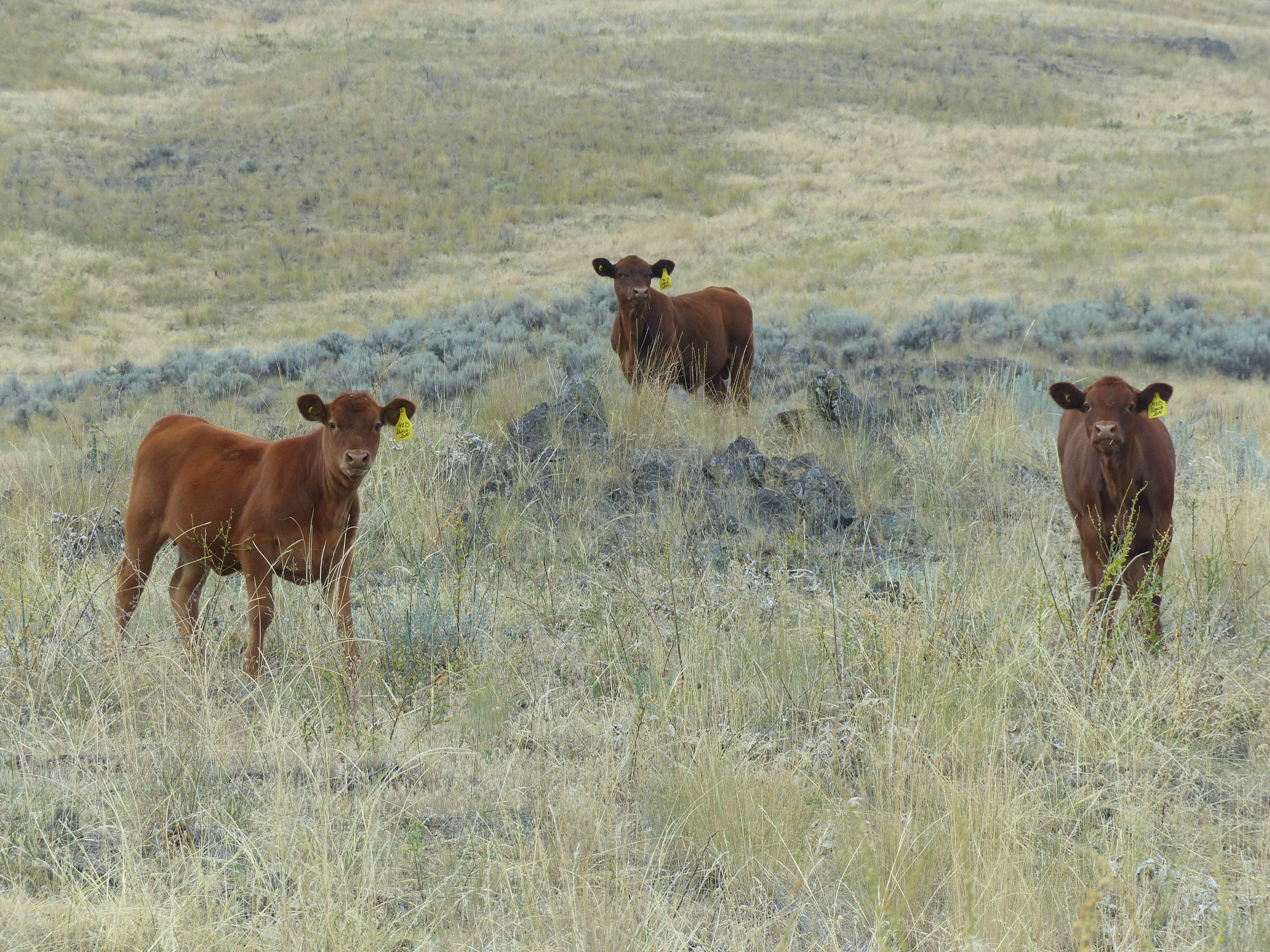
… that before the land was mis-grazed by their ancestors, it looked a bit like this:
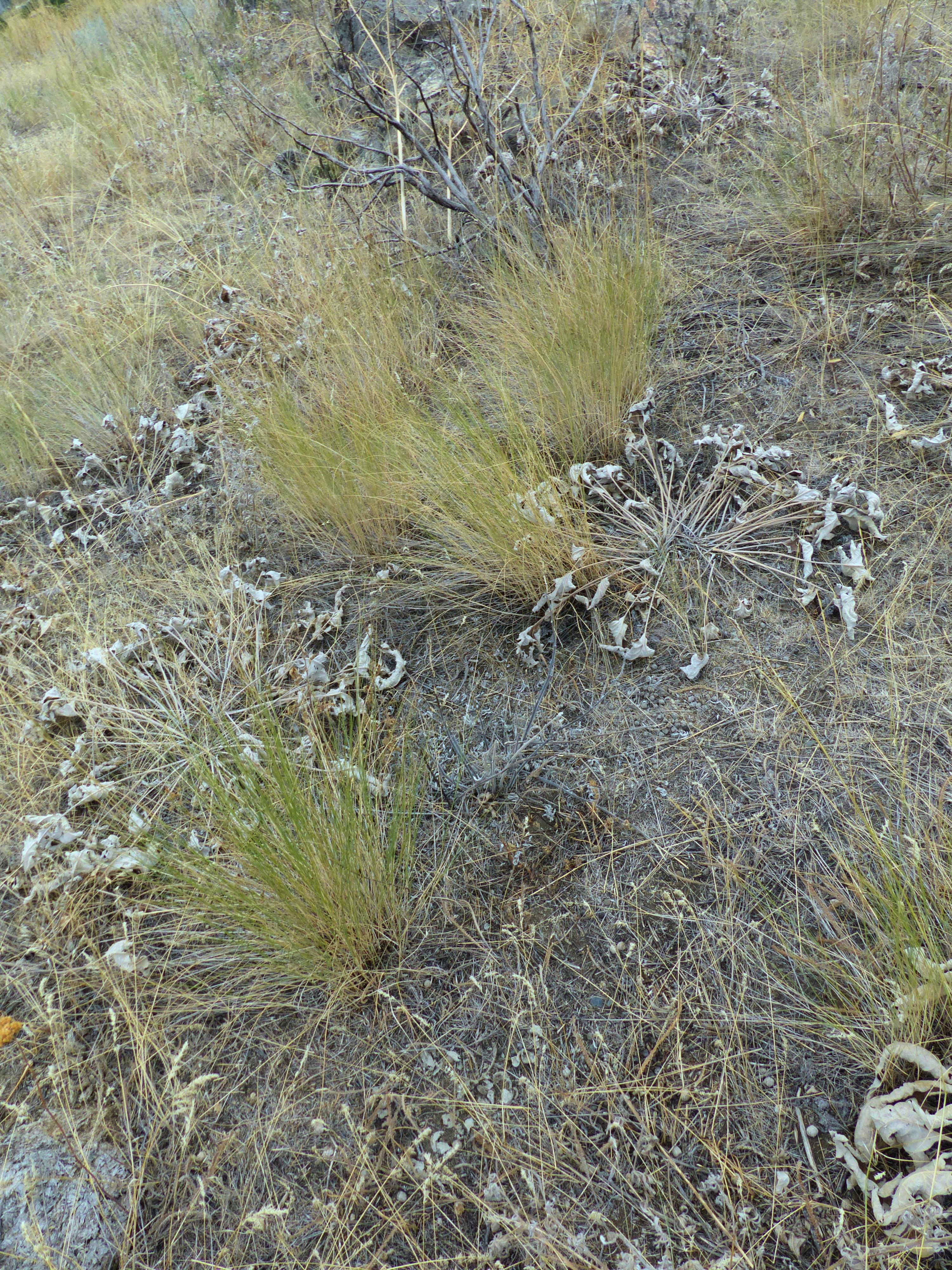
Blue-bunched wheat grass was high in protein, because it was rich in seeds.

If you graze it for more than two weeks in the spring, you exterminate it. Note how little green is growing amidst those dead, rain-gathering stalks. Now, take a look at the difference in the land in the image below. The top half of the image is the territory of 1000s of acres belonging to these 6 cows and the man in the large truck who bumps along inspecting his empire. The bottom half of the image below shows the bunchgrass they’d get out to — a couple acres of deer grazing land burnt off by a fire two years ago and regrowing nicely.

This is called farming.
Categories: Agriculture, Erosion, Grasslands, invasive species, Nature Photography, weeds



Спасибо за разъяснения. Как называется эта порода коров? Сколько литров молока они дают?
LikeLike
I’m not a cattle expert, but it looks like a shorthorn to me. Cattle tend to be interbred here, to strengthen their disease resistance.
https://en.wikipedia.org/wiki/Shorthorn
In this area, the cows won’t be milked. The milk industry is highly regulated. A half hour to the north, there are dairy cows, but not this breed.
She’s a lovely animal, though, isn’t she!
LikeLike
Спасибо большое!
LikeLike
You’re welcome! Always nice to find someone who loves the beauty of a good cow.
LikeLike
Как их можно не любить?)) И как жить без их молока?))
LikeLiked by 1 person
They are very grounded, aren’t they!
LikeLike