


By accident, we have turned our hills into giant gold sluices.
Road Gutter, Okanagan Landing
Note how it very efficiently sorts gravel out from water.
The water is lost to the ecosystem, but the gravel is not so willing to go…

Much of the Water Just Evaporates, Actually
It’s a low tech method of moving rock. With a little patience, it’ll all be concentrated together. OK, a lot of patience, maybe.
These methods of sluicing might not be efficient enough to yield high levels of ore. But take a look at this baby:
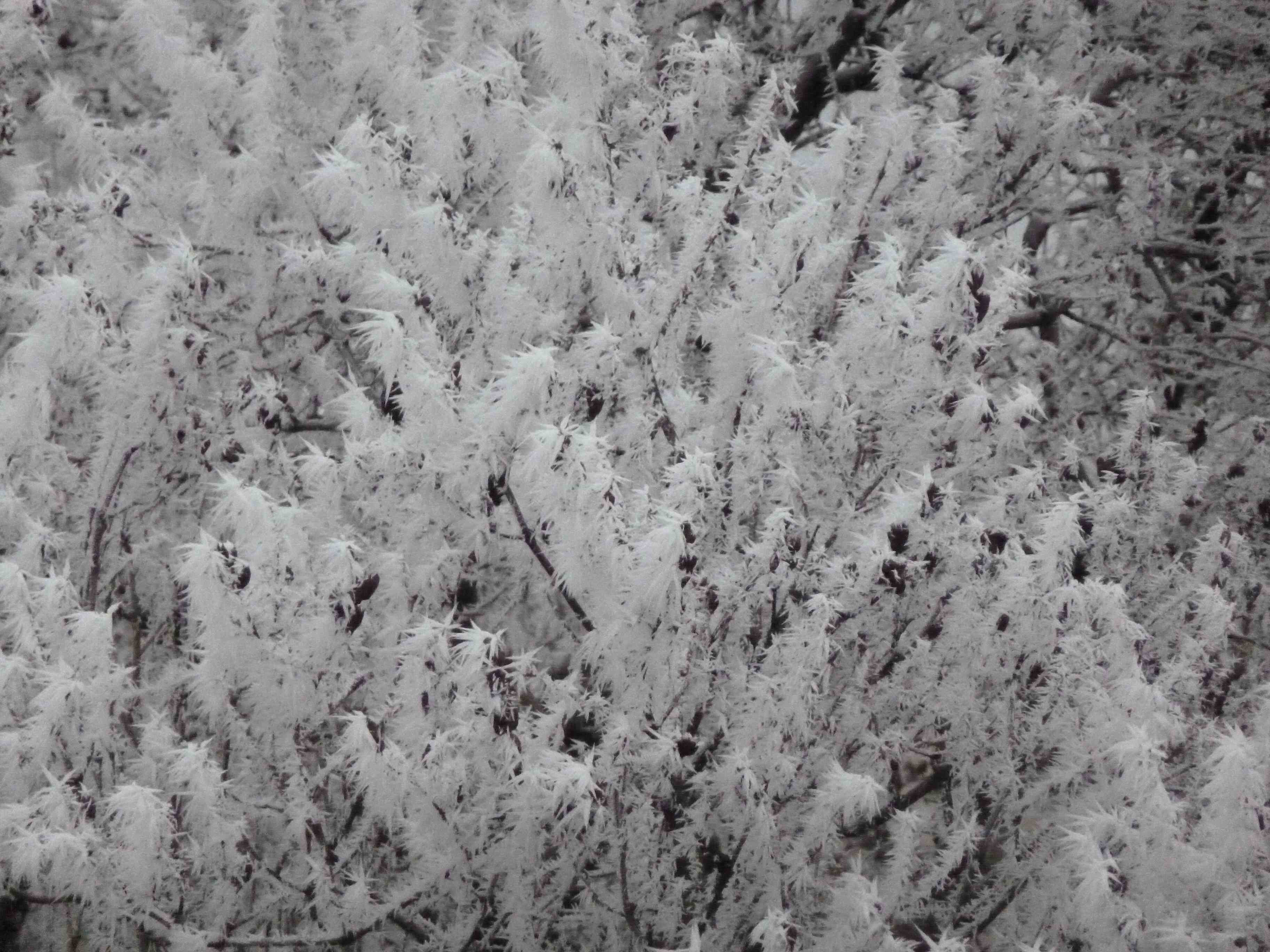
Russian Thistle in the Frost
It looks like it is covered with silver. It’s really chock full of minerals. Russian thistles are great at collecting chromium. Grow them on the right soil, burn them, and you have chromium ore.
Where are you likely to find chromium? Ah, perhaps here:

Westbank Industrial Park
The purple icon marks Kelowna Electroplating, a small company specializing in chrome-plated heavy truck bumpers. A likely spot for a little russian thistle plantation, in the new geological science of phytoprospecting.
In fact, the whole industrial area looks like a potential metal farm. The technique is called phytomining and phytoremediation, and it is effective at removing toxic chemicals and metals from soils and concentrating them in plant tissues, from which they can easily be removed. If there’s no chromium in this industrial park, there’s likely to be some here the Westbank Water Treatment Plant. Wastewater plants collect anything that gets washed down the drain, whether on purpose or by accident. I’m pretty sure the people at Kelowna Electroplating are doing a good job at containing their byproducts, but, still, chromium washed down the drain from electroplating companies is one of few contaminants in the compost created each year by the ground-breaking Edmonton Waste Management Centre. No doubt it shows up elsewhere. But why stop with russian thistles?

Bull Thistles, Okanagan Indian Band Lands…
…wishing they were Russian Thistles, too. Who knows what they are bringing up from the soil. They’re sure doing it with style.
Some plants that mine the soil are: poplars (arsenic); russian thistle (chromium); Indian mustard (copper, nickel); canola (selenium, but it is released to the atmosphere; gold); sunflower (uranium, cesium, and strontium); grapes (gold); alpine pennycress (zinc, nickel). There are many more. Did you catch that? Some grape varieties harvest gold, and concentrate it, in nuggets up to 2 grains in size, within their leaves. This, for instance, might be a mine in the future:

Future Gold Mine? Okanagan Landing
It gives a new name to Dolmathes, doesn’t it?
Other plants harvest petroleum and chemical compounds. Hemp is great. Redroot Pigweed catches most anything at all:
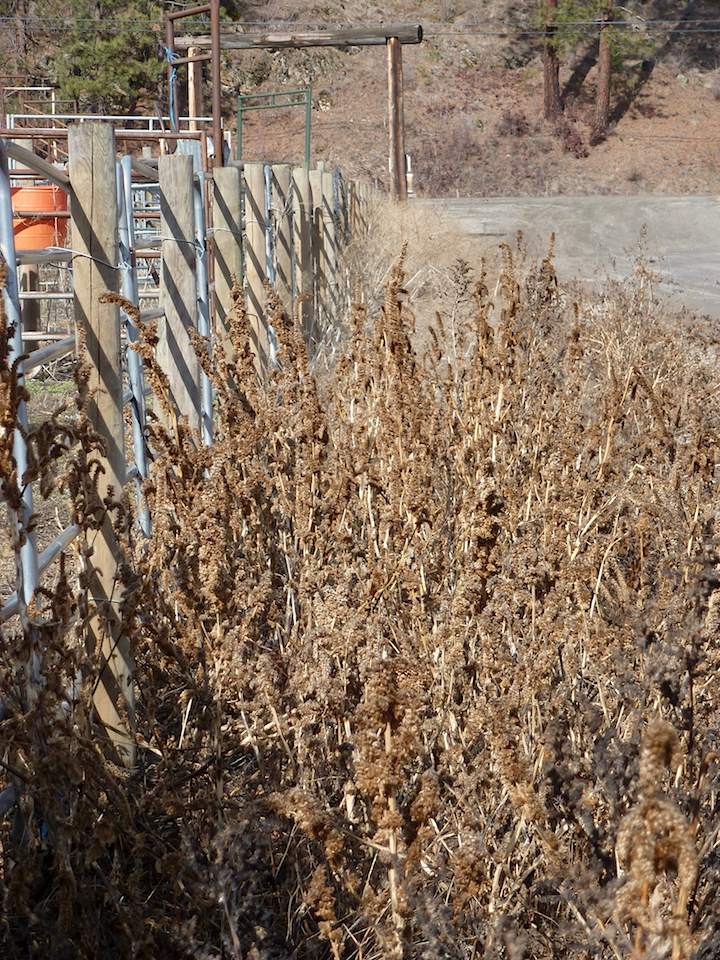
Bullion on the Hoof?
Okanagan Indian Band Feed Lot
There’s no shortage of seeds to get started with, at any rate:
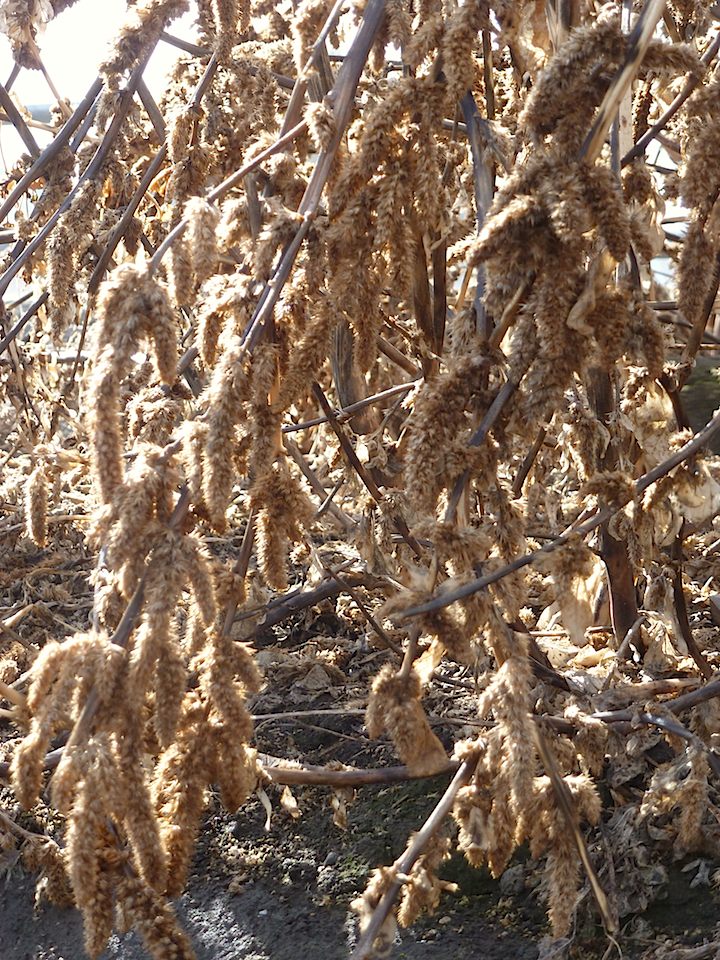
Water Purification at the Source
Perhaps we can just forget the whole idea of using water to concentrate road pollutants and use plants instead, right at the source. Why spend the money to collect the water, then further money to clean it up again?
We already mow our ditches. We’d just have to start baling them at the same time. Transportation would be easy. And aesthetically?

Bull Thistle Looking Good
It already looks like it’s carved out of metal!
Categories: Earth Science, Industry

 Okanagan Okanogan