





Yesterday, I showed you the photos of my afternoon in the vole gardens high above Okanagan Landing. If you’ll recall, the voles created a rich garden of all their favourite plants, in the midst of a hot hillside of bunchgrass and rabbitbrush. The coyotes and the hawks came hunting, and there was a cool balance going on. That’s not the whole story, though. Just uphill from the vole garden, there’s this:
 Eroded Basalt Outcropping
A rare volcanic structure, relatively unglaciated. Before the ice came, the landscape was once covered exclusively with such mounds. Few marmots have ever had such rare digs.
And look at their view. Sakes alive!
 The View from Volcanic Marmot City
I kept the viewfinder low to concentrate not on what humans look for, the long view over a valley, but for what might be of more interest to a marmot: the vole gardens, just downhill. You could do the commute in 10 minutes, 2 if you were having coyote problems.
The marmots are completing the vole garden in vital ways: by extending the range of the plants that the voles gather, and by translating them into nitrogen. Here’s what that looks like:
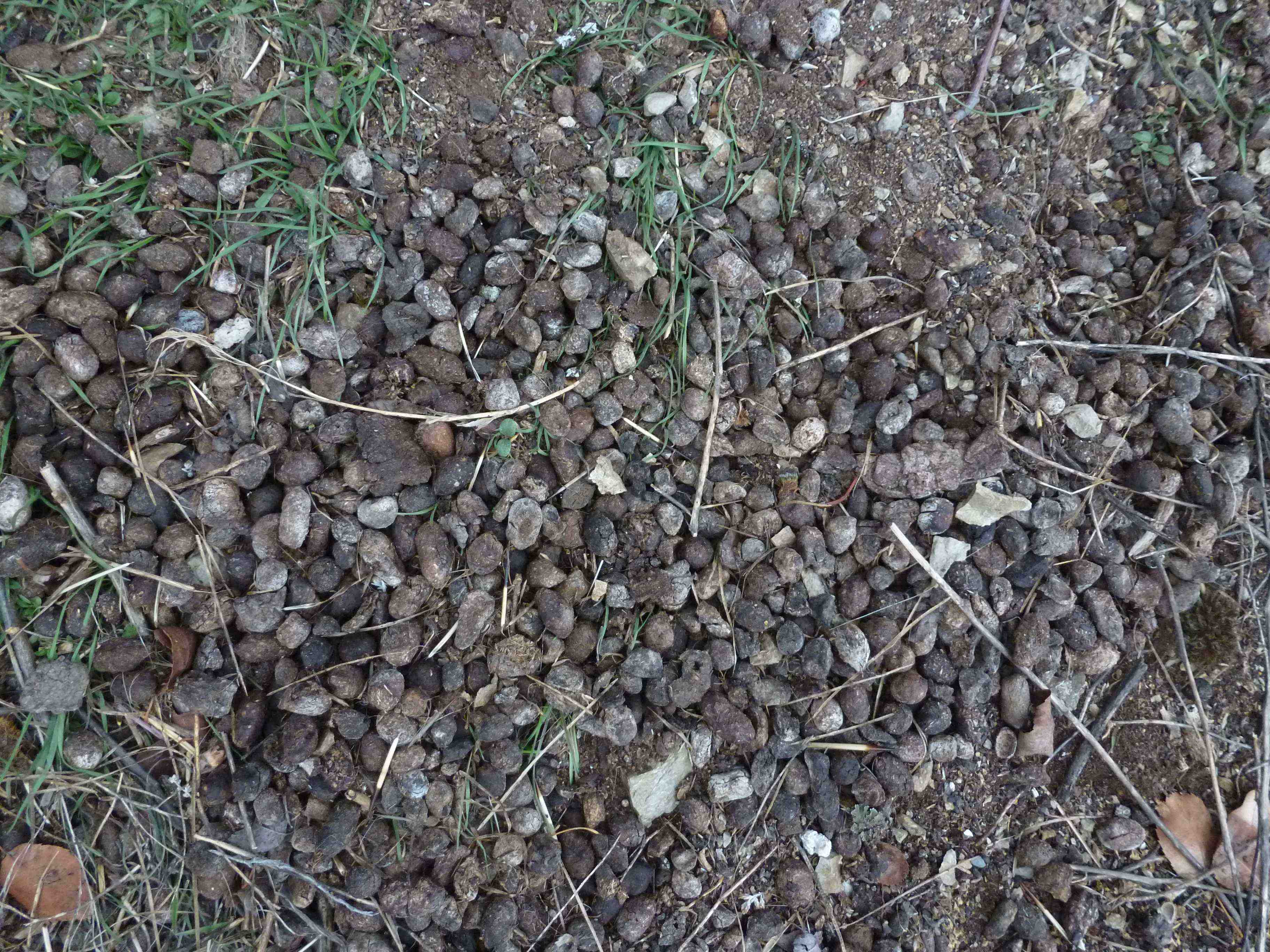 Marmot Pellets at the Mouth of Volcanic Marmot City
There’s years of the stuff here.
And what does a marmot do to spend the time in the city? Why, munch on flowers dragged up from the vole garden and in from the grass. It seems that a certain marmot has a favourite spot:
 Leftovers
It took many days of munching on flowers in exactly the same place to make a pile like this. Tidy guys.
And, what do you do when you get the urge to do more than just drop a pellet? Well, it seems that there’s a place for that, too:
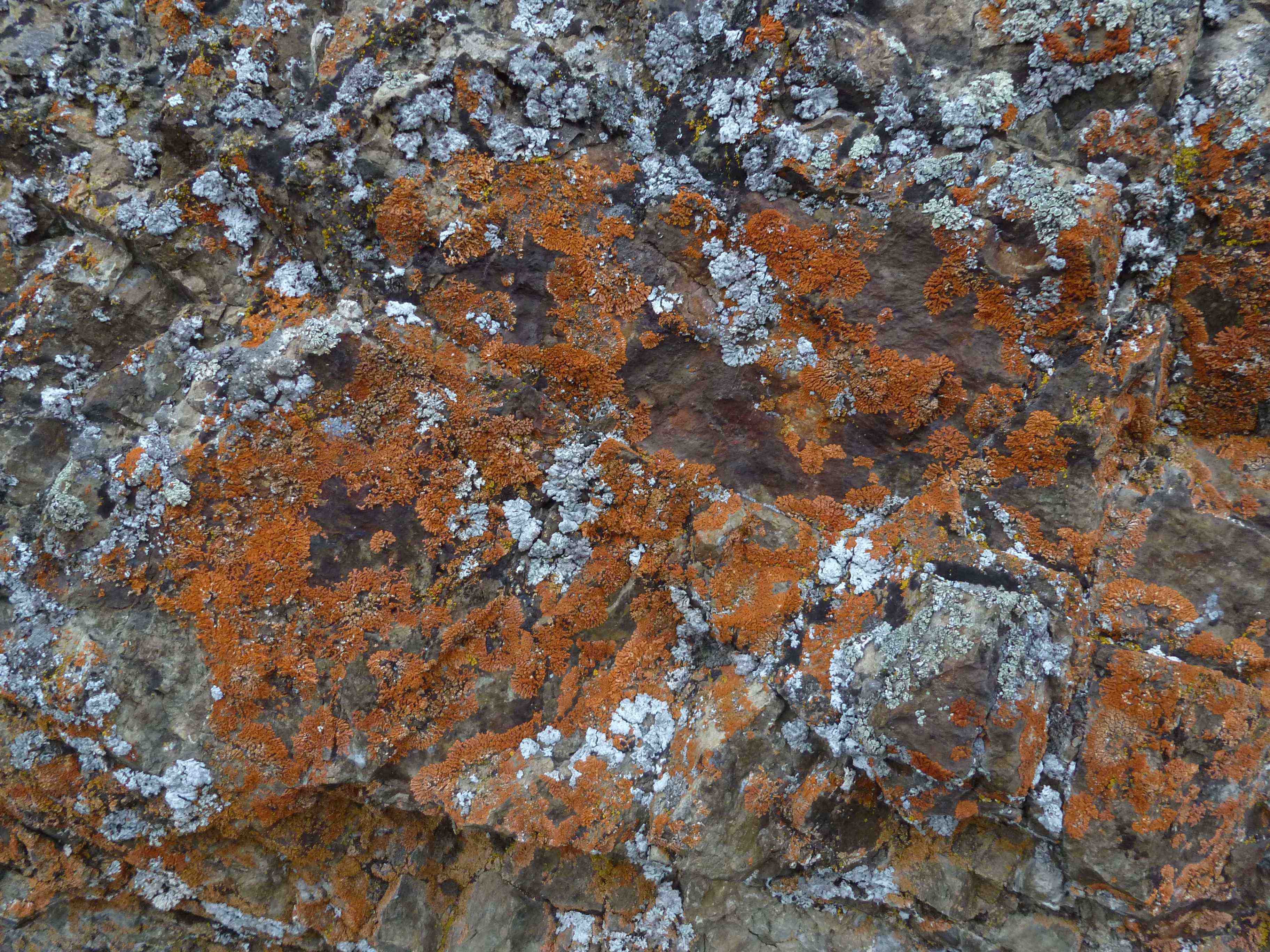 Orange Lichen in Full Glory
Lichens like these live off of urine. Usually in the grasslands it’s from birds, perching on glacial erratic boulders to see above the grass, but here, well, I think there are better candidates.
The cool thing here is what happens next. It is an extension of the vole gardens themselves. Take a look:
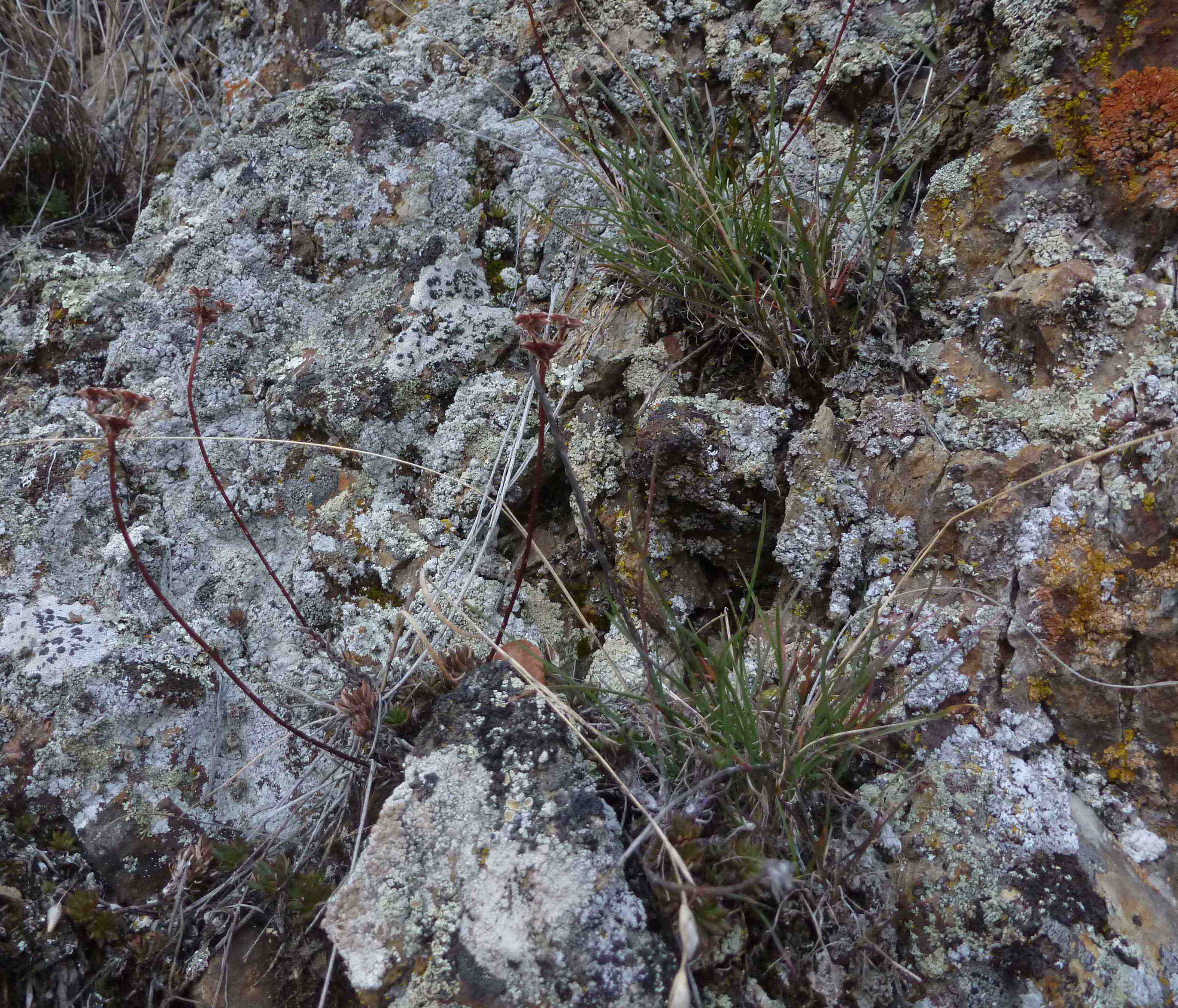 Marmot Rock Garden in Full Bloom, December 4, 2011
You gotta love it. It’s spring in Marmot City! On the entire slope, for kilometres, this is the only basalt outcropping with rock gardens like this. I doubt it’s a coincidence.
And all of this because of the voles.
We make a big mistake if we think that the grasslands are continuous communities, or even that they are about grass.
Sometimes to get the big picture you have to look at the details.
Categories: Land, Other People

 Okanagan Okanogan