





The Okanagan is full of dirt, but most of it didn’t come from here. It was brought by water. Here’s what I mean:
 Silt bluffs by Penticton
At the end of the last ice age, some 10,000 years ago, the waters of Glacial Lake Penticton covered these fine, clay cliffs. The cliffs were, in fact, sediment on the bottom of the lake. It is the remains of this sediment that supports the Okanagan’s wineries today. And where did this sediment come from? Here’s a clue:

Remnant of Glacial Till, North Okanagan
The capstone on this tower was original about 150 metres above the level of glacial lake Penticton.
And where did the rest of the soil go? Why, most likely here:
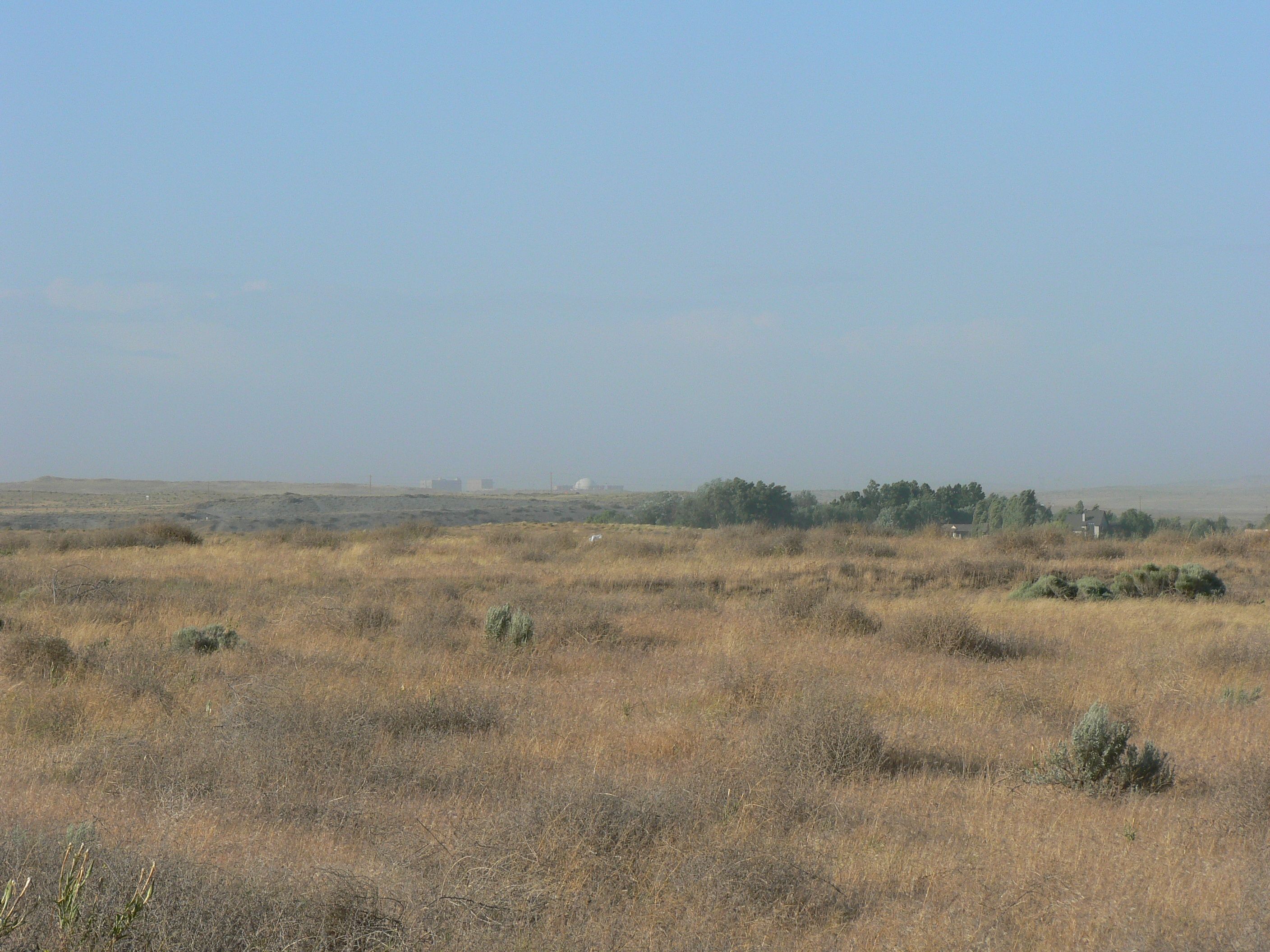 A Dust Storm Dulls the Sky at Hanford, Washington
And here…
 Sand Dunes at the Mouth of the Columbia River, looking towards the North Jetty
The north and south jetties were an attempt by the US Army Corps of Engineers to speed up the flow of river and clear it of its dangerous bar. It didn’t work.
I took a vial of this sand to Chief Joseph. It seemed the least I could do.
 Offerings at Chief Joseph’s Grave
The next time you taste a bottle of Okanagan wine, forget about the wine wheel. Remember: you are tasting soil on its way to the sea. It stops with you for a minute, brought up from deep underground by the vines.
You have just an instant before it’s gone.
Hang on to it for as long as you can.
Categories: Agriculture, Land

 Okanagan Okanogan
It’s an emotive subject but I think you can pull it off…keep up the good work.
LikeLike