


The fruit that this rich land produces is dependent upon mining the water resources that used to flow down from the hills. As a result of the corresponding loss of spawning channels running up into the hills, Okanagan sockeye salmon are unable to return to their ancestral home in Skaha Lake. Out of respect, Okanagan men are taking them from what is, effectively, dead water. This is hard work. Here they are at Thanksgiving.
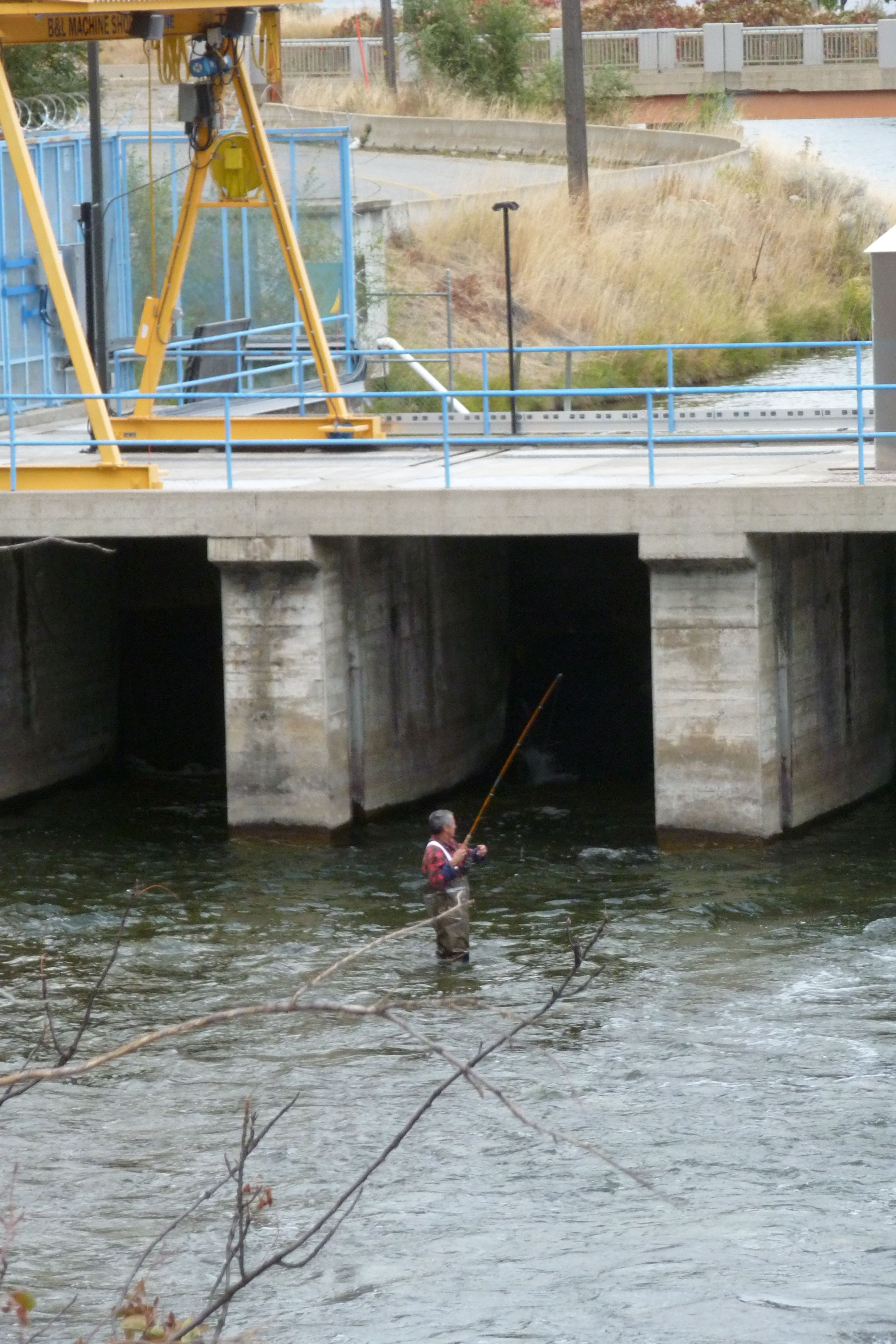
Respecting the Water and the Salmon at Okanagan Falls Dam
Now that the salmon have learned to breach the McIntyre Dam to the south, all that stands in their way of going home are water-based agricultures, like apples, peaches, and pears. For the moment, catching all of the strongest fish, the ones that make it this far, is the deepest respect. It would be disrespectful to stop at that.
It’s not the only way. Here are just a few images of fruits that grow wild in this climate, with no need for irrigation, on top of yesterday’s wild cherries, and last week’s wild apples. They include a few weeds. Such as:
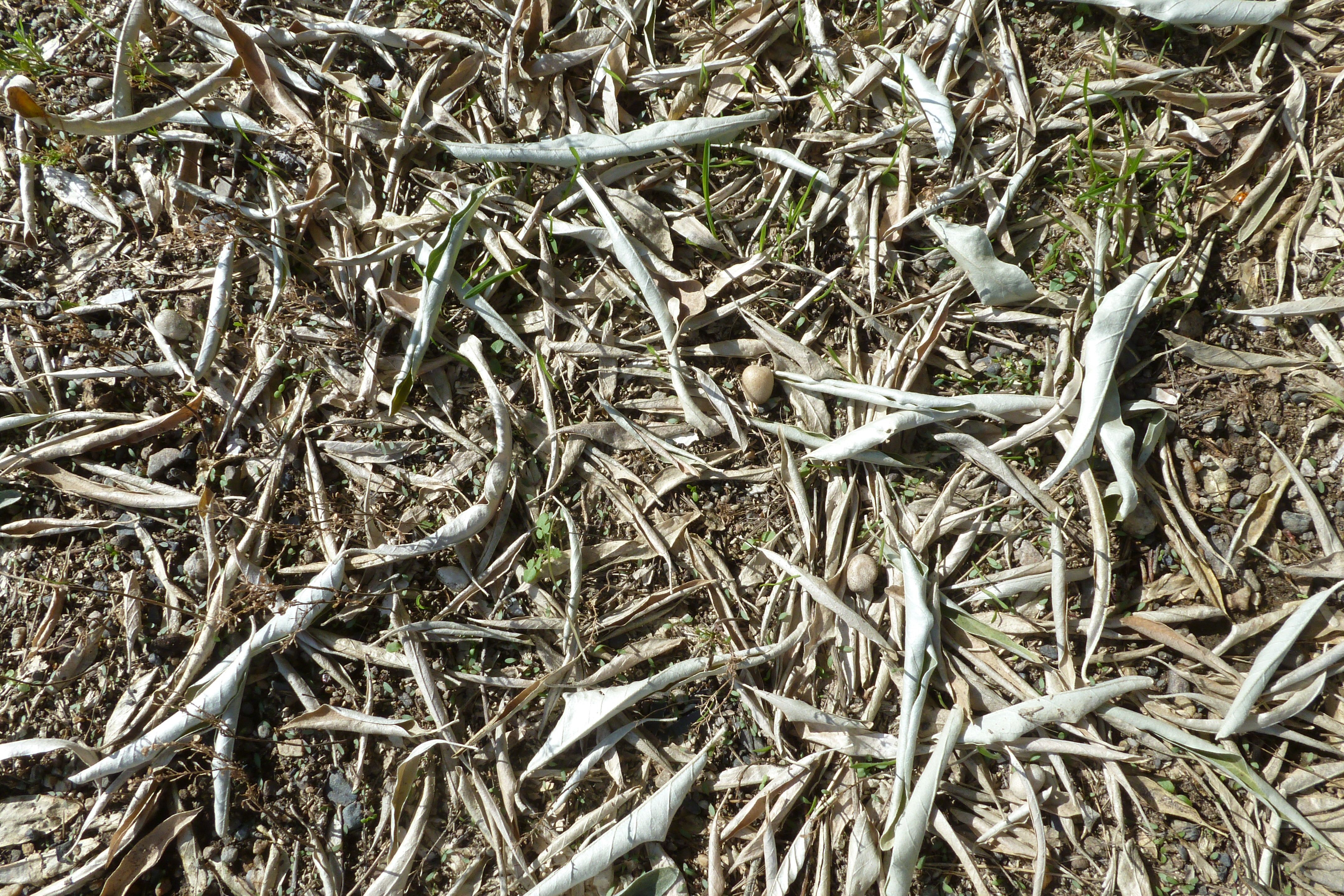 Russian Olives Fallen From the Tree
A week before, the last ones were hanging on the branches. In the summer, they are sour and rather hopeless, but late in the fall they are as sweet as chardonnay grapes.
 Cranberry Cotoneaster Berries in October
The berries are not humanly edible, but are good for the birds. What they’re really good for, however, is the bees. Thirty feet of hedge can support a hive of bees for a week.
Compare that cotoneaster to this traditional privet:
 Privet Hedge Without Berries, Birds, or Bees
I don’t know about you, but I like honey. The cotoneasters trim up better, too.
 Honey Locust Pretending that the Okanagan Okanogan is Africa
And loving it. In Upper Keremeos, these trees, and their sisters the black locusts, formed a formal archway for the Green Mountain Stage, as it pulled in to Frank Richter’s Ranch from Penticton. That was in the days when this really was the Interior, a term brought over by old Africa men. Honey locusts, however, can be a splendid forage, food, and lumber crop.
That’s six wild crops, if we’re counting: apples, cherries, salmon, cotoneaster, locust, and olives. Only one needs the water. In the next weeks, more will follow, but tomorrow: where did all this dirt come from anyway?
Categories: Agriculture, Industry, Water
 Okanagan Okanogan