Photographic Punk: Another Look at the Urban Okanagan

Yesterday, I shared a vision for my city, Vernon, in the North Okanagan, based around the notion of steampunk, an art form usually praised for funky flea market jewelry made from recycled watches, and novels with computers, dragons, and zeppelins all flying around together having great, low-tech adventures. I see this exciting new way of considering urban space to have the capacity to unite communities into common vision (because it is already universal) and to provide as well clear terms for creating healthy interfaces with the earth, using terms rooted in young, popular culture, where any future will be created. While I work out some more detailed principles, I’d like to leave you with a thought. It’s about photography. These are all images of humans. What you will see as you scroll down are (bear with me here) four humans. Have a look at the beautiful creatures…

zone Human #1

A steampunk creation of brick, asphalt, a power pole, paper for recycling, a glass window,  a magnificent art work of natural gas piping, and some handsome sturdy posts, as part of the human-automobile war. This human lives in an alley between the Vernon Art Gallery & Civic Parkade and a discount clearance outlet selling anything and everything in no particular order.

We’re working on the primary sculptural principle that sculptures are representations of the space of a human body in time, but those are big words for something that photography has made simple. Here’s our second human:

planter2Human #2

Empty flower planter and dry fountain at the Vernon Museum & Archives. Budgets are tight. Flowers and water appear to be the first thing to go. Even though dry, though, the human still appears to be doing well.

It is one of the principles of photography that everything it captures takes on significance. It is an industrial, machine process so perfectly pitched to human consciousness that it fools us every time. It is, in other words, a form of sculpture. More on that in a second, but first, human #3…

lter Human #3

Recycling waste cowering for shelter around a sturdy pole, becomes, when meshed with a muralized wall, a human, bravely facing the future, although with a certain amount of unease.

It was Mary Shelley who first created the steampunk world, right when photography was invented. Her creation, Frankenstein, was a novel cobbled together out of experiences, ghost stories, and folk tales. It’s star, Frankenstein’s monster, was cobbled together out of dead body parts, reignited by a spark of electricity, and wanting a life of its own: pure steam punk! Also, pure photography. Here’s Human #4.

magicalwindows

Human #4

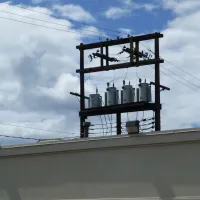
A particularly bright-eyed specimen, with very intriguing body alterations and decorations. A splendid example of steampunk. Backside of the Royal Canadian Legion.

Now, one might wish to call these humans “robots”, but I’d prefer that we called them images of contemporary Vernon citizens. I think they’re beautiful, and can be brought together with the other, fleshier humans, who live amongst them, to create a new language.  I am intrigued by how photography, which in a way (through its industrial nature) led society down the path towards being divorced from the earth, can now lead us back by helping us to see where its effects sit within our cities. I think these photographs are sculptures. I think Vernon itself is one giant spiritual photograph, one that is dynamically alive, as here in the one functioning civic fountain …

splish Notice the Clock!

Photography traditionally achieved its effects of aestheticizing the world through the addition of time: a photograph of anything 100 years old is automatically art. It’s a fascinating effect. Now, though, we have the Vernon Post Office …womantreeclose

A Woman’s Tree Fear

… the effects are immediate, and time has saturated all aspects of the urban environment. See how I got to steampunk? All those lockets and earrings made from old watch gears, and all those thousands of people streaming around to garage sales on Saturday, are all playing an interesting aesthetic game with time. The tree above is not, and that’s what’s interesting. This difference means that there is great latent power within this aesthetic, and I’d like to accept the challenge of trying to find words for it and to bring it to healthy life. I’ll leave you with one more thought, while I think further on this. Here’s the local farmer’s market …

sweetandsavoury Tents, Cars and People in a Parking Lot

One part of future economic health. 

And here’s another…

acupofteaA Pot of Tea (or, a Farm of the Future, or Human #5)

Back Alley in Vernon, with muffler, pineapple weed, and a used coffee cup. In the steampunk world, which adds articles together to create temples of time, nature is trying to get into the picture. The steampunk image is currently looking to the past, and to a very dirty industrial one, too. The plants are pushing the image into, what… life punk?

Let’s follow it!

Next: I hope to have some clear terms for this form of art and future making.

Vernon: Steam Punk Capital of the World

Steam punk is a branch of writing and art (especially jewelry and sculpture, romantic novels and visual poetry) that recombines materials from the age of steam and iron, and sets them in the contemporary world of petroleum and electrons. Here’s what www.steampunk.com has to say about all that:

  • Take place in the Victorian era but include advanced machines based on 19th century technology (e.g. The Difference Engine by William Gibson and Bruce Sterling);

  • Include the supernatural as well (e.g. The Parasol Protectorate by Gail Carriger);

  • Include the supernatural and forego the technology (e.g. The Anubis Gates by Tim Powers, one of the works that inspired the term ‘steampunk’);

  • Include the advanced machines, but take place later than the Victorian period, thereby assuming that the predomination by electricity and petroleum never happens (e.g. The Peshawar Lancers by S. M. Stirling); or

  • Take place in an another world altogether, but featuring Victorian-like technology (e.g. Mainspring by Jay Lake).

Very cool stuff. A popular way of crafting some good steampunk is to hop on down to the flea market and scrounge up some  broken watches and costume jewelry, and do your magic to them, like this:

steampunk-craftfair

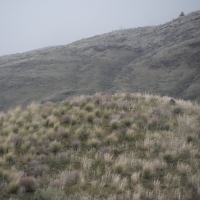
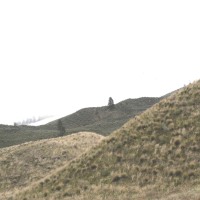
What’s not to love? You can view the rest of this Australian Maestro’s gallery here. Well, here’s the thing. I’m living on the edge of a city in the grasslands, and for a year and a half I’ve been talking about the lost world of the grass, and trying to show how it’s the future, while wandering through the houses and vineyards that have been plunked down in the middle of it like some bad body jewelry. Well, I’ve just had a brainwave. This is steampunk!

P1600588

Steam Punk in the Hills!

OK, maybe more waterpunk, but still, right?

You see, this city is flush with crafty artists and self-proclaimed avante garde writers, who are busy … making old things, in old ways. The truly avante garde poet Jason Dewinetz, for instance, pretty much gave up poetry to devote himself to a letterpress. He has never been so happy. You can find his award-winning design work at www.greenboathouse.com. Here’s one:

ock

One of the first books Jason did, before he was in the dungeon of Okanagan College and out at the Greenboathouse just up the lake from my house now, and long before I moved here, was this baby. First, the proud papa…

daydreamhr … and then the book …daydreamh

And for a sample of this translation of Shakespeare into a kind of steampunk nrrgh? Here you go: click. At the time, I was trying to work out some things about oral language, but what I did manage was to translate myself into Vernon, capital of steampunk. It’s not just Jason. It’s Kevin Mcpherson Eckhoff, too. He’s a stand-up comic who teaches writing things at Okanagan College, hangs around Jason’s dungeon, and hosts chapbook making afternoons at Vertigo Gallery in Vernon. Here’s one of Jason’s books…

201014_L

This tradition of using Victorian etchings in new and wild ways as a new art form and a daughter of poetry and excellent glue-stick technique has roots in the first world war, and wouldn’t you know it! So does Vernon! In fact, in Vernon, the men of the entire Interior, between the Coast Mountains and the Rocky Mountains, a country as big as West Germany, were lured into a makeshift camp on the grasslands, trained for a few weeks in marching and lunging, and then sent off to France, where they all died. And that was the end of that. Well, you might think so, but not in Vernon. Now it’s steampunk. Look:

lethalexposure

In Vernon, the War has Just Begun!

See the Steampunk touch? The mirrored wall beside it, complete with tagging and this photographer’s legs and worn-out hiking boots? Excellent, Vernon!

In fact, the war is everything to Vernon.

powerline

Note the Steampunk Hand-written Addition!

That’s one tagger I owe a cup of coffee. It was a French soldier who shot my Great Uncle Alfred through the head and sent him down the long road of a private post-war battle with the German Post Office and, gasp, eventual incarceration in an insane asylum in Sweden, no less. Not a boy from Vernon. No, they were all dead by the time Verdun rolled around.

My resolute hatred of war aside, I think this steampunk thing is the key to local society. After all, here’s a local alley…

thelast2straws

The Last Two Straws

The installation would be nothing without the tire. Pure steampunk!

Even the local art gallery is in on the act. It is right now trying to get funding to move out of its parkade before the local museum gets funding to move out of space built 50 years ago and as tiny as a crypt, while the politicians are trying to insist that they become one building, with one great big cold storage for all their paintings and artifacts (this was a fruitgrowing town once, and cold storage knowledge runs deep in the veins). Here’s what it looks like from the street…

show2 Annual High School Student Show, Vernon Art Gallery

While the kids are being taught about the ancient aesthetic thing of art (In mnany places, contemporary with the pre-World War I era, but in Vernon definitely a NOW thing), the passing traffic is driving right through their paintings. Really…

public

Pure Steam Punk.

Note the lack of “plant art” in the “planting box frame”. For “art”, the writing is on the wall.

You see how that works? No need for a multi-million dollar gallery. Just a cold storage and a bunch of polished windows, and we’re in. Meanwhile, over at city hall, the wise councillors are into a little steampunking of their own…

fountainoflifeCivic Fountain

That’s an elm seed (an invasive weed) and a dead mosquito and … eeyew.

You see how this works? Vernon is so steampunk, that everything is steampunk here. Even nature. Now “nature” is not a word I use when I’m in the grass, but down in town, where it’s an aesthetic thing, well …

manintree See the Man Walking Up in the Tree?

I wish I could do that. Very futuristic! And the civic offices? Aha!

blackbird Former Flower Planter

Now a weed planter, framing the reflected “nature” in the office window… no different than the art gallery with its cars, but grass and dandelions. Wow. Just wow. Brilliant use of media, guys! I owe this landscaper a coffee, too. And as for the War That Will Not End, even it is fought in Nature …

neverendingwar Note the Flag!

In Vernon, where World War II soldiers line up at the bus shelter, Canada is steam punk, too.

Now, I’m thinking that we could make common cause here. I could use the concept of steampunk to find an appropriate language for the colonial treatment of the earth in this place and put on some photography/text shows to blow the whole idea of nature wide open, so even Leipzig, champions of street art, would notice, Kevin and Jason could teach the stuff at the college, the museum and the art gallery could move in together and make steampunk displays of both artifacts and paintings in the same installations, and install stuff in windows to keep it all up to date, the taggers could be put on the gallery board of directors, the landscaper dude can be given a bag of dandelion seeds to work his magic on the civic lawns, and the road crew could use their mastery of abstract impressionism …

industrialart3

… to beautify the streets.

headrushGreen Light in Vernon

A head rush, for sure. There’s no limit. The cars don’t actually have to move…

waitingThey’re Waiting for Us to Catch Up!

Notice the excellent steampunk decoration of nature in the background. Exciting stuff!

Whatever else happens, the galleries and museums are going to need to reflect a culture in which the current galleries, the back alleys of town, are endlessly creative …

windowsweedswideIt Just Would Be So Much Less Without the Nature

Here too …

boxy Clever Use of Asphalt and Cardboard

And here…

door A Veritable Steam Punk Novel!

And pure mystery here …wallofmysteriesMystery Wall.

It is time to honour the culture of this place, and to help it heal its war wounds by bringing it to a language that can mesh its exciting culture of power …

betweenturns It’s Unclear Whether You Should Turn Left

and gas …

fitting This Gas Fitter Should Get an Award from the Regional Arts Council

Especially for that drain.

… and power…

redwhiteblue I weep for the joy of it. And for its exquisite use of line …redno Right to the Red Door!

…and (Hey, it is steam punk) Victorian lighting technology …lamplines In Vernon We Don’t Let in the Light. We Beam it to the Stars.

What a gas!

Not just a gas, but jazz…

jazzline The Power Lines of Vernon: A National Artistic Treasure

One of the earliest public art installations in the country, and, thanks to steam punk, excellently preserved. It makes those decades of a fruit industry all worthwhile!

And just in case you forget to …breatheBreathe.

More of that private parking thing, though. I think humans are at war with cars.

This war must end!

reflecteyes No Cars, No Steam Punk!

Note the eyes in the back window.

After all, the cars, strategically placed, beneath walls painted with the right colours, with the right orientation to the sun … can become steam punk, too!

sun

Vigilance is necessary …wild

… and nature could be treated with as much honour as the concrete it complements…

planter Weeds Trying to Steam Punk an Abandoned Planter for Shrubberies

Well, shrubberies were so 1970s. There was still money here. There was still a fruit industry. The museum had 50 years less steam punk to try to preserve. Time is part of every story here. And out on the outskirts, where something of the earth still breathes?  Aha …

plasticvistaThe Plastic Has Been Laid Down

Steam Punking the Land

It’s only here, where the city breaks down at its edges, that steam punking is a bad idea. In the city core, steampunking adds life. Out here, it’s just death. This soil has been stripped of nutrients, plasticized, chemically sprayed for weeds (yesterday, to prevent seed germination), and pounded back to rock …

soilTractor Blight

Steam punk gone bad.

So, you see. Steam punk, the heart and soul of a city that so wants to have a big art gallery like those huge multinational global cities of artistic excellence like Kelowna! What? You haven’t heard of Kelowna? Well, you’re forgiven. It’s a strip mall of car dealerships that sits on top of a bunch of old onion fields, but here’s the thing: they have the steam punk bug too.

2013_Stephen_Foster_tmp

Stephen Foster’s Toy Portraits, June 22 to September 29th, 2013

Pure Steampunk!

Now, in Kelowna this stuff is called “Art”, but in Vernon it’s the streets. We have an incredible confluence of forces: museum, gallery, college, writers, print foundry, book designers, taggers, landscapers, road crews, and all the people who dress up like this …

olourfulworldWithout Colourful People, Vernon is Just for Cars

… just to keep the colour thing working. Kelowna doesn’t have that. As for the toy Indians? They did that in Dresden a decade ago. But this art is on the street and its punk thing? They did that in Leipzig only five years ago, so, like, we’re ahead, right! Not only that, in Leipzig, they don’t have this …

P1600605Crab Spider Hunting on the Steampunk Weeds in the Steampunk Suburb

They had a life on earth 200 years ago. We still have it. So, when we go to the stars with our art, and our streets, we can make a new kind of city, in which art, streets, museums and galleries are all one thing. I mean, we’re already there. Sometimes being in cold storage for awhile is an advantage… if you seize it. Even Kelowna can’t do that anymore, even if you haven’t heard of it, even if you have. Think Green!

forever “Art” is obsolete, but the green light is on!no card

Vernon! Steam Punk Capital of the World!

I’m serious.

The Scent of Spring

Here’s the queen of our wild flowers … it smells so fine, it finds you before you find it!P1610811In wild rose season, everyone gets to be a bee. Bees gather pollen after being lured by the scent… and humans? The intriguing creatures stick their noses into the centre of the flower and breathe in deeply. That’s just as practical as the bee thing. It can change your life, and  your attitude to the world around you. Instead of creative writing classes, we can just send people out to breathe deeply.

P1610806They will return as humans.

~

All flowers found on Tuesday in Bella Vista.


Beyond David Suzuki

My friend Claude has reminded me of David Suzuki’s observation:

“We need air to live, we need water to live, we need food to live. If we continue to destroy all these gifts of the Earth, we will have no livelihood.” David Suzuki

By “We”, Dr. Suzuki means, I think, creatures like this:

1024px-Crowd_in_HK

Crowd in Hong Kong Source

Dr. Suzuki is an eminent politician. He knows how to influence humans. His “we” reflects that. To ensure the earth survives human self-absorption and over-population, however, this vision will need to evolve to include, among the ‘we’, this person…

P1610686 Killdeer

Leading me step by step away from its nest. Waiting for me when I stop, moving when I move on.

And this one, too…

folded Look how its whole body breathes …

butter2Western Tailed-Blue, Bella Vista

With my fellow earth people and the planet in mind, I’d like to expand Dr. Suzuki’s vision for the new century and the future that must be built:

We need air to live, we need water to live, we need food to live. We, the people of the earth, from the smallest bacteria to the largest whale, are these things. Whoever in this community continues to destroy these things and their living connections is separating life from the earth and individuals from community, thereby destroying life and sowing death in its place. We, the people of the earth, from the grizzly bear to the salmon and the human child to the black widow spider, the blue-bunched wheatgrass and the rocky mountain maple choose life.

If you can shorten that, I’d love to hear your version. Consider it a work in progress.

Bringing Life to the Political Table

Politicians represent humans and the workings of their societies. I believe that is just not good enough. For instance…

P1600064Not Represented by Politics

In a political process that is skewed towards dealing with human society separate from the greater society of which it is a part, many citizens of society have no voice. This yellow-bellied marmot, for instance, freshly up for his four months of sun. Did his appearance appear in the local newspaper? No it did not. There isn’t even a reporter covering the marmot beat. No articles on the quality of the balsam root crop this year. Nada.

One assumption behind the culture that creates human-centred political philosophies is that life will take care of itself — it’s a kind of an accidental thing that evolves and changes and adapts through a mysterious process called “wildness”. Well, when you live on a piece of land and it is your identity, there is no wildness You can only get to such a place if you assume that it is there for human use, and as soon as you assume that, you are not there. Behind that assumption is the one that humans and life are somehow different. Behind that is a notion about specialness and God (Adam and Eve munched the apple and then were kicked out of the garden.) God must be miffed to be so misunderstood. The garden is still here! Here God is, saying “deer”, and lo a deer walks across the grass, but politicians hear only “resource”. Anything else is for children. Sentimental, you know.

doe2

Half-Starved Doe

Denied a viable life by human predation on her food, shelter and travel needs, this is one half-starved critter with a nasty-looking sore on her other cheek. Locally, this is known as a “problem deer”. The suggestion is “removal.” Another word for that is “death.” Another is “no room on the planet for you.”

Here’s an idea: if it’s for children, it’s probably about right. If that doesn’t seem right, it means you left the garden and are looking for a canister of weedkiller and some rodent bait. That means you are the problem. Politicians, for example, propose ensuring the health and sustainability of the human societies they see as their business. Around here, the different ways of doing this are strangely reduced to a choice between “the economy”, which means building roads and buildings and green space, like this …

P1610812

Multi-Million dollar Plan to create 4 blocks of Green Space With a Road…

… where there was a road before.This is “economy.” Vernon

… or through a thing called sustainable resource use, which is like saying, “We’re going to look after the earth…for people.” What, are we slave owners? After 17 months working on this project and paying attention, as best I can, to the land around me, I have learned a different road. Take a look …

facingResource

No, not the arrow-leaved balsam root, or the last clumps of bunchgrass sheltering beside it, or the sagebrush, but the pile of old trees. Some kid came up from the orchards long ago and built himself a fort out of grassland trees. That’s a resource. You use it, it fills a purpose, and then you’re done. Meanwhile the ants, termites, birds and bees that lived in those trees are… gone.

The earth is not a resource. To say it is one is like saying that your mother is a resource, or your child, or the blood in your veins, or the spinach you planted in August  (the stuff that overwintered under the snow for four months, and now, mid-May has made a spinach pie for eight, out of 6 spinach seeds (6!) — which is what I served here last night), is a resource. No, it is not a resource. It is life. If it were a resource, it would be so to something that is not-life. Is that you? Not-life?

P1610599

Skeleton Weeds Given the Heave-Ho

If you’re not in favour of public intervention in the grasslands, if you consider it wild and consider that it will look after itself, or that the budget must wait because a new sports field in town has a 5 million dollar priority, then you’re in favour of the replacement of the grasslands by this noxious weed, brand new here and waiting for no political discussions.. If we don’t stop this evil of human neglect and carelessness now, the entire valley will be wiped out of half of its life within a couple decades. Next year is too late. My year-to-date: 2000 plants removed. That is 20,000,000 viable seeds removed from the wind. You want to know what evil looks like? It is this.

So, let’s have a look at something else popular with Green politics: “The Environment”. Have you ever seen an environment? Let’s look. Is this an environment?

P1590556

Balsam Root and the Earth’s Deep Mantle Blasted to Make a Subdivision

Not an environment. Life the whole way. And some reshaping of the living earth to fit automobiles (non-life).

OK, is this an environment?

P1600516Arrow-Leaved Balsam Root Gone to Seed

Hardly an environment. Many insects live on and around and off of this plant, but that doesn’t make it an environment. It means that, together, the insects, the plant, the air, the soil, the microbes in the soil, the sun, the snow, the marmots, the deer and the rain are life. Life, lives all at once. A lot of it is living off of those balsam root seeds. To illustrate that, take a look at that image of the balsam root and the ruined “tree” fort that opened this blog, but two weeks later …

P1610767

Balsam Root Seeds, All Gone

The deer have been by.

The seeds are hard to gather and shell, and once you’ve done so you have a lot of work for very little… if you’re a human. That might be worth it, but the deer do it easily. They just digest the whole flower head. There’s a point in there about wildness. In contemporary thinking, that deer is wild. In earth thinking, that deer is a person — as are cattle, politicians, and grocery stores. It means that it needs a voice in politics. Since it can’t speak for itself, we must speak for it. It doesn’t mean it cannot be used for food, especially since it is such an efficient and gentle harvester of wild sunflowers, but it might mean that it can no longer be harvested for sport, because it is us. Any use of deer for food is a sacred responsibility, that starts with looking after the earth as if it were our mother and our child. Any politics that talks about resources will fail. There are no resources. There is life, and there is death. There are only our sisters and our brothers. Some of them serve a role as food, but they still have a place at the table, on their terms, not ours. Oh, and as for the Garden of Eden?

P1610744After a Morning Rain

God didn’t kick us out. All he did was give a choice: live in the garden or live in the weeds. He was kind of hoping, though, that we’d choose the garden. Every morning we are presented with this choice anew.

Up to this point, politicians have largely been the kind of people who choose weeds. I’m not kidding. I found three election signs today, all hammered into the northern flanking motion of hawk skeleton weed in the valley, the number one threat to the long-term viability of the Okanagan Valley. It makes almost every other species here an endangered species — and not in some unforeseeable future. Obviously, the people working for these politicians did not know that there is evil, or that it must be dealt with now, not with talk or pounding in signs, but by doing the real work. In my speechlessness, I offer red arrows to show where the largest of the weeds (769 individuals in total) are …

P1610841 So much for the social democrats. And …P1610837… so much for the Neo-Conservatives, and …

P1610843… so much for the other Neo-Conservatives. As for the Green Party, our most enthusiastic candidate from a city far away urges us to build an economy out of local food processing. That’s a good start. It will do amazing things for human social infrastructures. It still doesn’t subordinate humans to life, though, or bring life to the political table. When that party does that, then the economics of the other parties will become as foreign as the skeleton weed is now. I don’t want humans to continue to be that weed, or to continue to vote for it. Yes, vote for it. The state of the land is a direct representation of the state of our politics. That hurts, but sometimes it’s good to stare the truth in the face and then to start in on the real work, with renewed vigour.

British Columbia Election: of Zombies and Skeletons

Since 1990, the budget and staff of the Environmental Ministry of the British Columbia Government has been reduced by something like 92%. As a result, no one is there to deal with the zombies.

P1610592

Skeleton Weed (Foreground). Pure Zombie.

These shoots of concentrated evil are present in 2 areas of the Okanagan: north of town, and up the hill from my house. Both are in the City of Vernon. The zombies have been here for less than a decade. They can be stopped. Someone has to do the real work.

The civic government is planning a sports field, one penny at a time. The provincial government has no time, energy, desire, funds or personnel to deal with the death of its rangelands, or any other part of its environment. Meanwhile, we are in the midst of a provincial election that exists on TV only, as such performances usually do. Out in the world, as a result, it’s rather a skeleton election: one party got us into this mess, another also got us into this mess, another has offered a candidate from a city 6 hours away, who has not even come here to pull a single weed, and then there’s a guy who says, “Vote for the other guy.” And he’s the “Independent!” Sheesh. Meanwhile, I vote, like this:

P1610594Skeleton Weed Meets Its Match

One zombie at a time.

P1610601Tally for today: 253. That’s 530 year to date.


Growing a Future from a Living Past

I want to show you something about money. And something else about life. (Hint: choose life.) Here is a future apple orchard.

P1600194Nursery Done on the “Cheap”

In this case, cheap is expensive. These are grafted trees, lined out to grow for a year before being planted out into the orchard itself.

Here’s what it is intended to look like in a year. By the look of them, these are trees imported from Europe.

P1600178

Newly Planted Apple “Orchard”

The money is in the posts. Really.

Before I left this valley for 20 years, I was the guy who did the kind of grafting you see in these photos. I used local grafting wood, added my labour, and used trees grown locally for the roots. I was well paid and in high demand. Now the ready-grafted trees come from Holland. Instead of an industry, and all the creativity and spin-offs that come from it, we now give the work to Holland. That would be bad enough, but it’s not all. Have a closer look:

P1600197

Dead Soil

This is not how to do this. This soil has been depleted of organic matter by years of growing tomatoes under plastic, depleted of oxygen by being compressed under heavy equipment, infected with bacteria because of the tomatoes, and depleted of nutrients. It is not soil. It is just ground up rock. Not the same thing. Not only that, each tree here is planted in the space really needed by four trees. It means more space for more tomatoes, and a cash crop for this year, but the trees need that space, too, because once they’re planted out in a high density system they will need branches and will need to produce fruit immediately. That is a stretch. It will only happen with incredible access to nutrients, soil bacteria, light, and freedom from cultivation damage. None of those are present here. This means that the approximately $2.50 a tree in likely borrowed money paid here is money large thrown away. But that’s not all. See if you can see anything growing here.

P1600199

Not Growing

These trees have been in cold storage and have been fumigated to get across the border. Both of these mean that they won’t start growing for weeks (and let’s hope that works). As for the soil, it’s not even fit to cough up a single weed.

Meanwhile …

P1600273

Apple Blossoms (Royal Gala, actually)

See the leaves? The grafts should have been fully-leafed by now. Not this far along, but on the way.

The consequence of the contemporary economic system can sometimes be impoverishment: of the soil, of horticultural knowledge, and of the future. In this case, at any rate, they have all been sacrificed . We used to be able to do this in a first class way. Now it’s fifth class, at best — and fifth class, in something as expensive as this, means: don’t bother. But, don’t be depressed. Please. This is just a story about an error. It can be reversed. Easily. The knowledge is still here. It is only in the last two decades that the changeover has been made from trees like this (kept for sentimental reasons)…

old

Apple Trees Planted Circa 1975

OK, so, not old. These were the high density trees of their time. Notice that the process of replacement has resulted in … do you see that? Nothing! The land is wasted instead, waiting for houses to come, or for someone to have a better idea.

But let’s just take our eyes away from the story of the trees for a moment, as seductive as it is, and concentrate on the posts.  The money is just flowing away into them.  They are made using extremely toxic chemicals, and devour huge sums of money, which the farms are hard-pressed to repay. Yet, 120 years ago, there was a better way …

P1610103

Black Locust Trees

These are the trees that graced every original farm in the intermontane region. There was a reason for that. Fence posts made from these trees last in the ground for, get this, 120 years. Compared to the 25 years for poisonous pressure-treated pine posts, that’s, um, pretty good, right? Not only that, but creating the posts is good, productive, life-giving work, and the beans on the trees are edible, too. And bees love their flowers. 

Our young people and the life in the earth that they represent need us to get real. Fortunately, it is possible. Memory is part of the story. I have been given a chunk of it. By reading this, you are sharing in my work at figuring out how to pass it on and put it to use. Thanks for being here. I couldn’t do this without you all.

Highways: Green Space

I know it’s counterintuitive, but look…P1610018… and here the ants are lending a hand …

P1610417… and here a beekeeper, selling propolis and royal jelly and all kinds of super live-till-you’re-120 health products in beautifully packaged little jars and squeeze tubes, and mead too, flavoured with blueberries and apricots, mmm, and, heck, everything all healthful and good …

P1610404… is trying to stop the future by applying a good whack of 2-4D to his crumbling driveway. The dandelions are suffering, but they wont die, and the road is not saved. Its time is over. The rest of the road is going the same way.

P1610061Crack Sealing

Buying time for a dead road.

The money to repair this infrastructure may not come again. If it does, it won’t last for long. 10 years after that, we will be dealing with roads that are completely falling apart. It’s time to develop the technology now, so we’re ready…

P1610313Wireweed, Pineapple Weed, Cheat Grass, and Wild Lettuce

Showing us the way to green urban space, and food for all. Either we eat this stuff or weed kill it for no reason other than some attempt at control.

Here are 3 principles. 1. We are not in control. 2. Choose life, always. With those in mind, we’ll get along just fine. By choosing life, we are choosing not to be in control, but by choosing it in advance, then we are on its side, rather than against it. That’s a form of control — controlling us. 3. If we don’t choose life, we are the problem. If we choose it, we are the solution.


The Creative Economy and a Living Earth

Here’s how the earth came to be alive up on the hill.

P1600609

Spider Making the Most of Invasive Knapweed

Here’s how the earth came to be dying up the hill. An investment company hoping to transform a section of living earth into a piece of “land” which could be sold socially blasts it to bits to make roads and building lots. Now that a rare remaining grassland was a part of social life and no longer a part of the living earth (it was now “land”), the company could sell it as a cost to society. To make this cost as large as possible, a vineyard was planted. Its presence made the earth around the development seem like a piece of Provence (a social image) and the “land” seem like a piece of New Mexico (a social image of a hot place). These attractive social ideas were incorporated into the architectural and landscaping plans of the development. They had the potential to increase the land’s cost to society, which would then be private profit for the developers. For complex reasons to do with global economic factors, a collapsed real estate market, and so on, the development went bankrupt. At that point, the final phases of the vineyard development were abandoned, although the sagebrush and native plants had already been scraped off of them and piled up to the side. In other words, it had already been transformed from life into “land”. At this point in the development of a piece of living earth into a monetary engine, the project’s capital investment was written off, and the developers moved on, free of encumbrances. Well, almost. They left behind a life-debt, from the earth’s perspective, and a creative debt. Here’s what the creative debt looks like:

P1600827 Bamboo Stakes, Rotting Away

These stakes were likely harvested in China and bundled and shipped at great expense. As this creative input and the life-debt behind it was never put to use to help raise young grape vines (by saving on labour costs — another social cost contributing to greater profit for the development company) it was ultimately wasted. Instead of leading to social life, as a substitute for original earth-life (which would have preserved and expanded the creative capacity within them), these stakes became only capitalized objects, discarded as easily as the capital debt. Unlike the debt washed clean by the bankruptcy process, however, this debt remains. Here’s some more of it…

P1600821

Vineyard Infrastructure … Mostly Ruined Now

Strangely, the laws around private property are so strong that the banking companies left with the abandoned project never sold off this material (while it was still useful) so that the creative input that went into it could be used, to help clear its life-debt. Instead, it was treated like the capital that invested in it. Capital, though, is a social concept. The earth’s debts are not so easily erased. There is, however, a way to do it, that gives some hope for the future. For one thing, the wire still holds its creative potential. In the bank of creative potential, it still has a positive balance in its account.

P1600828

The rest of the story is what is happening around that stack of wire. Here’s a closer look …

P1600830

Yes, humans are messy, and this form of economic organization is messy, but that’s not the point. Look more closely …

P1600832

Yellow Clover!

You see that? The “land” creation process made a desert of blasted bedrock, yet life is establishing itself there. Not social life. Not human life. Not the original grassland. Not a vineyard. But life. New life. With new goals. In this case, the great debt this “development”  created within the living earth can be partially erased by observing that in what is supposed to be “Provence” and “New Mexico” and “hot” and a “desert”, new crops are showing up, capable of living on dead land without irrigation or soil and making it alive. The creative potential of the bamboo has been wasted.

P1600825

The removal of the slopes from the earth to create a vineyard to increase property costs was a waste. The death of the land and its now-rare grassland was a waste. All of these wastes are debts. Nonetheless, the earth can be returned to this place, and it can be alive again, with the input of human creative energy. In other words, by giving human social energy to the earth (rather than using the alienation of a living earth to create social debt which can then be turned into private profit), humans can help the earth give them a creative profit: a living development, with an economy of life stronger than the life that was here before, and a social life in tune with the earth. There can, one day, be profit here again, but it will be in the life created out of developing human error and transforming “land” back into living earth, complete with new crops, new reclamation strategies, new systems of earth-based economics, and new lifestyles. It is too late to go back. We can, however, go forward with hope. If we chose not to, we are choosing death…

P1600646 Death

Transformation of a Living Earth of 1000s of species and great water efficiency into “Water Smart” Rock Landscaping and invasive knapweed and a few strands of cheatgrass, and nothing else.

…instead of life …

P1600627 Life: Beautiful Natural Grasses (Foreground)

Doing a better job of aesthetic gardening than the “Provençal” plants in the back.

I mean, look at the beautiful colour of this stuff…P1600625Lavender looks no better, but this stuff can grow here without water, and can host insect worlds. Of course, even the knapweed, for all its sinister, hellish qualities, does a better job of that than lavender…

P1600605

Crab Spider, Nicely Camouflaged

Let’s work with the earth. Let’s live.

Wild Bees Going Wild

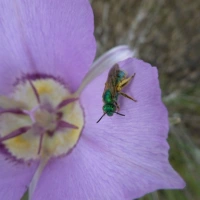
Wasps, bees, hornets, bumblebees, beetles, ants, butterflies … everyone is out in the wild cherries today. Nobody is in the orchards ten feet away. And not one single domesticated bee in sight. Look at them flying around!
P1600895

Here’s a blue wasp sucking the sweet nectar of life…

P1600857

And, not to be outdone, a blue ant …

blueant

… and this beautiful creature, whatever it is …

P1600930 … and all the while, these guys are flying around …

P1600896 I gave up on photography and just stood in the swarm (they cared not a whit). I noticed this much…

  • Mourning Cloak Butterfly
  • Blue ant … Blue ant? … yeah, blue ant!
  • Shiny blue fly.
  • Grey bee 2 cm
  • Blue wasp 2 cm
  • Blue grey bee 1.5 cm
  • Blue grey bee 2 cm
  • Black wasp 1 cm
  • Black bee-fly 1 cm
  • Beetle-like bee 1.5 cm
  • Small round beetle with grey scribbles on its back 5 mm
  • Yellow bee with black stripes 1.5 cm
  • Yellow and black bee 1.5 cm
  • Multiple tiny bees and wasps ± 5 mm
  • Black hornet 4 cm.
  • Black bumble bee 4 cm
  • Yellow bumble bee 3 cm
  • Yellow jacket 3 cm
  • Black and white striped bee (fat) 2 cm … and
  • Wasp with red abdomen with black lightning strike decoration, like a black widow …

red copyGold fur and black chitin is a very lovely look …
P1600955 Here’s what it looks like in flight …P1600964

And not a single bee, wild or domesticated, in the orchard. Does it really seem an accident that domesticated bees are dying out? The poor things are as poisoned as we are. Now, just so you can share in this glimpse of a possible future for beekeeping, here’s a video, a bad video, a wobbly video with a ridiculous airplane filling it with NOISE, but, still, full of bees, for your pleasure…

They care not one bit whether a human stands in their tree or not. Got that? We’re not the story. Culturally, in these parts wild bees are considered excellent pollinators and … well, that’s about it. But it’s not about pollinating a future crop, and it’s not about honey. It’s about the presence of a crop right now. One ignored by humans. One that causes hay fever among humans with non-localized immune systems damaged by human environments. One that nonetheless provides pollen. Huge amounts of pollen. Here’s the skinny on that:

pollen


That is, um, more protein and less fat than a T-bone steak. And we don’t harvest this stuff? Imagine a world in which there were flowers everywhere, no agricultural chemicals, because they didn’t matter, and we just harvested the pollen and staggered around surrounded by beautiful insects and birds and blue (Blue!) ants. I mean, wouldn’t our work places turn into this?

P1610008Beats flogging burgers at MacDonalds. Look again …
P1610011


See? No grease. Humans, it seems, are always the last to know. That’s because we’re still new on this planet. I think the best thing to say to young scientists might be: Get out of the lab! Go and stand in a tree at 3 in the afternoon on a hot day! Thirty minutes there are worth 5 years in a place of higher learning. Oh, and stay out of the orchard! That place can kill you.