




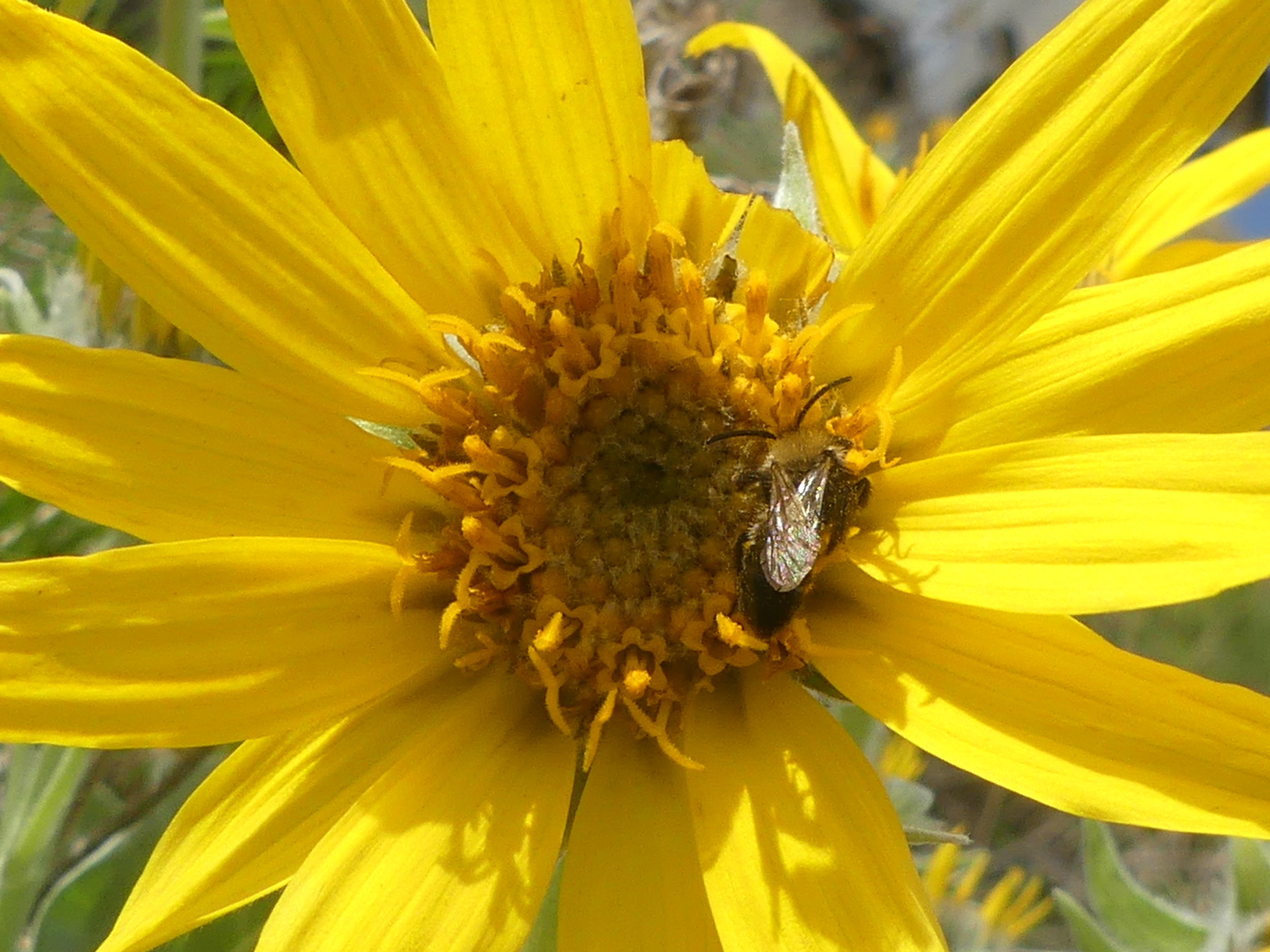
The balsam root blossoms on the hill were visited by these furry brown bees yesterday.

These are the first bees I’ve seen on the flowers that were not shy. They wouldn’t scare. I came close. I moved into their light. I waved my arms. Nothing.

So, why this year? Why these bees with no fear of a predator? Or is it that they’re used to humans and aren’t from here?
Categories: Floral, Grasslands, Nature Photography, Open Agriculture

 Okanagan Okanogan
They look like some kind of mining bees, a kind of wild bees mostly solitary living. If they come out of the hole in spring, were they were bred in all on their own since autum.
Most mining bees fly in two generations a year, only few once, so after a long time in the ground, they are just interested in food, and ignore to be probably disturbed as long as possible, just to get the last drop of nectar.
Maybe you will find little holes in some open ground. As pollinatiors, they are as good as honey bees or bumble bees, but because of their small action radius mining bees and their preference dor digging holes in open and dry areas, they are lucky to stay in the amateur-status, while the commercial gardening detected bumble bees and mason bees for “pollinator-slavery”.
LikeLiked by 2 people