






Here’s what might sound at first like a fantastical story, but it does end with a deeply practical point. I hope you enjoy it! To start, look at the spirit whale of the Okanagan at the end of a winter day. The first people who came through here 12,000 years ago were ice-edge hunters from the ocean to the West. They would have known about whales moving through leads in the ice. The trees in the foreground would have been underwater then.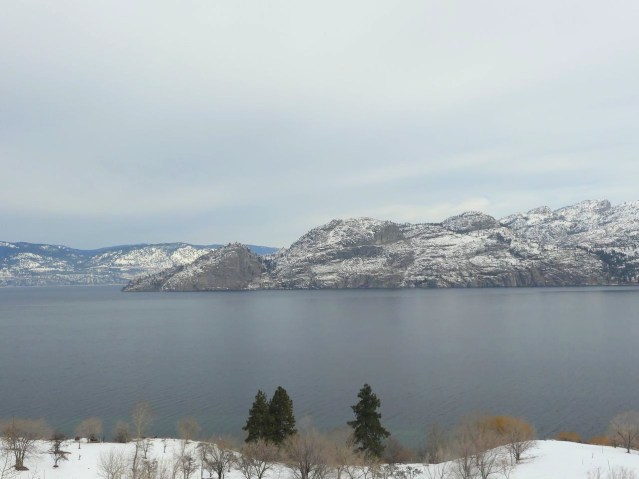
Look at the big fin of the whale’s tale to the south. That’s quite the whale.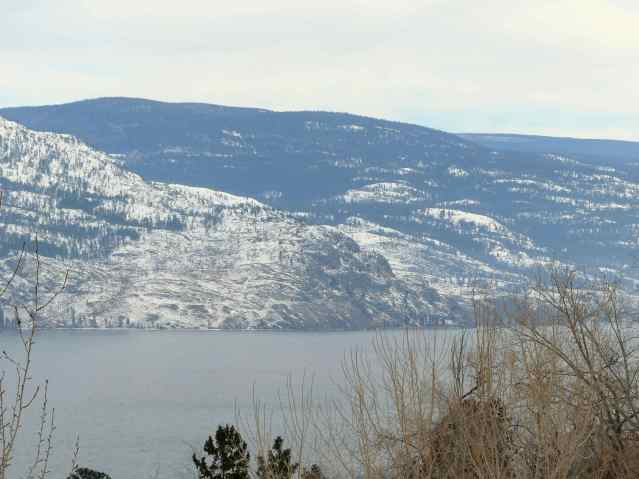
Over time, she has risen from the water. The purple line below was the lake shore 12,000 years ago. The red one, 10,000 or so. The drop was rapid in each case.
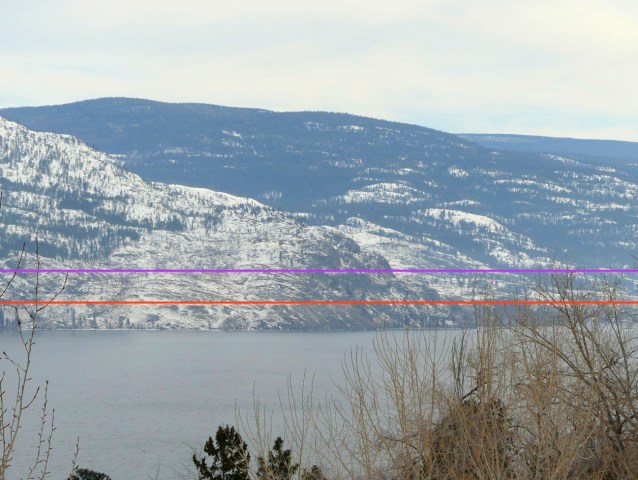
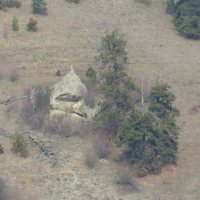
As you might just be able to make out above, when the tide was in (so to speak), the whale’s tail would have had three heads. Its fin would have been hidden. Swinging to the left, her head would have looked like this:
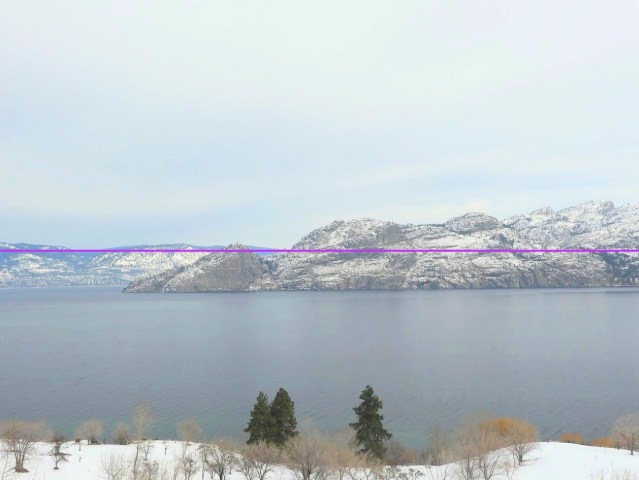
She was underwater, that’s what she was. Her body was a canoe full of animals. That would have been intimate knowledge to oceanic ice-edge hunters, and common to a number of indigenous flood stories. Look below for a closer look of the prow. The whale’s head is just a tiny island, leading the way like a porpoise. In this image, the ancestral animals who are the cargo are more clear.
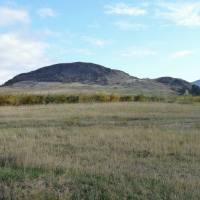
The image below shows the stern of the canoe again, as it would have appeared above the lake, blunt-nosed as we would expect, with two trails of froth. The stern itself is a clown’s head, a motif we see on hundreds of sacred rocks in the Pacific Northwest. Whatever the reasons are is a discussion for another day. For now, let’s just be present on this ancient shore.
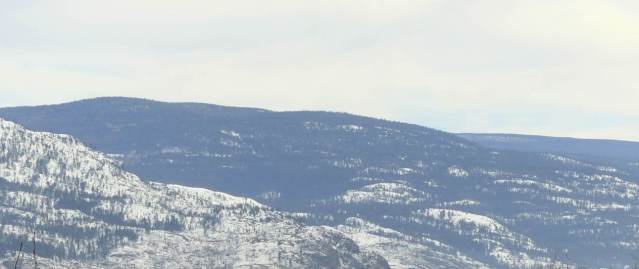
There’s no way of knowing if people viewed the whale this way or not 12,000 years ago, but one thing is certain: over the course of half a day she lifted out of the water and left behind a lake in the shape of a snake. Two thousand years later, she did it again. Today, that snake is called, derisively, Ogopogo. With more respect, but in equally colonial terms, she is called a lake. That discrepancy between spiritual and European knowledge is worth keeping in mind, when assessing my story of the mountain that is a whale: whether they are indigenous or scientific, story-tellers bring their knowledge and see it reflected in conversation with the forms of the land. People who come from that land, however, see the spirit first.
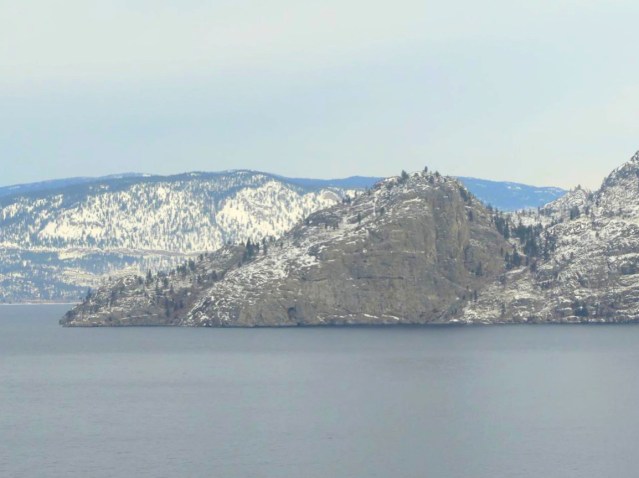 As a man, if that’s what I am and not “tree walking” or something like that, what I see in the image above is my self. I can’t say I understand this, or do not. “Understanding” is the wrong concept to apply to that presence, and can only access deep threads of European knowledge and explanation. Like “lake” or “mountain”, however, such activity comes from somewhere else and does not describe the bond between my body, spirit and mind and those of the land. Even “land” is the wrong word for this stuff. I seem to be evolving past words. What’s next, I wonder.
Categories: Arts, First Peoples, Gaia, History, Land, landscaping, Nature Photography, Spirit, Water

 Okanagan Okanogan