


Ah, Iceland. When the Vikings came, Irish monks were already there. At the end of the world they had a fighting chance to get just a little bit closer to God. They were like saints in the desert — single monks living alone in holes and caves they had grubbed out of the volcanic soil. The poor souls on the edge of paradise must have been annoyed when the Norse came and started burning God’s birch trees to warm their pale hands.

The Sacred Birch Forest of Ásbyrgi in the Morning Sun
Most of the rest of the forests are gone now: burnt up as kindling or nibbled and hobbled by sheep. Others hide behind stones, reaching the daring mature height of some two inches.
Eventually there were monasteries and nunneries in the four corners of the land. In them, the monks treated the sick, fought off invading ogres, regulated all the things that the Church regulates, took in boys and girls as novices, and taught the girls to use embroidery as a principal method of devotion. For awhile, imagine, humans spoke directly to God in a language of flowers.

Just Another Day in East Iceland
God speaking to humans in his language of flowers. The monks tried to get their farm girls and boys to speak the same language right back. It was a kind of make-do-with-what-you’ve-got educational practice.
Off in mainland Europe at the time of the Icelandic monasteries, there were other languages: war, alchemy, literature, even Hungarian. It got messy. People didn’t understand each other very much. Many of these languages were methods humans had devised for speaking to God, but few if any were as charming as the language of flowers, especially since it might be the only one that speaks along with Him.

Speaking with the Wind
Seyðisfjörður, Iceland
In Iceland, this way of being with the world and the Word became the language that could speak of the shared space that lay between land and society. Now, you may recognize that space, of course, and you should, because humans today live there. It’s what is called individual consciousness and personality now, and is largely seen through a language of perceptions and feelings. Those are pretty new ideas, though. Their older incarnations looked more like this:

Hand-Collected Birch Leaves
Icelandic bedroom decoration, near Ásbyrgi, The Birthplace of the Gods, way up in the Green North. By the way, the pine boards are attached with copper nails. Now, that’s cool. As for the birthplace thing, well, if you’ve been there, you won’t doubt it, and if you listen the ravens will talk to you about it all the long northern day long.
There was a time, very recently, too (and in Iceland it still continues, here and there), when individual and social identity were the same thing. In this context, an individual wishing to express his or her deepest desires, used the language at hand — the language of the land and its patterns of rain and snow and the plant growth that mirrored it. The plants of the earth were one with the earth, and with the sky.

Small Waterfall near Seljalandsfoss, Iceland
Flowers hanging around like a flock of monks, too.
So it was that when the cloisters of Iceland took in young girls from the countryside and the language these girls could speak was not the language of the Books of Moses or the Gospels but the language of leaf and flower the abbots and abbesses of Iceland worked with that. It was, after all, God’s language, a living language of creation given without the least translation into words. Make no mistake. It was no simple language, and it did have a direct path to God. That certainly made it a bit more direct than those other languages that needed incense and gargoyles to pull it all off.
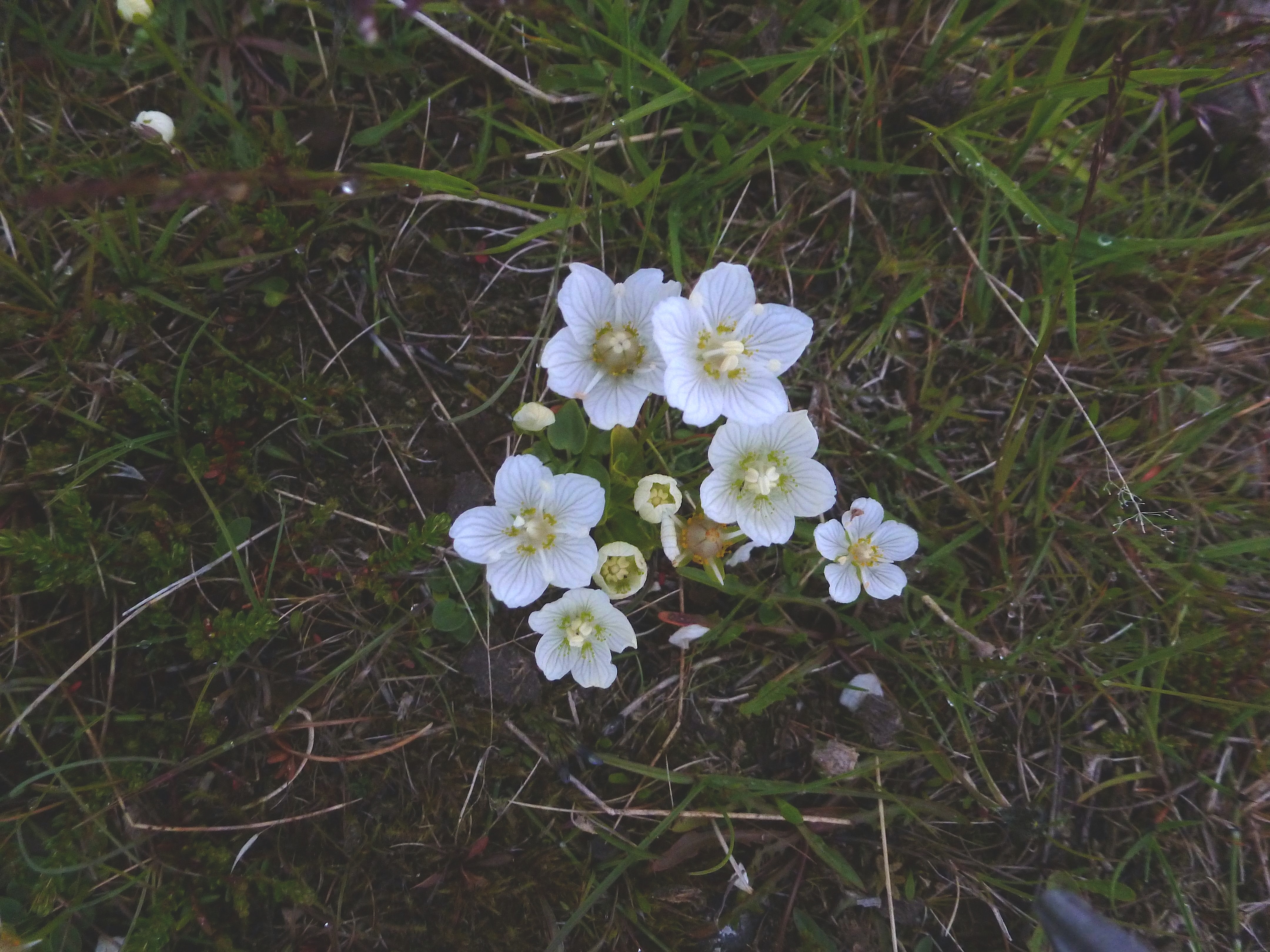
Icelandic Flowers, Njardhvik
As God spoke them in the evening of creation. Gargoyles need not apply.
This lost language of flowers has done much to carry civilization to the present state of affairs, in which the invention of Liquid Embroidery ® pretty much put a bullet through its temple. But that’s a story for tomorrow, from the country estates of Silesia, the Royal Residences of Saxony, and the flour sacks of the Canadian Depression, right up to the question of what would it look like if we learned this language again? It is ours. It carried us for so long. Here’s what it did in Iceland, back in the 1930s.
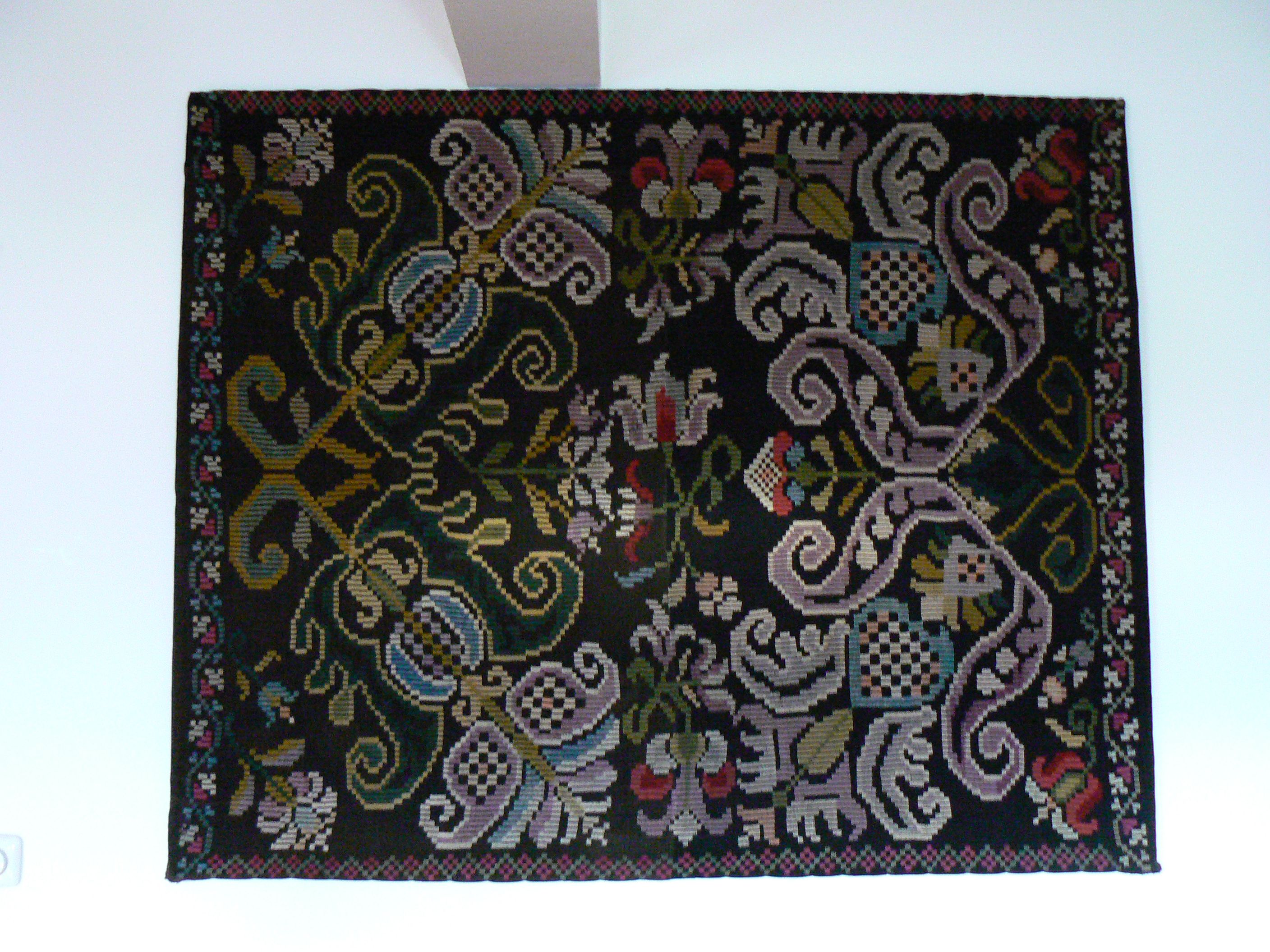
Nationalist Icelandic Embroidery
In the East Fjords, along Lake Lagarfljot, just downriver from the East Icelandic Monastery at Skridalklaustur, tucked into the newly replanted birch forests at Hallormsstadhur, the Icelandic Home Economics School took the girls of East Iceland in. While their brothers were farther downriver, learning the ins and outs of industrial agriculture, they were taught long lost and recently-revived Icelandic needlepoint traditions.
A decade later, Iceland was an independent country, free from foreign rule for the first time in about 700 years. That had a lot to do with American and British military occupation during the Second World War, but the opportunity would have come to nothing if the Icelanders hadn’t insisted on planting birch trees, teaching the old language of the flowers, and building up an agricultural industry capable of actually sustaining the people. Here in the Okanagan Okanogan, we live in a volcanic landscape the equal of Iceland’s. Compared to how they have become it, though, we are just children.
Tomorrow, off to Dresden, as we continue into the roots of this conversation.
Categories: Agriculture, Arts, education, History, Industry, Nature Photography

 Okanagan Okanogan
This is so lovely.
LikeLike
Love this…thanks Harold. 🙂
LikeLike
You can certainly see your enthusiasm in the work you write.
The world hopes for even more passionate writers such as you who are not afraid to
say how they believe. All the time follow your
heart.
LikeLike
Admiring the commitment you put into your website and detailed information you provide.
It’s nice to come across a blog every once in a while
that isn’t the same unwanted rehashed information. Excellent read!
I’ve bookmarked your site and I’m including your RSS feeds to my Google account.
LikeLike
We are a bunch of volunteers and opening a new scheme in our community.
Your website provided us with helpful info to work on. You
have done an impressive activity and our entire
group will be grateful to you.
LikeLike
Hi, yup this paragraph is really fastidious and I have learned lot of things from it regarding
blogging. thanks.
LikeLike
Howdy! I’m at work surfing around your blog from my new apple iphone!
Just wanted to say I love reading through your blog and look forward to
all your posts! Carry on the fantastic work!
LikeLike