




Here’s what trees are doing, when left to their own devices…
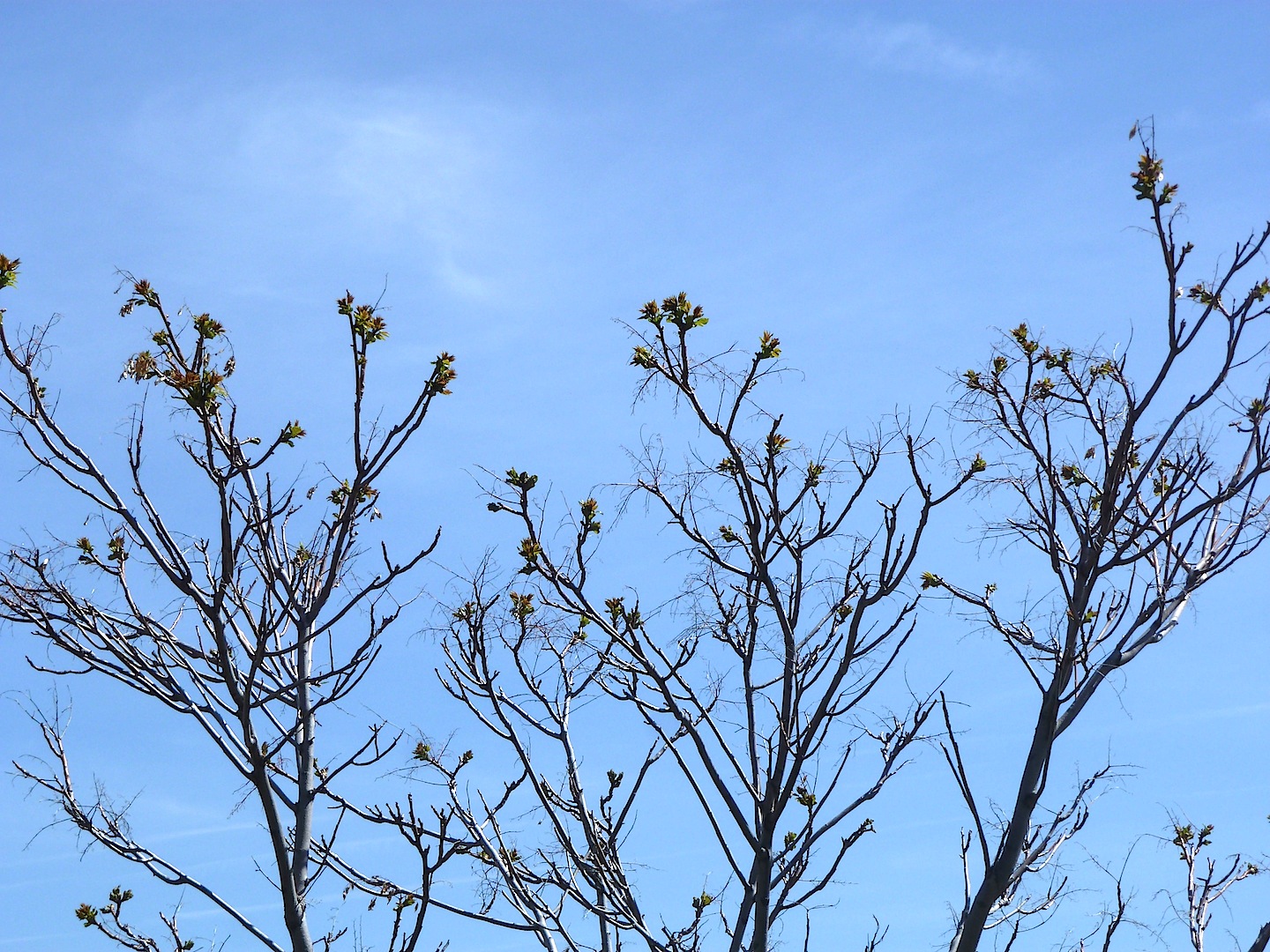
Sproing
Actually, this is what water is doing. As water evaporates from leaves folded all winter inside the egg cases of their bud shells, it draws the leaves along with it. You could say that the water unfolds and eventually blooms.
Another way of managing the same protective and unfolding process looked like this about 70 million years ago…
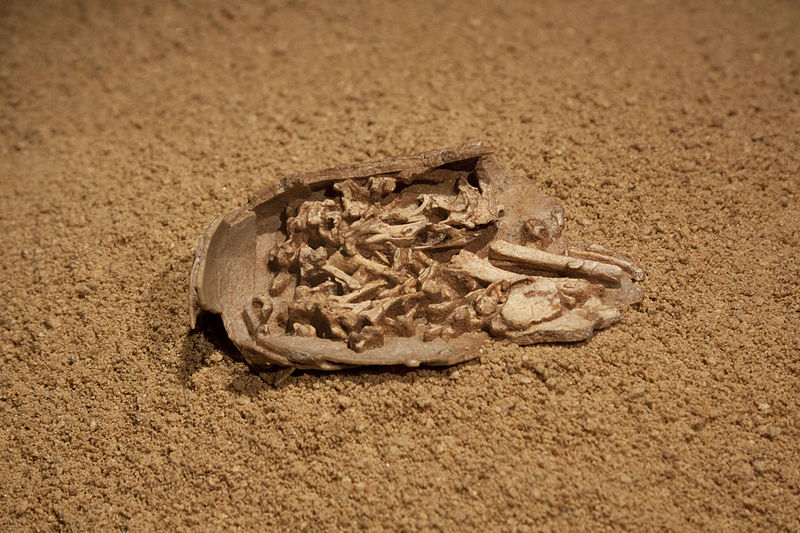
Oviraptor Embryo Late Cretaceous. Source.
The trees survived all that. Seemingly, just being a conduit for the water and the light works well.
Here’s one human response to that long process of balance between earth and sun:

Which Came First, the Tree or the Fencepost?
A technique for forcing mature trees in cramped sixteenth century European stone cities to produce productive first-year vegetative branches and the most possible firewood per tree seems to have become an aesthetic in its own right.
And this isn’t the first time for this tree…
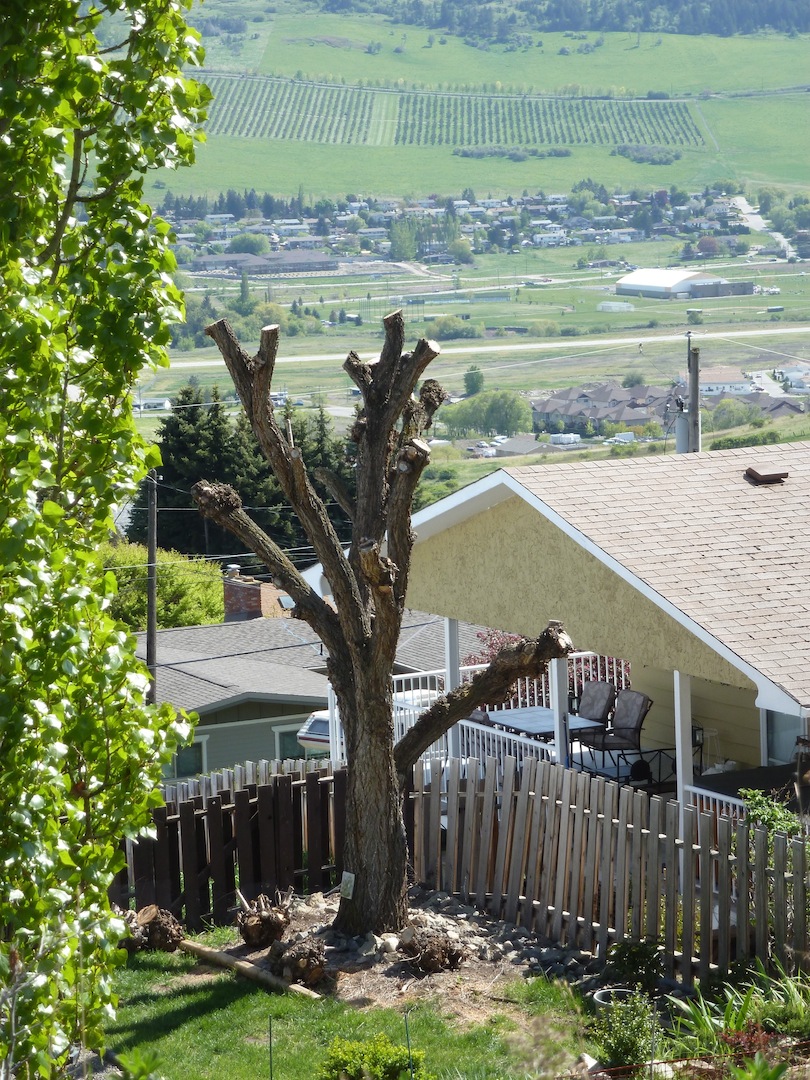
Closer
Note the blocks of wood with the branch stubs from the last pruning, and, oh, gasp, isn’t that the tire swing that used to swing there when the yard was full of children?
And the wood? It went to the recycling yard to be made into mulch, which is used to cover garden areas so that nothing will grow in them. This, I think, is what happens when a society is structured so that the children move away to distant civilizations. Ah well, sometimes, the solution seems to be to cut a tree down to the ground and attempt to solve the problem of human adaptation to the earth in that way…

Chinese Elm
As translated into the language of the chain saw.
Well, not so fast …
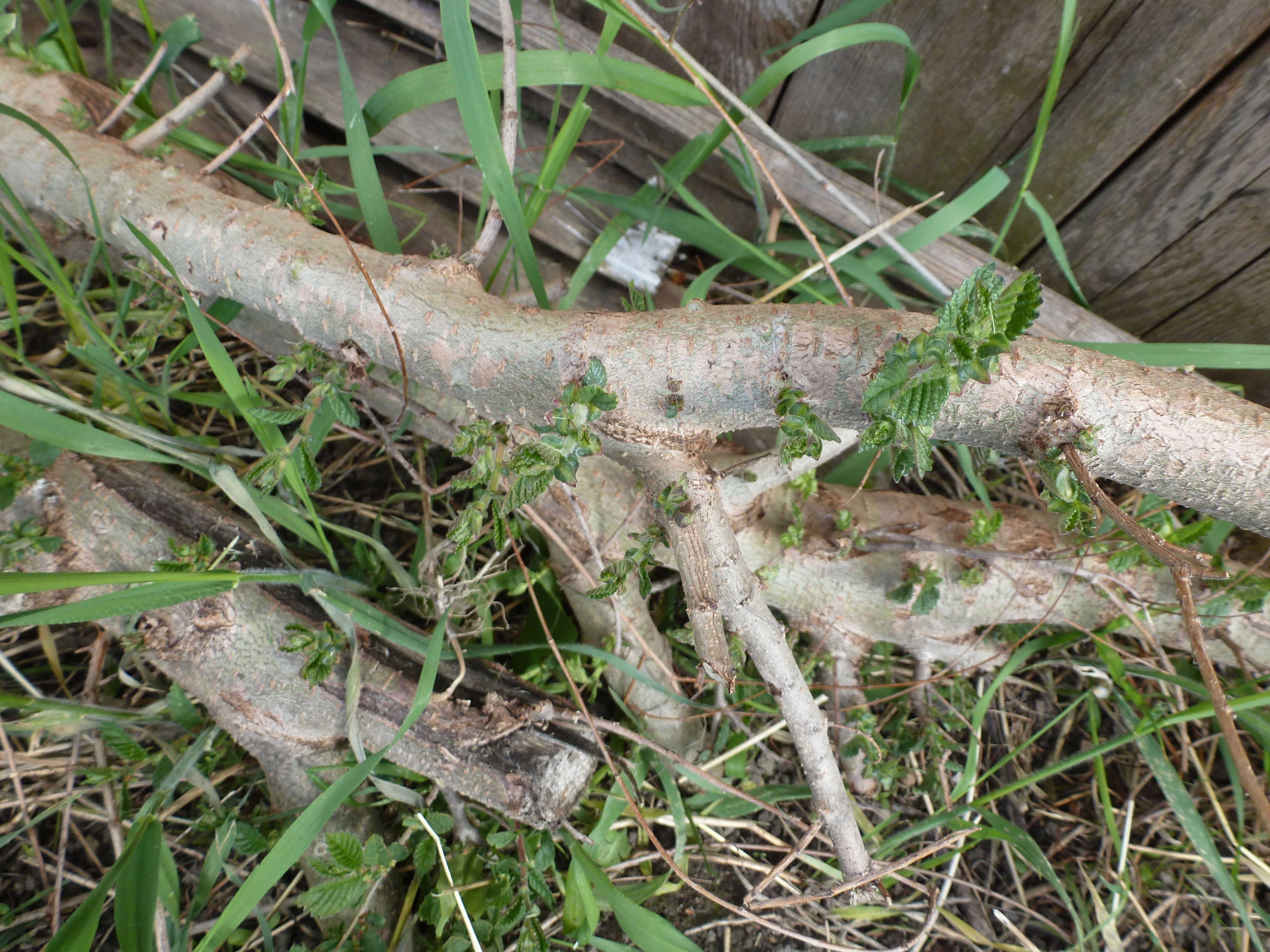
Chinese Elm Logs
Putting out new shoots, without roots.
Now, that’s worthy of respect. The kids would love it.
Categories: Industry, landscaping

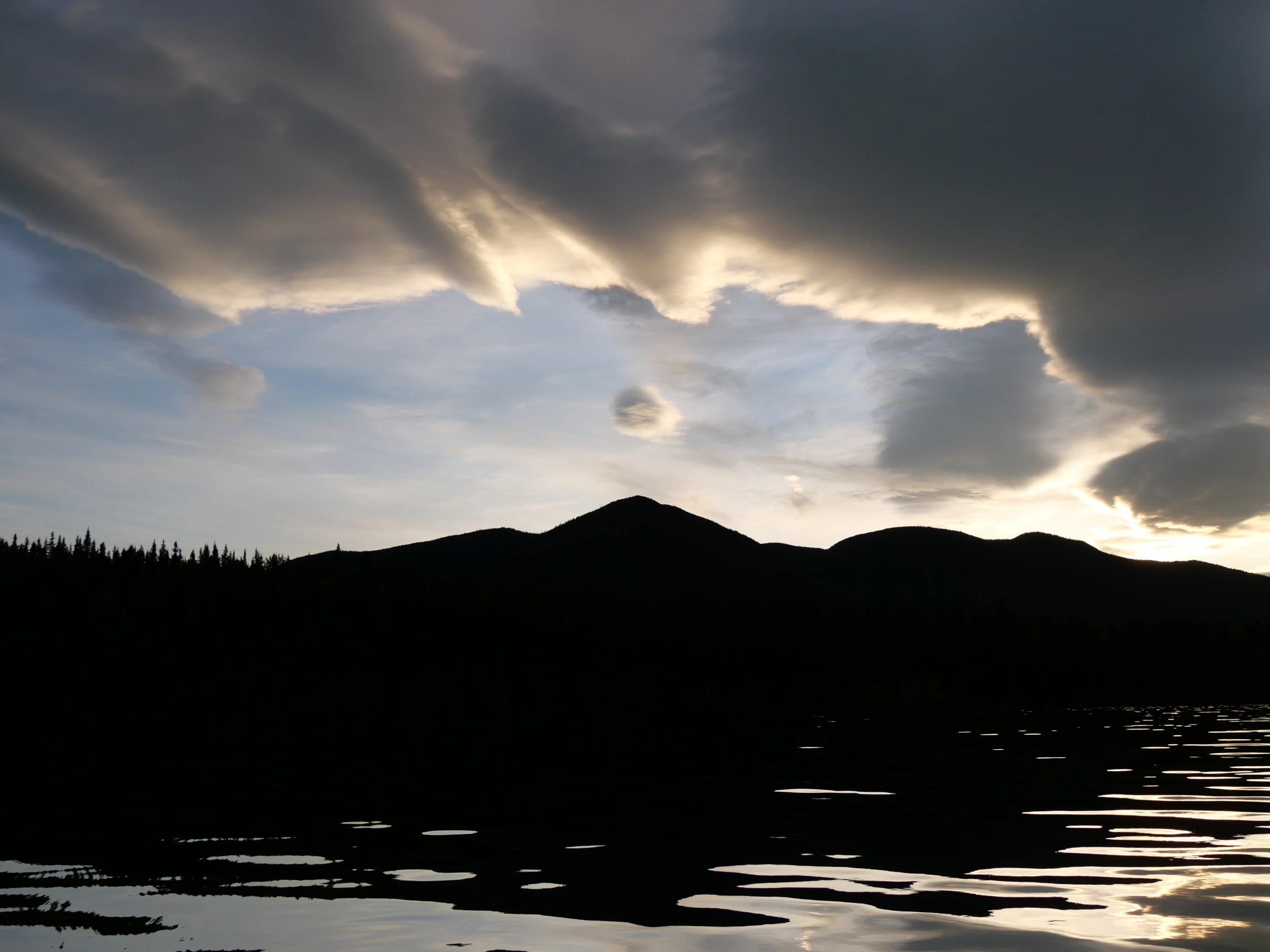
 Okanagan Okanogan