


The science of botany got its start in plant classification and botanical gardens. Because of that, contemporary human understanding of plant communities largely revolves around species and their interactions. The results can be quite intricate:

A Sudden Spring World Turtle Mountain
A week before, this was bare rock, crusted with a few dry, crusty lichens. Now it is in full glory, as it absorbs the melting winter snow. No water leaves the rock for the valley below.
As intricate as those relationships are, they are reacting to the world in ways that far surpass the species-by species story. Another way to view the story of plants is to see where they grow, and their relationship to that, rather than their relationships to each other.

Opal in the Moss
Turtle Mountain is an old volcanic core. Its sulfurous gases have long ago hardened to opals within the rock. Now, weathering is breaking them loose.
Looking at the rock like this provides new ways to re-imagine plant life. One way is geology: the layers of plants on the rock are part of a geological story. Another is weather: the flows, pools and sprays of plants on the rock are expressions of weather. Others are light and water. Together, they form a complex set of relationships that are currently emotionally or aesthetically viewed, but which have the potential to become a new science. In the following image, for example, the water that flows down over the stone is brought into light. Call this a river of light slowed down almost to the speed of rock.

Water and Life Flow Together
Earth sciences, especially the science of Gaiea, have a handle on these relationships. They point to a strong correlation between the physical characteristics of the planet and the life that has played a major role in creating them. These characteristics include weather, glaciation, sea level, atmospheric composition, and weathering rates of stone. The story also works at an intimate level: effects that take place planet-wise also take place in areas the size of a human hand.
Gravity is different here. Plants use it. They can stop it, even. In the following image, water that might be expected to bring life when it lies still on the flat upper surfaces of stone, actually does so as soon as it tips over the eastern face of the rock.
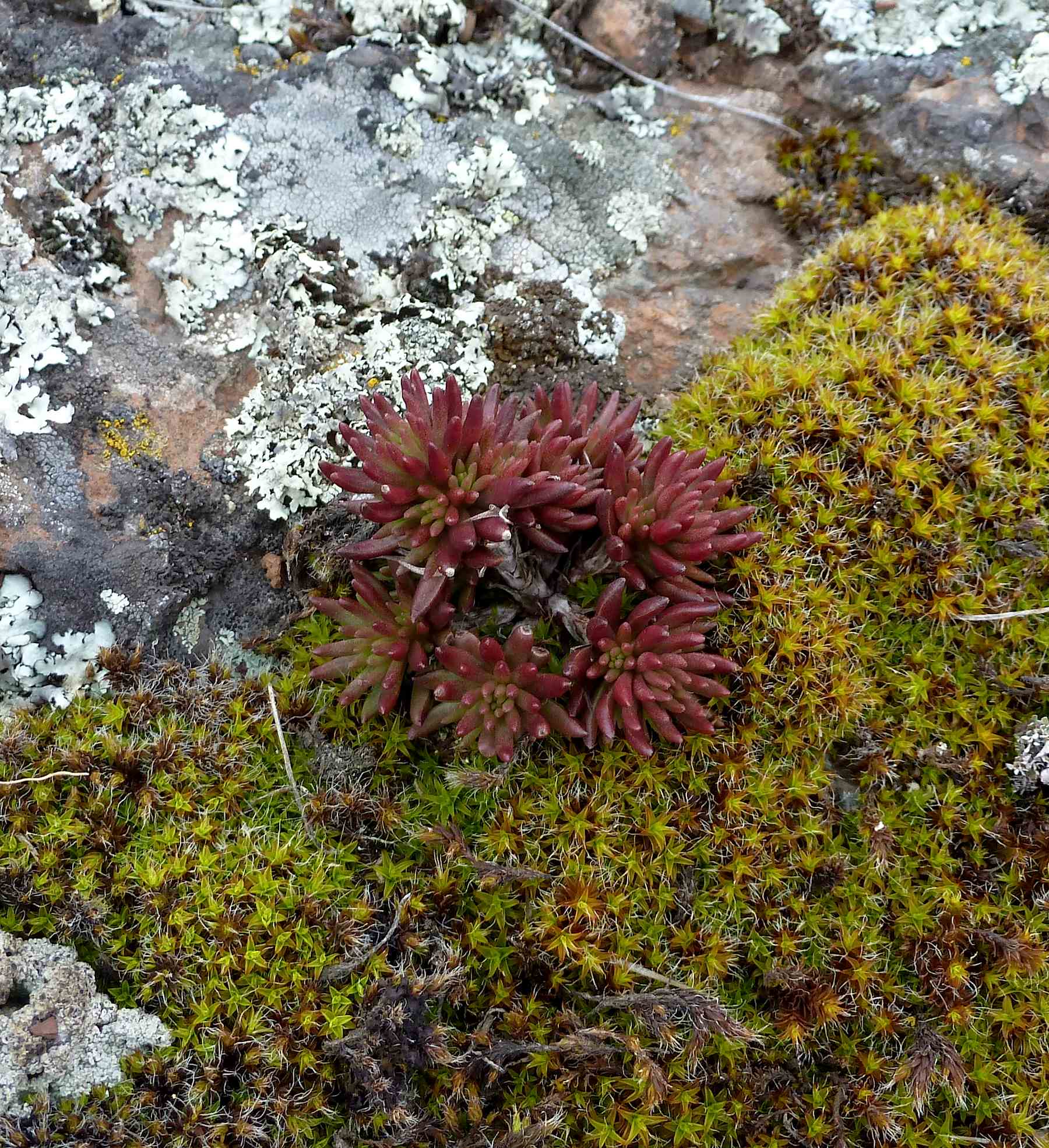
Keeping Out of the Afternoon Light
The sun is a major part of this story. Think of the rock as a community, rather than a series of individuals. Then you’ll see the water pooling in place, defying gravity, beautifully.
Sometimes river valleys help with that as well…

Deep Canyons in the Rock also Provide Environments that Modulate Light.
You don’t have to do it all within your leaves. You can work in concert with your surroundings as one organic system. For humans, here’s a hint: if it’s beautiful, it has a system of order than can be studied.
Rock is important, too. Here’s an example of life following old volcanic flows, in the same way that post-glacial rivers follow pre-glacial valleys cut through basalt flows that filled the valleys that came before them. Since the old patterns are the new patterns, much of the change in the land is that it has come alive…
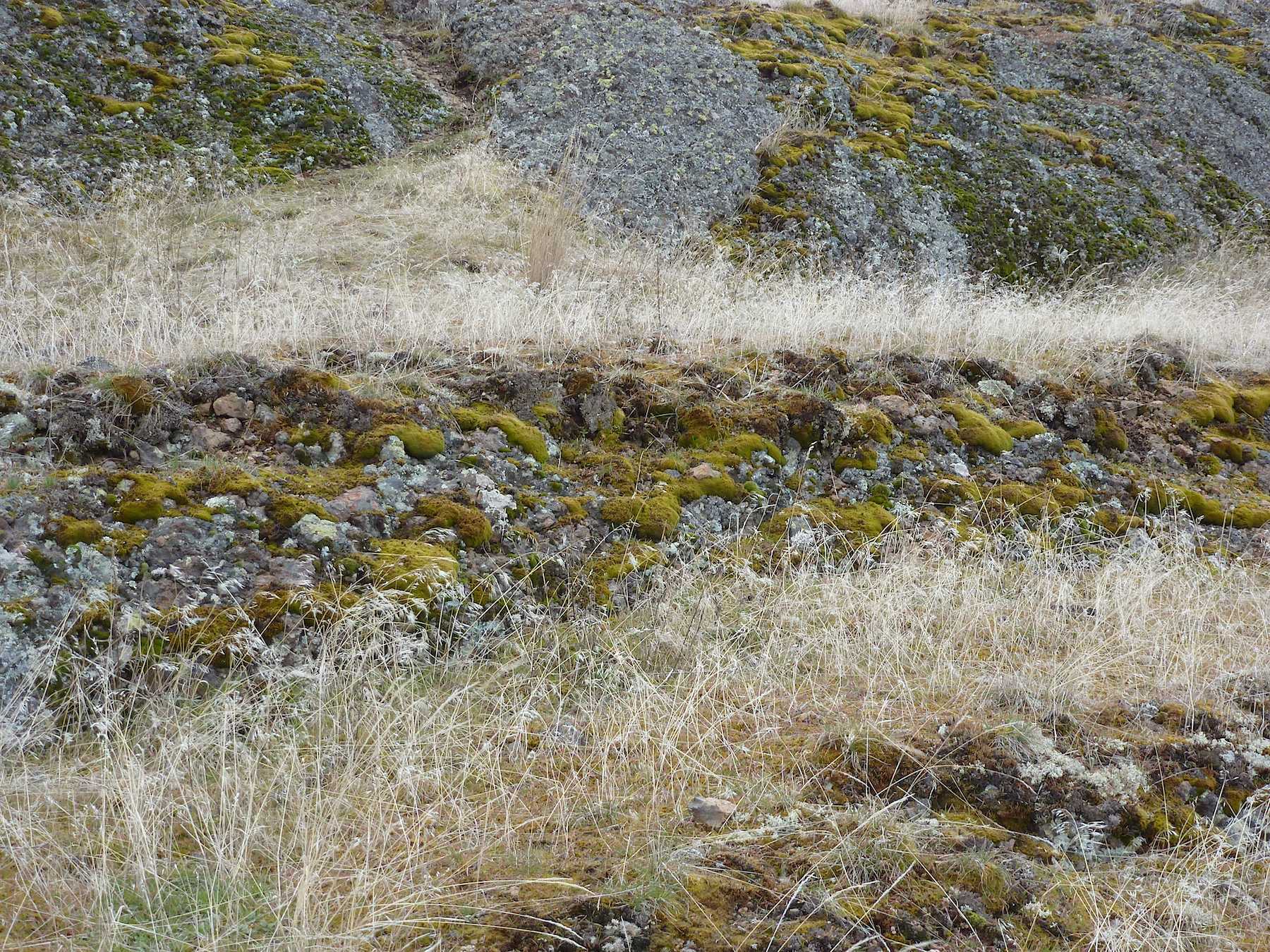
Basalt Flow Patterns are Grass Flow Patterns…
… and moss flow patterns, too.
Geology came about by the desire to understand how the rock of the earth was put together. Geologists can now show how each layer formed, by what process, in what direction it flowed, at what rate, and when. This has proven very useful for mineral extraction and engineering. A new science that looked at life through the relationship between life, rock, air, water, and light, as one functioning unit, would lead to equally broad functions and technologies. It is an entirely other world. Its effects aren’t simple. Sometimes water and light can pool and hold still on vertical surfaces…

Solar Pool
What makes a community thrive here, but otherwhere only on vertical faces?
The answers to such questions are essential for determining how to farm rock, like this, without expensive technologies, such as the greenhouse, irrigation and fertilization technologies in use today. Society is going to need that, as the earth heats up. These plants have already made the change… long ago.

Plants are Creatures of the Sun.
They eat it. The rock is a technology they put to use — it’s not where they live. That’s a human idea.
This area only appears as a desert, because humans are largely inside during the late winter, when this landscape is hard at work. Right now, life is irrepressible…
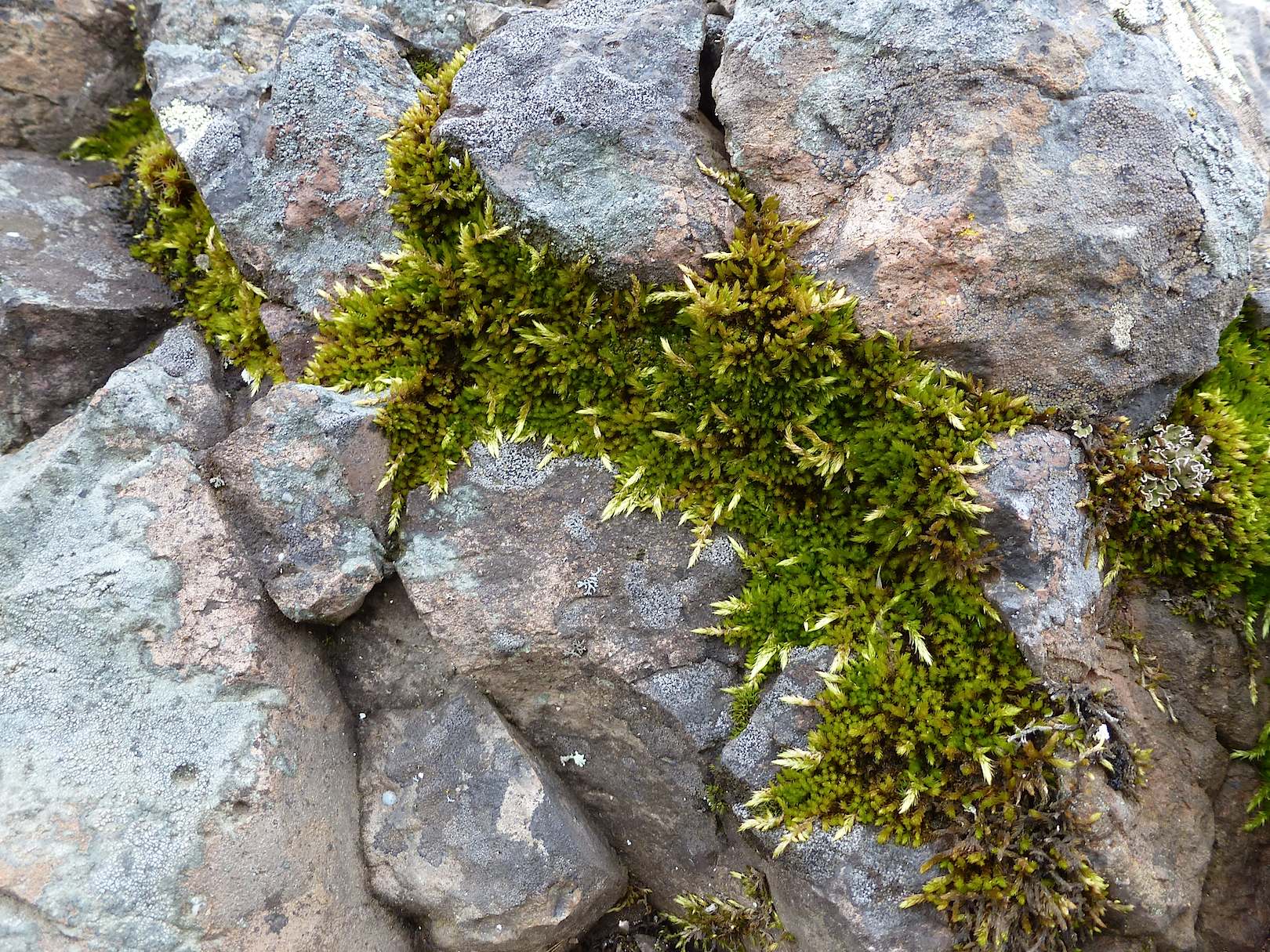
Colonizing the Volcano
The trick is to work with the rock, not to insist that it become river sand. The river is just a process. It is wherever you recognize it.
Soon the year will be over. In many of these stream beds, it already is…
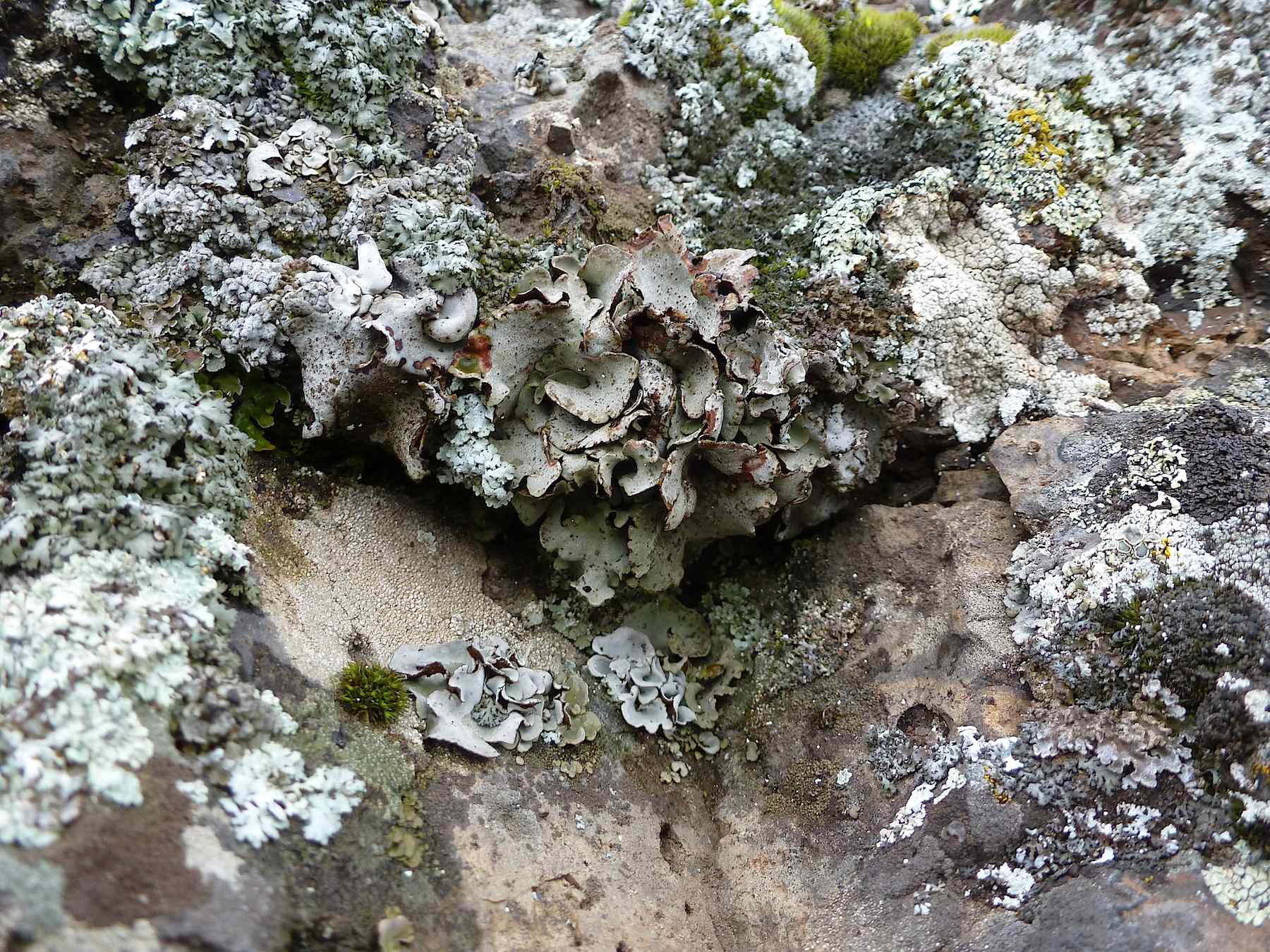
Dry Streambed
The drought season begins.
The riparian zones in the grassland operate on the same principle. In them, water does not flow above ground. It flows through plants, that flourish in ravines because they are able to concentrate underground water — just slightly, but that’s enough. Only in catastrophic flood seasons do they flow above ground. More on that tomorrow, in a troubling post… but first, an exciting thought.

Volcanic Rock Blasted out of Turtle Mountain to Make Roads …
…or new vertical gardens. Notice how their water is just running off at the moment. With our sciences of engineering and geology, we humans have managed to bring the mountain back to the form it had 50 million years ago. We had to cut through its present form to get to that. It cost a lot of money, but we managed in the end, by gosh.
A society intent on bringing the earth to life would have cut this road system across eastern faces of the mountain, instead of the southern lines above. The eastern faces are twice as productive. With the right cognitive tools, with the right science, we’ll get there yet. And that’s what Okanagan Okanogan is working at.
Categories: Earth, Earth Science, Industry, Innovation, Land, Light, Nature Photography, Water

 Okanagan Okanogan
Kudos! Beautiful and intensely significant. I teach environmental ethics in religious studies at the U of C.
I understand what you are seeing and saying.
Anne White, Ph.D.,
Dept. of Religious Studies,
U of C.
LikeLike