


Up in the British Columbian Okanagan, we have just come through a civic election. Throughout the valley, the call was heard for responsible civic management, financial audits, and streamlining local governmental regulations to attract business. The goals are solid: to spend our money wisely and to provide jobs for our people, especially well-paying jobs, and especially for our young people. I think this is why:
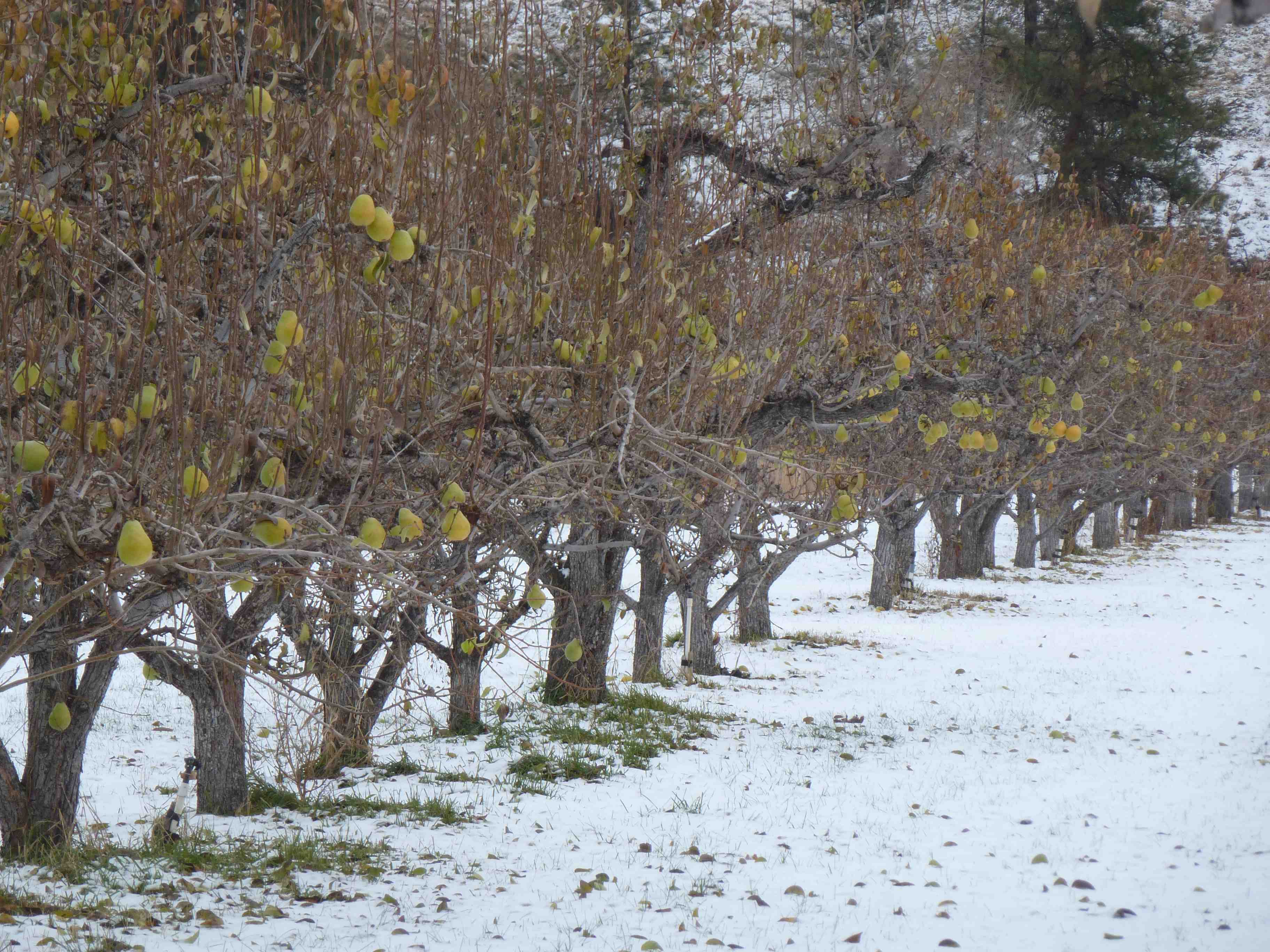
Beurre D’Anjou Pears Frozen on the Tree on Election Day
If the goal of our communities is to care for our people by effectively distributing resources to where they are needed, something is wrong. If the goal of our communities is not to effectively distribute resources in support of our people, something is very wrong.
In the past twenty years plans to increase prosperity by streamlining government have repeatedly failed throughout British Columbia, and rarely for lack of good will, passion, intelligence, or commitment. They fail because you can’t buy prosperity (usually you have to work for it), cutting governmental costs often cuts the ability to develop unacknowledged community assets, and many structural problems are not local but provincial or even national. To date, the development model that sells Okanagan land to outside investors and homeowners has resulted in both prosperity and poverty. The prosperity lies in housing construction and sales. The poverty lies in the neglect of our ability to use our land to create wealth out of the energy of our young people, supported by community investment.

Snowman on Election Day
The family energy to work with children is alive and well.
Sometimes investment comes from Edmonton and Calgary oil men, who develop expensive vineyard properties into exciting opportunities. Sometimes, though, it is as simple as civic governments re-imagining land use policy to allow for full utilization of agricultural opportunity. It costs a lot more in governmental resources to feed the jobless and homeless than it would to take care of this problem:
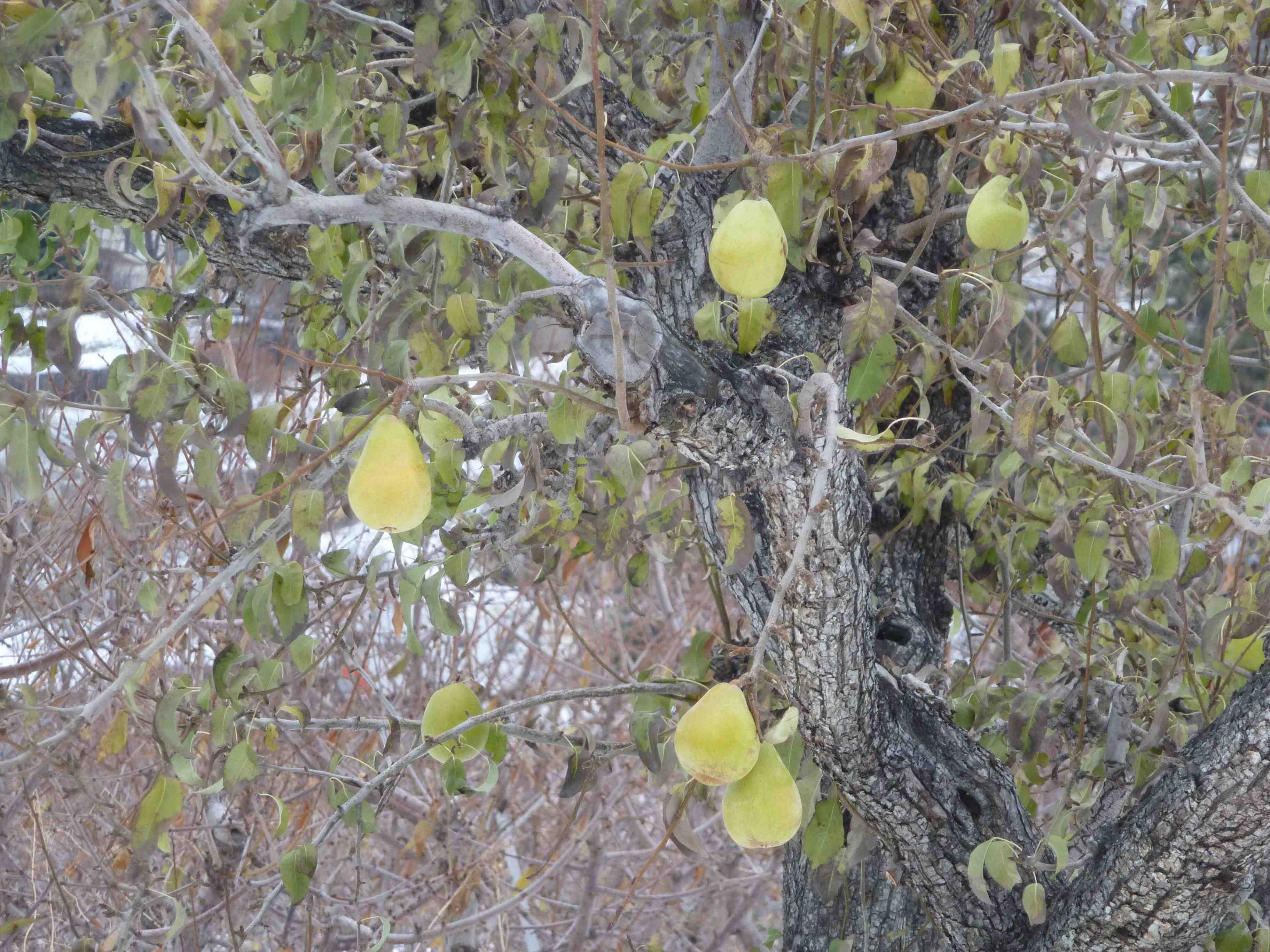
Resources: Food, Wood, Work, Dignity, and Beauty
All dependent upon a food distribution and production system that could stand close scrutiny.
The answer is not to cut community management, but to direct it towards creative community planning, that will free latent opportunity. I believe it is time to consolidate the last thirty years of real estate investment in the Okanagan, by completing the land-use side of the equation. Tomorrow, I will suggest how that might be done. For now:
 Hurrah!
The Morning After the Election in Okanagan Falls
Categories: Agriculture, Industry, Innovation, Land

 Okanagan Okanogan