


At the moment, farmers can mine gravel on their land and deduct the income from their taxes, as a loss of value. The result can be a vineyard, like the one below. Yes, a vineyard… do you see any grape plants? No, there are just roads, gravel, and dumped concrete scraps used as fill. The grapes are up higher.
Above this weedy bank.

Early this summer, the farmer spent many thousands of dollars building a loading area and a lovely wide road big enough for a semi-trailer, to a small vineyard block at the end of his property.
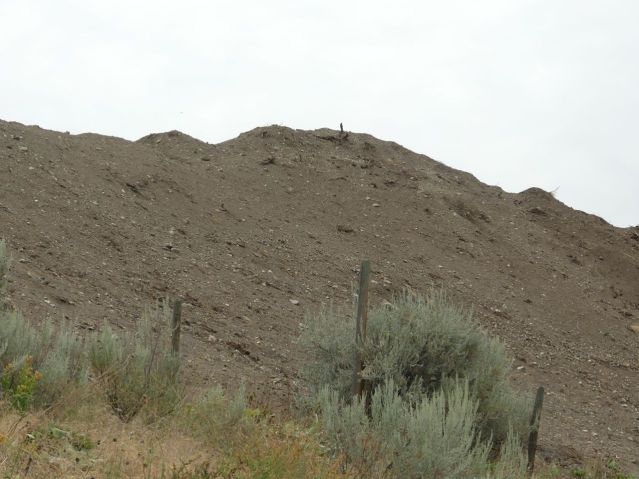
The cost of doing that is called an expense and can be written off against farm income. Of course, this behaviour comes with an environmental cost, which subsidizes that income but does not otherwise enter into the accounting. Private income, in other words, is subsidized by public loss. We can fix this. Putting through legislation requiring environmental values to be maintained … well, we already have that, and it’s not much use. But there is a way. Currently, farmland is taxed at a low value, which is a direct subsidy for farming, on the principle that farming provides public value. Such taxation subsidies could be removed for land that is stripped of environmental productivity. The same for land developers of any other kind. The housing development below, for instance. In this case, the yellow clover is doing its best.
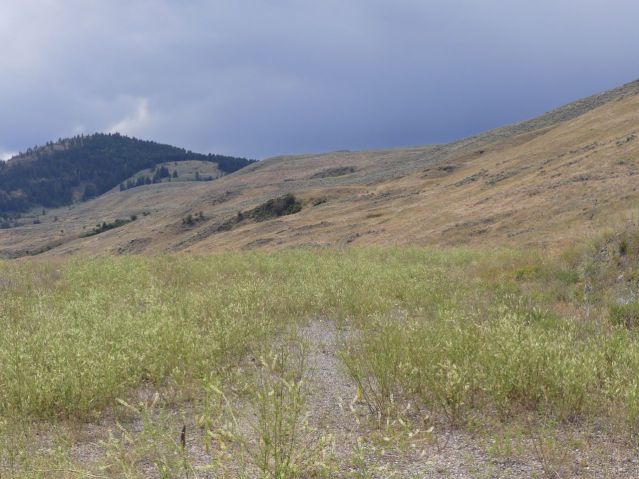
Even the trashed, unproductive grassland in behind. Squeezed between an inability to develop land into housing and an inability to trash it wantonly, farmers and developers, who are very smart people, would do the right thing.

Mariposa Lily: a Grassland Crop Not Just for the Sweat Bees
Categories: Industry


 Okanagan Okanogan
1 reply »