


One secret of water is that it flows downhill. Another is that it does not stay. This is true of wetlands, which don’t consume water but use it then pass it on, usually to lake and river system. It is also true of dryland water. Like here:
 Hawthorn Living off the Water Flowing Downhill Past its Roots
Here’s another example:
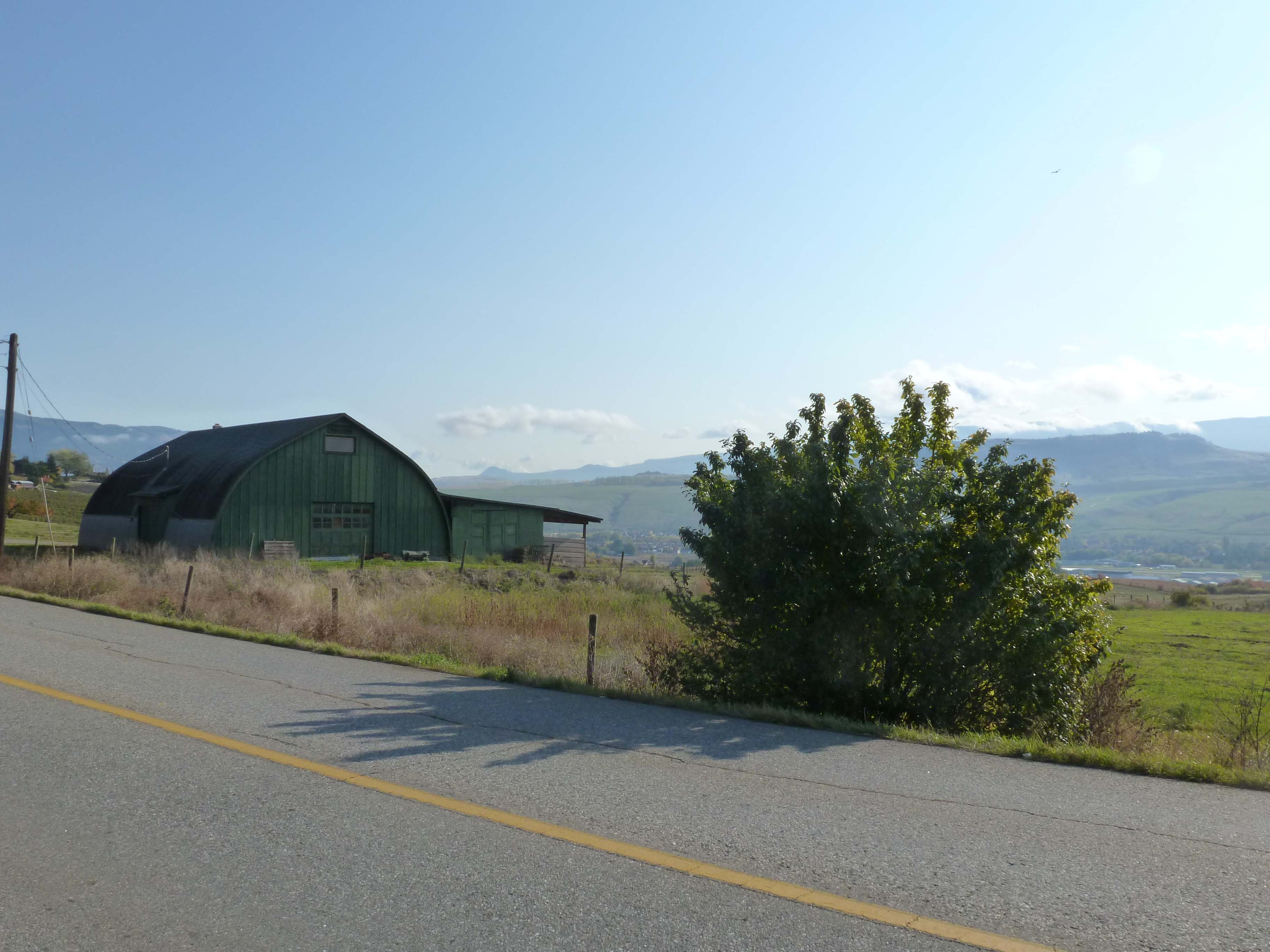 Damson Plum Seedling Beside the Road
The water is passing by, on its way down to Okanagan Lake and the Pacific Ocean.
The lesson of these trees is that there is water aplenty here, but that we can’t stop it from flowing. We just borrow it and pass it on. In contrast to this wisdom, here’s what passes for green landscaping today:

How to Make a Living Landscape into a True Desert
The water here is just shed and passed on. Where does it go? Take a look:
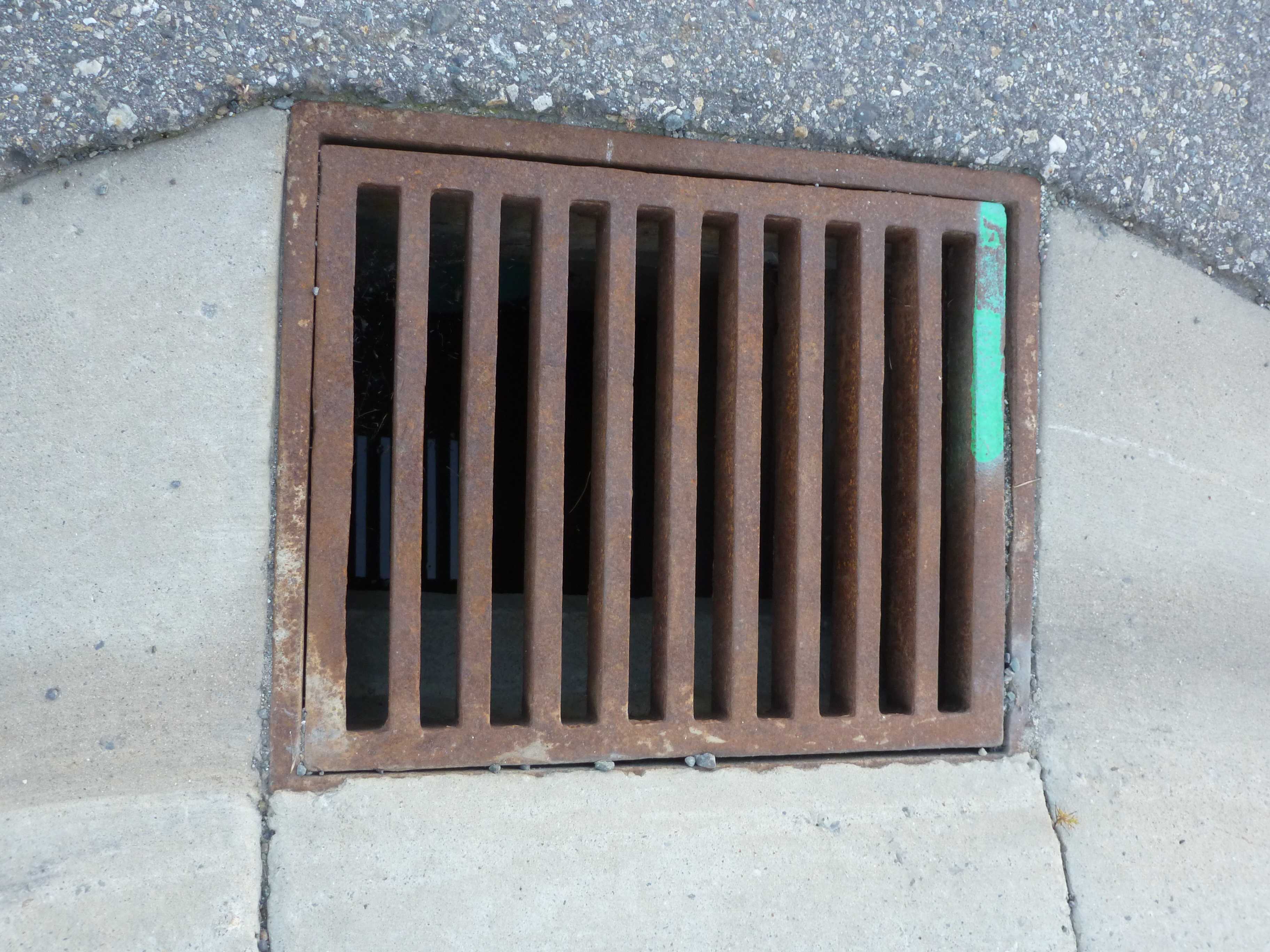 The Sad End of Living Water
Destination: Okanagan Lake, in an Awful Hurry
For some reason, contemporary urban construction seems determined on getting rid of its water without using it on the way. And where natural wetlands spring up beside a trail, what is the response? Ah, indeed:
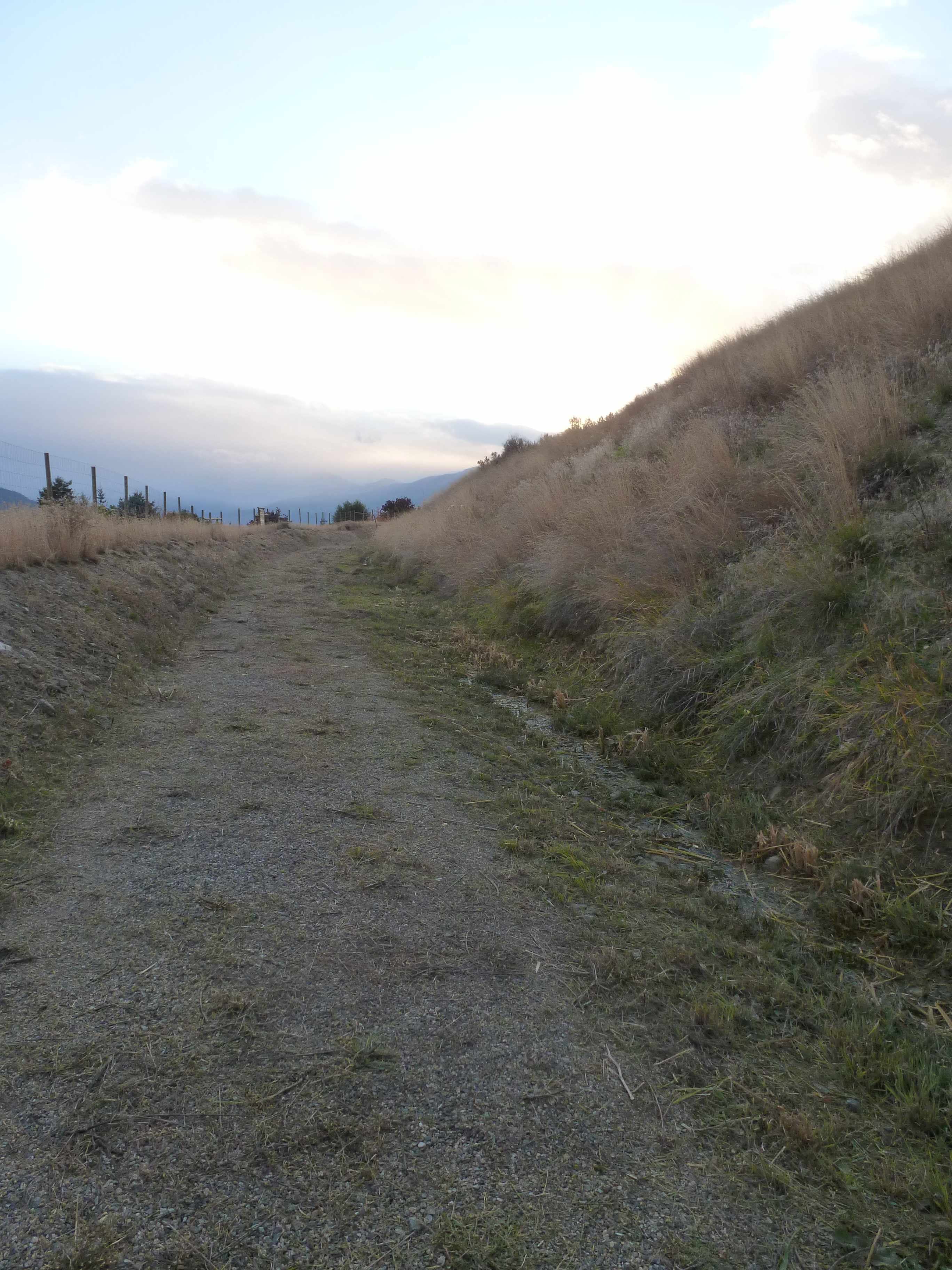 The Path of a Weed Whacker and its Attendant Human
The new wetland along the edge of this trail, flush with cattails all summer, home to ducks and insects, beloved of dogs, in the way of no human activity, has been put into some kind of order.
I must say, this doesn’t look like how to live in a dry landscape at all. It looks like how to turn it into a barrens. One final shed tear follows:
 Cat Tails, without Cats or Tails
There is plenty of water here.
Categories: Water

 Okanagan Okanogan
People in the Okanogan should be installing rain gardens to filter and utilize water instead of having it run into the drain. See http://www.raingardennetwork.com/about.htm
LikeLike
Hey, thanks, Mike. My feelings exactly. I’ve been looking around, and it seems to me that natural growth usually exceeds that on planted areas, and without the addition of water. This rain garden thing is great. I hope they have a food production version. I’m going to be checking that out.
LikeLike